
Private Label Bath Bomb Sets: Complete Guide To Launch & Scale
If you can turn “five minutes of self-care” into a giftable ritual, you can turn a simple fizzy sphere into a repeatable, scalable brand. A private label bath bomb set is one of the fastest ways to enter the bath category with strong margins, endless creative angles, and high perceived value—especially when you combine the right formula, packaging, and manufacturer to deliver a consistent unboxing and in-tub experience.
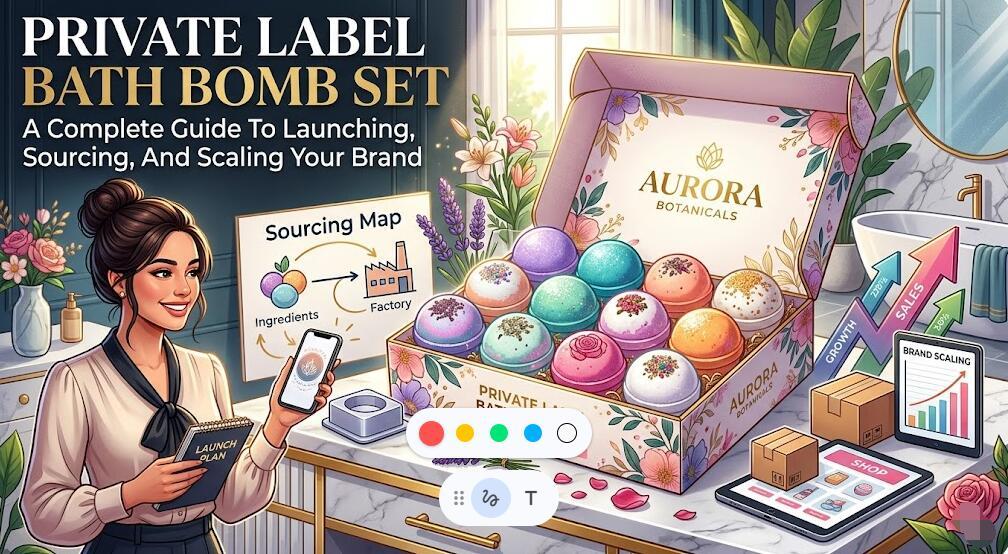
Why Private Label Bath Bomb Sets Are a High-Potential Product
Growing consumer demand in self-care and gifting
Bath bombs sit at the intersection of wellness, sensory experience, and gifting. A well-designed bath bomb gift set fits birthdays, holidays, bridal events, corporate gifting, and “treat yourself” purchases.
High perceived value with relatively low unit cost
Compared to many skincare products, bath bombs can offer premium presentation at accessible costs—especially when you purchase wholesale bath bombs or build bulk bath bomb sets with cost-efficient packaging and consistent QC.
Strong differentiation opportunities (scents, colors, themes, packaging)
You can build a custom bath bomb set around aromatherapy, luxury butters, kids themes, seasonal storytelling, or minimalist “clean” aesthetics. Differentiation is driven by scent profiles, color design, inclusions, and branded packaging.
Ideal for seasonal launches and limited editions
Bath sets are perfect for drops: Valentine’s, Mother’s Day, Halloween, and Q4 gifting. Limited editions also help you test new fragrances and packaging without overcommitting.
What “Private Label Bath Bomb Set” Means (and Your Main Business Options)
Private label vs. OEM vs. ODM (simple definitions)
Private label: You select an existing formula/design from a supplier and apply your branding (labels, box, messaging). Fastest route for branded bath bombs.
OEM: Manufacturer produces to your specifications (fragrance, color, size, packaging). Ideal when you want custom logo bath bombs with controlled performance and look.
ODM: Manufacturer develops product concepts and designs for you (sometimes including fragrance direction, set themes, packaging structures). Useful if you want speed plus differentiation with expert R&D.
When to choose each model based on budget and speed-to-market
Fastest: Private label (existing base + your packaging).
Most control: OEM (customization without building a factory).
Best for “brand + innovation” without internal R&D: ODM.
Typical buyers: DTC brands, spas, salons, subscription boxes, retailers, influencers
Common paths include DTC Shopify launches, Amazon bundles, boutique retail sets, and subscription sampler boxes. Many buyers use contract manufacturing bath bombs to focus on branding, content, and sales.
Core Elements of a Successful Bath Bomb Set (What Customers Actually Buy)
Set concept and theme
Customers buy stories: “Sleep & De-Stress,” “Citrus Energy,” “Botanical Spa,” “Kids Surprise Shapes,” or “Holiday Cheer.” Your theme should match your target channel and price tier.
Scent story and fragrance strength
Great sets have a coherent fragrance narrative (top/middle/base impression) and consistent strength across the box. Avoid a mix where one bomb overpowers the rest.
Visual identity: color, embeds, swirls, glitter (and “clean” alternatives)
Visual payoff matters: swirls, embeds, or layered color reveals. If your audience prefers “clean,” use biodegradable shimmer or mineral-based color strategies and avoid heavy staining dyes.
Skin-feel and performance: fizz time, foam, moisturizing finish
People remember performance: how quickly it starts, how long it lasts, whether it leaves a moisturizing feel, and if cleanup is easy.
Sensory experience: aroma throw, water color, residue control, tub cleanup
High-performing sets color the bathwater beautifully while minimizing residue rings, botanicals that clog drains, or oily slip hazards.
Popular Types of Bath Bomb Sets to Consider
Classic aromatherapy set (lavender, eucalyptus, rose, citrus)
Reliable mass appeal and clear benefits messaging (relax, refresh, uplift). Works well for DTC and retail gifting.
Spa & relaxation set (soothing, low-stain, moisturizing)
Focus on calming scents, gentle colorants, and a clean tub finish. This category supports premium positioning with minimal risk.
Kids/family set (gentle formula, fun shapes, low fragrance, safer colorants)
Prioritize mild fragrance, less dye, and shape-driven fun. Use cautious claims and avoid ingredients likely to irritate sensitive skin.
Luxury set (butters, premium fragrance, elegant packaging)
Elevate with refined scent blends, creamy feel, and rigid gift boxes. Great for high AOV gifting.
Seasonal/holiday set (Christmas, Valentine’s, Mother’s Day, Halloween)
Limited-edition packaging, themed shapes, and seasonal notes (peppermint, sugar cookie, cranberry, floral) drive urgency.
Subscription/mini bath bomb sampler set
Mini bombs reduce barrier to trial and encourage repeat purchase. This format pairs well with monthly themes.
CBD-inspired or “botanical” positioning (with compliance considerations)
Botanical positioning can be powerful, but claims and ingredient legality vary widely by market. Ensure labeling and claims are aligned to local rules.
Product Design Decisions (Your Brand’s Differentiation Checklist)
Bomb size and count per set (mini vs standard vs jumbo)
Mini: Great for samplers, lower shipping risk, and subscription packs.
Standard: Most common; balances value, experience, and cost.
Jumbo: Premium feel but can increase breakage risk and shipping cost.
Shape options (round, heart, donut, character molds)
Round is efficient for production and packaging. Character molds can boost virality but may require stricter QC to prevent cracks and chips.
Color strategy (vibrant vs pastel vs “natural-looking”)
Vibrant sells on social; pastel reads premium; “natural-looking” fits clean beauty. Match color intensity to your stain-risk tolerance and bathtub cleanup promise.
Add-ins and inclusions
Botanicals and petals (benefits, risks, drain/tub considerations)
Botanicals look premium, but they can clog drains, stick to tubs, or trigger customer complaints. If you use them, keep the quantity minimal and consider including a drain-catching tip in directions.
Clays and salts
Clays can improve skin-feel and aesthetics; salts can reinforce spa positioning. Balance them with fizz performance and structural stability.
Oils and butters
Butters can elevate luxury and leave a soft finish, but too much oil may reduce fizz and increase slip. Test for tub residue and cleanup.
Glitter vs biodegradable shimmer
Many brands are shifting to biodegradable shimmer for sustainability messaging while maintaining visual impact.
Fragrance selection and custom scent development
A strong set includes complementary profiles (e.g., one floral, one herbal, one citrus, one warm/vanilla) rather than random mixes. For premium positioning, develop a signature accord for brand recognition.
Sensitivity considerations (allergens, essential oil levels, fragrance-free variants)
Offer at least one gentler option (low fragrance or fragrance-free) if your audience includes sensitive users. Keep claims measured and avoid medical promises.
Ingredient & Quality Expectations (What Buyers and Regulators Care About)
Common base ingredients and their functional roles
Acid/base system for fizz performance
Binders for hardness and reduced crumbling
Emollients for after-feel
Colorants and fragrance for sensory identity
Natural ingredient positioning—how to do it credibly
“Natural” works best when you can explain what it means in your context: plant-derived oils, biodegradable shimmer, and responsible sourcing. Align your claims with documentation and avoid vague overpromises.
Stability and shelf-life expectations
Bath bombs are moisture-sensitive. Shelf-life depends on formula, packaging barrier, and storage humidity. Plan packaging and warehousing accordingly.
Performance testing basics (fizz, crumbling, staining, scent retention)
Fizz: start time and duration
Hardness: drop/handling resilience
Staining: tub ring risk from dark dyes
Scent: retention after storage and transit
Micro and contamination risk management (especially with botanicals)
Botanicals can increase contamination risk and reduce shelf stability. If you include botanicals, confirm handling controls and storage requirements with your supplier.
Documentation to request from a manufacturer (COA, MSDS/SDS, IFRA where applicable)
COA for key materials (as applicable)
SDS/MSDS for ingredients and fragrances
IFRA compliance documents for fragrance (where applicable)
Batch records and traceability approach
Packaging That Sells (and Protects the Product)
Primary packaging: shrink wrap, paper wrap, biodegradable bags, clamshells
Primary packaging must protect against humidity and preserve fragrance. Shrink wrap and barrier films often perform best for scent containment; paper wraps can work when combined with strong secondary packaging and controlled storage.
Secondary packaging: gift boxes, rigid boxes, sleeves, window cartons
Secondary packaging sells the set. Window cartons show off colors; rigid boxes increase perceived luxury and gifting value.
Protection requirements: humidity control, breakage prevention, scent containment
Use internal inserts/cushioning to prevent chipping
Control humidity during storage and shipping
Minimize scent migration between different fragrances
Sustainability options and trade-offs
Compostable or paper-based packaging can strengthen brand positioning, but you must validate humidity resistance. Many brands use a hybrid approach: protective inner wrap + recyclable outer box.
Label elements: mandatory info, marketing claims, barcode/QR, batch coding
Include product identity, net weight, ingredients (format depends on market), usage directions, warnings, company info, and batch/lot coding for traceability.
Unboxing experience for e-commerce vs retail shelf impact
E-commerce needs transit protection and a “wow” reveal; retail needs clear shelf communication, legibility, and an obvious gift cue.
Branding & Positioning for Private Label Bath Bomb Sets
Defining your target customer and price tier
Decide early: mass-market value, indie mid-tier, premium spa, or clean minimalist. Your tier dictates fragrance intensity, packaging spend, and bundle size.
Competitive landscape mapping (mass, indie, premium, clean beauty)
Audit 10–20 competing sets: scent types, number of bombs, packaging structure, reviews mentioning staining or weak scent, and what customers praise about “moisturizing” or “strong fragrance.”
Naming, set storytelling, and collection architecture
Use a consistent naming system: collection name + scent name + mood benefit. This helps you expand into other private label bath products later.
Claims strategy (vegan, cruelty-free, natural, handmade, clean)
Only use claims you can support operationally and with supplier documentation. “Handmade-style” and “clean” should be explained in your brand standards to avoid confusion.
Photography needs (product, in-bath shots, lifestyle, gift angles)
On-white pack shots for marketplaces
In-bath color/fizz video frames for social proof
Gift-ready unboxing visuals
Pricing & Margin Planning (Practical Cost Structure)
Typical cost components (formula, fragrance, colorants, labor, packaging)
Your real cost is the full landed cost: product + packaging + QC + freight + duties + warehousing + damage allowance.
MOQs and how they affect unit cost
Higher MOQs typically reduce per-unit cost. If you’re testing the market, consider fewer SKUs first (e.g., 4 scents, one box) to consolidate volume.
Sampling and development costs (and how to minimize iteration)
Provide a clear product brief and reference samples. Limit variables per round (change scent or color or size) so you can identify what improved performance.
Recommended margin targets for DTC and wholesale
DTC: aim for healthy gross margins that can support paid acquisition and fulfillment.
Wholesale: leave room for retailer margins while protecting your own profitability.
Promotions, bundles, and gift-with-purchase strategy
Use tiered bundles (4-pack, 6-pack, 12 mini sampler) and seasonal sleeves. Consider a mini as a gift-with-purchase to drive trial.
How to Choose the Right Manufacturer (Key Vetting Criteria)
Production capability and capacity planning
Ask about daily output, peak season capacity, and how they prevent delays during Q4 or holiday surges.
OEM/ODM experience and customization depth
Confirm whether they can execute your mold shapes, swirl styles, inserts, and packaging coordination without quality drift.
Quality control system and consistency
Request QC checkpoints, defect standards, and how they handle breakage, weight variance, and fragrance consistency.
Trade/export experience and communication
If you’re sourcing internationally, export documentation and clear communication can be the difference between an on-time launch and missed seasonality.
Lead times, responsiveness, and after-sales support
Lead times must include sampling, packaging procurement, production, curing/drying (if applicable), and outbound scheduling.
Ethical sourcing and compliance readiness
Ask for compliance support relevant to your destination market (label formats, ingredient naming conventions, and documentation availability).
Private Label vs OEM vs ODM Comparison Table (Decision Support)
| Model | Best For | Customization | Typical Speed | Risk Level |
|---|---|---|---|---|
| Private Label | Fast launch, simple Bath Bomb Gift Set concepts | Low–Medium (branding + limited options) | Fast | Lower product risk, higher differentiation risk |
| OEM | Brands wanting distinct branded bath bombs without full R&D | Medium–High (formula, scent, size, packaging) | Medium | Balanced |
| ODM | Brands needing manufacturer-led innovation + speed | High (concept + development support) | Medium–Fast (depends on complexity) | Lower internal workload, requires strong partner trust |
Soft Integration: A Reliable Manufacturing Partner for Private Label Bath Bomb Sets
Who they are and why it matters
When you’re building bulk bath bomb sets for export, consistency, lead time reliability, and trade experience can matter as much as the scent itself. One option that many overseas buyers evaluate is Boymay Cosmetics Co., Ltd. , established in 1995, with a long-term focus on bath product manufacturing and R&D. They have proven capability in bath bomb OEM/ODM production, which can be useful if you want to move beyond generic offerings into repeatable, brand-owned sets.
What overseas buyers typically need—and how Boymay supports it (soft commercial fit)
One-stop service for international customers
For buyers managing time zones, packaging vendors, and shipping schedules, Boymay offers strong trade/export experience and can support a one-stop workflow across product development, packaging coordination, production, and shipment planning.
Product quality + competitive pricing
They emphasize natural raw materials and handmade crafting processes, aiming for high product quality while keeping pricing competitive—especially relevant when you’re positioning wholesale bath bombs for gifting and retail.
Speed and reliability that helps brands launch on time
Sampling speed and on-time delivery can make or break seasonal drops. Boymay highlights fast sampling turnaround and clear production scheduling with reliable delivery timelines.
Low-risk trial for new brands
If you’re testing suppliers, they provide free samples (customers only pay shipping), which can reduce iteration risk before you commit to a full production run.
Best-fit collaboration scenarios
New brands launching their first giftable set
Established brands expanding into bath category quickly via OEM/ODM
Retailers needing seasonal sets with reliable delivery windows
Development Process: From Idea to Finished Bath Bomb Set
Step 1: Define product brief (goal, audience, price point, claims)
Document your target customer, price tier, fragrance direction, “clean” requirements, and what you want customers to feel after use.
Step 2: Choose formula direction (natural, sensitive, luxury, kids)
Pick one clear formula direction first. You can expand later once you’ve validated demand and reduced operational complexity.
Step 3: Scent selection and color palette
Select a coherent scent family and a unified color system that looks great as a set photo (grid, flat lay, unboxing).
Step 4: Sampling and iteration (what to test and how to evaluate)
Drop test (breakage)
Fizz performance (time, foam, residue)
Staining checks in a white tub
Scent strength after storage
Step 5: Packaging design, dielines, and label review
Confirm dielines early and ensure label content matches market requirements. Add batch coding space and barcode/QR placement.
Step 6: Pre-production confirmation (golden sample approval)
Approve a final “golden sample” covering scent, color, finish, weight, and packaging. This becomes the reference for production QC.
Step 7: Mass production, QC checkpoints, and batch records
Set in-process controls (weight, hardness, moisture), and require batch records for traceability.
Step 8: Shipping, warehousing, and launch readiness
Plan for humidity protection, cartons that resist compression, and enough buffer time for delays—especially during holidays.
Quality Control Checklist for Private Label Bath Bomb Sets
Incoming material checks (fragrance, colorants, oils)
Confirm material IDs and specs
Check fragrance documentation (e.g., IFRA where applicable)
Verify colorant consistency across batches
In-process controls (weight, hardness, moisture)
Weight tolerance per unit
Hardness/crumbing checks
Moisture control to prevent premature fizzing
Finished goods testing (appearance, fizz time, scent, staining)
Visual defects (cracks, chips, uneven color)
Fizz start and duration consistency
Scent throw consistency across set
Stain/ring evaluation
Packaging inspection (print accuracy, seals, damage rate)
Color accuracy and legibility
Seal integrity and scent containment
Drop/compression resistance for e-commerce
Batch traceability and documentation storage
Store COAs/SDS, batch codes, and shipment records so you can respond quickly to customer feedback or retailer requests.
Shipping & Logistics Considerations (Especially for Export)
Protecting bath bombs in transit (humidity, compression, temperature)
Humidity is the enemy. Use barrier packaging, desiccant where appropriate, and avoid long exposures to high heat that can weaken fragrance and structure.
Carton drop testing and internal cushioning
Use inserts, partitions, and padding to prevent direct impact. Carton testing helps reduce returns and negative reviews.
Incoterms basics (EXW, FOB, CIF/DDP—when each makes sense)
EXW: You manage most logistics; more control, more complexity.
FOB: Supplier delivers to port; balanced option for many importers.
CIF/DDP: More turnkey; potentially easier budgeting (confirm inclusions clearly).
Lead time planning for peak seasons
Reverse-plan from your launch date: production + packaging + ocean/air transit + customs + warehousing + content creation lead time.
Customs paperwork you may need (depending on destination)
Expect typical export documents and confirm whether any additional cosmetic/bath product documentation is required for your country.
Compliance & Labeling Considerations (High-Level, Country Dependent)
Cosmetic vs. bath product classification basics
Classification varies by market and claims. Keep benefit language cosmetic and avoid therapeutic promises unless you have the regulatory basis.
Ingredient naming conventions (INCI where required)
Many markets require specific ingredient naming conventions. Confirm formatting requirements before printing.
Claims to avoid (medical/therapeutic claims)
Avoid disease or medical claims. Keep language focused on sensory experience and cosmetic benefits.
Children’s product positioning cautions
Be careful with “kids” claims and warnings. Ensure fragrance level and colorants are suitable for the intended audience and market norms.
Fragrance allergens and disclosure norms (market dependent)
Some markets require allergen disclosures for certain fragrance components. Align with your destination requirements.
Marketing & Sales Plan for Bath Bomb Sets
Best channels: TikTok/Instagram, Amazon, Etsy, Shopify, retail boutiques
Bath bombs are visual. Short-form video, unboxing, and “water color reveal” clips are high-performing assets for social and marketplaces.
Product page essentials (benefits, scent notes, what’s included, directions)
What’s in the set (count, size, scent list)
Scent notes and strength expectations
Directions + cleanup tips (especially with botanicals)
FAQ on staining and sensitive skin
Bundling strategy: set tiers, seasonal drops, limited editions
Create a core set and rotate seasonal sleeves or limited-edition scents. This keeps inventory manageable while maintaining novelty.
Influencer seeding and UGC prompts
Send creators a set with clear filming prompts: drop-in shot, fizz close-up, water color reveal, and post-bath tub wipe test.
Email/SMS flows for gifting seasons
Build flows around gifting deadlines, “last day to ship,” and bundle upgrades. Include a “choose your scent family” quiz to improve conversion.
Wholesale pitch assets (line sheet, MOQ, case packs, tester strategy)
Provide case pack details, MSRP, wholesale pricing, and tester/sample policy. Retailers need clarity and reliable replenishment.
Common Mistakes to Avoid
Choosing packaging that doesn’t protect against humidity
Overusing botanicals that clog drains or create cleanup friction
Poor scent balance (too weak or overpowering)
Ignoring stain risk in dark dyes
Underestimating lead times during holiday peaks
Missing batch coding and traceability
Conclusion: How to Launch a Competitive Private Label Bath Bomb Set
A winning private label bath bomb set is built on a few non-negotiables: a clear concept, consistent scent and performance, packaging that protects against humidity, a manufacturer that can execute reliably, and QC that prevents returns. Start with a tight brief, sample smart, lock packaging early, and plan logistics around seasonal deadlines.
If you want an export-ready OEM/ODM pathway with fast sampling and lower trial risk, consider a partner like Boymay Cosmetics Co., Ltd. —established in 1995, focused on bath product R&D and production, experienced in bath bomb OEM/ODM, offering one-stop trade support for overseas customers, competitive pricing with natural-raw-material handmade processes, on-time delivery, and free samples (shipping only).
For sourcing discovery, many brand builders compare options through bath bomb china,bath bomb manufacturer searches, then shortlist suppliers based on documentation, sampling quality, and delivery reliability—especially if you’re scaling into contract manufacturing bath bombs for long-term growth.
Frequently Asked Questions (FAQ)
What’s the difference between a custom bath bomb set and private label?
A custom bath bomb set typically implies deeper customization (scents, colors, shapes, packaging structure), while private label often starts from existing formulas and designs with your branding applied. Many brands begin private label, then evolve into OEM for stronger differentiation.
Can I sell branded bath bombs with my own logo on each bath bomb?
Yes. Many manufacturers offer custom logo bath bombs via stamping, embossing, or logo-applied packaging formats. Confirm feasibility for your chosen shape and whether logo detail holds up during shipping.
What are typical minimum order quantities for bulk bath bomb sets?
MOQs vary by formula complexity, shape molds, and packaging. Bulk bath bomb sets generally require higher volumes if you want multiple scents and custom packaging at the best unit cost.
How do I evaluate wholesale bath bombs before placing a large order?
Request samples and test for breakage, fizz time, scent strength, staining, and post-bath cleanup. Ask for documentation (SDS/MSDS, COA where applicable, and IFRA for fragrance where relevant) and confirm batch coding/traceability.
Are private label bath products easy to expand beyond bath bombs?
Yes. Once you have a consistent brand style and a reliable supplier, it’s common to expand into complementary private label bath products like bath salts, shower steamers, and gift sets that share the same scent collections and packaging system.
How do I reduce shipping damage for bath bomb gift set orders?
Use humidity-resistant primary wrap, internal partitions or inserts, and cartons designed for compression resistance. For e-commerce, test a few shipping scenarios (drop and vibration) before scaling.
What should I ask a supplier if I’m using contract manufactuRing Bath Bombs?
Ask about QC standards, in-process checks (weight/hardness/moisture), documentation availability, capacity during peak season, lead times, and their experience coordinating packaging and export shipments.