
You bought the fizzing tablets. You dropped one in, watched it bubble like a tiny science experiment, and rinsed the bottle out feeling vaguely accomplished. But did anything actually get cleaned, or did you just perform a satisfying ritual?
It's a fair question. These little tablets promise a lot for something the size of a coin. So let's cut through the packaging language and look at what really happens inside your bottle, where they genuinely help, and where they quietly leave you hanging.
The Problem Nobody Wants to Talk About: What's Really Growing in Your Bottle
Here's the scenario most of us know too well. You use the same bottle all week, give it a quick rinse now and then, and by Friday there's a smell. Not a strong one, necessarily. Just... off. Slightly sour, a little stale.
That smell isn't your imagination. It's the byproduct of bacteria and biofilm, a thin, slippery layer of microbial gunk that clings to surfaces. If you've ever run your finger along the inside of a bottle that hasn't been scrubbed in a while and felt something faintly slick, that's it.
Why Bottles Get Gross Faster Than You Think
Bottles are basically a spa for bacteria. They stay moist, they're often warm from sitting in a bag or car, and every sip sends a little backwash of saliva and whatever you ate back inside.
Add sugary drinks, protein shakes, or coffee to the mix and you've handed those microbes a buffet. Sugars and proteins are fuel. The warmer and wetter the environment, the faster things multiply.
Insulated and narrow-neck bottles make it worse. They hold temperature well, which is great for your drink and unfortunately great for bacteria too. The tight opening also traps residue that never fully drains or dries.
The Spots a Sponge Can't Reach
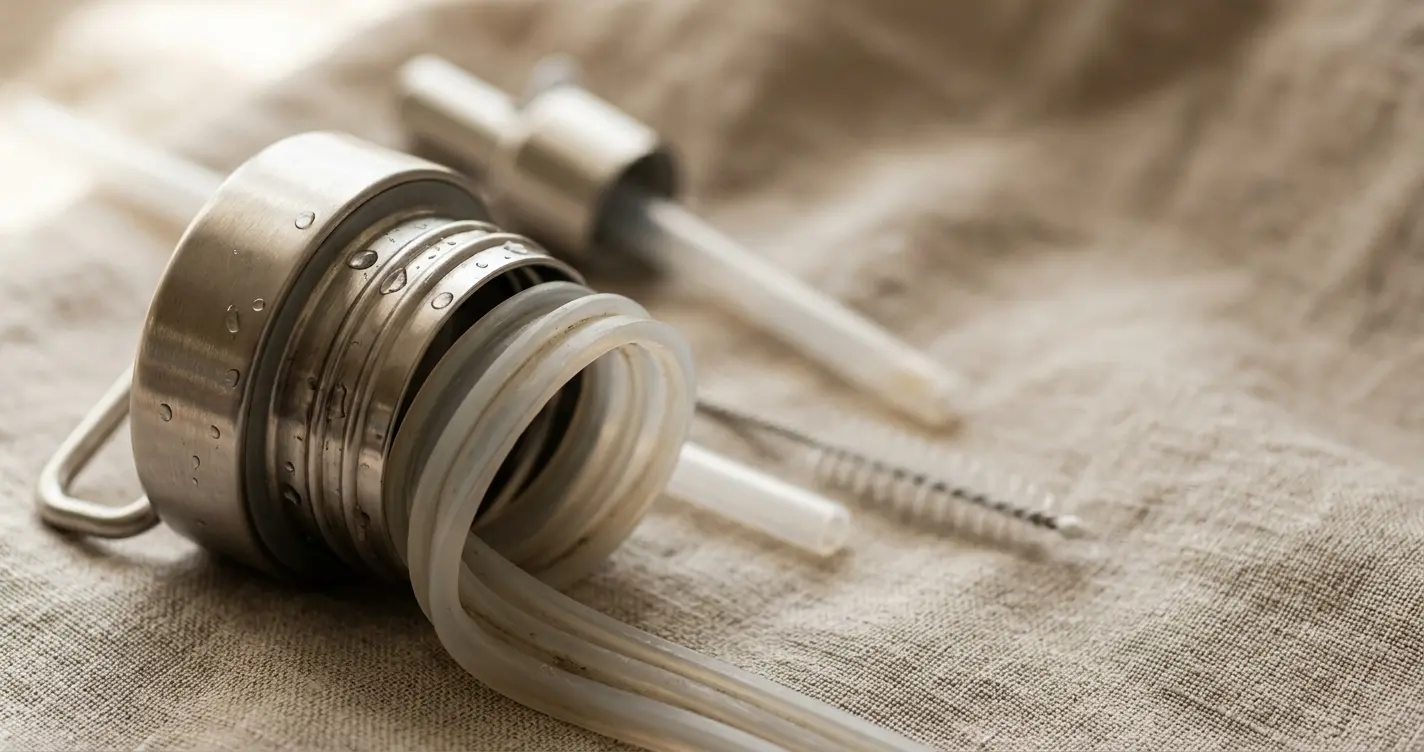
Even diligent cleaners miss things. The threads where the lid screws on, the rubber gasket that creates the seal, straw components, and the seam at the base of the bottle are notorious hiding spots.
You can scrub the main chamber all day, but if the gasket is harboring grime, the smell comes back. This is exactly the gap that cleaning tablets claim to fill: reaching the places a brush physically can't.
So, Do Water Bottle Cleaning Tablets Actually Work?
Short answer for the skimmers: yes, but with real limits. They're a legitimate tool, not a miracle.
Tablets are genuinely good at loosening light buildup and knocking out odor. What they can't reliably do is replace the mechanical action of scrubbing when things get seriously grimy. Understanding the difference is the whole game.
What's Inside the Tablet (And Why It Fizzes)
The fizz isn't just for show, though it does feel a bit magical. It's chemistry doing a specific job.
Effervescent Agents and Oxygen-Based Cleaners
Most tablets rely on a combination of sodium percarbonate, sodium bicarbonate (baking soda), and citric acid. When they hit water, citric acid and bicarbonate react to release carbon dioxide, which is the bubbling you see.
That agitation matters. The bubbles physically nudge at residue and help lift it off surfaces you can't reach with a brush. Meanwhile, sodium percarbonate breaks down into hydrogen peroxide and soda ash, releasing oxygen that helps break apart organic grime and neutralize odors.
So the effectiveness of a water bottle cleaning tablet comes from two things working together: chemical breakdown of gunk and the gentle scrubbing motion of the fizz.
Sanitizing vs. Cleaning: An Important Distinction
This trips people up constantly. Some products are marketed as water bottle sanitizing tablets, implying they kill germs. Others simply dissolve grime. These are not the same claim.
In regulatory terms, "sanitize" means reducing bacteria to a specific safe level, and products making that claim are held to a testing standard. "Clean" just means removing visible dirt and residue. A tablet that cleans beautifully may not be certified to sanitize, and that's worth knowing before you trust it to disinfect.
What They Do Well
Where tablets shine is convenience and odor control. Drop one in, walk away, come back to a bottle that smells fresh again. No elbow grease required.
They're especially handy for dissolving light film and reaching the threads, gaskets, and straw channels that brushes struggle with. For routine maintenance on a bottle that gets rinsed regularly, they do exactly what most people need.
Where They Fall Short
They won't fully dismantle thick, established biofilm on their own. If you've neglected a bottle for weeks and there's visible slime or a stubborn stain, a soak alone often isn't enough.
Gaskets and lids that are genuinely caked will still need physical attention. Think of tablets as maintenance, not rescue. Once things get bad, chemistry needs a scrubbing partner.
How to Clean a Water Bottle With Tablets the Right Way
Most people who say tablets "don't work" are using them wrong. Here's how to actually get results tonight.
The Basic Method
Fill the bottle with warm water, not boiling. Drop in one tablet and let it fizz. Warm water activates the ingredients faster and helps dissolve residue, but boiling water can be too aggressive for some formulations and risky for certain bottle materials.
Then wait. Give it the full soak time on the label, usually somewhere between 15 minutes and a few hours depending on the product. When it's done, rinse thoroughly with clean water until there's no taste or residue left.
Don't Forget the Lid and Straw
The lid is almost always the dirtiest part of the whole setup, and it's the part people skip. Disassemble everything, pop out the gasket if you can, and soak the components separately so the solution actually contacts them.
A straw is a sealed tube that stays wet inside for days. If you're not cleaning it, you're basically drinking through a bacteria sleeve. Break it down and soak it too.
Common Mistakes That Waste the Tablet
Cold water is the big one. It slows the reaction and leaves you underwhelmed. Cutting the soak time short is another, since the chemistry needs time to work through the grime.
Skipping the rinse leaves a chemical aftertaste that people then blame on the product. And expecting a single tablet to erase deep stainless steel odor from months of neglect is asking too much of a passive soak.
Tablets vs. The Alternatives
Tablets aren't the only option, and they're not always the best value. Here's how they stack up.
| Method | Best For | Weakness |
|---|---|---|
| Cleaning tablets | Odor, hard-to-reach spots, hands-off convenience | Thick biofilm, stubborn stains |
| Baking soda + vinegar | Cheap odor control | Messier, less agitation reach |
| Dish soap + brush | Physical grime removal | Can't reach narrow gaskets easily |
| Dishwasher | Dishwasher-safe plastics and some steel | Can damage insulation and coatings |
Baking Soda and Vinegar
The DIY classic. A spoon of baking soda, a splash of vinegar, and you've got a fizzing reaction not unlike the tablet, at a fraction of the price.
It handles odor well and it's already in your kitchen. Where it lags is convenience and reach. It's messier to deal with and doesn't come pre-portioned for a quick soak.
Dish Soap and a Bottle Brush
This is still the gold standard for physical removal. Nothing beats mechanical scrubbing for lifting established grime off a surface you can actually reach.
The honest way to think about tablets is as a supplement to this, not a replacement. Brush what you can reach, let the tablet handle what you can't.
Dishwashers
If your bottle is labeled dishwasher-safe, this is easy and effective. The problem is that many insulated bottles are not. High heat can compromise the vacuum seal between the walls, ruining the insulation, and it can degrade exterior coatings or paint.
Always check the manufacturer's guidance before tossing an insulated bottle in. A ruined vacuum seal is not something a tablet can fix.
Choosing Among the Best Water Bottle Cleaning Tablets
Ignore the brand hype and focus on what actually affects your results and your bottle's longevity.
What to Look For on the Label
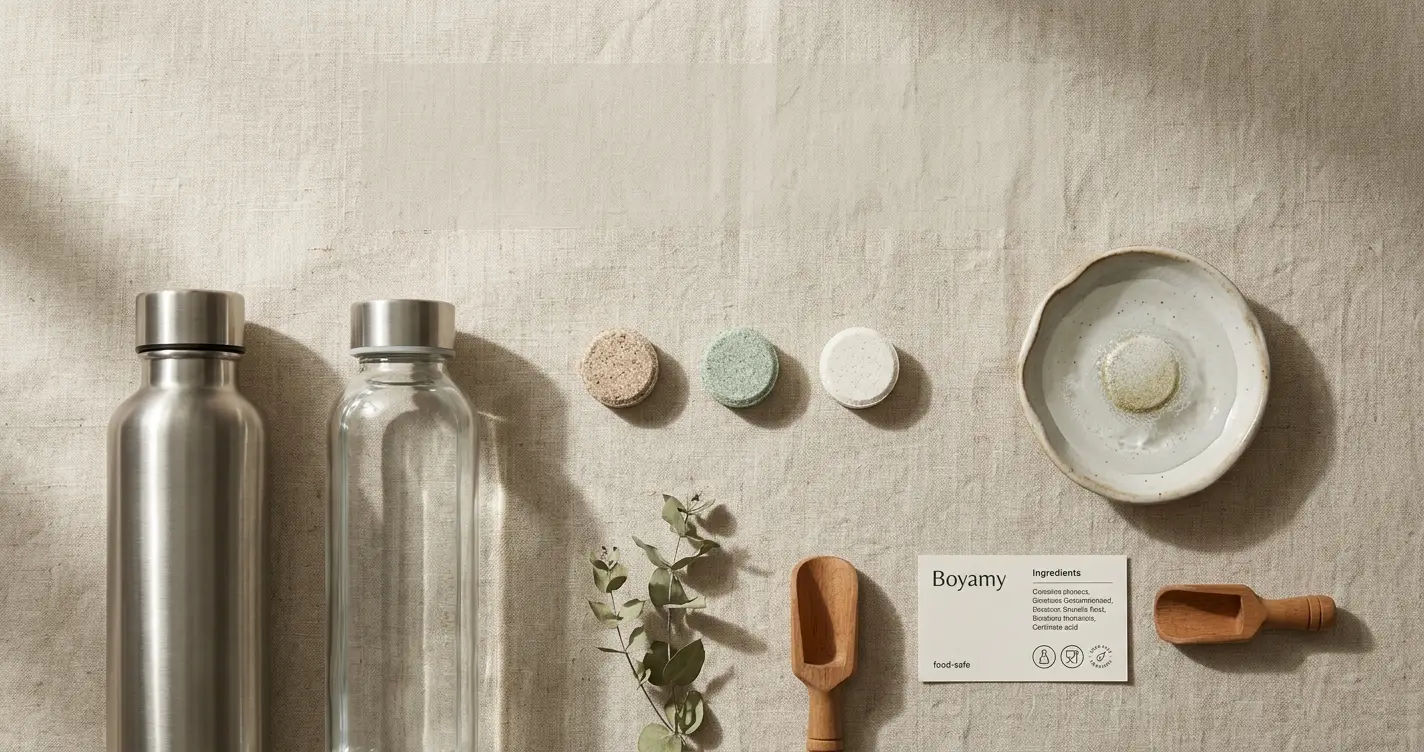
Prioritize ingredient transparency. A product that lists its active ingredients clearly is one you can actually evaluate. Look for food-safe certification if you want peace of mind about residue.
Fragrance-free options are worth considering if you're sensitive to lingering smells or tastes, and clear soak instructions save you from guessing. Vague labels are a small red flag.
Material Matters: Stainless Steel, Plastic, and Glass
Not every tablet plays nicely with every material. Some formulations are gentle enough for anything; others can dull or spot certain finishes over time.
If you're using hydro flask cleaning tablets or any product on an insulated steel bottle, cross-check it against the manufacturer's care guide. The goal is to avoid anything that could harm the insulated walls, interior lining, or exterior coating.
Cost Per Clean and Environmental Footprint
Do the math on cost per clean. A tin of tablets might run a modest amount, but compare that to baking soda and vinegar, which cost pennies per use.
Then there's packaging. Tablets come in tins, blister packs, or plastic tubs, and that waste adds up. For eco-conscious buyers, a refillable DIY approach may win on both cost and footprint, though it trades away the convenience.
What Users and Testers Are Reporting
Look across aggregated reviews and independent testing writeups and some clear patterns emerge, more useful than any single glowing testimonial.
The Recurring Praise
Two things come up again and again: convenience and odor elimination. People love that they can restore a fresh-smelling bottle without scrubbing, and the "no more funky smell" feedback is remarkably consistent.
The Recurring Complaints
The complaints cluster too. A residual taste shows up when people under-rinse, which is really a usage issue more than a product flaw.
The other frequent gripe is disappointment when someone expected a tablet to erase a set-in stain or thick buildup by itself. That mismatch between expectation and reality drives most of the negative reviews, and it points back to the same lesson: tablets maintain, they don't rescue.
The Bottom Line
Water bottle cleaning tablets work. They're a genuinely effective tool for routine maintenance, odor control, and reaching the spots a brush can't touch.
What they're not is a magic wand. Pair them with occasional manual cleaning, disassemble your lid and straw, use warm water, and rinse well. Do that, and the tablets earn their place. Expect them to single-handedly resurrect a neglected, slime-lined bottle, and you'll be let down.
Frequently Asked Questions
Q: Are water bottle cleaning tablets safe to use?
A: Generally, yes, when you choose a food-safe formulation and follow the directions. The most important step is a thorough rinse afterward, which removes any leftover cleaning agents. Under-rinsing is the main reason people report an unpleasant aftertaste.
Q: How often should I use them?
A: For plain water, a deeper clean once a week is a reasonable cadence, with rinsing in between. If you drink sugary beverages, coffee, or protein shakes, bump that up, since those leave residue that feeds bacteria faster. Daily-use bottles for anything but water benefit from more frequent attention.
Q: Can I use them in insulated bottles like Hydro Flask?
A: Usually yes, but use warm rather than boiling water and check the manufacturer's care guide first. The concern with insulated bottles isn't the tablet chemistry so much as heat and material compatibility. Extreme temperatures are what threaten the vacuum seal, not a gentle soak.
Q: Do the tablets kill bacteria or just clean?
A: It depends on the product. Ones marketed and certified as sanitizing tablets make a specific germ-reduction claim held to a testing standard. Many tablets simply clean, meaning they remove grime and odor without a verified kill claim. Read the label if disinfection matters to you.
Q: Can I just use denture tablets instead?
A: You can, and many people do, since denture tablets share ingredients like sodium bicarbonate and effervescent agents. The caveats are fragrances and additives designed for dental use rather than food-contact surfaces. If you go this route, rinse extremely well, and prefer a purpose-made bottle tablet when food-contact suitability matters.
Q: What's the fastest way to deep clean a really dirty bottle?
A: Combine methods. Fully disassemble the bottle, drop a tablet in warm water for a long soak, and while it works, hit the reachable surfaces and gaskets with a bottle brush and a little dish soap. The chemistry loosens what you can't reach while the brush handles what you can, and together they clear buildup a single approach would miss.