
A procurement-focused breakdown of leading Chinese soap factories — comparing minimum order quantities, OEM/ODM capability, certifications, and customization depth — so you can shortlist the right supplier faster and skip the trial-and-error phase that eats up a launch budget.
Introduction: Who This Guide Is For
You've found a soap you love on a trade site, the price looks great, and then the first message back reads: "MOQ 20,000 pieces, lead time 45 days, no custom mold." That's the moment most first-time buyers realize sourcing soap from China is easy — but sourcing the right factory is a different sport entirely.
Mismatched MOQs, missing certifications, and vague lead times are what quietly kill product launches. A supplier can make beautiful bars and still be wrong for your business if their minimums don't fit your cash flow or their paperwork won't clear your customs.
This guide is written for the people actually placing the order: importers, private-label brand owners, Amazon and DTC sellers, regional distributors, and hotel-amenity buyers. If you're weighing a shortlist right now, this is meant to save you a few weeks of back-and-forth.
What you'll get here: honest strengths and limitations for each manufacturer, a fast comparison table, and a practical framework for verifying MOQ, certificates, and OEM-versus-ODM scope before you commit. No vendor puffery — the goal is to help you avoid the expensive mistakes, not to sell you on one name.
How China's Soap Manufacturing Landscape Looks for Buyers Today
Most of China's export-grade soap production sits in a handful of clusters. Guangdong — specifically Guangzhou, Foshan, and Huizhou — dominates cosmetic-grade, handmade, and natural soap. Jiangsu, and Yangzhou in particular, is the historic heart of hotel-amenity soap. Knowing which cluster a factory sits in tells you a lot before you even read the spec sheet.
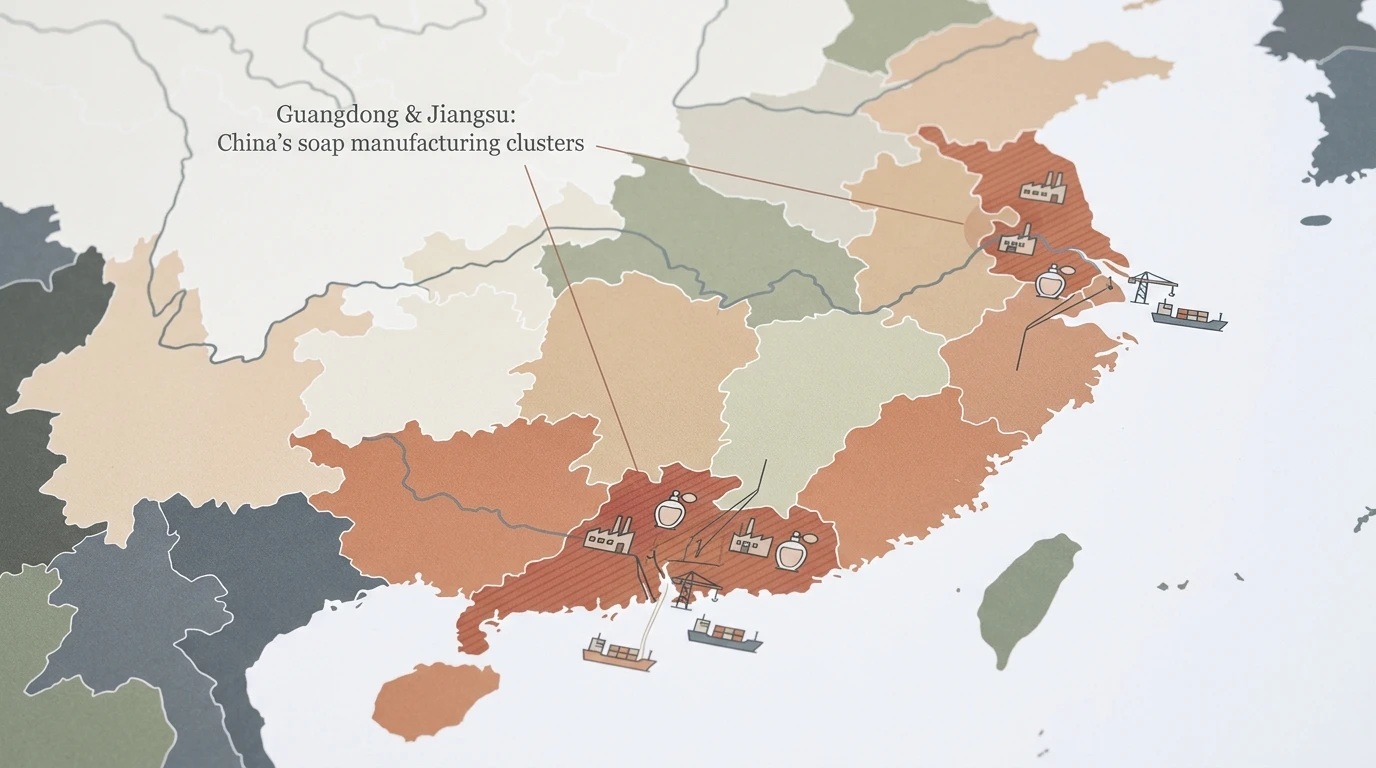
The market splits into fairly distinct segments, and each carries its own MOQ and pricing logic:
- Hotel amenity soap — small bars, high volume, low unit price, packaging-driven. Minimums are usually large.
- Handmade / artisan soap — cold-process or melt-and-pour, low-to-mid volume, higher margin, strong customization.
- Natural & herbal soap — clean-label formulas, botanical actives, premium positioning, tighter compliance requirements.
- Mass-market bar soap — commodity-style production, price-sensitive, container-scale ordering.
Cluster location isn't a trivia point — it directly affects your sampling speed and your freight. When your supplier sits near a mold maker, a fragrance house, and a packaging printer, sample rounds move faster. When they're near a major port, you consolidate freight more cheaply.
On the demand side, the clearest shift over the past couple of years has been steady growth in private-label natural and organic bars, plus cleaner-label formulations — palm-free, vegan, sulfate-free claims are showing up in more RFQs than they used to【数据待核实】. Buyers who plan for those claims early tend to avoid reformulation costs later.
Our Ranking Criteria: How We Evaluated Each Manufacturer
Rankings that only list "top factories" without saying why aren't much use to a buyer. Here's exactly what we weighed:
- MOQ — from startup-friendly small runs to bulk-only operations that won't quote below a container.
- OEM / ODM capability — can they run your formula (OEM), or develop one from scratch (ODM)? Most buyers assume both; not every factory does both well.
- Certifications — GMPC, ISO 9001 and ISO 22716, MSDS/SDS documentation, third-party SGS or SMETA reports, and FDA registration where the destination requires it.
- Customization — formula, fragrance, shape and mold, packaging, and labeling depth.
- Production capacity & lead time — realistic sampling turnaround and mass-production windows.
- Export experience — which markets they actually ship to (US, EU, Middle East, Africa) and whether their paperwork holds up.
A note on honesty: where a specific figure couldn't be independently confirmed, I've kept it qualitative and flagged where you should verify directly. Treat every MOQ and certification below as a starting point for your own due diligence, not gospel — factories update capabilities constantly.
Quick Comparison Table: Top 10 China Soap Manufacturers at a Glance
| Company | Location | Specialty | Typical MOQ | OEM/ODM | Key Certifications | Best For |
|---|---|---|---|---|---|---|
| Boymay | Guangdong | Bath sponges, shower gel, private-label & natural bar soap | 1,000 | Both | GMP, ISO, FDA, SMETA | Startups, DTC/Amazon, premium private label |
| Zhejiang Jifu Daily Chemical | Zhejiang | Daily-chemical & soap production | Mid–high | OEM-focused | ISO (verify) | Mid-volume commodity buyers |
| Yangzhou Aplus Amenities Int'l | Yangzhou, Jiangsu | Hotel amenity soap | High | OEM | ISO, hospitality standards (verify) | Hotel & amenity distributors |
| Yangzhou Huaxing Cosmetic & Hotel Supply | Yangzhou, Jiangsu | Hotel & cosmetic supply | High | OEM | ISO (verify) | Hospitality bulk buyers |
| Guangzhou Lichen Cosmetics | Guangzhou, Guangdong | Natural / cosmetic soap | Mid | Both | GMPC, ISO 22716 (verify) | Natural & herbal private label |
| Jiangsu SOHO International Group | Jiangsu | Trading & manufacturing group | Very high | OEM / trade | Varies by factory | Large-volume importers |
| LMZ Hotel Amenities | China (verify) | Hotel amenity soap | High | OEM | ISO (verify) | Budget bulk hotel orders |
| Guangzhou Yilin Cosmetics | Guangzhou, Guangdong | Handmade / cosmetic soap | Mid | Both | GMPC (verify) | Cosmetic private label |
| STPP Group | China (verify) | Detergent & soap base | Very high | OEM / raw material | ISO (verify) | Base buyers & bulk commodity |
| Shenzhen Bubble Beauty Factory | Shenzhen, Guangdong | Handmade / artisan soap | Low–mid | Both | Verify | Boutique small-batch brands |
MOQ and certification data above should be confirmed directly with each supplier — factories adjust minimums by season, formula, and packaging complexity.
Top 10 Soap Manufacturers in China (Detailed Analysis)
Each profile below follows the same structure so you can compare like with like: company info, main products, MOQ, customization, certifications, strengths, limitations, and best-fit buyer. Only real, verifiable company names are used.
1. Boymay (Guangdong Boymay Cosmetics Co., Ltd.)
Company info: Operating since 1995, Boymay runs a 40,000-square-meter facility with 16 automated production lines and more than 200 staff. The company built its name on OEM/ODM manufacturing of bath sponges, shower gels, and personal care products, and extends the same design-to-export model into private-label and natural bar soap.
Main products: Bath sponges, shower gel, body wash, and custom private-label bar and handmade-style soap.
MOQ: 1,000 units — one of the lowest genuine minimums among established factories in this list, which is what makes it approachable for new brands.
Customization: High. Formula development (including vegan, cruelty-free formulations), custom molds, fragrance, appearance, packaging, and labeling. Custom samples typically run 7–14 days depending on complexity; bulk production is 25–30 days.
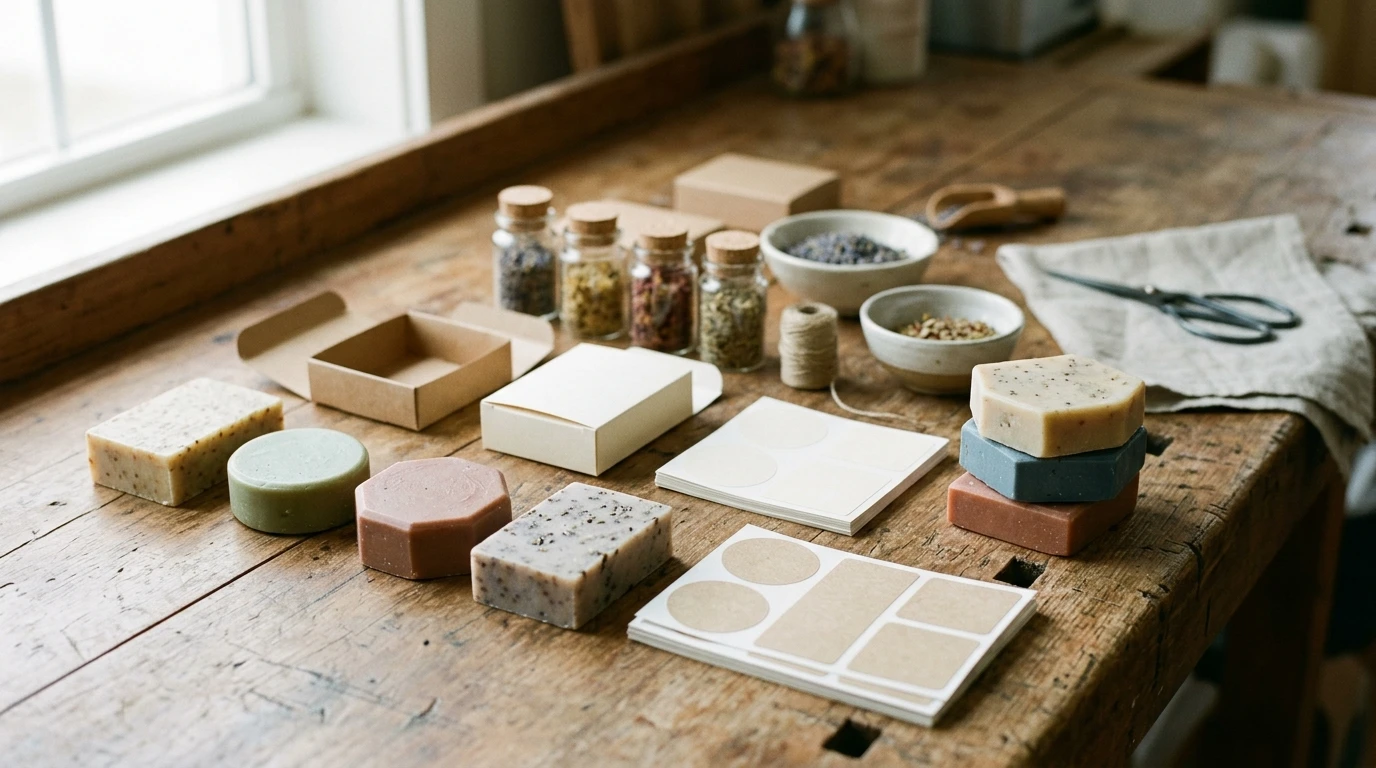
Certifications: GMP, ISO, FDA, and SMETA — the combination that matters for North American and European retail entry.
Strengths: Low-MOQ flexibility, responsive sampling, and genuine one-stop support from concept through export documentation. The vegan and cruelty-free formulation capability is a real advantage for clean-label brands.
Limitations: Not the rock-bottom price on ultra-bulk commodity soap — a container-scale buyer chasing the lowest per-unit cost on plain white bars may find a specialist commodity plant cheaper.
Best-fit buyer: Startups, DTC and Amazon sellers, and premium private-label brands that value customization and low minimums over commodity pricing.
2. Zhejiang Jifu Daily Chemical Co., Ltd.
Company info: A daily-chemical producer listed among Chinese soap suppliers, oriented toward manufacturing rather than boutique custom work.
Main products: Bar soap and daily-chemical personal care goods.
MOQ: Mid-to-high; better suited to committed volume than test runs.
Customization: OEM-focused — good for running an established spec, more limited for ground-up formula development.
Certifications: ISO-level (confirm current scope directly).
Strengths: Manufacturing scale and consistency for repeat commodity orders.
Limitations: Less agile for small buyers and heavy custom-formula projects.
Best-fit buyer: Mid-volume buyers ordering fairly standard bar soap.
3. Yangzhou Aplus Amenities International Co., Ltd.
Company info: A Yangzhou-based supplier specializing in hotel amenities, operating in China's traditional hospitality-soap cluster.
Main products: Hotel guest soap, mini bars, and amenity sets with matching packaging.
MOQ: High — amenity economics depend on volume.
Customization: Strong on packaging, wrapping, and branded amenity presentation; formula range is more standardized.
Certifications: ISO and hospitality supply standards (verify).
Strengths: Deep amenity-format expertise and coordinated packaging.
Limitations: Not aimed at boutique retail bars or small custom runs.
Best-fit buyer: Hotel groups and amenity distributors.
4. Yangzhou Huaxing Cosmetic & Hotel Supply Co., Ltd.
Company info: Another Yangzhou hotel-and-cosmetic supplier serving hospitality procurement channels.
Main products: Hotel soap, amenity kits, and cosmetic personal care supply.
MOQ: High, in line with the amenity segment.
Customization: Packaging and set configuration; formula customization is moderate.
Certifications: ISO (verify current certificates).
Strengths: Broad amenity catalog and hospitality-channel familiarity.
Limitations: Retail-shelf branding depth is weaker than dedicated cosmetic OEMs.
Best-fit buyer: Hospitality bulk buyers wanting a one-stop amenity source.
5. Guangzhou Lichen Cosmetics Co., Ltd.
Company info: A Guangzhou cosmetics manufacturer active in natural and cosmetic-grade soap OEM.
Main products: Natural and herbal soap, cosmetic bars.
MOQ: Mid-range.
Customization: Both OEM and ODM, with genuine formula development for botanical bars.
Certifications: GMPC and ISO 22716 (confirm scope).
Strengths: Natural-formula know-how and cosmetic compliance orientation.
Limitations: Not a commodity-price leader for plain bulk soap.
Best-fit buyer: Natural and herbal private-label brands.
6. Jiangsu SOHO International Group
Company info: A large trading and manufacturing group with broad export reach across product categories.
Main products: Soap and personal care among a wide industrial and consumer portfolio.
MOQ: Very high — this is a scale player.
Customization: OEM and trade-managed; deep custom formula work depends on which partner factory handles your order.
Certifications: Vary by manufacturing partner — ask which factory is producing.
Strengths: Capacity, export infrastructure, and multi-container reliability.
Limitations: Limited agility and hand-holding for small buyers; you're one of many accounts.
Best-fit buyer: Large-volume importers with defined specs.
7. LMZ (Hotel Amenities Soap Manufacturer)
Company info: Described as one of the larger hotel-soap suppliers in China, positioned on low-price bulk hotel amenities.
Main products: Hotel guest soap and low-cost amenity products.
MOQ: High — priced around volume.
Customization: Packaging and wrapping; formula options are standardized.
Certifications: ISO (verify).
Strengths: Competitive bulk pricing for amenity formats.
Limitations: Budget positioning means less emphasis on premium finishes and boutique formulas.
Best-fit buyer: Budget-driven bulk hotel orders.
8. Guangzhou Yilin Cosmetics Co., Ltd.
Company info: A Guangzhou cosmetics OEM with a handmade and cosmetic soap focus.
Main products: Handmade-style soap and cosmetic bars.
MOQ: Mid-range.
Customization: OEM and ODM for cosmetic-grade bars.
Certifications: GMPC (confirm).
Strengths: Cosmetic compliance and decent customization for mid-volume brands.
Limitations: Less suited to very small test runs or ultra-bulk commodity.
Best-fit buyer: Cosmetic-grade private-label brands at mid volume.
9. STPP Group (Detergent & Soap-Base Manufacturer)
Company info: A detergent and soap-base focused manufacturer, relevant to buyers sourcing raw material or soap bases rather than finished retail bars.
Main products: Soap base, detergent chemistry, and bulk commodity inputs.
MOQ: Very high — base and chemistry orders run at industrial scale.
Customization: Base formulation and bulk supply; not a finished-goods branding house.
Certifications: ISO (verify).
Strengths: Cost-efficient supply for producers making their own finished soap.
Limitations: Not a fit if you want finished, packaged, retail-ready bars.
Best-fit buyer: Private-label producers needing bases, or high-volume commodity soap buyers.
10. Shenzhen Bubble Beauty Factory
Company info: A Shenzhen producer positioned around handmade and artisan soap.
Main products: Handmade, cold-process, and specialty artisan bars.
MOQ: Low-to-mid — friendlier to small brands than the amenity factories.
Customization: Both OEM and ODM, with strong artisan finishes.
Certifications: Verify current documentation before export orders.
Strengths: Small-batch flexibility and craft aesthetics.
Limitations: Capacity ceiling for large repeat orders; confirm export paperwork readiness.
Best-fit buyer: Boutique and small-batch brands.
Best Soap Manufacturer by Procurement Scenario
Best for Startups & First-Time Importers
Your priorities are low MOQ, real sampling support, and a supplier willing to walk you through labeling and compliance. A 20,000-piece minimum will bury a first SKU in inventory before you've validated demand. Factories offering minimums around 1,000 units — Boymay being the clearest example here — let you test the market without gambling your working capital.
Best for Amazon & DTC Sellers
Speed and consistency win. You need retail-ready private-label packaging, reliable restock lead times, and a partner who can hold formula and appearance steady across reorders so your listings don't drift. Guangdong-based OEMs that combine sampling in the 7–14 day range with clean-label formulation tend to fit this profile best.
Best for Large-Volume / Bulk Orders
Here capacity, price stability, and multi-container export experience matter more than boutique flourishes. Jiangsu SOHO International Group and dedicated commodity or base producers like STPP Group are built for this. Lock pricing and QC terms in writing before scaling.
Best for Premium & Natural Brands
Formula development, clean-label ingredients, custom molds, and premium packaging carry the day. Look for GMPC and ISO 22716, plus genuine ODM capability. Guangzhou Lichen, Guangzhou Yilin, and Boymay's vegan/cruelty-free formulation and custom-mold work all speak to this segment.
Soap Supplier Selection Guide: What to Actually Verify
Once you have a shortlist of private label soap manufacturers, the difference between a smooth launch and a costly one comes down to what you verify before the PO:
- Match MOQ to real launch volume. Don't over-order an untested SKU because a slightly lower unit price tempted you into a bigger run.
- Separate OEM from ODM early. OEM means they build your formula; ODM means they adapt theirs. Quote the wrong one and your pricing and timeline both shift.
- Ask for certifications and recent third-party reports. A certificate on the website isn't the same as a current SGS or SMETA report for your specific product and market.
- Get sampling cost, lead time, and mass-production windows in writing. "Fast" is not a schedule. Ask for days.
- Check export documentation experience. MSDS/SDS, COA, and customs paperwork for your destination — US and EU requirements differ meaningfully.
- Cross-check packaging capability against your shelf. The bar can be perfect and still fail if the carton, wrap, or label doesn't meet retail spec.
Do this once, thoroughly, and you'll filter out most of the bulk soap factories in China that look right on paper but won't actually serve your channel.
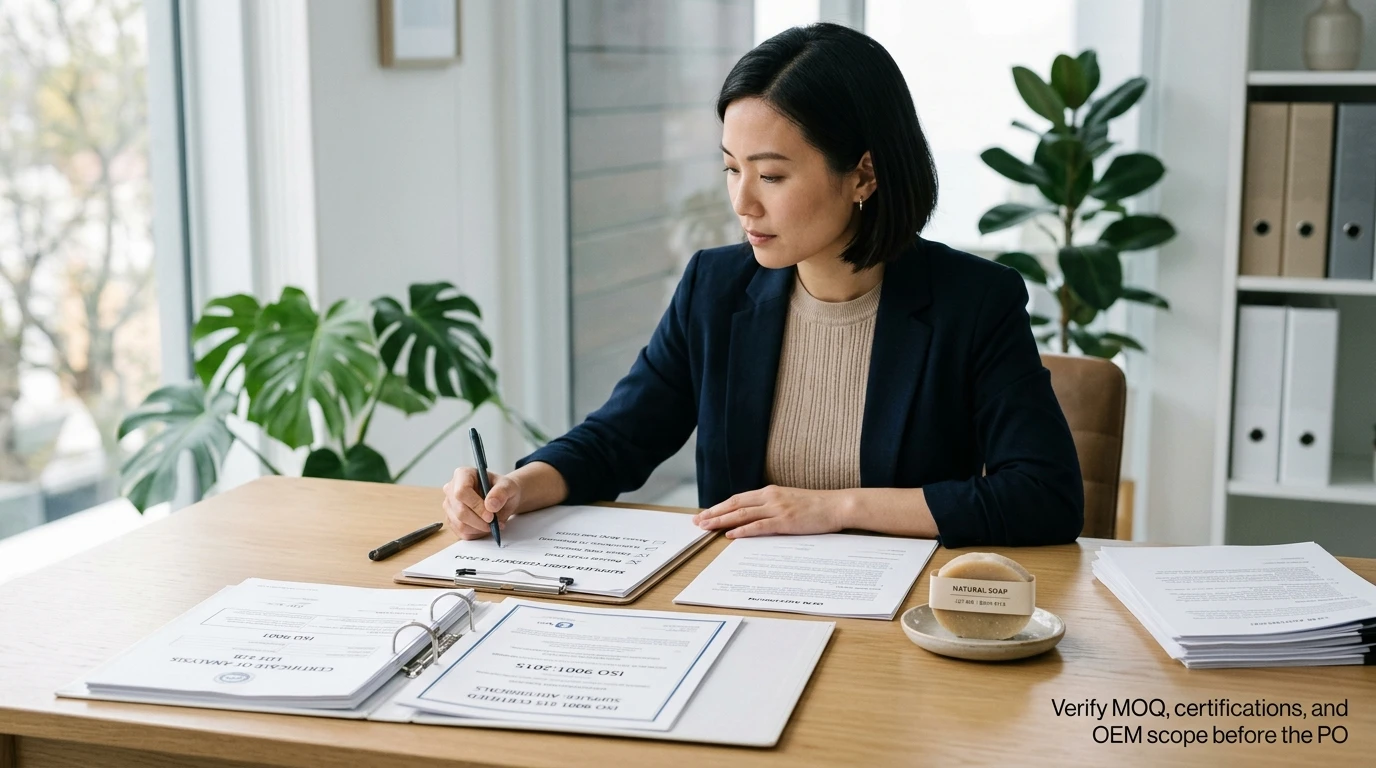
Get Your MOQ & Quote: Next Steps
The right supplier isn't the one with the lowest headline price — it's the one whose MOQ, formula capability, and target-market experience actually match what you're launching. A boutique brand and a hotel chain should almost never end up at the same factory.
If you're building a private-label or natural line and want a partner that combines a low 1,000-unit minimum, GMP/ISO/FDA/SMETA certification, vegan and cruelty-free formulation, custom molds, and design-to-export support under one roof, Boymay is worth a direct conversation. It's the flexible end of the spectrum — built for buyers who need customization without commodity-scale minimums.
To get a tailored MOQ and quote, send three things: your target quantity, your packaging preference, and your destination market. With those, you'll get a realistic minimum, a lead-time estimate, and a costing you can actually plan a launch around — instead of another vague "contact us for details."
Frequently Asked Questions
Q: What is the typical MOQ for soap manufacturers in China?
A: It varies widely by soap type. Handmade and artisan runs can start low — sometimes in the low thousands or even hundreds at small workshops — while hotel-amenity and commodity bar factories often require tens of thousands. Established custom OEM/ODM producers like Boymay offer minimums around 1,000 units, which sits at the accessible end for a factory with full certification and export support.
Q: How long is the lead time for custom soap production?
A: Expect two stages. Custom samples usually take 7–14 days depending on formula, fragrance, appearance, and packaging complexity. Bulk production then runs roughly 25–30 days after sample approval. Timelines stretch when you add new molds, complex packaging, or ingredient sourcing, so build buffer into your launch calendar.
Q: Can I get a sample before placing a bulk order?
A: Yes — and you should. Reputable custom soap manufacturing companies in China provide paid samples so you can approve formula, scent, appearance, and packaging before committing. Sample fees are common and are often credited back against your first bulk order once you proceed.
Q: Which certifications should I require from a Chinese soap supplier?
A: At minimum, look for GMPC and ISO 22716 for cosmetic-grade production, plus MSDS/SDS for shipping and compliance. For the US market, FDA registration matters; for the EU, confirm cosmetic regulation compliance and proper labeling. SMETA is a plus if your retail buyers care about ethical-audit standards. Always request current documents, not just claims.
Q: What's the difference between OEM and ODM soap manufacturing?
A: OEM (Original Equipment Manufacturing) means the factory produces soap to your formula and specification — you own the recipe. ODM (Original Design Manufacturing) means you select or adapt the factory's existing formula and design. OEM suits brands with a proprietary formula; ODM is faster and cheaper for private-label buyers who want a proven product with their own branding.
Q: Can factories handle custom shapes, fragrances, and packaging?
A: Many can, but depth differs. Full-service OEM producers handle custom molds, bespoke fragrances, vegan and cruelty-free formulations, and retail-ready packaging in-house. Commodity and amenity plants usually offer packaging customization but limited formula flexibility. Confirm mold tooling costs and fragrance sourcing up front, since these are where "custom" quietly gets expensive.