
This guide breaks down what's driving the category, what actually separates a good bar from a mediocre one, where most current suppliers are falling short, and what to look for in a manufacturing partner if you're building or scaling a brand.
The Goat Milk Soap Market Is Booming: Why Buyers Are Paying Attention
Ten years ago, goat milk soap lived in farmer's markets and Etsy shops. It was handmade, inconsistent, and mostly bought by people who already knew what they were looking for. That's changed. The category has crossed into mainstream retail, and demand isn't slowing.
Market Size and Growth Trajectory
The broader natural soap market has doubled in under five years, and goat milk specifically is taking a larger slice of that pie each year. Search volume, retailer shelf allocation, and DTC brand launches all point the same direction.
| Metric | 2022 | 2025 | 2026 (Projected) |
|---|---|---|---|
| Global Natural Soap Market (USD Billion) | 3.8 | 5.4 | 6.1 |
| Goat Milk Soap Share of Natural Category | ~9% | ~14% | ~16% |
| CAGR (Goat Milk Soap Segment) | — | 8.7% | 9.1% |
| Amazon "goat milk soap" avg. monthly searches (US) | 74K | 121K | 135K+ |
Why Consumers Are Switching
Three forces are stacking on top of each other. First, sensitive skin diagnoses keep climbing. The American Academy of Dermatology has flagged eczema and dermatitis as increasingly common presenting conditions in adults, not just children. Buyers are actively reading ingredient decks now.
Second, the clean-label movement has matured beyond "no parabens." Shoppers want short, recognizable ingredient lists, and animal-based skincare, everything from tallow balms to raw dairy soaps, has ridden that wave onto social feeds.
Third, the pricing math works for everyone. A bar that costs $1.40 to produce can retail at $8 to $12. Few personal care categories offer that kind of margin structure without regulatory headaches.
The Retail Opportunity for SMBs and Private Label Brands
Gross margins between 40 and 70 percent are common for well-positioned goat milk soap SKUs. Etsy sellers pushing artisan lines, Amazon FBA operators bundling gift sets, and boutique retailers looking for high-turn, low-return products are all buying in. The barrier is no longer demand. It's finding a manufacturer that can produce at retail-grade consistency without forcing you to commit to a container-load of inventory.
What Actually Makes a Goat Milk Soap "The Best"? 7 Non-Negotiable Criteria
Marketing language on the outside of a wrapper doesn't tell you much. Here's what buyers with any experience actually evaluate.
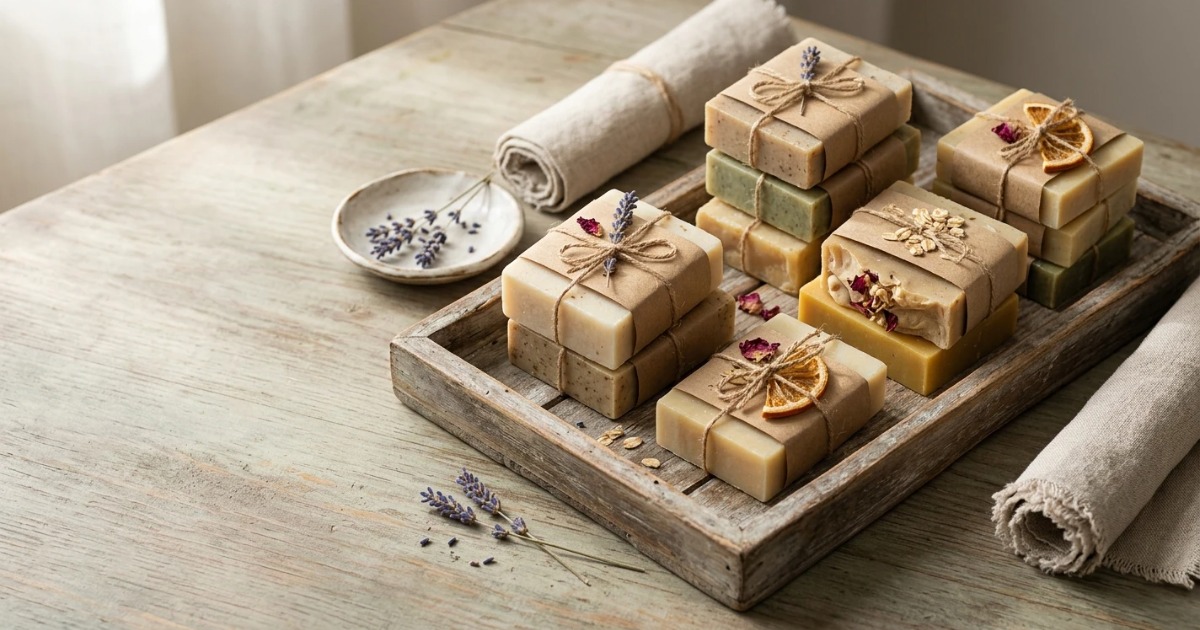
1. Real Goat Milk Content, Not Just Marketing Claims
A quality bar contains 15 to 25 percent fresh goat milk by weight. Plenty of mass-produced options use reconstituted powder, and some contain trace amounts purely for the label callout. If a supplier can't tell you the milk-to-oil ratio in their recipe, that's your answer.
2. Cold Process vs. Melt-and-Pour Base
Cold process saponification preserves caprylic acid, vitamin A, and lactic acid, the compounds that make goat milk clinically useful for skin. Melt-and-pour bars use a pre-made glycerin base with a dash of milk stirred in. Both have their place, but only one delivers the actual benefits customers are paying for.
3. Superfat Percentage and Moisturizing Profile
Superfat refers to the excess oils left un-saponified in the final bar. A 5 to 8 percent superfat range hits the sweet spot: moisturizing enough for sensitive skin, dry enough to avoid the greasy, dissolving-in-the-shower problem that plagues cheaper handmade bars.
4. Clean Ingredient Deck
No SLS, no parabens, no synthetic dyes, no phthalates. What should be present: olive oil for gentleness, coconut oil for lather, shea and cocoa butter for conditioning. Anything beyond that should serve a documented purpose.
5. pH Balance
Properly cured cold process goat milk soap lands between pH 8.5 and 9.5. Higher than that, and you're stripping the skin barrier. Lower than that on a true soap is usually impossible without adulterating the chemistry.
6. Cure Time
Four to six weeks minimum. Cure time hardens the bar, mellows the pH, and lets residual water evaporate. Bars sold at three weeks feel soft, dissolve fast, and get flagged in reviews.
7. Certifications and Compliance
GMP, ISO, FDA facility registration, and SMETA audits form the baseline that major retailers and export markets require. Without these, you're limited to farmer's markets and small e-commerce channels.
The Top 7 Best Goat Milk Soap Formulations on the Market
Whether you're benchmarking existing products or planning a private label lineup, these are the formulations moving the most volume right now.
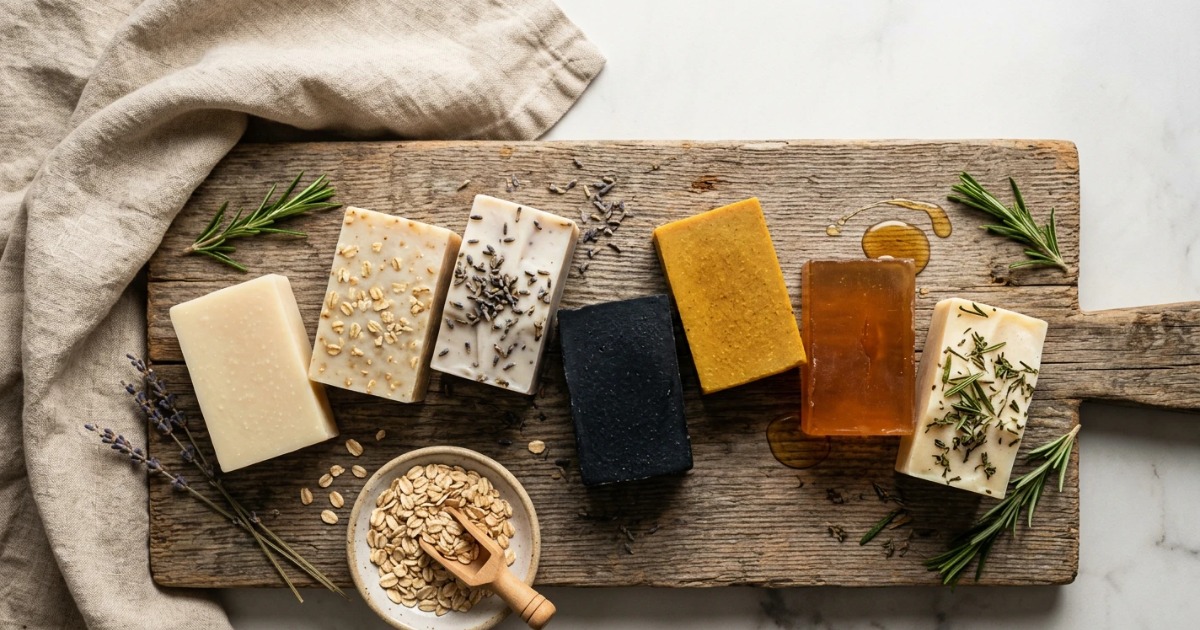
1. Raw Unscented Goat Milk Bar Soap
The starting SKU for almost every serious brand. Works for sensitive skin, eczema, and baby-friendly positioning. Typical formulation: raw goat milk, olive oil, coconut oil, shea butter, sodium hydroxide. No fragrance, no color, no complications.
2. Oatmeal and Honey Goat Milk Soap
The workhorse. Consistently a top seller on Amazon and Etsy. Colloidal oatmeal handles itch relief, honey adds mild antibacterial properties, and the visual of oat flecks in the bar reads as "wholesome" to shoppers.
3. Lavender Goat Milk Soap
Strong in spa retail and gift assortments. Real essential oil, not synthetic fragrance, is what makes it worth the premium.
4. Activated Charcoal Goat Milk Soap
The men's grooming and acne category driver. The dark bar photographs well, and the positioning around detoxifying and oil control resonates with a specific buyer.
5. Turmeric and Goat Milk Soap
Fast-growing in the brightening segment, particularly across South Asian, African, and Latin diaspora markets. Buyers looking for hyperpigmentation solutions drive repeat purchases here.
6. Manuka Honey Goat Milk Soap
Premium tier. Retails between $12 and $18. The ingredient cost is real, and the positioning holds up in luxury and gifting channels.
7. Organic Goat Milk Soap with Essential Oils
Certified organic ingredients unlock 30 to 45 percent higher pricing. The clean-beauty buyer will pay it, provided the certification is verifiable.
Where Today's Goat Milk Soap Market Falls Short
The category is growing, but growth attracts opportunists. Here's where most existing suppliers and finished products are underdelivering, and why that gap is where sharper competitors are winning shelf space.
Diluted or Powdered Milk Substitutes
Some of the most widely distributed bars contain less than 5 percent actual goat milk. Reconstituted powder is cheaper and easier to work with at scale, but it hollows out the value proposition. Regulators haven't caught up on percentage disclosure, so brands hide behind vague label copy.
Inconsistent Batch Quality
Small artisan makers struggle with color drift, scent fade, and hardness variation from one batch to the next. When a retailer stocks 500 bars and 40 of them look darker than the rest, returns and complaints follow. Consistency isn't glamorous, but it's what keeps a brand on shelves.
Poor Shelf Stability
Improper antioxidant systems and low-quality oils cause rancidity. The industry calls the visible symptom "dreaded orange spots," or DOS. A bar that develops DOS at month eight is unsellable, and if it's on your customer's shelf, it's your problem.
Weak Regulatory Documentation
Missing MSDS sheets, incomplete INCI declarations, no allergen statements, no stability testing. These gaps block entry into major retail chains, Amazon's stricter beauty listings, and every serious export market. Any manufacturer that can't produce this paperwork on request isn't ready for real retail.
Limited Packaging and Customization
Custom molds, embossed logos, branded cartons, shrink bands, ingredient inserts. Small suppliers usually can't offer any of it at accessible MOQs, forcing brands to either accept generic packaging or commit to volumes they can't move.
Sustainability Gaps
Plastic overwrap, non-recyclable labels, unverified "eco" claims. Eco-conscious end consumers are increasingly skeptical, and greenwashing is now a reputational risk, not just an ethical one.
Boymay: Manufacturing Goat Milk Soap to the Highest Market Specifications
The gaps above are exactly where our production model was built to compete.
30+ Years of OEM/ODM Expertise Since 1995
Boymay has been formulating and manufacturing bath bombs, shower steamers, and personal care products for global brands since 1995. That saponification, emulsification, and cold-process experience translates directly to premium goat milk soap production, not as a new category we're learning, but as an extension of what we've done for three decades.
Full-Scale Manufacturing Infrastructure
A 40,000㎡ facility with 16 automated production lines. This is what allows us to hold artisan-grade quality while producing at the volumes serious retailers demand. Consistency at scale is a manufacturing engineering problem, and we've solved it.
Certifications That Open Retail Doors
GMP, ISO, FDA, and SMETA. Every one of these is a checkbox that major global retailers, big-box buyers, and Amazon compliance reviewers actively verify before onboarding a supplier or a private label brand's product.
Formulation Flexibility
Custom recipes, superfat adjustments, essential oil blends, organic ingredient sourcing, and specialty additions like manuka honey or turmeric are all handled in-house. No middlemen, no outsourced steps.
Low MOQ of 1,000 Units
1,000 units per SKU is the accessible entry point for new brands and small retailers. It's low enough to test the market without warehouse pain, and high enough to justify certified production and full documentation.
Full Compliance and Documentation Package
Complete INCI lists, safety data sheets, stability testing summaries, allergen declarations, and export documentation come standard. If your target market is FDA, EU CPNP, or UK SCPN, we ship you the paperwork that clears it.
Boymay vs. Typical Market Suppliers
| Criteria | Typical Small Supplier | Typical Mass Producer | Boymay |
|---|---|---|---|
| MOQ | 500 (inconsistent) | 10,000+ | 1,000 |
| Certifications | Often none | Partial | GMP + ISO + FDA + SMETA |
| Custom Formulation | Limited | Rigid | Full ODM |
| Facility Size | Home/small workshop | Large but unspecialized | 40,000㎡ specialized |
| Documentation | Incomplete | Standardized only | Full export-ready |
| Years in Business | 1–10 | Varies | 30+ (Since 1995) |
How to Choose the Right Goat Milk Soap Supplier for Your Brand
A practical checklist worth running through before you sign a purchase order.
Verify Certifications Before Sampling
Ask for copies of the actual certificates, not just logos on a PDF. Then confirm them with the issuing bodies. Legitimate suppliers expect this and won't push back.
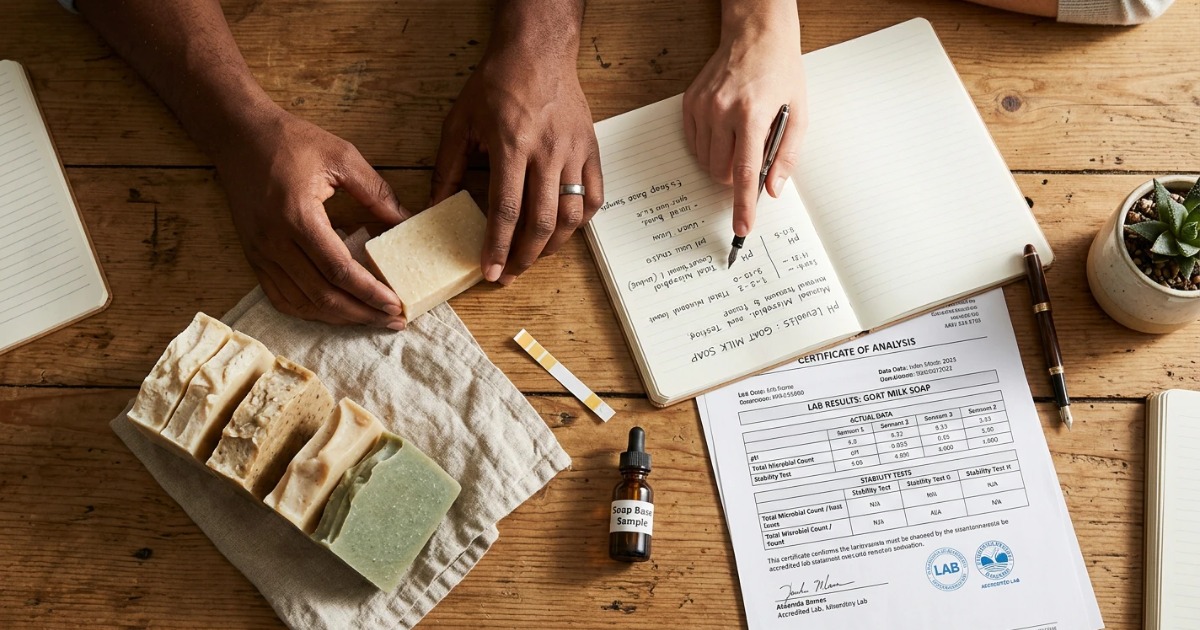
Request Third-Party Lab Testing
Microbial counts, pH readings, and stability testing from an accredited lab. If a supplier can only produce their own internal data, that's a signal to keep looking.
Evaluate Samples Across 4 to 6 Weeks
Don't judge a bar on day one. Test hardness, lather, scent retention, and skin feel over a full month. This is where poor formulations show themselves.
Confirm Packaging and Labeling Capabilities
Your target market's regulatory labeling matters. FDA cosmetic labeling, EU CPNP notification, UK SCPN registration. Different requirements, different formatting. Your supplier should know which applies to you.
Assess Communication and Lead Time Reliability
A responsive partner who hits stated timelines is worth more than one who's ten percent cheaper and drops off email for a week. Ask for references. Talk to their existing clients.
Ready to Launch or Scale Your Goat Milk Soap Line?
If you're sourcing a goat milk soap supplier that can meet the highest market specifications, deliver the compliance paperwork that unlocks major retail channels, and support you at a workable 1,000-unit MOQ, Boymay was built for exactly this. Three decades of manufacturing depth, a purpose-built 40,000㎡ facility, and the certification stack that serious buyers require.
Get in touch. Send us your brand brief, your target formulation, or just a few questions. We'll come back with sample options, a formulation consultation, and a quote that reflects your actual production goals, not a generic price sheet. Bring the brand vision. We'll handle the manufacturing complexity from raw material to retail-ready bar.
FAQ
Q: Is goat milk soap really better than regular soap for sensitive skin?
A: Yes, when it's formulated correctly. The lactic acid, medium-chain fatty acids, and naturally lower pH make it gentler than most synthetic detergent bars, and it's particularly well-tolerated by eczema and dry-skin sufferers. The keyword is "formulated correctly," a poorly made goat milk bar isn't automatically better than a well-made syndet.
Q: What's a realistic MOQ for a private label goat milk soap launch?
A: 1,000 units per SKU is the practical industry benchmark for accessing a certified manufacturer with full documentation. Below that, you're usually working with home-scale producers where quality and compliance drop off quickly.
Q: How long does a custom goat milk soap production run take?
A: Standard Boymay runs take 30 to 45 days from formulation approval, curing included. Rush timelines are sometimes possible depending on order scale and current line capacity.
Q: What's the shelf life of a properly formulated bar?
A: 18 to 24 months when stored in cool, dry conditions with adequate airflow. Vacuum-sealed or shrink-wrapped bars can trap moisture and shorten that window, so packaging choice matters.
Q: Can goat milk soap be sold as "organic"?
A: Only when ingredients are certified organic and the finished product meets the standard in your target region, USDA Organic, COSMOS, or an equivalent. Boymay supports certified organic ingredient sourcing when the project calls for it.
Q: What's the typical wholesale price range?
A: Between $1.20 and $3.50 per bar, depending on formulation complexity, packaging tier, and order volume. Manuka honey, certified organic ingredients, and custom packaging push the upper end.