
Walk down the soap aisle at any drugstore and you'll see bars stacked twenty deep, most of them promising "moisture," "gentleness," or some vague sense of freshness. Then you spot a chunky, uneven bar at a farmer's market wrapped in kraft paper, and it costs three times as much. Fair question: is it worth it?
Short answer, for a lot of skin types, yes. The longer answer involves glycerin, lye chemistry, a bit of dermatology, and some honest talk about what mass production strips out of a bar before it ever reaches your shower. Let's get into it.
What Exactly Is Handmade Soap?
Here's a bit of trivia most people miss. That "Dove Beauty Bar" you've been using? Legally, it can't call itself soap. Look closely and you'll see it labeled as a "beauty bar" or "moisturizing bar." The FDA has a specific definition of soap, and syndet bars (short for synthetic detergent) don't fit it.
Real soap happens when fats or oils meet an alkali, usually sodium hydroxide, and go through a chemical reaction called saponification. Handmade soap follows that traditional process. Most drugstore bars skip it entirely and rely on petroleum-derived surfactants instead.
Handmade Soap vs. Commercial Bars: The Real Difference
Commercial bars are engineered for shelf stability, low production cost, and consistent lather. That's not a knock. It's what the industry optimizes for. The trade-off is a bar that cleans aggressively and often leaves skin feeling tight.
Artisan soap makers optimize for something different: how the bar feels on skin, how it interacts with the natural moisture barrier, and what it leaves behind after you rinse. Different goal, different product.
A Quick Look at the Cold Process Method
Cold process soap making sounds intimidating, but the concept is straightforward. A maker measures out oils, heats them just enough to blend, then adds a carefully calculated lye solution. The mixture is stirred until it thickens (soap makers call this "trace"), poured into molds, and left alone.
Over the next 4 to 6 weeks, the bar cures. Water evaporates, the saponification reaction completes, and the pH mellows. By the time it reaches you, there's no lye left. Just soap, glycerin, and whatever oils the maker chose to leave in.
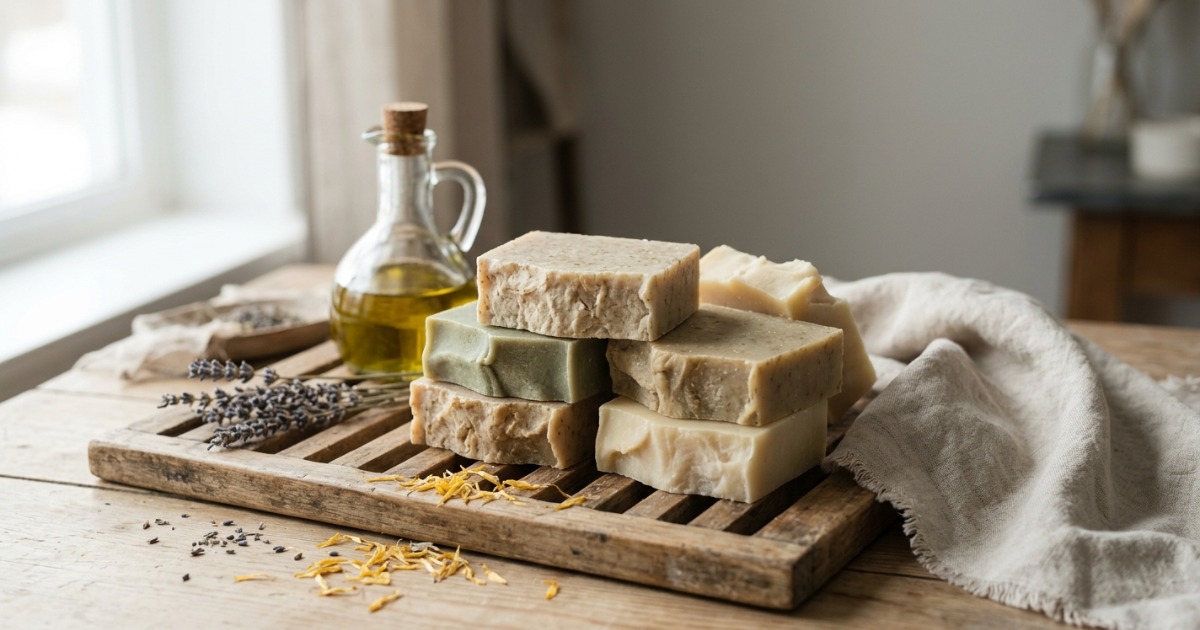
Benefit #1: It Keeps Natural Glycerin Where It Belongs (On Your Skin)
This is the point that convinces most skeptics. Saponification produces glycerin as a natural byproduct, roughly 8 to 10% of the finished bar by weight. Glycerin is a humectant, meaning it pulls moisture from the air into your skin.
Here's the catch. Large manufacturers extract that glycerin during production and sell it separately to the cosmetics and pharmaceutical industries, where it fetches a better price than soap does. Handmade bars keep every drop.
Why Glycerin-Rich Soap Feels Different in the Shower
You know that squeaky-clean, slightly tight feeling after using a regular bar? That's your skin's natural oils being over-stripped. A glycerin-rich soap doesn't do that. Rinse off, towel dry, and your face still feels comfortable without needing moisturizer within thirty seconds.
Benefit #2: Fewer Mystery Ingredients, Fewer Skin Reactions
Read the back of an average drugstore bar and you'll find a list that reads like a chemistry midterm: sodium lauryl sulfate, tetrasodium EDTA, propylene glycol, synthetic fragrance blends listed simply as "parfum." None of these are automatically dangerous. But for reactive skin, cutting them out often helps.
The natural soap benefits most people notice first are the things that stop happening. Less redness. Fewer breakouts around the jawline. Scalps that stop itching if the bar doubles as a shampoo.
Common Irritants You Won't Find in a Good Artisan Bar
SLS (sodium lauryl sulfate): A cheap foaming agent known to irritate sensitive skin and disrupt the moisture barrier.
Triclosan: Once common in antibacterial soaps, now restricted by the FDA due to hormone-disruption concerns.
Synthetic fragrance: A catch-all term that can hide dozens of undisclosed compounds, some of which are common allergens.
Parabens: Preservatives that show up in syndet bars but rarely in properly cured cold process soap.
Benefit #3: Real Moisturizing Power from Real Oils
Look at the ingredient list of a well-made bar and you'll typically see something like olive oil, coconut oil, shea butter, cocoa butter, castor oil, and maybe sweet almond or avocado. These aren't decorative. They're the actual structure of the bar.
Each oil brings something specific. Olive oil creates a gentle, conditioning lather. Coconut oil adds cleansing power and bubble stability. Shea butter contributes fatty acids that support the skin barrier. Castor oil, even in small amounts, boosts the creamy quality of the foam.
How Superfatting Works (And Why Soap Makers Do It)
Superfatting is one of those small technical choices that separates a decent bar from a great one. When calculating the lye ratio, experienced makers deliberately use less than the amount needed to convert all the oils. Usually somewhere between 5 and 8 percent extra oil is left "unsaponified" in the finished bar.
The result is a moisturizing bar that actively conditions your skin as you use it. It's the difference between clean and comfortable, and clean and stripped.
Benefit #4: Gentler on Sensitive, Dry, and Eczema-Prone Skin
Talk to anyone with chronic eczema or reactive skin and you'll hear the same story. They tried every "sensitive" bar in the drugstore, spent a small fortune on dermatologist-recommended cleansers, and eventually stumbled onto a handmade bar that just... worked. It's not magic. Usually it's a combination of pH balance and gentler surfactants.
What Dermatology Research Suggests
Studies on skin barrier function consistently point to two factors. First, harsh anionic surfactants like SLS damage the stratum corneum, the outermost protective layer of skin. Second, cleansers with a pH significantly higher or lower than skin's natural range (around 4.7 to 5.75) can disrupt the acid mantle.
Well-formulated cold process soap tends to sit around pH 8 to 10, which is higher than skin, but the presence of natural glycerin and residual oils buffers the effect. Compared to a foaming syndet loaded with SLS, most people find true soap noticeably less irritating.
Benefit #5: Tailored Formulas for Every Skin Type
Here's something a factory in Ohio churning out 40,000 bars a shift simply cannot do. A local soap maker can adjust the recipe for you. Dry winter skin? More shea butter, less coconut oil. Oily T-zone? Add kaolin clay. Teenage acne? Activated charcoal and tea tree.
That level of customization is one of the underrated advantages of artisan soap ingredients. You're not stuck picking the closest match on a shelf. The closest match is often the exact match.
Charcoal, Oatmeal, Honey, Clay: What Each Add-In Actually Does
Activated charcoal: Draws impurities from pores, useful for oily and acne-prone skin.
Colloidal oatmeal: Soothes inflammation and itching, backed by decades of dermatological research.
Raw honey: Naturally antibacterial and full of enzymes that support wound healing.
Bentonite or kaolin clay: Absorbs excess oil while gently exfoliating.
Goat milk: Rich in lactic acid, a mild alpha hydroxy acid that supports cell turnover.
Benefit #6: A Small but Real Win for the Environment
Not the headline reason to switch, but worth mentioning. A bar of handmade soap usually arrives in paper, cardboard, or nothing at all. Compare that to the plastic bottles of body wash piling up in landfills at the rate of about 550 million per year in the U.S. alone.
The ingredients themselves are biodegradable. Real soap breaks down harmlessly in wastewater treatment, unlike some synthetic surfactants that persist in aquatic environments.
Packaging, Palm Oil, and What to Look For on the Label
Not every "natural" brand is genuinely sustainable. Two things to watch for: palm oil sourcing (look for RSPO certification or a clear statement that it's sustainably harvested) and packaging that's actually recyclable or compostable, not just labeled "eco-friendly" in green ink.
Benefit #7: It Simply Feels Better to Use
This one's harder to quantify, but ask anyone who's made the switch. The lather is creamier. The scent from real essential oils feels alive in a way synthetic fragrance never quite matches. Even the weight of the bar in your hand is different.
The Sensory Difference Most People Notice First
Handmade bars wear down slowly and unevenly, like a good bar of chocolate. Commercial bars dissolve into a slick puddle within a week. The scent of a lavender bar made with real essential oil shifts as you use it, revealing the earthy base notes underneath. It's a small pleasure, but it turns a chore into something you actually look forward to.
How to Choose a Quality Handmade Soap
Not every pretty bar at a craft fair is well made. A few things to check before spending your money.
Reading the Ingredient List Like a Pro
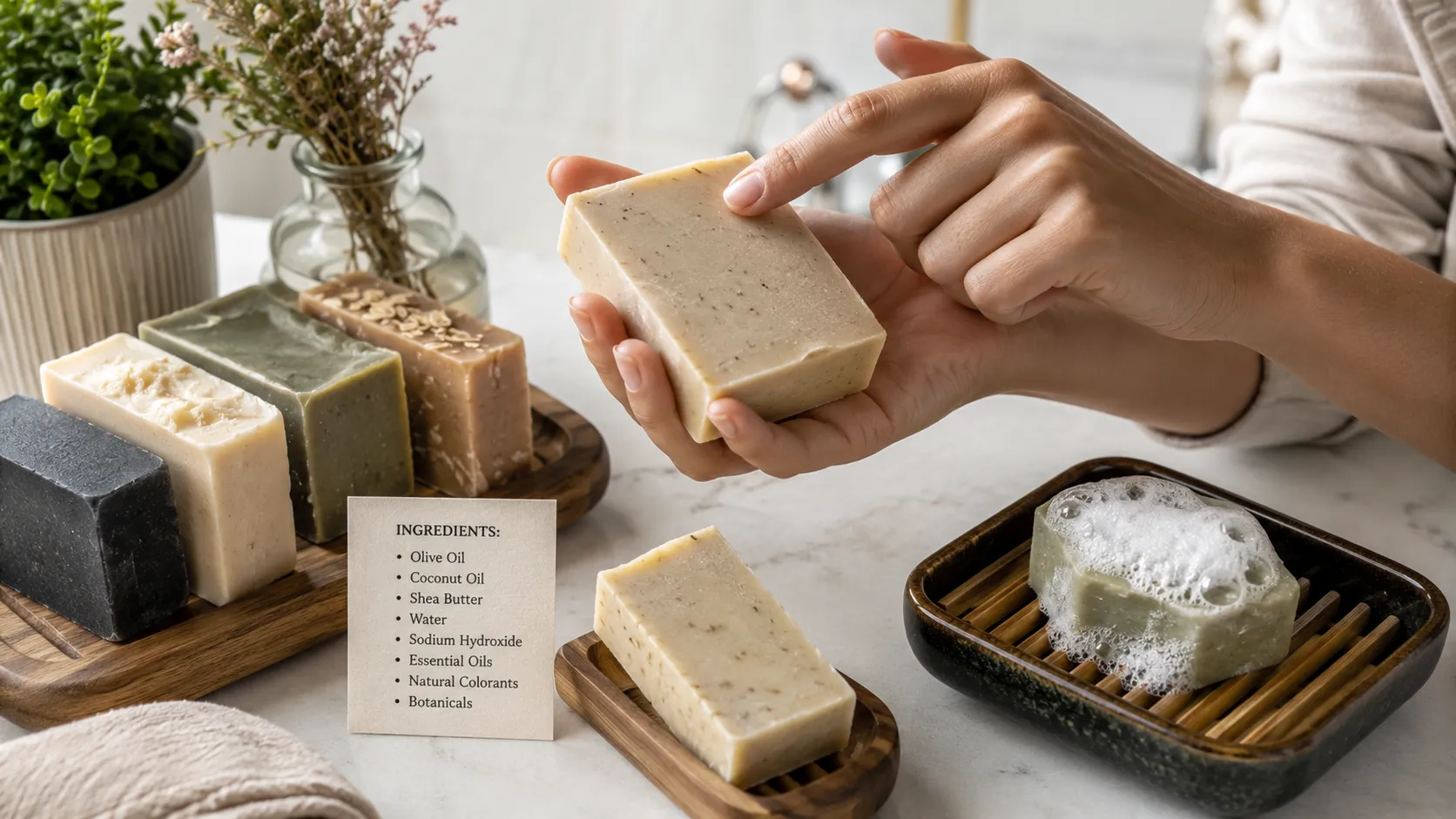
Ingredients are listed by weight, highest to lowest. If the top three are olive oil, coconut oil, and shea butter, you're probably in good hands. If the top ingredient is water, "soap base," or something unpronounceable, it may be a melt-and-pour bar rather than genuine cold process soap.
Avoid bars where "fragrance" is listed with no source disclosed. Reputable makers name the essential oils they use.
Signs of a Well-Cured Bar
Pick it up. A properly cured bar feels hard and dense, not soft or waxy. Tap it lightly on a counter and it should sound solid. When you lather it up, the foam should be creamy and stable rather than watery and thin.
How to Make Your Handmade Soap Last Longer
The one habit most people get wrong: leaving the bar sitting in a pool of water. That will dissolve even the best bar within days. Use a soap dish with drainage, ideally one with slats or ridges so air can circulate underneath.
Between uses, keep the bar somewhere it can fully dry out. If you shower daily, rotating two bars actually stretches them further than using one continuously. A well-treated 4 oz bar can easily last 4 to 6 weeks of daily use.
Final Thoughts: Is the Switch Worth It?
Honestly? For most people, yes. Not because handmade soap is a miracle product, but because it's simply a better version of an everyday thing. You're trading a $2 bar of engineered detergent for a $6 bar of real soap that leaves your skin feeling like skin, not like it's been power-washed.
If you have perfectly happy skin and love your current routine, no need to fix what isn't broken. But if you've been dealing with dryness, tightness, mysterious rashes, or that vague sense that your body wash isn't quite working, a good handmade bar might be one of the easiest upgrades you can make. Try one. Give it two weeks. Your skin will tell you the rest.
Frequently Asked Questions
Q: Is handmade soap actually better for acne-prone skin?
A: It can be, if you pick the right one. Bars with high olive oil content, activated charcoal, or tea tree essential oil tend to work well for oily and breakout-prone skin. Skip heavy butters like cocoa butter if you're prone to clogged pores. The gentler cleansing action often calms the inflammation that drives cystic acne.
Q: Why does handmade soap cost more than regular soap?
A: Real ingredients cost real money. A quality bar might contain 30 to 40 dollars of raw oils, butters, and essential oils per batch, then sit curing for six weeks before it can be sold. Small-batch production also means no economies of scale. When you buy a $7 handmade bar, you're paying for time, ingredients, and someone's actual labor.
Q: Can I use handmade soap on my face?
A: Yes, and many people do. Look for bars formulated with facial skin in mind: higher superfat percentages, gentler oils like olive and sweet almond, and additives like colloidal oatmeal or goat milk. Skip anything with harsh exfoliants or strong essential oils like cinnamon or clove if your skin runs reactive.
Q: How long does a bar of handmade soap last?
A: Depending on size, ingredients, and how you store it, a 4 to 5 ounce bar used daily lasts anywhere from 3 to 6 weeks. Bars high in coconut oil dissolve faster. Bars high in olive oil (like traditional Castile soap) can last much longer. Keep it dry between uses and you'll get the most out of every bar.
Q: Is cold process soap safe if it contains lye?
A: Completely safe. Lye (sodium hydroxide) is a reactive ingredient during production, but the saponification process converts every molecule of it into soap and glycerin. A finished, properly cured bar contains zero lye. Every real soap that has ever existed, including the ancient stuff, was made with an alkali. It's not a shortcut, it's the chemistry that makes soap possible.
Q: Does handmade soap expire?
A: It doesn't spoil the way food does, but the natural oils can eventually oxidize, especially in bars with softer oils like sunflower or hemp. You might notice orange spots (soap makers call this "DOS" or "dreaded orange spots") or a slightly rancid smell. Most bars stay in good shape for 12 to 18 months. Store them somewhere cool, dry, and out of direct sunlight to stretch that out.