
A simple, calming soak you can mix in your own kitchen tonight.
There's a certain kind of tired that a warm bath just seems to fix. Not the deep-sleep-debt kind, but the wound-up, can't-switch-my-brain-off kind. If that sounds familiar, a bedtime soak might earn a spot in your evening routine, and mixing the salts yourself costs a fraction of the boutique stuff.
Below is the recipe, plus the reasoning behind every ingredient so you're not just following steps blindly. I'll also be straight about what the science actually supports and where it gets murky.
Why a Bedtime Bath Salt Soak Actually Helps You Wind Down
A lot of the "relaxing bath" advice out there runs on vibes alone. But there's a real physiological mechanism at play, and it's worth understanding because it tells you when and how long to soak.
The Sleep-Bath Connection in Plain Terms
Your body temperature naturally dips in the evening. That drop is one of the signals that nudges you toward sleep. It's part of your internal clock doing its job.
Here's the counterintuitive part. Soaking in warm water heats you up. Then when you get out, your body sheds that extra heat quickly. Blood rushes to the skin's surface, and your core temperature falls faster than it would on its own. A warm bath doesn't fight the sleep signal. It amplifies it.
Sleep researchers have poked at this. A 2019 review out of the University of Texas at Austin found that a warm bath roughly one to two hours before bed helped people fall asleep faster. The temperature swing, not just the coziness, seems to be doing the heavy lifting.
Why People Are Making Their Own Blends
Store-bought soaks can run surprisingly expensive, and the ingredient lists are often padded with dyes, synthetic fragrance, and fillers you didn't ask for. That's a big reason homemade lavender bath salts have caught on.
When you mix your own, you know exactly what's going into the water. No mystery "parfum," no artificial colorant tinting your tub blue. For anyone with sensitive skin or a general dislike of surprise additives, that transparency is the whole appeal.
Meet the Two Star Ingredients: Lavender and Magnesium
Most of the recipe is supporting cast. These two do the real work, so let's talk about what each one actually brings.
Lavender: More Than Just a Nice Smell
Lavender has been the poster child for calming scents for a long time, and not without reason. The aroma is tied to relaxation in plenty of small studies, likely through its effect on the nervous system and the simple power of scent-based cue setting. Smell something consistently at bedtime and your brain starts associating it with winding down.
You've got two ways to add it. Dried buds look lovely floating in the water and release a gentle fragrance, though they need to be strained out afterward or held in a muslin bag. Lavender essential oil is more concentrated and gives a stronger, more reliable scent. Many people use both. Buds for looks, a few drops of oil for punch.
Magnesium: The Mineral Behind the Relaxation
Magnesium plays a role in muscle function and nervous system regulation, which is why magnesium flakes for sleep have become a popular bath addition. Soaking in a magnesium-rich bath feels different from swallowing a supplement, mostly because the delivery route is completely different.
Now, the honest part. The idea that you absorb meaningful amounts of magnesium through your skin is genuinely debated. Some small studies suggest transdermal absorption is possible. Others argue the evidence is thin and the amounts negligible. The research just isn't settled.
So here's my take. Even if the mineral-absorption benefit turns out to be modest, the warm water, the quiet, and the ritual itself are doing real relaxation work. Treat the magnesium as a nice-to-have rather than a miracle.
Epsom Salt vs. Magnesium Flakes: What's the Difference?
People mix these up constantly, and they're not the same thing.
| Feature | Epsom Salt | Magnesium Flakes |
|---|---|---|
| Chemical name | Magnesium sulfate | Magnesium chloride |
| Cost | Very affordable | Pricier |
| Texture on skin | Can feel slightly drying | Often described as softer, silkier |
| Magnesium content | Lower per gram | Higher per gram |
If you're after a budget-friendly epsom salt relaxation soak, Epsom salt is the classic choice and works perfectly well. If your skin tends to feel tight after Epsom baths, or you want a more concentrated dose, magnesium chloride flakes are worth the upgrade. You can even use both in one blend.
The DIY Sleep Bath Salt Recipe
Here's the whole thing. Screenshot it, jot it on a card, whatever works.
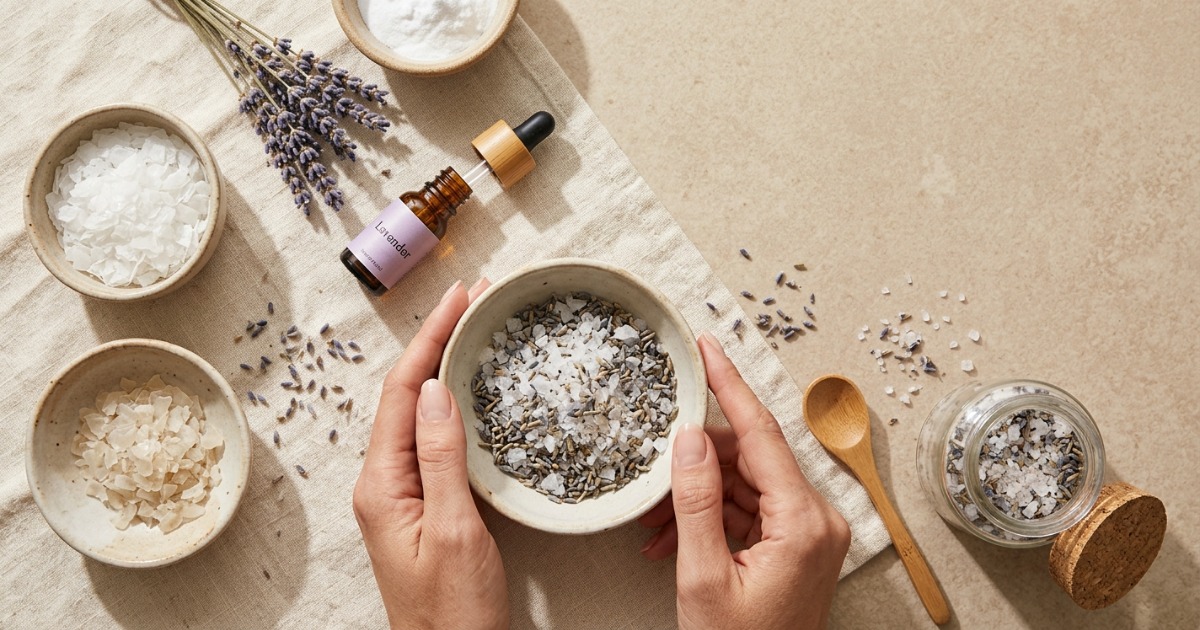
What You'll Need
1 cup coarse sea salt or Epsom salt (the base)
1/2 cup magnesium flakes (magnesium chloride)
1/4 cup baking soda (softens the water, gentle on skin)
2 tablespoons dried lavender buds
15 to 20 drops lavender essential oil
1 teaspoon carrier oil, optional (jojoba, sweet almond, or fractionated coconut)
This makes enough for roughly two to three generous baths.
Step-by-Step Instructions
In a medium bowl, combine the sea salt or Epsom salt, magnesium flakes, and baking soda. Stir until evenly mixed.
Add the dried lavender buds and fold them through.
If you're using carrier oil, drizzle it in first and stir. This helps the essential oil disperse instead of clumping up.
Add the lavender essential oil last, a few drops at a time, mixing as you go. Adding oils at the end keeps the scent from evaporating during prep.
Transfer to an airtight jar and let it sit for a day if you can. The scent settles and deepens.
How to Use It for the Best Results
Run a warm bath. Comfortably hot but not scalding, around 38 to 40°C (100 to 104°F), is a good range. Add roughly half a cup of your DIY bedtime bath salt blend and swirl it through the water.
Soak for 15 to 20 minutes. That's usually enough to warm you through and trigger the after-bath cool-down. Aim to get in the tub about 60 to 90 minutes before you plan to sleep, so your body has time to cool and the sleep signal kicks in.
Simple Variations to Try
The base recipe is a starting point, not a rulebook. Here's how to tweak it.
Adding Complementary Essential Oils
Lavender plays nicely with other calming scents. Chamomile leans soft and floral, cedarwood adds a grounding woodsy note, and bergamot brings a bright citrus lift that's still relaxing. For a layered essential oil bath soak, swap out about a third of the lavender drops for one of these. Maybe 12 drops lavender and 6 drops cedarwood. Keep the total in the same 15 to 20 drop range so it doesn't overwhelm.
A Skin-Softening Version
If your skin runs dry, especially in winter, stir in 2 tablespoons of colloidal oatmeal or bump the carrier oil up to a full tablespoon. The oatmeal turns the water silky and soothes itchy, tight skin. Just rinse the tub well afterward, since oils can make surfaces slippery.
No-Bathtub Option: A Foot Soak
No tub? A foot soak still delivers a lot of the ritual. Use about 3 tablespoons of the blend in a basin of warm water and soak your feet for 15 minutes while you read or unwind. It won't warm your whole body the same way, but it's a genuinely relaxing pre-bed habit.
Storage, Shelf Life and Gifting
A quick note on keeping your salts usable, and turning them into something giftable.
Keeping Your Salts Fresh
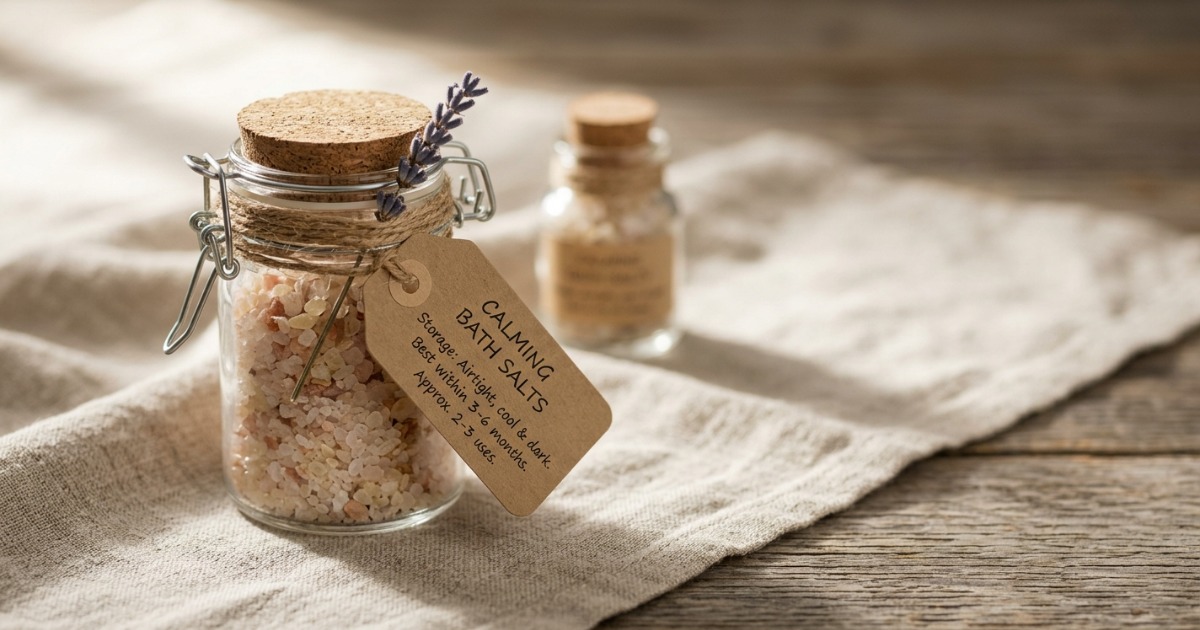
Store the blend in an airtight jar. A mason jar with a tight lid is ideal. Keep it somewhere cool and dark. Light and heat fade essential oils fast.
The salts themselves basically last indefinitely, but the scent is the perishable part. You'll get the best fragrance within about three to six months. After that it's still fine to use, just gentler on the nose.
Turning It Into a Homemade Gift
These make a genuinely nice present. Portion the blend into small clip-top jars or corked bottles, tie a bit of twine around the neck, and add a handwritten label with the ingredients and a simple "add half a cup to a warm bath" instruction.
A sprig of dried lavender tucked under the twine sells the whole thing. It looks thoughtful because it is.
Safety Notes and Who Should Be Careful
A bath soak is low-risk, but essential oils and warm water aren't zero-risk for everyone.
Patch-Test First
Before your first full soak, do a quick patch test. Dab a diluted drop of the essential oil on your inner forearm and wait 24 hours. If you see redness or irritation, skip it or cut back the amount. This matters most for people with reactive skin.
When to Check With a Doctor
If you're pregnant, or have very sensitive skin, low blood pressure, kidney issues, or a heart condition, run this by your doctor first. Very hot baths and certain essential oils aren't recommended in some of these situations.
One more thing worth saying plainly: this is a general wellness routine, not a treatment. If you're dealing with a diagnosed sleep disorder, a bath salt blend isn't a substitute for medical care. Think of it as a supporting habit, not a cure.
Frequently Asked Questions
Q: How often can I use a lavender and magnesium bath soak?
A: A few times a week is fine for most people, and some enjoy it nightly. If you notice your skin getting dry, dial it back or add more carrier oil to the blend.
Q: Can I really absorb magnesium through my skin?
A: Maybe, at least a little, but the research is genuinely mixed. Some studies suggest transdermal absorption happens. Others say the amounts are too small to matter much. Enjoy the soak for the relaxation it reliably provides, and treat any mineral benefit as a bonus rather than the main event.
Q: How much bath salt should I use per soak?
A: Around half a cup per full bath is a solid default. For a foot soak, drop that to about 3 tablespoons. No need to overdo it. More salt doesn't mean more benefit.
Q: Can I use fresh lavender instead of dried?
A: Dried works better here. Fresh lavender holds moisture, which can cause clumping and mold in a stored salt blend, and it gives off less scent. If fresh is all you have on hand, use it in a single same-day bath and toss the leftovers.
Q: Is this safe for kids?
A: Use caution. Essential oils should be heavily diluted or skipped entirely for young children, and lavender oil in particular isn't recommended for babies. For older kids, a plain Epsom or magnesium soak without essential oils is the safer route. When in doubt, check with a pediatrician.
Q: What's the best time to take the bath before bed?
A: About 60 to 90 minutes before bedtime. That window gives your body room to warm up and then cool back down, and it's that post-bath temperature drop that helps ease you toward sleep.