
Walk down any wellness aisle and you'll spot bags of Epsom salt promising everything from deeper sleep to full-body "detoxification." But here's the truth most brands won't tell you: this humble mineral compound isn't equally useful for everyone. Some people gain real, tangible benefits. Others should approach it with caution — or skip it entirely.
Below is a grounded, no-fluff guide to figuring out where you fit.
Understanding Epsom Salt Before Deciding If It's for You
What Epsom Salt Actually Is — Beyond the Marketing
Epsom salt isn't salt in the culinary sense. Chemically, it's magnesium sulfate (MgSO₄·7H₂O), a crystalline compound first discovered in the bitter springs of Epsom, England, back in the 17th century.
Table salt is sodium chloride. Himalayan pink salt is mineral-tinted sodium chloride. Sea salt is evaporated ocean water. None of these share any chemical relationship with Epsom salt, despite what the marketing photos of pink-lit bathtubs might suggest.
How the Body Interacts With Magnesium Sulfate
Here's where things get honest. The idea that magnesium passes through your skin during a soak — transdermal absorption — is widely repeated but weakly supported by rigorous clinical research. A 2017 review in Nutrients concluded the evidence remains limited and mostly anecdotal.
What Epsom salt does reliably do: soften water, create a warm hypertonic solution that many people find physically soothing, and act as a mild exfoliant. Whether that qualifies as "medicinal" depends on how strictly you define the word.
Quick Snapshot of Common Uses
Warm bath soaks for full-body relaxation
Foot soaks for tired soles
Localized compresses for stiffness or minor swelling
Garden fertilizer for magnesium-hungry plants
Oral use as a laxative — but strictly under medical supervision
Who Benefits Most From Using Epsom Salt?
Athletes and Active Individuals Seeking Muscle Soreness Relief
Runners, lifters, and CrossFit regulars have made Epsom soaks part of a broader recovery ritual. Warm water dilates blood vessels, and the buoyancy relieves pressure on aching joints. Whether the magnesium itself is doing the heavy lifting remains debatable — but the perceived recovery is real. There's a legitimate combination of placebo and physiology at work.
Typical protocol: about 2 cups of Epsom salt in a tub of water heated to roughly 100–104°F (38–40°C), soaked for 12–20 minutes. Longer isn't better. Skin becomes overly dry past 25 minutes.
Weekend Warriors vs. Professional Athletes — Different Needs
A Sunday-league soccer player recovering from a rough match might benefit from an occasional soak — say, once or twice a week. High-frequency athletes often build it into a structured recovery stack alongside foam rolling, protein timing, and sleep hygiene. The difference isn't the product. It's how it fits into a repeatable system.
People Managing Everyday Stress and Poor Sleep
The at-home wellness movement has exploded. A 2025 Global Wellness Institute report pegged the "wellness at home" segment at over $500 billion, with bath rituals among the fastest-growing subcategories. Epsom salt fits neatly into that wind-down routine — warm water plus dim lighting plus twenty phone-free minutes is genuinely restorative, whether or not you attribute it to magnesium.
Individuals With Minor Aches, Stiffness, or Foot Fatigue
Office workers with knotted trap muscles, nurses finishing 12-hour shifts, warehouse staff, older adults with morning joint stiffness — they often report a noticeable difference. It's not a substitute for physical therapy. But as a low-cost home comfort? Reasonable choice.
Gardeners and Home Plant Enthusiasts
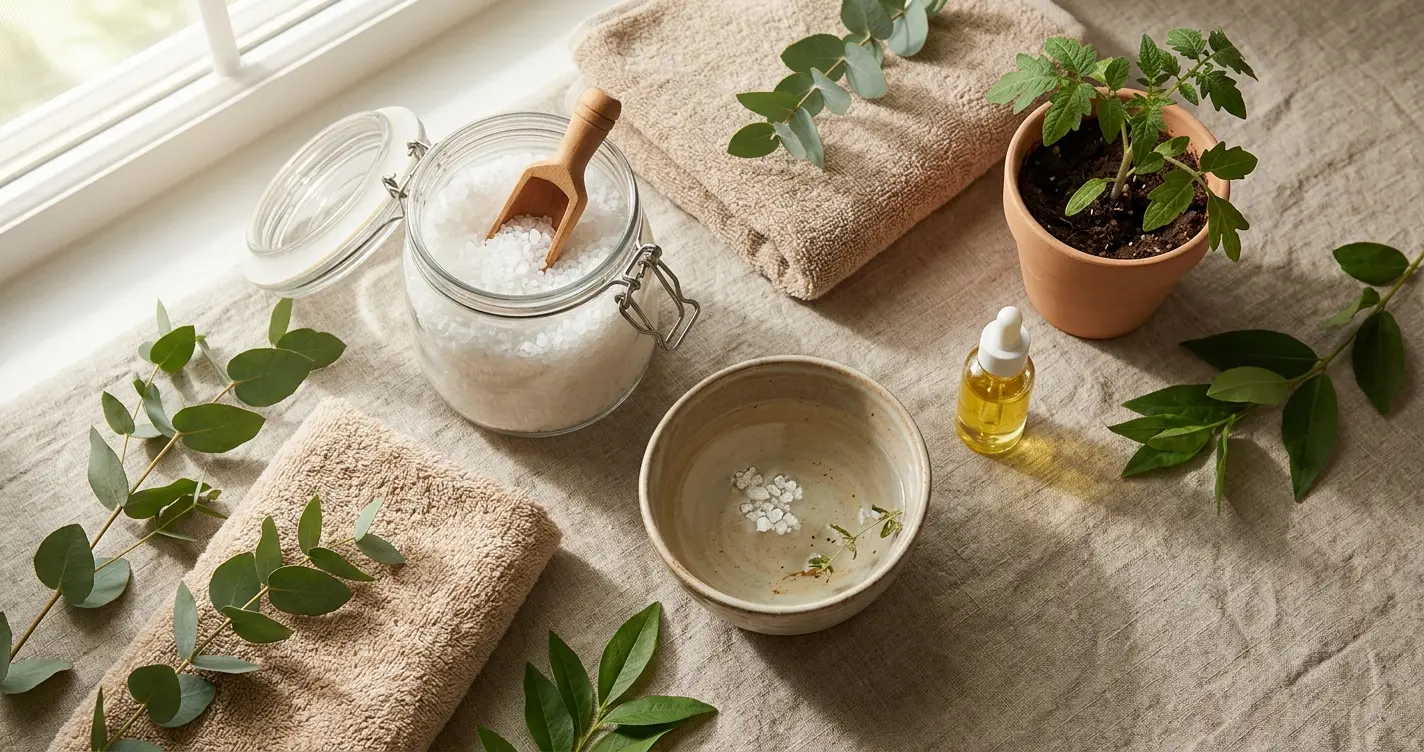
This is where Epsom salt quietly shines, and most wellness blogs ignore it entirely. Tomatoes, peppers, and roses are notoriously magnesium-hungry. A common ratio: 1 tablespoon per gallon of water, applied as a foliar spray or soil drench roughly once a month during growing season.
Signs your plants might need it: yellowing between leaf veins (interveinal chlorosis), poor fruit set on tomatoes, or pale rose foliage.
Indoor Plant Owners Looking for Greener Leaves
Houseplants in reused potting soil often run low on magnesium after 6–12 months. A very dilute solution — about a teaspoon per gallon — every few weeks can perk up monstera, pothos, and citrus specimens without the harshness of synthetic fertilizers.
People With Occasional Skin Irritation or Rough Skin
As a coarse exfoliant, Epsom salt sloughs off dead cells effectively. Some users blend a small handful with a carrier oil (jojoba, sweet almond) for an at-home body scrub. It's not clinical dermatology — if you have eczema, psoriasis, or persistent rashes, see a professional, not a bath salt.
Those Interested in Foot Care and Pedicure Prep
Softening calluses, easing pressure on bunions, and pre-pedicure prep rank among the most consistently satisfying uses. A basin of warm water, half a cup of Epsom salt, 15 minutes — cuticles and callused heels become noticeably easier to work on afterward.
Who Should Be Cautious or Avoid Epsom Salt?
People With Certain Chronic Health Conditions
Kidneys regulate magnesium levels. If yours don't function optimally — chronic kidney disease, dialysis patients — even topical exposure warrants a conversation with your nephrologist. The same caution applies to heart-rhythm disorders and poorly controlled diabetes.
Pregnant Women and Nursing Mothers
Warm baths on their own are usually fine in moderation during pregnancy. But adding Epsom salt — and especially any oral use — should be cleared with an OB-GYN first. Water temperature actually matters more than the salt itself here; anything above 100°F for prolonged periods isn't advised.
Children Under a Certain Age
For toddlers and young children, dermatologists generally recommend holding off on Epsom salt baths until age 6+. Even then, use half the adult dose with close supervision. Kids' skin is thinner, and the ingestion risk is higher — they drink bath water.
Individuals With Open Wounds, Burns, or Severe Skin Infections
Soaking an open wound in hypertonic salt water stings, delays healing, and can introduce contamination. If your skin is broken, wait until it's closed and healed before returning to Epsom routines.
People With Magnesium Sensitivity or Allergic Reactions
Rare, but real. Watch for unusual itching, hives, dizziness during a soak, or lingering redness. If any of these appear, drain the tub and rinse off with cool water. Persistent reactions warrant a call to your GP.
How to Tell If Epsom Salt Is Right for YOU — A Self-Assessment
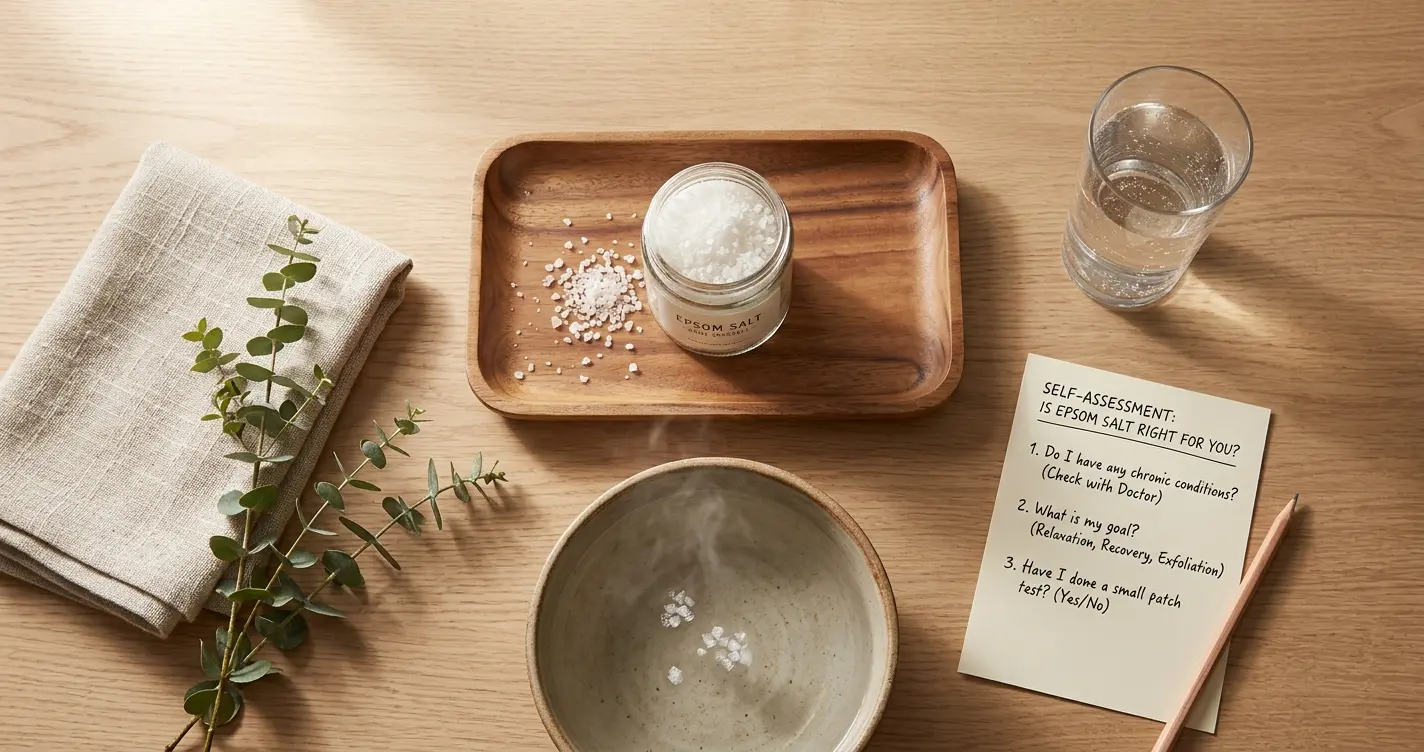
The 3-Question Check Before Your First Soak
Do you have any of the chronic conditions flagged above?
What's your actual goal — recovery, relaxation, exfoliation, or plant care?
Have you done a small patch test (a diluted paste on your inner forearm for 15 minutes) to rule out sensitivity?
Matching Your Lifestyle to the Right Usage Method
| User Profile | Best Method | Frequency |
|---|---|---|
| Endurance athlete | Full bath soak | 2–3× per week |
| Office worker with tight shoulders | Compress or bath | 1–2× per week |
| Parent with restless evenings | Short foot soak | As needed |
| Retiree with foot fatigue | Foot soak | 2–3× per week |
| Home gardener | Fertilizer solution | Monthly (growing season) |
Starting Slow — What a First-Time Routine Looks Like
Try one cup of Epsom salt in a standard bath, water at 100°F, for 12 minutes. Drink a glass of water beforehand. Note how you feel over the next 24 hours before increasing dose or duration.
Practical Tips to Maximize the Benefits Safely
Choosing High-Quality Epsom Salt
USP grade means it meets United States Pharmacopeia purity standards — suitable for personal use. Agricultural or "technical" grade is intended for gardens and industrial applications and may contain impurities you don't want touching your skin. Read the label. The difference isn't just marketing.
Ideal Water Temperature and Soak Duration
Between 100°F and 104°F, for 12 to 20 minutes. Hotter and longer isn't more effective — it just dehydrates skin and can leave you lightheaded.
Combining Epsom Salt With Other Wellness Practices
A few drops of lavender or eucalyptus essential oil (properly diluted), gentle post-soak stretching, and rehydrating with a glass of water will compound the benefits far more than doubling the salt would.
Common Mistakes to Avoid
Daily soaks that dry out your skin barrier
Skipping water intake before and after
Believing any product can "detox" organs your liver and kidneys already handle
Mixing with harsh bubble baths or bleach-based cleaners still in the tub
Final Takeaway: Is Epsom Salt the Right Fit for Your Routine?
Epsom salt is genuinely useful for athletes chasing better recovery, gardeners troubleshooting yellowing tomato leaves, and anyone whose evening ritual could use a warm, phone-free interlude. It's less useful — and occasionally risky — for people with certain medical conditions, very young children, and anyone hoping a bath will replace real medical care.
Treat it as what it is: an inexpensive, low-tech tool with a couple of legitimate uses and a lot of marketing wrapped around it. Once you separate the two, deciding whether it belongs in your life becomes surprisingly simple.
Frequently Asked Questions
Q: Can I use Epsom salt every day?
A: Most dermatologists suggest 2–3 times per week at most. Daily use often leads to skin dryness, tightness, and irritation. If your skin feels itchy or flaky, scale back.
Q: Does Epsom salt really detox the body?
A: Honestly? No — not in the clinical sense. Your liver and kidneys handle detoxification. What Epsom salt baths can actually do is help you relax, warm sore muscles, and support a calming ritual. That's genuinely valuable. But it isn't "pulling toxins out."
Q: Is Epsom salt safe for sensitive skin?
A: Usually, but do a patch test first. Choose unscented, USP-grade products, and avoid varieties with added dyes or synthetic fragrances if you react easily.
Q: Can I drink Epsom salt water for constipation?
A: Only under a doctor's or pharmacist's direction. It's an FDA-recognized saline laxative, but incorrect dosing can cause severe dehydration, electrolyte imbalance, or magnesium toxicity — especially dangerous for people with kidney issues.
Q: How long does an Epsom salt bath take to work for sore muscles?
A: Most people notice relief within 20–40 minutes after finishing the soak, largely from the warmth and buoyancy. Peak relaxation typically lasts a few hours. It isn't a permanent fix for muscle damage.
Q: Is Epsom salt good for pets?
A: Be careful. Dogs occasionally get vet-prescribed Epsom soaks for paw issues, but they must not drink the solution — ingestion can cause serious GI upset. In gardens, keep application away from areas pets graze.
Q: What's the difference between Epsom salt and bath salt?
A: Generic "bath salts" are usually sodium chloride or sodium bicarbonate blended with fragrance and colorants. Epsom salt is a distinct compound — magnesium sulfate — with different physical properties and uses entirely.
Q: How should Epsom salt be stored?
A: Store it in an airtight container, away from humidity. It absorbs moisture readily, which causes clumping. A sealed glass jar in a bathroom cabinet works well. A paper bag in a steamy bathroom does not.