
A practical guide for anyone who's ever stared at a bag of Epsom salt wondering if they're using too much, too little, or just wasting their money.
What Epsom Salt Actually Is (And Why It's Not Really "Salt")
Before we get to the measuring cups, it helps to clear up a persistent misunderstanding: Epsom salt isn't really salt in the culinary sense. The name stuck because of how the crystals look, not what they're made of.
Magnesium Sulfate vs. Table Salt
Chemically speaking, Epsom salt is magnesium sulfate heptahydrate — a compound of magnesium, sulfur, and oxygen bound with water molecules. There is zero sodium chloride in it. That's a meaningful difference, because sodium chloride and magnesium sulfate behave completely differently on skin.
The name traces back to the town of Epsom in Surrey, England, where a farmer in the early 1600s noticed his cattle refused to drink from a certain bitter spring. The water turned out to be rich in magnesium sulfate, and by the 1700s it was being bottled and sold across Europe as a mineral tonic. That's a lot of history for something that now sits in a plastic bag next to the shampoo aisle.
Why People Use It for Their Feet
The traditional pitch is straightforward: soothe sore muscles after a long day, reduce swelling, cut down on foot odor, and soften those callused heels that never seem to smooth out with lotion alone. Some of these effects have decent anecdotal backing — soaking in warm water alone reduces perceived swelling and eases muscle tension.
Where the science gets murkier is transdermal magnesium absorption. Whether meaningful amounts of magnesium actually pass through skin during a soak is still debated in dermatology and pharmacology circles. A frequently cited 2017 review in Nutrients concluded the evidence is thin and mostly comes from small, uncontrolled studies. So enjoy your soak, but don't expect it to fix a magnesium deficiency.
The Standard Ratio: How Much to Use Per Soak
The Baseline Measurement
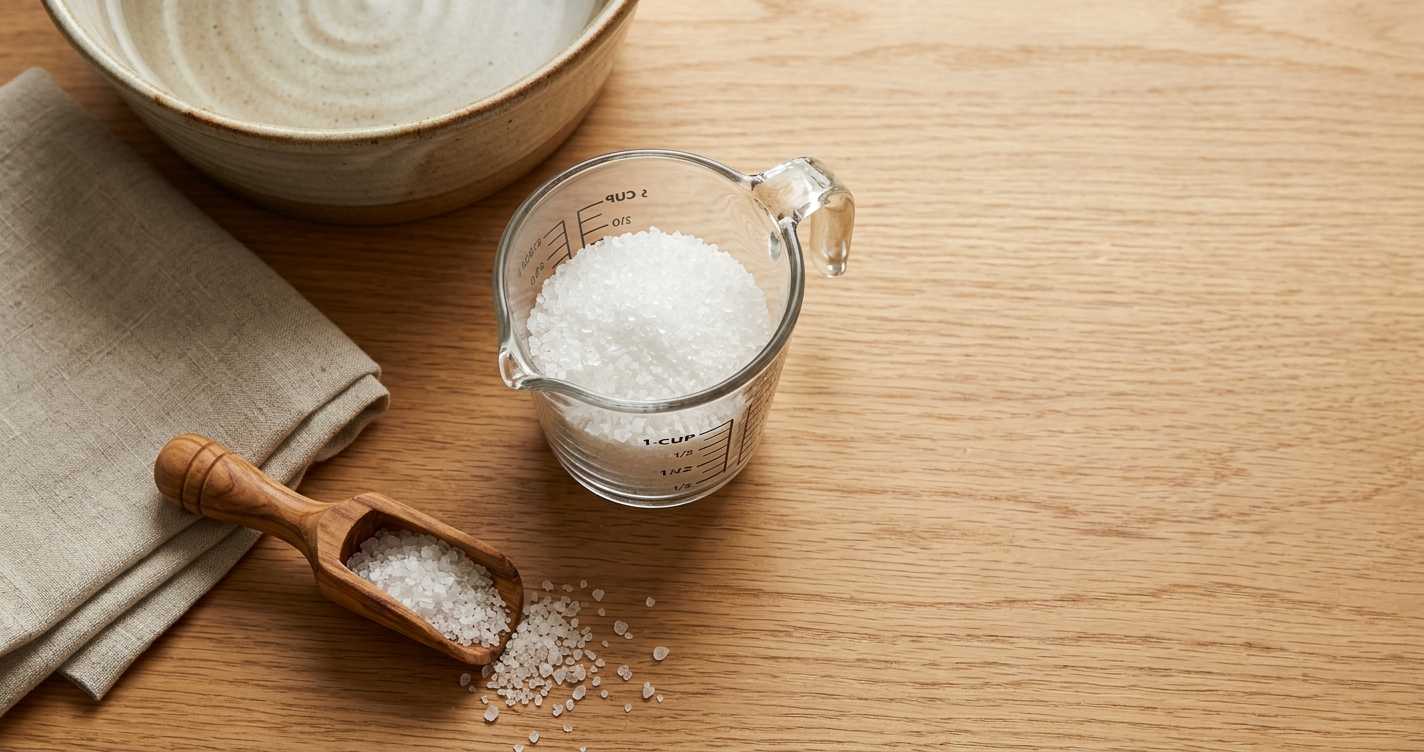
Here's the number most people came looking for: ½ cup of Epsom salt per 1 gallon of warm water. This is the ratio published by the Epsom Salt Council and echoed by most podiatrists in their patient handouts. For a typical foot basin holding 1 to 1.5 gallons, that means somewhere between ½ and ¾ cup does the job.
Adjusting for Basin Size
Small plastic tub (~1 gallon): ½ cup
Standard foot spa (~1.5–2 gallons): ¾ to 1 cup
Large basin, especially if you're covering your calves too (~3 gallons): about 1½ cups
If you don't feel like measuring water, fill your basin, then estimate: an average kitchen mixing bowl is roughly a gallon; most retail foot spas hold about 1.5 gallons at the fill line.
Water Temperature Matters More Than You Think
Aim for somewhere between 92°F and 100°F (33–38°C). This is warm bathwater, not hot-tub territory. Cranking the heat higher doesn't dissolve more salt or produce a better result — it mostly dries out skin faster. And for anyone with diabetes or peripheral neuropathy, water above 105°F is genuinely dangerous because damaged nerves may not register a burn until the skin is already blistered.
When You Might Adjust the Dose
For Sore, Overworked Feet
Stick with the standard ½ cup ratio and soak for 15 to 20 minutes. Longer isn't better. Past the 20-minute mark, the outer layer of skin (the stratum corneum) begins to over-hydrate and then dehydrate as it dries, which is why your fingertips prune up in the bath.
For Foot Odor or Fungal Concerns
Some people bump the concentration to a full cup per gallon and add a splash of apple cider vinegar for its acidity. That's a folk remedy, not a clinical protocol — it might help with mild odor caused by bacterial overgrowth, but it's not a substitute for treatment. If you've got actual athlete's foot (itchy peeling between the toes, redness that doesn't quit), you need a topical antifungal like clotrimazole or terbinafine. A soak alone won't clear a fungal infection.
For Ingrown Toenails or Minor Cuts
Podiatrists typically recommend a lighter concentration here — about ¼ cup per gallon — to avoid stinging or irritating tissue that's already inflamed. Honestly, warm water on its own does most of the work in these situations by softening the nail and skin so you can more easily lift the corner or clean the area.
How Often Is Safe?
Frequency Guidelines
Two to three times a week works well for most healthy adults. Daily soaking sounds like more self-care, but it tends to strip natural sebum from your skin. Older adults and anyone living through a dry winter will notice this fastest — cracked heels get worse, not better, when you soak them every night.
Who Should Skip It Entirely
People with diabetes. Nerve damage can mask burns, and small unnoticed cracks in softened skin can become infections that spiral quickly.
Anyone with open wounds or active athlete's foot lesions. Soaking a raw wound isn't disinfecting it — it's giving pathogens a warm environment.
People with significant kidney disease. Systemic magnesium overload from foot soaks alone is rare, but impaired kidneys clear magnesium poorly, so it's worth mentioning to your doctor.
If any of that applies to you, a 30-second conversation with your primary care doctor or podiatrist before starting a soaking routine is worthwhile.
Common Mistakes That Waste Your Salt
Dumping It Into Cold Water
Magnesium sulfate dissolves poorly below body temperature. If you pour it in and the water is lukewarm, half of it will sit at the bottom of the basin doing nothing. Stir it into hot water first, then adjust the temperature down if needed.
Adding "Extras" That Cancel Each Other Out
Social media loves a maximalist foot soak — Epsom salt, baking soda, hydrogen peroxide, essential oils, mouthwash, food coloring for aesthetic reasons. Some of these combinations chemically neutralize each other (baking soda is alkaline; vinegar is acidic — mix them and you get bubbly saltwater with none of the original benefits). Others irritate skin. A plain magnesium sulfate soak with maybe a few drops of lavender oil is fine. You don't need the rest.
Skipping the Moisturizer After
Magnesium sulfate has a mild osmotic drying effect. Pat your feet dry — don't rub — then apply an unscented lotion, or a thin layer of petroleum jelly if your heels are cracked. Doing this within about three minutes of getting out of the water, before evaporation pulls moisture from the skin, is what actually leaves your feet feeling soft the next morning.
What to Expect (Realistically)
Immediate Effects
The truth is that warm water is doing most of the heavy lifting for muscle relaxation. Circulation increases, tension in the small foot muscles eases, and the reduction in perceived swelling is real. Whether the magnesium is contributing to this or you'd get the same effect from plain warm water is genuinely hard to tell — and honestly, if it feels good, the mechanism matters less than the result.
Longer-Term Benefits
Over a few weeks of consistent use, expect softer skin around the heels and noticeably less end-of-day fatigue if you spend your day on your feet. Nurses, teachers, restaurant staff, and warehouse workers tend to be the most vocal fans for a reason. What Epsom salt won't do: cure plantar fasciitis, dissolve bunions, or reverse a bone spur. Anyone marketing it that way is selling hope, not medicine.
Buying Epsom Salt: What Actually Matters
USP Grade vs. Agricultural Grade
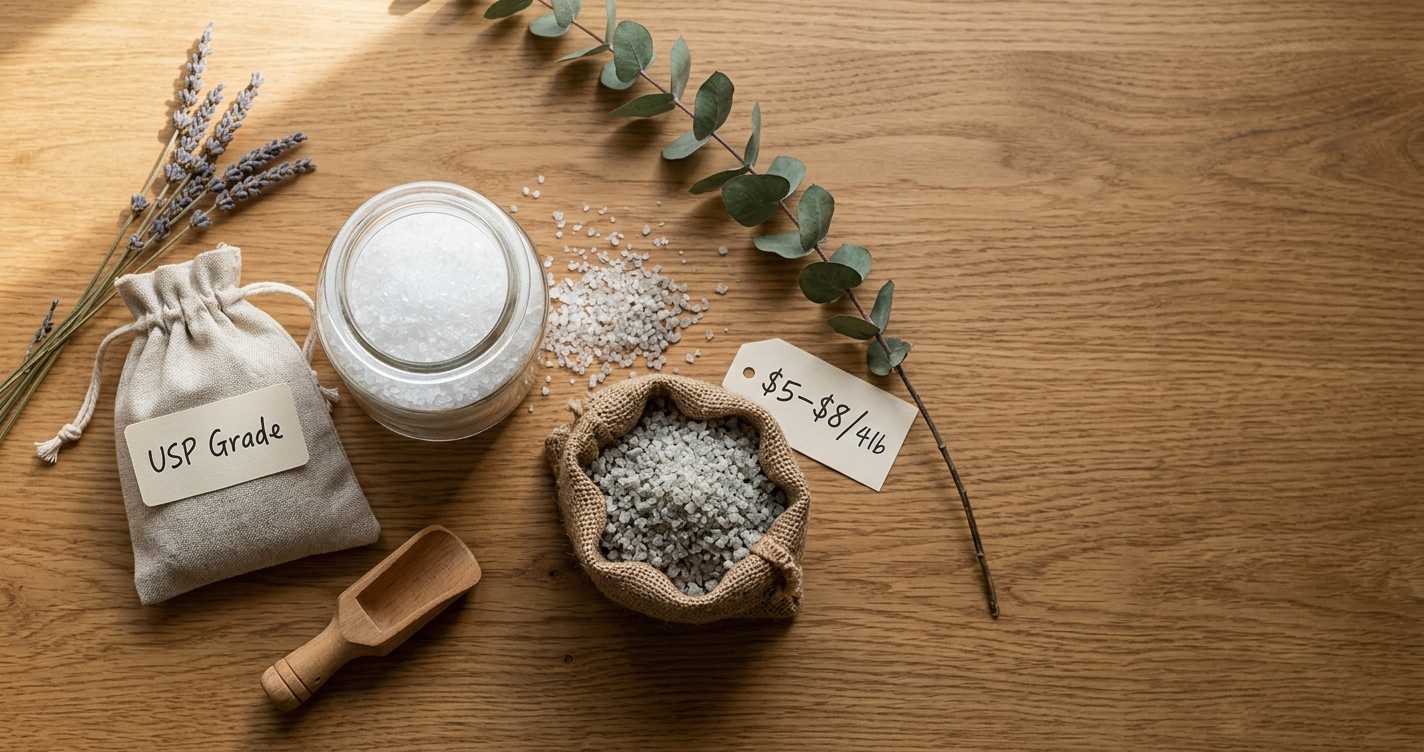
Look for USP grade on the label — that's the United States Pharmacopeia designation confirming the product meets purity standards for personal use. Agricultural or "technical grade" Epsom salt (often sold in giant sacks at garden centers) is cheaper but may contain trace impurities that aren't a problem for tomato plants but aren't intended for skin contact either.
Scented vs. Unscented
Eucalyptus and lavender versions smell nice and are fine for most people. If you have eczema, psoriasis, or reactive skin, go plain. Fragrance is one of the most common contact irritants dermatologists see.
Cost Check
A 4-pound bag of USP-grade Epsom salt runs about $5–$8 at U.S. drugstores in mid-2026 — enough for roughly 16 soaks at the standard ratio. Bulk bags online (10–20 pounds) bring the per-soak cost under 30 cents. It's one of the cheapest wellness rituals available, which is part of why it has such staying power.
FAQ
Q: Can I use table salt or sea salt instead?
A: No. Different chemistry, different effect. Sodium chloride can actually irritate skin at higher concentrations and doesn't provide the magnesium and sulfate that people are after in the first place.
Q: How long should I soak my feet?
A: 15 to 20 minutes is the sweet spot. Past 30 minutes, skin becomes over-softened and more prone to tearing, especially between the toes.
Q: Will Epsom salt help with swollen feet during pregnancy?
A: Warm foot soaks are generally considered safe during pregnancy, and many people find they help with the ankle swelling that shows up in the third trimester. Keep the water lukewarm rather than hot, skip essential oils unless your OB has cleared them, and check in with your provider first if you have any pregnancy complications.
Q: Can I reuse the water?
A: Not a good idea. Once feet have been in it, dead skin cells and bacteria are floating around too. Fresh water each time.
Q: Does more salt mean better results?
A: No. Beyond about a cup per gallon, you're not gaining benefit — you're just using more product and increasing the drying effect on your skin.
Q: How quickly should I feel results?
A: Muscle relaxation is usually noticeable within the same session. Softer skin and reduced heel cracking typically show up after two to three weeks of consistent, twice-weekly soaks.
Q: Can kids use Epsom salt foot baths?
A: Yes, with adult supervision, a lighter concentration (about ¼ cup per gallon), and a shorter soak of around 10 minutes. Skip it entirely for babies and toddlers — their skin is more permeable and they can't reliably tell you if the water is too hot.