
Slip into a warm tub after a brutal Monday, toss in a scoop of those chunky white crystals, and something interesting happens — your shoulders drop, your breathing slows, and the ache in your legs starts to fade. That's the Epsom salt experience in a nutshell. But what's actually going on beneath the surface, and how much of the hype holds up?
This guide breaks it down honestly — the real benefits, the exaggerated claims, how to soak the right way, and where Epsom salt fits alongside bath bombs and scented bath salts.
What Is Epsom Salt?
Despite the name, Epsom salt isn't really "salt" in the way most people picture it. You can't sprinkle it on fries. It won't season a steak. In fact, tasting it is a fast route to a very unpleasant afternoon.
The Chemistry Behind Epsom Salt (Magnesium Sulfate)
Chemically, Epsom salt is magnesium sulfate (MgSO₄) — a compound made of magnesium, sulfur, and oxygen. Table salt, by comparison, is sodium chloride (NaCl). Two totally different molecules, two different jobs.
The crystals look glassy and slightly translucent, a bit larger and more angular than kitchen salt. That coarse texture is why it dissolves so satisfyingly under running water.
A Brief History and Origin
The name traces back to Epsom, a town in Surrey, England. In the early 17th century, locals noticed that cattle refused to drink from a bitter spring there. Someone eventually boiled the water down and found the mineral residue had unusual effects — it soothed rashes and eased stiff joints. Word spread, and by the 1700s, "Epsom salts" had become a staple in European apothecaries.
Epsom Salt vs. Sea Salt vs. Himalayan Salt
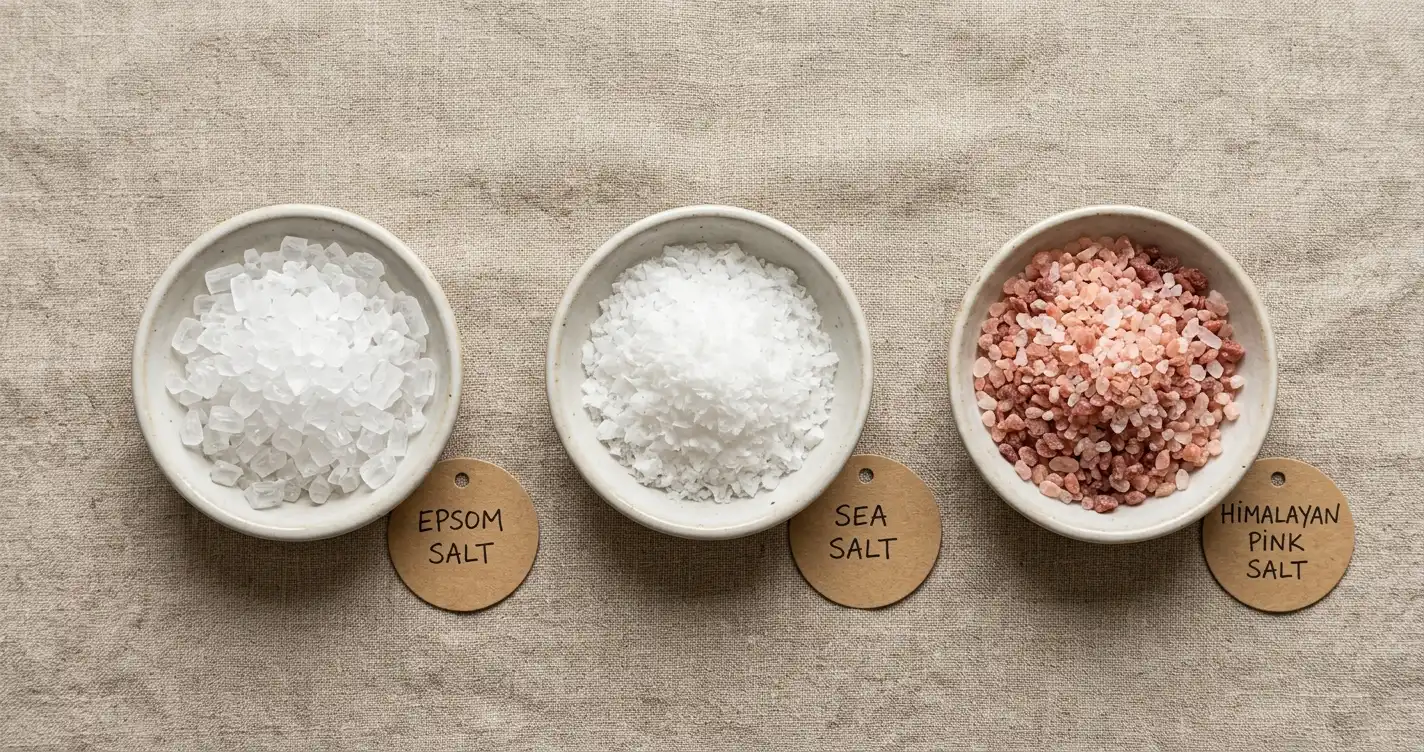
Epsom salt: magnesium sulfate; used mainly for soaking, not eating.
Sea salt: mostly sodium chloride with trace minerals; used in cooking and some scrubs.
Himalayan pink salt: sodium chloride with iron and other trace elements giving its pink hue; often used culinarily or in decorative bath blends.
Only Epsom salt delivers a meaningful dose of magnesium and sulfate — the two ions people are actually after when they run a therapeutic soak.
What Does a Bath With Epsom Salt Actually Do?
Soothing Sore Muscles and Post-Workout Recovery
Ask any long-distance runner or CrossFit devotee about their recovery routine and Epsom salt almost always makes the list. The combination of warm water and dissolved magnesium sulfate appears to help loosen tight muscle fibers after intense effort. Physical therapists have recommended the practice for decades, particularly for delayed-onset muscle soreness (DOMS) that shows up 24–48 hours after a hard session.
Easing Everyday Aches and Joint Discomfort
You don't need to be an athlete to benefit. Desk workers with cranky lower backs, warehouse staff on their feet for ten hours, weekend gardeners nursing sore knees — a warm soak can take the edge off general stiffness. It won't fix chronic conditions, but it offers a low-cost, low-risk way to unwind physically.
Promoting Relaxation and Stress Relief
There's something about twenty quiet minutes in warm water that resets the nervous system. Heat encourages vasodilation, breathing tends to slow, and the ritual itself — dim light, no phone, no notifications — signals your body that the workday is over. Many people report falling asleep faster on nights they've soaked.
Softening Skin and Exfoliation
Epsom salt's crystals dissolve gently, but a light scrub with slightly damp granules can smooth rough patches on heels, elbows, and knees. Follow with moisturizer to lock in hydration, since salt water can leave skin feeling tight.
The "Detox" Claim — What Science Actually Says
Here's where things get honest. Wellness marketing loves the word "detox," but your liver and kidneys handle that job perfectly well on their own. There's no strong clinical evidence that soaking pulls toxins out through your pores. What a bath does do is help you feel better through heat, relaxation, and possibly modest magnesium exposure. Feeling refreshed is real. "Flushing toxins" is largely marketing.
How Does an Epsom Salt Bath Work?
Absorption Through the Skin: Fact or Myth?
This one's genuinely debated. A small 2004 study from the University of Birmingham suggested magnesium levels rose in participants' blood after Epsom salt baths, but the sample was tiny and the results were never published in a peer-reviewed journal. Larger, more rigorous studies are still lacking. The takeaway: some transdermal absorption may occur, but the amount and effect vary from person to person.
The Role of Warm Water and Buoyancy
Interestingly, plain warm water alone offers real benefits — it reduces joint loading (you effectively weigh less in a full tub), increases circulation, and lowers muscle guarding. So even if magnesium absorption is modest, the soak itself is doing work.
Why People Feel Better After a Soak
Combine the physical effects — heat, buoyancy, improved circulation — with the psychological effects of disconnecting from screens and obligations, and you have a genuinely restorative twenty minutes. Ritual matters as much as chemistry here.
How to Take an Epsom Salt Bath the Right Way
How Much Epsom Salt Should You Use?
The standard recommendation is 1 to 2 cups per standard-size bathtub. For a foot soak in a basin, a few tablespoons is plenty. More isn't automatically better — overdoing it can leave skin feeling dry.
Ideal Water Temperature and Soak Duration
Aim for warm, not scalding — roughly 92–100°F (33–38°C). Soak for 12 to 20 minutes. Longer than that and your skin starts to prune uncomfortably, and the water cools past its therapeutic sweet spot.
Step-by-Step: The Perfect Routine
Fill the tub with comfortably warm water.
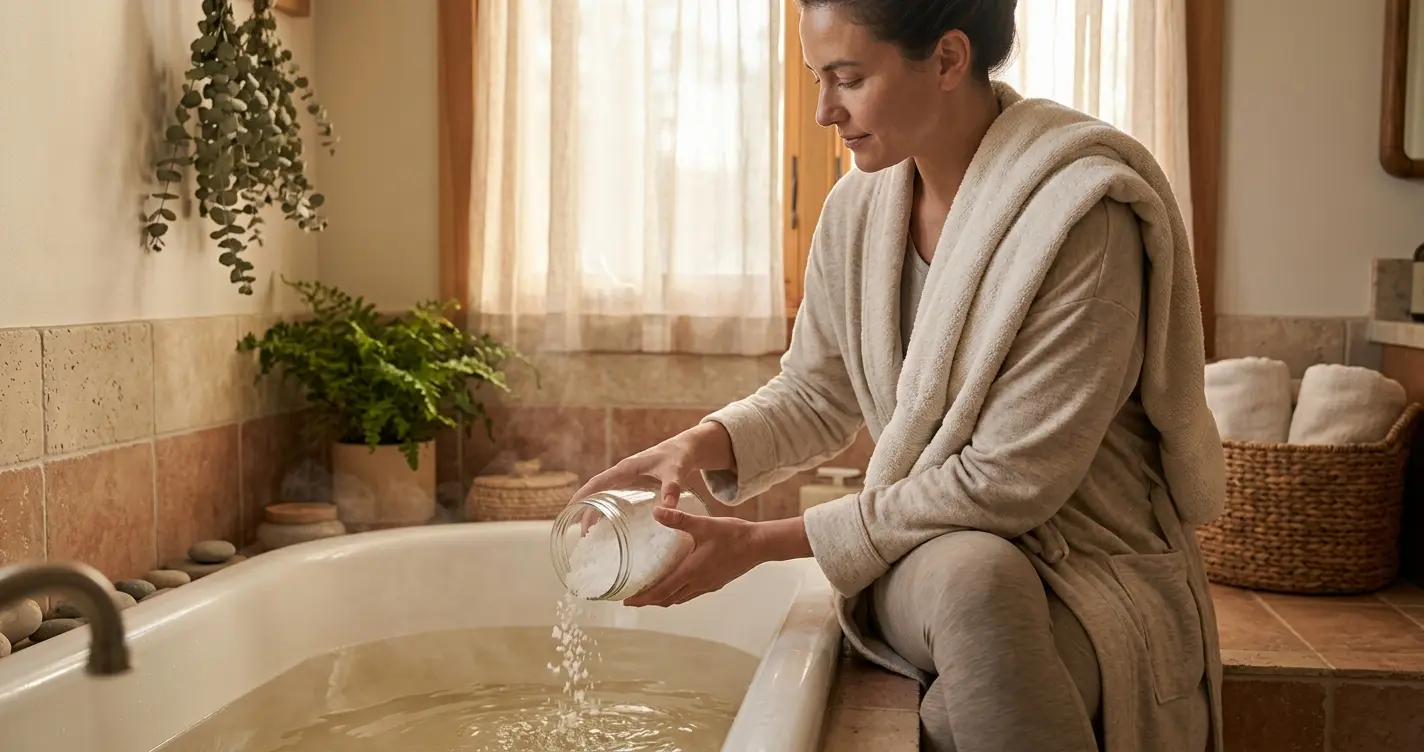
Add 1–2 cups of Epsom salt while the tap is still running so it dissolves evenly.
Swirl with your hand to check no undissolved crystals sit at the bottom.
Soak for 12–20 minutes, keeping a glass of water nearby.
Rinse briefly if your skin feels salty, then pat dry.
Apply moisturizer while skin is still slightly damp.
Enhancing Your Bath With Essential Oils
A few drops of lavender for winding down, eucalyptus when you're congested, or peppermint for tired feet all work well. Mix oils into the Epsom salt first before adding to water — this helps disperse them so they don't float as concentrated droplets that could irritate skin.
Safety Tips and Precautions
Who Should Avoid Epsom Salt Baths
Skip the soak — or check with a doctor first — if you have open wounds, severe eczema or psoriasis flares, kidney disease, uncontrolled diabetes, or serious cardiovascular conditions. Magnesium is processed by the kidneys, so anyone with reduced kidney function should be especially cautious.
Signs You're Overdoing It
Dizziness when standing up, unusual fatigue, itchy or dry skin after every soak, or headaches can all suggest you're bathing too hot, too long, or too often. Ease back and hydrate.
Pregnancy, Children, and Pets
Pregnant individuals should keep water temperature moderate (not hot) and consult their OB before starting a new routine. Children can enjoy shorter, milder soaks with reduced salt amounts. As for pets — don't let dogs or cats drink bathwater containing Epsom salt, as ingesting it can cause GI upset.
Frequency: How Often Is Too Often?
Two to three times a week is a reasonable ceiling for most people. Daily soaks can strip natural oils and leave skin unhappy over time.
Epsom Salt vs. Bath Bombs vs. Bath Salts: What's the Difference?
What Are Bath Salts?
Commercial bath salts are typically blends — Epsom salt or sea salt mixed with fragrance, botanicals, dyes, and sometimes carrier oils. They're designed for a sensory, spa-like experience rather than pure recovery.
What Are Bath Bombs?
Bath bombs are the fizzy party trick of the bathroom. They combine baking soda and citric acid, which react when wet to release CO₂ bubbles. Most also contain oils, colorants, and fragrances. They're fun and moisturizing, but they're not built for muscle recovery the way plain Epsom salt is.
Can You Combine Epsom Salt With a Bath Bomb?
Absolutely — and many people do. Dissolve the Epsom salt first, then drop the bath bomb in for the fizz show. You get the therapeutic soak plus the aromatherapy and skin-softening oils.
Choosing the Right Product
Sore muscles or recovery focus? Plain USP-grade Epsom salt.
Relaxation and mood? Scented bath salts or a lavender bath bomb.
Gift or treat? A curated bath bomb set usually wins.
Buying and Storing Epsom Salt
What to Look For on the Label
Look for "USP grade" or a clear "for bath use" indication. Agricultural-grade Epsom salt exists too (gardeners use it as a magnesium supplement for tomatoes and peppers), but that grade isn't refined for skin contact.
Where to Buy Quality Epsom Salt
Drugstores, supermarkets, big-box retailers, and online marketplaces all carry it. It's inexpensive — a large bag usually costs less than a fancy coffee.
How to Store It Properly
Keep it in an airtight container somewhere dry. Bathroom humidity will turn a loose bag into a solid brick over a few weeks.
Final Thoughts
An Epsom salt bath won't detox your organs or melt fat, but it also doesn't need to. What it offers is real: eased muscle tension, softened skin, a quiet ritual that helps you decompress. For a few dollars and twenty minutes, that's a decent return on investment.
Pair it with a lavender bath bomb on a rough day, keep the water warm rather than scalding, and don't overdo the frequency. Simple, honest self-care — no miracle claims required.
Frequently Asked Questions
Q: Can I take an Epsom salt bath every day?
A: You can, but most dermatologists suggest keeping it to 2–3 times weekly. Daily hot soaks can dry out skin, especially in winter or if you already lean toward eczema.
Q: How long should I soak in an Epsom salt bath?
A: Twelve to twenty minutes is the sweet spot. Beyond that, your skin starts to feel over-soaked and the water cools below therapeutic temperature.
Q: Does an Epsom salt bath help with weight loss?
A: Not meaningfully. Any scale drop right after a bath is water weight from sweating, and it comes right back when you rehydrate. Skip the marketing that claims otherwise.
Q: Can Epsom salt baths help with anxiety or insomnia?
A: Many people find that the ritual — warm water, quiet, low light — genuinely helps them wind down before bed. Whether the effect comes from magnesium, heat, or the break from screens, the outcome is what matters.
Q: Is it safe to soak with sensitive skin?
A: Usually, but do a small patch test first. Dissolve a bit in warm water, dab it on your inner arm, and wait a few hours. Choose fragrance-free products if you're prone to reactions.
Q: Do I need to rinse off after the bath?
A: Optional. If your skin feels tight or salty, a quick lukewarm rinse and moisturizer help. Otherwise, just pat dry.
Q: Can Epsom salt baths help with foot odor or athlete's foot?
A: A warm foot soak with Epsom salt can help reduce odor and soothe tired feet. It's not a cure for athlete's foot — that fungal infection needs proper antifungal treatment — but it can complement care by keeping feet clean and less irritated.