
A practical guide to understanding when magnesium sulfate helps, when it hurts, and the warning signs everyone should recognize.
Why This Everyday Bath Product Deserves a Closer Look
Walk into any drugstore and you'll find bags of Epsom salt sitting near the bath bombs, priced like candy. It looks harmless. For most people, in most situations, it more or less is.
But here's the part that rarely makes it onto the label: American poison control centers still handle thousands of Epsom salt-related calls each year, and the majority involve oral ingestion, pediatric accidents, or use on skin that wasn't in any shape to be soaked. It's not a scary product. It's just one that gets used carelessly because it feels familiar.
The Chemistry Hiding in the Bag
Epsom salt isn't salt in the way most people think of it. Chemically, it's magnesium sulfate heptahydrate — a completely different compound from table salt (sodium chloride), sea salt, or the pink Himalayan variety that's had such a strong marketing run.
That distinction matters more than shoppers usually realize. Magnesium sulfate behaves one way when it hits the digestive tract (as an osmotic laxative, drawing water into the bowel) and quite differently when dissolved in warm bathwater. Dermal absorption, despite what wellness blogs suggest, is far more limited than oral intake — a nuance we'll come back to.
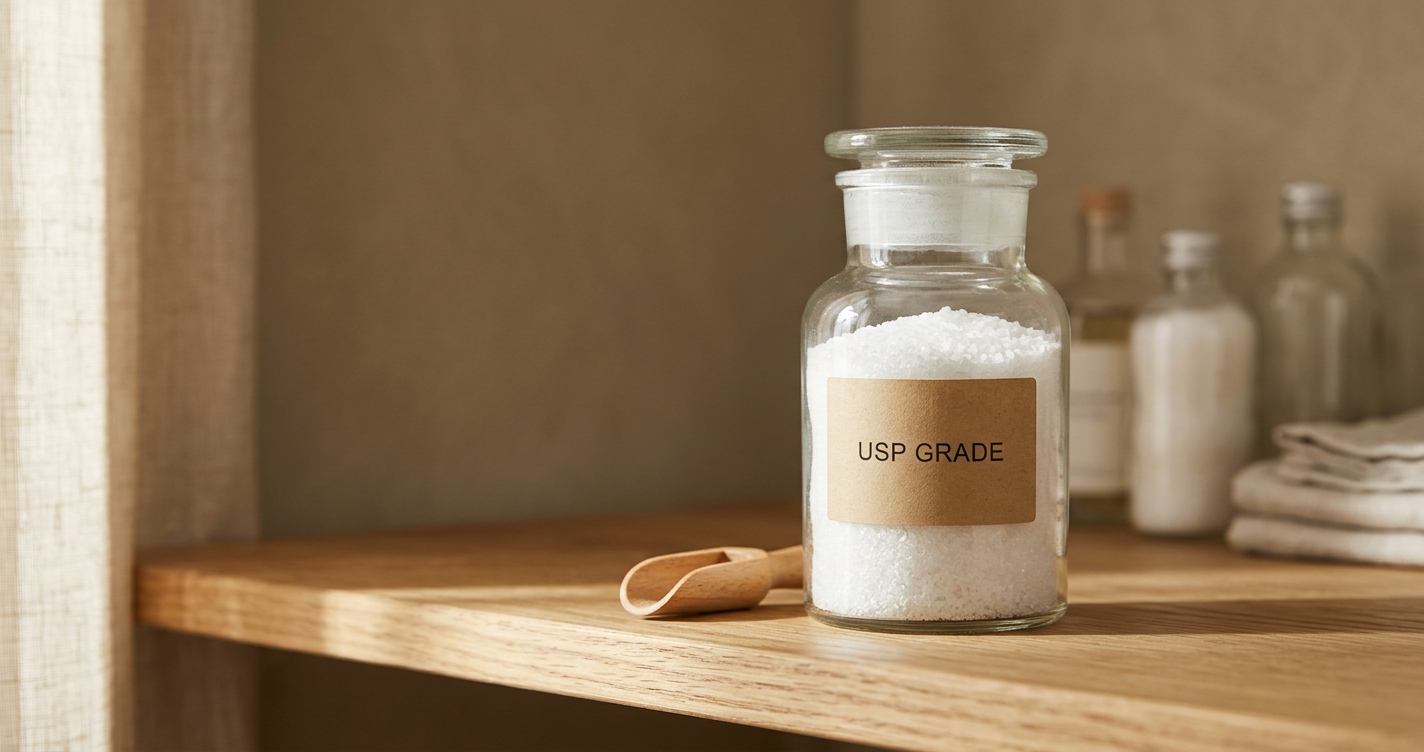
There's also the grade question. The USP designation on a bag tells you it meets pharmaceutical purity standards. Agricultural or technical grade — often sold cheaper and used as a fertilizer or de-icer — can contain trace impurities you probably don't want soaking into your pores. If a bag doesn't specify USP, treat it as a garden product, not a bath one.
The Gap Between Folk Wisdom and Clinical Evidence
Dermatologists tend to agree that a warm Epsom soak is fine for most healthy adults, and can genuinely soothe sore muscles — though whether that comes from the magnesium or just the hot water is still debated. Where they push back is on the more ambitious claims: detoxing organs, "pulling toxins" through the skin, curing chronic conditions. There isn't good evidence for any of that.
The FDA does regulate Epsom salt as an over-the-counter laxative, and the warning label on those boxes is notably longer than the two sentences printed on the bath variety. That gap is worth noticing.
Who Should Think Twice Before Reaching for the Bag
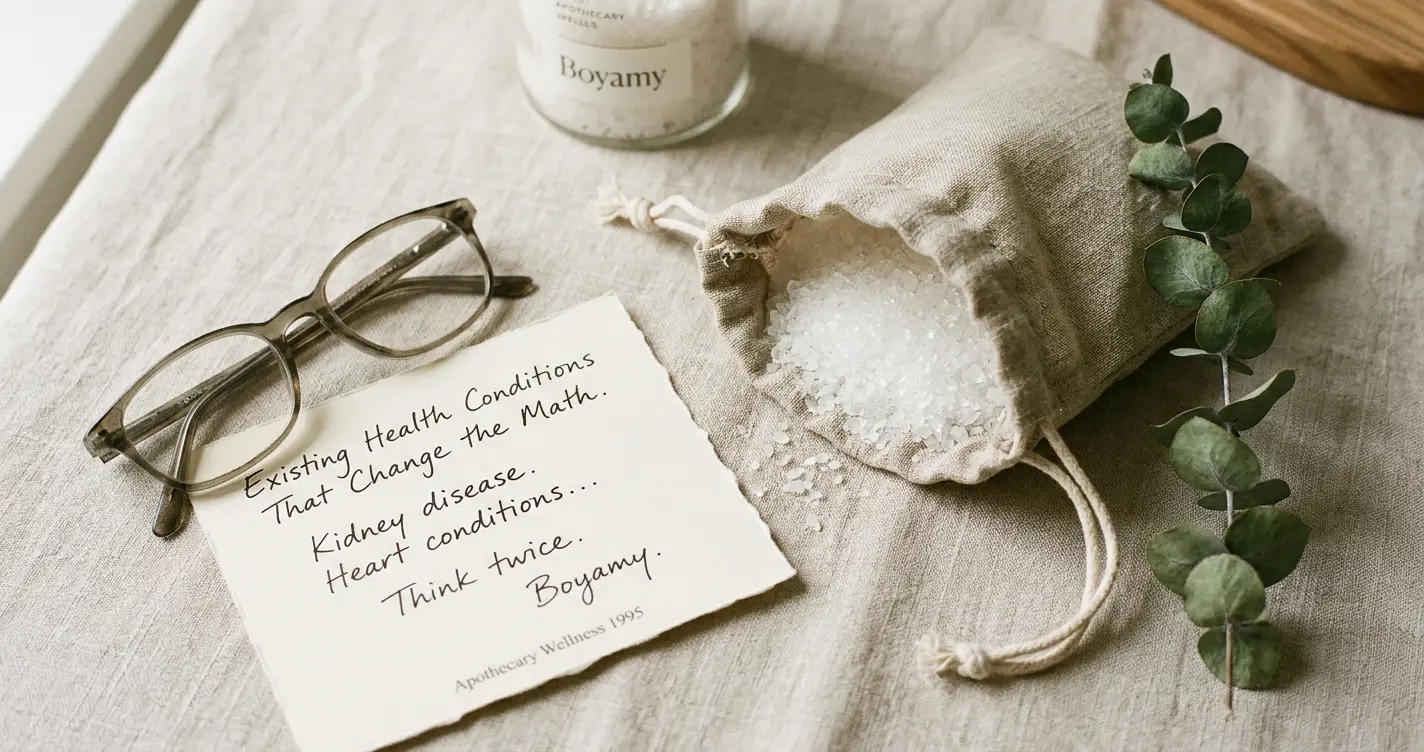
Existing Health Conditions That Change the Math
Kidney disease. Your kidneys are what clear excess magnesium from the bloodstream. When they're compromised — even mildly — a dose that would be nothing for a healthy person can accumulate to dangerous levels. This applies to oral use especially, but chronic soaking isn't risk-free either.
Heart conditions. Magnesium influences both blood pressure and heart rhythm. If you're already on medication that touches either, adding another variable isn't wise without a doctor weighing in.
Diabetes. Two separate concerns here. Peripheral neuropathy dulls the ability to feel water temperature, making burns from too-hot soaks more common than you'd expect. Foot soaks, in particular, deserve extra caution — the softened, macerated skin becomes vulnerable to infection, which heals slowly in diabetic patients.
Pregnancy. Oral use is generally discouraged unless a physician specifically prescribes it. Topical soaks are more of a gray area — many OBs don't object, but the "safe" position is to ask before starting, especially in the third trimester.
Medications That Don't Play Well With Magnesium Sulfate
Certain antibiotics — tetracyclines and quinolones — bind with magnesium and lose effectiveness. Spacing doses helps, but this is mainly a concern with oral Epsom use.
Muscle relaxants and some blood pressure medications can produce additive effects, meaning more sedation or a steeper drop in pressure than expected.
Digoxin and diuretics interact with magnesium and potassium balance, creating electrolyte complications that aren't always obvious until they cause symptoms.
Children, Elderly Users, and Broken Skin
Pediatric ingestion of Epsom salt — either dry from the bag or by swallowing bathwater — is one of the more common calls poison control fields. Kids are small, and the therapeutic window is narrow.
Older adults have thinner skin and slower magnesium clearance, which shifts the risk profile even for topical use. And anyone with open wounds, active eczema, psoriasis flares, or fresh surgical sites should skip the soak entirely. The salt draws water out of already-compromised tissue, delaying healing rather than helping it.
The Bath: What's Safe, What's Overdone
Realistic Dosing for a Soak
The figure you'll see everywhere is two cups of Epsom salt in a standard bathtub. That number comes from consumer product recommendations rather than clinical trials, but it's a reasonable ceiling for most adults.
Water temperature matters more than people give it credit for. Anything above around 40°C (roughly 104°F) starts to cause vasodilation strong enough to drop blood pressure — combine that with magnesium absorption and you can feel genuinely lightheaded getting out of the tub.
Duration is the other overlooked variable. The "soak as long as you want" advice on lifestyle sites is bad guidance. Twelve to fifteen minutes is a more defensible upper limit for most people. Longer than that and you're mostly just prunier, with more chance of skin barrier disruption and dizziness on standing.
Signs You've Overdone It in the Tub
Feeling faint or dizzy when you stand up — a classic orthostatic drop
Skin irritation, unexpected itching, or a rash that appears hours after the soak
Muscle weakness that lingers well past the bath itself
Any of these? Cut back on frequency, duration, or salt concentration next time. If they persist across sessions, stop and check with a doctor.
Foot Soaks and Localized Use
Foot soaks are where diabetic caution really applies. For fungal infections, the picture is mixed — a short soak can soften calloused tissue for treatment, but prolonged wet exposure macerates skin and creates the exact damp environment fungi thrive in. Twenty minutes, dried thoroughly afterward, is a better rhythm than a leisurely half hour.
A small note that gets overlooked: dissolved magnesium sulfate can dull certain metals, so remove jewelry before soaking. It can also contribute to plumbing scale over time in older pipes.
Oral Use: The Category Most People Should Skip
Why Ingesting Epsom Salt Is a Medical Decision, Not a Wellness Choice
Magnesium sulfate has a legitimate history as an osmotic laxative — that's what the boxed pharmaceutical product is for, and it works exactly as advertised. What it isn't is a detox agent, a liver flush, or a general wellness intervention.
Emergency medicine physicians see a fairly steady stream of patients who've followed some version of an internet "cleanse" and ended up with severe dehydration, electrolyte disturbances, or worse. The gap between influencer confidence and gastroenterology consensus on this point is wide.
Overdose Symptoms Worth Memorizing
Early markers of magnesium sulfate overdose include nausea, facial flushing, drowsiness, and a general sense of heaviness. If it progresses, you can see slowed breathing, irregular heartbeat, and dangerously low blood pressure — that's the point at which emergency services need to be involved, not the point at which you wait to see if it passes.
In people with kidney impairment, hypermagnesemia can escalate within hours. This isn't a "sleep it off" situation.
If You've Already Taken Too Much
Poison control will typically ask how much, when, whether it was USP or bath grade, and what other medications are on board. Chugging water isn't the fix people assume — it can worsen electrolyte balance rather than dilute the problem.
Mild GI upset in an otherwise healthy adult usually resolves with monitoring. Any of the cardiovascular or breathing symptoms, or ingestion by a child, elderly person, or someone with kidney issues — that's a call to poison control or the ER, not a wait-and-see.
Storage, Quality, and the Little Things That Matter
Reading the Label Like a Pharmacist Would
USP on the label guarantees pharmaceutical purity. Without it, you're guessing about what else is in the bag.
Fragranced Epsom products — lavender, eucalyptus, and the rest — smell nice, but the added dyes and perfumes are the most common culprits behind post-soak skin irritation. If you've reacted to a scented version, try an unscented USP-grade product before writing off Epsom salts entirely.
Expiration dates on Epsom salt are somewhat theoretical for a stable inorganic compound, but hardened clumps, discoloration, or odd smells suggest moisture contamination and are worth taking as a signal to replace the bag.
Keeping It Away From the Wrong Hands
Because Epsom salt looks like sugar or coarse salt, kids and pets get into it. Dogs, in particular, can develop serious magnesium toxicity from ingesting a surprisingly small amount. Store it up high, and out of the cabinet where cleaning products and medications share space — cross-contamination from opened containers is a real, if unglamorous, hazard.
Talking to a Healthcare Provider Before You Start
If you have a chronic condition, take regular medications, or have surgery coming up, a two-minute conversation with your doctor or pharmacist is worth the trouble. For athletes, physiotherapists and athletic trainers often have more practical input on soak protocols than a general practitioner will.
Useful questions to bring: How often is reasonable for my situation? Any interactions with what I'm already taking? Is there a reason to avoid it around my next procedure? Specific beats general every time.
A Sensible Bottom Line
Epsom salt is genuinely useful. It's cheap, it's been around forever, and for a lot of people it's a real part of how they wind down or recover after hard training. None of that is in question.
What's worth pushing back on is the wellness-industry habit of treating it like an all-purpose remedy with no downsides. The precautions above aren't scare tactics — they're the small things that separate someone using it well from someone ending up in an urgent care lobby explaining what they did over the weekend. Use it thoughtfully, respect the exceptions, and it stays what it should be: a boring, dependable bath additive that just quietly works.
Frequently Asked Questions
Q: Can I use Epsom salt every day?
A: You can, but most people shouldn't. Daily hot soaks disrupt the skin's lipid barrier over time, and while topical magnesium absorption is limited, it's not zero — repeated exposure can matter for people with kidney issues. Two or three times a week is a more sustainable rhythm for most.
Q: Does Epsom salt actually get absorbed through the skin?
A: Some, yes — but not much, and the evidence base is thinner than wellness marketing suggests. The most-cited study on the topic is a small, unpublished pilot from the early 2000s with real methodological limits. Skin absorption is real but modest; most of the muscle-relaxing benefit of a soak probably comes from the warm water itself.
Q: Is it safe during pregnancy?
A: Topical soaks are often permitted with a green light from your OB, particularly in the first two trimesters, at moderate water temperatures. Oral use is a different story — generally discouraged without medical supervision, since the laxative effect and electrolyte shifts add risk that isn't worth taking on casually.
Q: Can I give an Epsom salt bath to my child?
A: Pediatricians vary on this. For older children, a diluted soak with close supervision is usually fine. For toddlers and infants, the risk of drinking bathwater — which delivers a real oral dose — makes it not worth the trouble. When in doubt, ask your pediatrician about age and dose.
Q: What's the difference between Epsom salt and sea salt or Himalayan salt?
A: Different compounds entirely. Sea salt and Himalayan salt are primarily sodium chloride with trace minerals. Epsom salt is magnesium sulfate, with different chemistry, different effects, and different precautions. They're not interchangeable in any meaningful sense, even if they all end up in bath products.
Q: Are there better alternatives for muscle soreness?
A: Depends what you're treating. For acute inflammation, cold water immersion has stronger evidence. For chronic tightness, contrast therapy (alternating hot and cold) and simple heat both hold up well. Magnesium glycinate as an oral supplement — under medical guidance — is often better tolerated than magnesium sulfate for people actually low in magnesium.
Q: What should I do if I feel unwell after a soak?
A: Get out slowly to avoid a blood pressure drop, rinse off any residue, and hydrate with water at room temperature. Mild lightheadedness usually resolves within an hour. Persistent nausea, chest discomfort, unusual weakness, or breathing changes are reasons to call a doctor or poison control rather than tough it out.