
Ask ten people with eczema what finally calmed their skin, and you'll get ten different answers. Somewhere in that mix, goat milk soap tends to come up. It has a devoted following, a growing shelf presence at farmers markets, and marketing claims that range from reasonable to wildly overstated. So does it actually work?
This is a grounded look at what the ingredient does, who tends to benefit, and where the hype gets ahead of the evidence.
Understanding Eczema and Why Soap Choice Matters
Eczema isn't a surface problem. It's a barrier problem. And the wrong cleanser can undo weeks of careful skincare in a single ten-minute shower.
What Eczema Actually Does to Your Skin Barrier
Atopic dermatitis is driven by a combination of genetics and immune response. Many people with eczema carry a mutation affecting filaggrin, a protein that helps hold skin cells together and keeps moisture in. Without enough of it, water escapes, irritants get in, and the itch-scratch cycle begins.
The condition is more common than most people realize. Recent dermatology data linked to WHO estimates put it at roughly 10% of adults and up to 20% of children globally, with rates still climbing in urban populations.
Why Conventional Soaps Often Make Eczema Worse
Standard bar soap sits at a pH of about 9 to 10. Healthy skin sits closer to 5. That gap matters, because every wash with an alkaline cleanser temporarily disrupts the acid mantle that keeps skin flora balanced and lipids intact.
Add sulfates like SLS, synthetic fragrances, and preservatives such as MI/MCI, and you have a product that strips ceramides and irritates already-compromised skin. The National Eczema Association has been consistent on this point for years: cleanser selection is one of the few things patients can control that has real downstream effects.
What's Actually in Goat Milk Soap
To judge any bar honestly, you need to know what's inside. Marketing labels won't tell you much. Ingredient lists will.
The Key Compounds: Fats, Lactic Acid, and Vitamins
Medium-chain fatty acids, primarily caprylic and capric acid, which closely resemble the lipids in human sebum
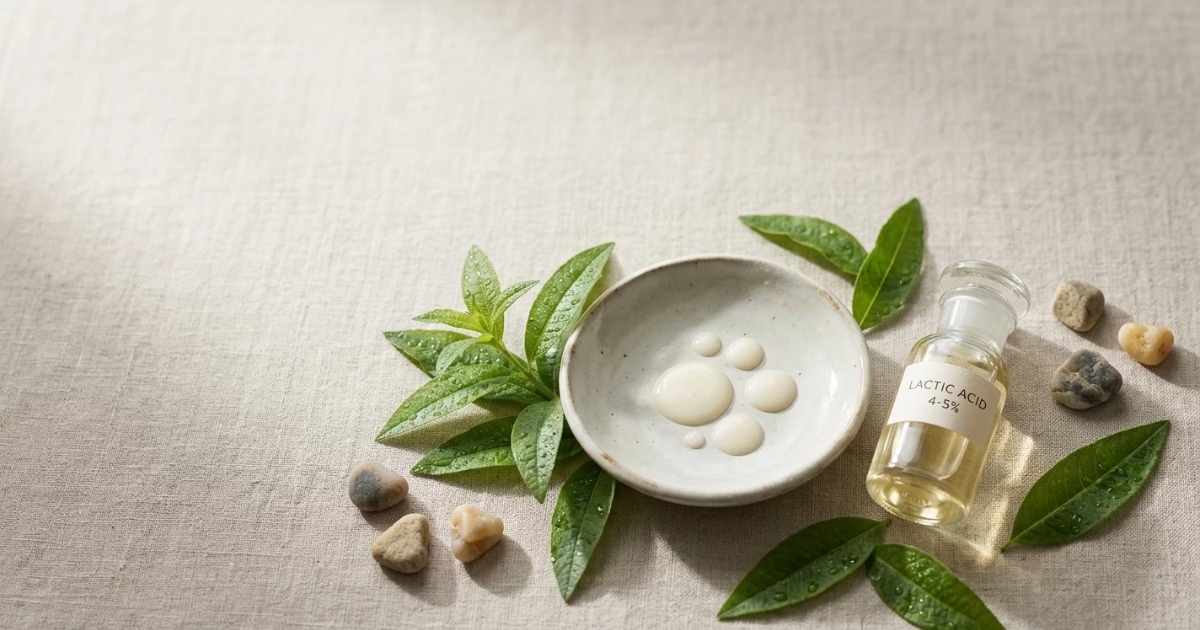
Naturally occurring lactic acid, typically around 4-5%, acting as a gentle alpha hydroxy acid
Vitamin A, several B vitamins, plus trace minerals like selenium and zinc
Lactic acid is the interesting one. At low concentrations it functions as a mild humectant and exfoliant, and small studies have shown it can improve stratum corneum hydration without the sting of stronger AHAs.
How Traditional Cold-Process Soap Differs From Commercial Bars
Cold-process soap is made by combining oils with lye at low temperatures, then curing the result for four to six weeks. This method retains the glycerin produced during saponification, a natural humectant that most commercial soapmakers extract and sell separately.
The takeaway: a handmade cold-process goat milk bar and a supermarket "goat milk" body wash are barely the same category of product. One is a moisturizing cleanser. The other is often detergent with milk powder added for the label.
Is Goat Milk Soap Good for Eczema? The Honest Answer
Short version: for many people with mild to moderate eczema, yes, as a supportive daily cleanser. It isn't a treatment. It won't stop a flare. But it can stop making things worse, which is often what people actually need from a soap.
What the Research Actually Shows
Peer-reviewed work on lactic acid at concentrations under 10% has consistently shown improvements in skin hydration and mild barrier support. Research on milk-derived lipids points in a similar direction for barrier repair.
Here's the honest part: no large-scale clinical trial has isolated goat milk soap as an eczema intervention. The evidence is mechanistic and adjacent, not direct. Anyone claiming otherwise is selling something.
Where Goat Milk Soap Genuinely Helps
Lower pH than standard soap, usually landing between 7 and 8 depending on cure time and superfat
Mild chemical exfoliation from lactic acid, without physical scrubbing
Retained glycerin that draws moisture into the skin during and after washing
Fewer added irritants than fragranced commercial cleansers, assuming the maker keeps the formula clean
Where It Falls Short (and When to Skip It)
It is not a substitute for prescribed topicals during an active flare. If your dermatologist has you on tacrolimus or a mid-potency steroid, goat milk soap is the supporting act, not the show.
Quality varies enormously. A well-made cold-process bar from a careful soapmaker is a different product from the fragranced novelty bars sold at gift shops under the same name. And "natural" scents matter here. Lavender, tea tree, and citrus essential oils can trigger irritation in eczema-prone skin even when the base is gentle.
Real-World Examples: What Users and Dermatologists Report
Theory is one thing. Wet skin at 7 a.m. is another.
Case Snapshots From Eczema Communities
Patterns in the National Eczema Association forums and on Reddit's r/eczema are surprisingly consistent. Users who switch from standard body wash to a plain cold-process goat milk bar tend to describe reduced itching within two to three weeks. Others report no change at all.
The common thread among those who benefit: they chose unscented, minimal-ingredient bars and stopped using anything else on their body. The people who saw no change often kept using scented lotions or hot water, undoing whatever benefit the soap provided.
What Dermatologists Tend to Recommend Alongside It
Cleanser choice is maybe 10% of a functional eczema routine. Moisturizer application within three minutes of getting out of the shower does far more. Lukewarm water instead of hot, short showers, and any prescribed medications carry the rest of the weight.
Treat soap as the thing that stops sabotaging your skin, and let the emollients and treatments do the healing.
How to Choose the Right Goat Milk Soap for Eczema
A short checklist will save you more grief than any brand recommendation.
Ingredient Red Flags to Avoid
"Fragrance" or "parfum" anywhere on the label
Sodium lauryl sulfate or other harsh surfactants
Artificial dyes and colorants
High concentrations of essential oils, even the trendy ones
Palm oil derivatives if you have a known sensitivity

Green-Flag Features to Look For
Cold-process or hot-process production stated on the label
Full INCI ingredient list, not vague marketing terms
Superfat content between 5 and 8% for extra unsaponified oils
Unscented, or scented only with skin-safe options at low concentration
Small-batch producers who publish sourcing and cure times
Reading the Label: A 30-Second Test
Here's a simple rule. If the ingredient list has fewer than ten items, no fragrance, and no dye, the bar is worth patch-testing. If it reads like a chemistry final, keep walking.
How to Use Goat Milk Soap Safely With Eczema
The product matters. So does how you use it.
The 48-Hour Patch Test
Rub a small lather on the inner forearm, rinse, and wait two days. Any redness, itching, or new dryness means the bar isn't for you, regardless of how many five-star reviews it has.
Bathing Protocol That Protects the Barrier
Water temperature under 37°C, or roughly the temperature you'd drink
Total shower time under 10 minutes
Pat dry with a soft towel, never rub
Apply moisturizer within three minutes, while skin is still slightly damp
When to Reduce Frequency or Stop
Watch for increased dryness after a week, new patches of irritation, or stinging when the lather touches your skin. Any of these means the bar is either wrong for you or being used too often. Cutting back to every other day sometimes solves it.
Goat Milk Soap vs Other Eczema-Friendly Cleansers
Placing goat milk soap alongside its competitors makes the tradeoffs clearer.
Compared to Syndet Bars (Dove Sensitive, Cetaphil)
Syndets are synthetic detergent bars formulated to a lower pH, and technically they aren't soap at all. They're more predictable batch to batch, but they don't deliver the lipid content of a cold-process goat milk bar. Trade consistency for nourishment, essentially.
Compared to Colloidal Oatmeal Cleansers
Colloidal oatmeal has stronger clinical backing for itch relief and is recognized by the FDA as a skin protectant. During flares, oatmeal wins. For daily maintenance on calm skin, goat milk soap holds its own.
Compared to Prescription Cleansers
No contest during an active flare. Prescription options exist because eczema is a medical condition. Goat milk soap belongs in your calm-skin routine, alongside your maintenance moisturizer, not in place of medication.
The Bottom Line
Goat milk soap can be a smart part of an eczema-friendly routine, particularly for anyone still using a fragranced commercial body wash. The lower pH, retained glycerin, and mild lactic acid content give it real advantages over standard soap.
What it isn't: medicine. It won't cure anything, won't shorten a flare, and won't work for every skin type. Choose a clean cold-process formulation, patch-test before committing, and pair it with proper moisturization and any prescribed treatments. That combination, not the soap alone, is what actually moves the needle.
FAQ
Q: Can goat milk soap cure eczema?
A: No. Eczema is a chronic condition without a cure. A well-formulated bar may reduce triggers and support your skin barrier, but it does not address the underlying immune dysregulation driving the condition.
Q: How long before I see results?
A: Users who respond well usually notice reduced dryness and less itching within two to four weeks of consistent use. If nothing has changed after a month, the product is likely neutral for your skin and you can look elsewhere.
Q: Is it safe for babies and children with eczema?
A: Generally yes, if the bar is unscented and cold-process. That said, pediatric dermatologists typically recommend syndet cleansers first for infants. Talk to your child's doctor before switching a routine that is already working.
Q: Can I use it on my face?
A: Yes, though facial skin is thinner and more reactive. Start with every other day, watch for tightness or flakiness, and stop if your skin feels stripped after rinsing.
Q: Are milk-protein allergies a concern?
A: Rarely, because topical exposure behaves differently from ingestion. Still, anyone with a diagnosed dairy allergy should patch-test with more care than usual, and stop at the first sign of a reaction.
Q: Does it help with other conditions like psoriasis or rosacea?
A: Anecdotally, some people with mild cases report benefits, but the evidence is even thinner than for eczema. Think of it as a gentle daily cleanser, not a treatment for any specific condition.
Q: Where should I buy it?
A: Small-batch soapmakers with transparent ingredient lists tend to outperform mass-market brands using goat milk as a marketing hook. Look for makers who publish their superfat percentage, cure time, and sourcing.