
If you've ever picked up a chunky, slightly rustic-looking bar at a farmers market and wondered why it costs four times more than the stuff at the drugstore, you've probably held a cold process bar. It's the soap-making method with a bit of a cult following, and once you understand what's actually happening inside that bar, the price tag starts making a lot more sense.
Let's walk through the whole thing together, no chemistry degree required.
Cold Process Soap in Plain English
At its heart, cold process soap is soap made the old-fashioned way. You mix oils with a lye solution, stir them together at room-ish temperature, pour the batter into a mold, and then wait. That's the whole game.
The Short Answer
If a soapmaker at a market said, "so what makes this bar special?" they'd probably tell you this: it's made from scratch with real oils, no synthetic detergents, and the natural glycerin stays right where it belongs, in the bar. That's the elevator pitch.
How It Differs From Melt-and-Pour and Hot Process
People often lump all handmade soap together, but the three main methods are pretty different once you look closer.
- Melt-and-pour uses a pre-made soap base you melt in the microwave. Fast, kid-friendly, but you're stuck with whoever formulated the base.
- Hot process cooks the soap batter in a slow cooker, speeding up saponification. Bars are ready sooner but tend to look rugged and rustic.
- Cold process skips the cooking. It's slower, but the batter stays fluid long enough to swirl, layer, and get artistic. This is where the pretty bars come from.
Cold process gives you the most creative freedom and, most soapers would argue, the smoothest finish.
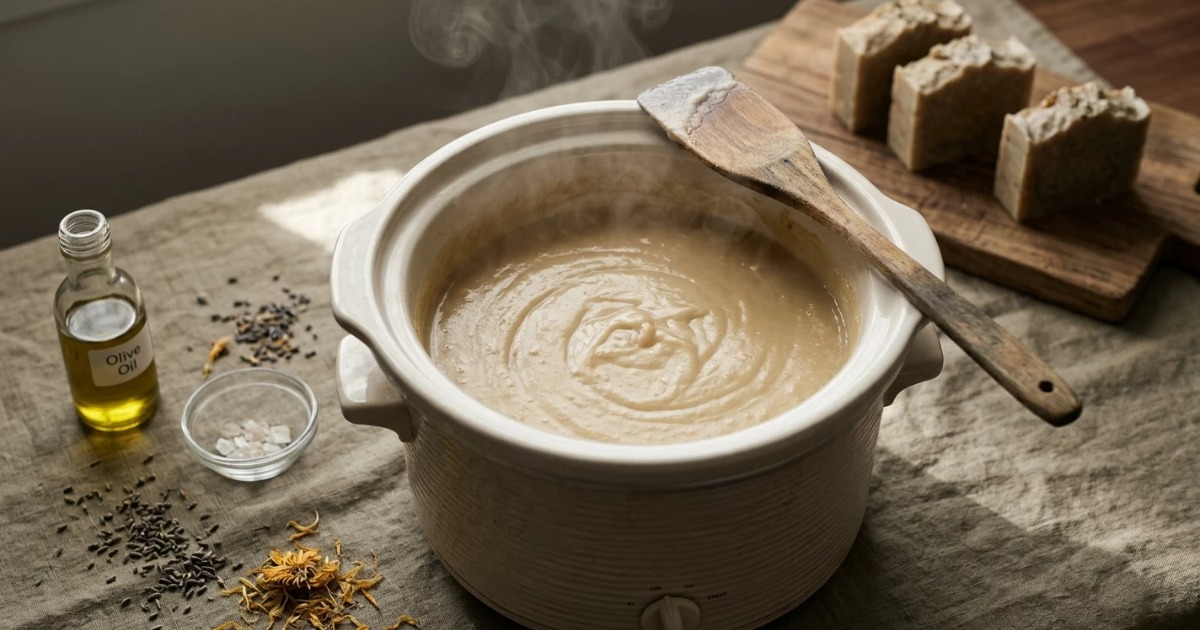
The Science Behind It (Without the Headache)
Saponification, Explained Simply
Here's the whole trick in one sentence: fats plus a strong base equals soap plus glycerin. That reaction is called saponification, and it's been happening in soap pots for thousands of years.
When oils meet sodium hydroxide (lye) dissolved in water, the molecules basically reshuffle. The fatty acids break away from their glycerin backbone and bond with sodium ions, creating soap. The glycerin stays behind as a natural humectant. That's why handmade bars often feel less stripping than commercial ones, which usually have the glycerin extracted out and sold off.
Why "Cold" Doesn't Mean Cold
This one confuses almost everyone. "Cold process" doesn't mean the soap is cold. When lye hits water, the mixture rockets up past 180°F on its own. Oils are usually gently warmed to melt any solid fats like coconut or shea. Both are then combined somewhere around 90 to 110°F.
The "cold" part just means you're not adding external heat during saponification. The reaction generates plenty on its own.
The Role of Lye (And Why You Shouldn't Fear It)
Yes, real soap needs lye. Every single bar. Even the fancy French triple-milled ones. Even the ones at Whole Foods. If it's true soap, lye was involved at some point.
Sodium hydroxide is caustic when raw, absolutely. You wear goggles, gloves, and a long sleeve shirt when handling it. But by the time saponification finishes and the bar cures, there's no free lye left. It's all been chemically converted. A properly formulated lye soap recipe is completely safe on skin, even sensitive skin.
What Actually Goes Into a Bar
The Oil Lineup
Every soapmaker has favorites, but a few oils show up in most recipes:
- Olive oil makes a mild, gentle bar. Traditional Castile soap is 100% olive.
- Coconut oil is the lather king. It bubbles like nothing else, but too much can be drying.
- Castor oil boosts and stabilizes lather. A little goes a long way.
- Shea butter adds creaminess and skin-loving unsaponifiables.
- Palm or lard gives hardness and a stable bar. Sustainability-minded soapers often swap in tallow or high-oleic sunflower.
The mix determines everything. A high-coconut bar squeaks when it lathers. A high-olive bar feels silky and takes longer to cure. Blending is half the craft.
Water, Lye, and the Occasional Milk Swap
Water dissolves the lye, and that's mostly it. But you can swap water for other liquids. Goat milk creates a creamy, almost pearlescent bar. Coconut milk adds richness. Beer (flat, please) gives a caramel color and interesting lather. These swaps require careful temperature control because milk sugars can scorch, but the results are worth the extra caution.
Add-Ins That Make Each Bar Unique
Once you've got the base, this is where the personality comes in. Essential oils for scent, dried botanicals for texture and looks, kaolin or French green clay for slip and detox, oatmeal or poppy seeds for gentle exfoliation, activated charcoal for a striking black bar. This is why no two artisan bars look alike.
How a Bar Is Actually Made
Step 1: Measuring and Mixing the Lye Solution
Precision matters here. Everything gets weighed on a digital scale, never measured by volume. The lye is slowly added to cold water (never the other way around, that can cause a volcano), stirred until dissolved, and then set aside to cool. Goggles and gloves stay on the whole time.
Step 2: Combining Oils and Reaching Trace
Once the oils are melted and both the oils and lye solution are within a similar temperature range, they get combined. A stick blender does the heavy lifting. The mixture thickens from watery to something like warm pudding, and that's what soapmakers call "trace." It just means the batter is emulsified and ready.
Trace is a weirdly satisfying moment. Ask any soaper.
Step 3: Pouring, Swirling, and Getting Creative
This is the fun part. Batter can be split into portions, colored with natural pigments or micas, and swirled into layers, drops, or peaks. Silicone loaf molds are the standard for beginners because they release easily. Some folks go elaborate with hanger swirls or spoon plops. Others keep it clean and simple.
Step 4: The Wait
Molds sit undisturbed for 24 to 48 hours while saponification finishes. Then the loaf is unmolded, cut into bars, and set out to cure.
Curing: The Part Everyone Underestimates
Why Curing Cold Process Soap Takes 4 to 6 Weeks
Fresh-cut bars are technically soap, but they're not ready. During curing, excess water evaporates, the pH stabilizes, and the crystal structure of the soap tightens up. The result is a harder, milder bar that lasts weeks longer in the shower.
Skipping the cure is like eating cookie dough. Technically edible. Not the same experience.
What Happens If You Use It Too Soon
Young bars are soft, dissolve fast, and can feel harsh even if the recipe is sound. Give them time. The bar you use at week two will be genuinely different from the same bar at week six.
How to Store Bars While They Cure
Airflow is everything. Bars need to breathe on all sides, so most soapers use a wire rack, a shoebox with the lid off, or parchment-lined shelves. Space them out so they're not touching, keep them out of direct sun, and turn them once a week if you're feeling thorough.
Why People Choose Cold Process Over Commercial Soap
Skin Feel and Natural Glycerin
Big soap manufacturers pull the glycerin out to sell separately for lotions and creams. In a handmade bar, the glycerin stays put. That's the difference you feel when your skin doesn't scream for moisturizer the moment you step out of the shower.
Ingredient Transparency
Read the back of a supermarket "beauty bar." You'll find sodium palmate, sodium tallowate, fragrance, tetrasodium EDTA, titanium dioxide, and a handful of others. A cold process label usually reads like a pantry list. Olive oil, coconut oil, water, sodium hydroxide, lavender essential oil. That's it.
The Environmental Angle
Handmade soap typically ship in paper or cardboard, not plastic bottles. The ingredients are biodegradable. The scale is small. It's not going to save the planet single-handedly, but the footprint is genuinely lower per wash than liquid body wash in a plastic pump.
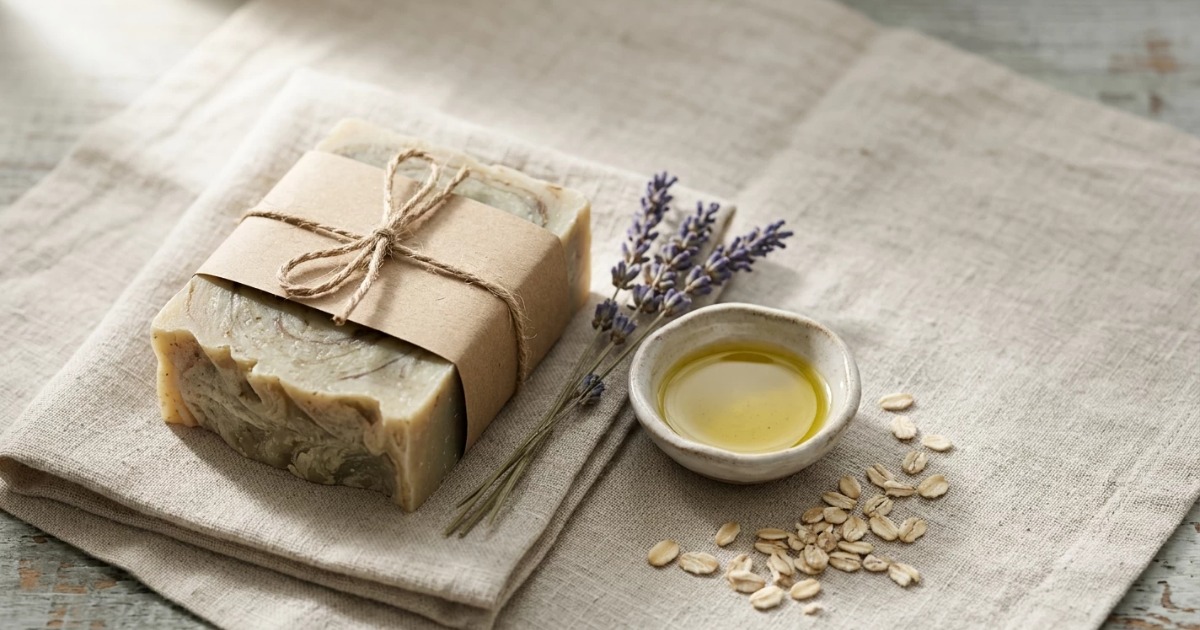
The Cost Question
A $9 artisan bar sounds pricey next to a $3 supermarket one. But a good cold process bar, properly cured, lasts four to six weeks with daily use. The commercial one might last two. Add in body wash refills, and the math gets closer than it looks.
Common Myths Worth Clearing Up
"Cold Process Soap Still Contains Lye"
Nope. Once saponification is complete, the lye is gone. Chemically converted, no longer present. Every bar of true soap, handmade or otherwise, went through this same reaction.
"Natural Means Hypoallergenic"
Sadly, no. Essential oils, botanicals, and even oatmeal can trigger reactions in sensitive folks. Natural is not the same as inert. Patch test anything new.
"Homemade Soap Doesn't Lather Well"
This one depends entirely on the recipe. A well-formulated bar with coconut and castor oils lathers plenty. If someone had a disappointing handmade bar, they probably tried a 100% olive oil Castile, which lathers like whispered promises. Different recipe, different experience.
Is It Right for Your Skin?
For Dry or Sensitive Skin
Look for bars high in olive oil, shea butter, or avocado oil, with a superfat of 6% to 8% (that just means extra unsaponified oil left in the bar for moisture). Skip strong essential oils and go fragrance-free if you're truly reactive.
For Oily or Acne-Prone Skin
Clay-based bars, especially with bentonite or French green clay, can help draw excess oil. Activated charcoal bars are popular for the same reason. Lower superfat percentages (2% to 4%) keep things from feeling too rich.
When to Stick With a Dermatologist-Recommended Cleanser
If you're managing eczema, rosacea, or acne with prescription products, don't swap them out for a market bar just because it's pretty. Handmade soap is wonderful, but it's not medicated. Use it on your body and keep the doctor's cleanser for the trouble spots.
Thinking About Trying It Yourself?
What a Beginner Setup Looks Like
You can start for under $100. A digital scale, a stick blender from a thrift store, a silicone loaf mold, a couple of stainless bowls, safety gear, and a starter set of oils. Bramble Berry, Nurture Soap, and Bulk Apothecary are common go-tos for supplies in the U.S.
A Simple First Recipe to Look For
Search for a beginner recipe using olive, coconut, and castor. That trio is forgiving, cures reliably, and produces a solid all-purpose bar. Skip the goat milk swirl masterpieces for round two.
Safety Habits Worth Building Early
Goggles on before the lye comes out. Long sleeves, gloves, closed shoes. Good ventilation, ideally with a window open. Pets and kids in another room. Vinegar nearby for spills. These habits become automatic after a batch or two.
FAQ
Q: Is cold process soap safe for babies and kids?
A: Yes, as long as the recipe is gentle and fragrance-free. Look for bars specifically formulated for babies, usually a mild olive-heavy base with no essential oils or exfoliants.
Q: How long does a bar of cold process soap last?
A: A well-cured bar used daily typically lasts four to six weeks, sometimes longer if you keep it dry between uses. Commercial bars usually clock in around two to three weeks.
Q: Can I use cold process soap on my face?
A: It depends on the recipe. A high-olive, low-cleansing bar with a generous superfat can work well. A high-coconut bar will probably feel too stripping. Read the ingredient list before you swipe it across your cheeks.
Q: Why does my bar have a white powder on top?
A: That's soda ash. It forms when unsaponified lye reacts with carbon dioxide in the air during the first day or two. It's harmless, purely cosmetic, and can be wiped off with a damp cloth or steamed away.
Q: Does cold process soap expire?
A: Sort of. It doesn't spoil like food, but oils can go rancid over time, causing yellow-orange spots called DOS (dreaded orange spots). Stored in a cool, dry, airy spot, most bars stay great for a year or more.
Q: Can I make cold process soap without lye?
A: No. Soap by definition is the product of a fat and an alkali reacting. If there's no lye, it's not soap. Melt-and-pour bases skip the lye step for you because the manufacturer already did that part upstream.
Q: Why is handmade soap more expensive?
A: Small batches, quality oils, hand labor, six weeks of curing space, and a maker who's actually earning a living instead of running a factory. When you break it down per shower, the price gap is smaller than it looks.