
Walk into any drugstore and you'll spot it: a small amber bottle of thick, syrupy oil sitting between the coconut oil and the vitamin E. Castor oil has been quietly holding its spot on shelves for decades, but suddenly it's everywhere. TikTok scalp routines, dermatologist videos, overpriced "wellness kits" online.
So the real question isn't whether castor oil works. It's what it actually works for, and where the marketing has gotten ahead of the evidence. Let's sort through that honestly.
Introduction: Why Castor Oil Is Back in the Spotlight
Old ingredients tend to cycle back when people get tired of complicated 12-step routines. Castor oil fits that mood. One ingredient, one bottle, dozens of possible uses.
A Brief History Most People Skip
Castor seeds have turned up in Egyptian tombs dating back over 4,000 years, where the oil was burned in lamps and rubbed on skin. Ayurvedic practitioners in India have used it for centuries as a digestive aid and joint treatment. And up until the mid-20th century, American grandmothers were still spooning it into reluctant children with stomach troubles.
Why Everyone's Talking About It Again
Search interest for "castor oil packs" climbed sharply through 2024 and 2025, and it hasn't really cooled off. Part of it is social media. A handful of viral hair-growth videos put the oil back on the map. Part of it is a broader shift toward simpler, single-ingredient products. Either way, sales figures suggest the trend has legs.
What Exactly Is Castor Oil?
Before getting into what it can do, it helps to know what it actually is. Castor oil isn't like olive or coconut oil, even though it looks similar in the bottle.
From Seed to Bottle: How It's Made
The oil comes from the seeds of the Ricinus communis plant, a shrub native to tropical East Africa but now grown widely in India, which produces most of the world's supply. The seeds are shelled, then either cold pressed (mechanical squeezing at low temperatures) or solvent extracted using hexane. Cold pressing keeps more of the oil's natural properties intact, which is why the label matters.
The Star Ingredient: Ricinoleic Acid
Here's what makes castor oil chemically weird: about 85 to 90 percent of it is ricinoleic acid, a fatty acid you basically don't find in any other common plant oil. Ricinoleic acid carries a hydroxyl group on its molecular chain, which gives the oil its unusual thickness and its ability to hold moisture against the skin. It's also mildly anti-inflammatory, which explains a lot of the traditional uses.
Cold Pressed vs. Refined vs. Jamaican Black
Three main types show up on shelves. Cold pressed castor oil is pale yellow and considered the standard for skin and hair use. Refined versions are clearer and cheaper but stripped of some compounds. Jamaican black castor oil is made from roasted seeds, giving it a darker color, a smoky scent, and a slightly higher pH. Traits that many people with thick or textured hair prefer.
What Is Castor Oil Good For? The Uses That Actually Hold Up
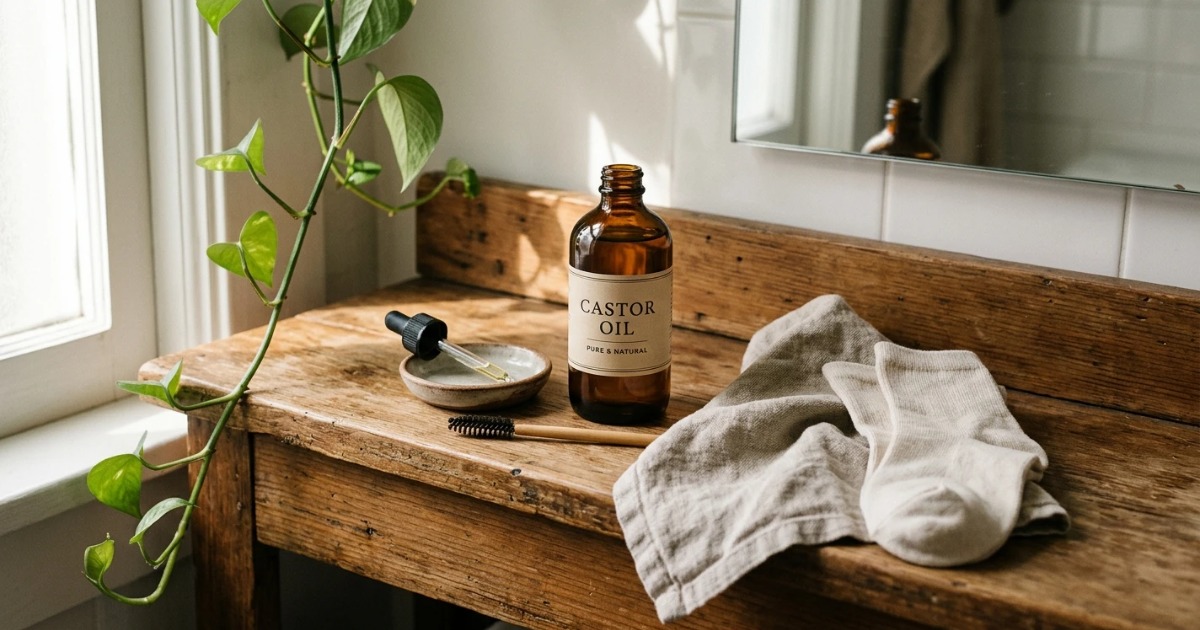
Time to answer the main question. I've grouped the uses by category, and for each one I'll tell you what the tradition says and what current research actually backs up.
Castor Oil for Hair: Growth, Thickness, and Scalp Health
This is where castor oil earned most of its recent fame. It's also where the biggest myths live.
Does It Actually Grow Hair Faster?
Short answer: not directly. A 2024 review published in dermatology literature looked at the available evidence and found no solid clinical trials showing castor oil speeds up hair growth the way minoxidil does. What it does do is condition the scalp, reduce breakage, and improve the appearance of thickness, which people often confuse with new growth. Ricinoleic acid may also inhibit prostaglandin D2, a compound linked to hair loss, though research on this is still early.
How People Are Using It on Eyebrows and Lashes
Dab a clean spoolie into a small amount of oil and brush it through brows before bed. Same idea for lashes, but stay well clear of the eye itself. Castor oil in the eye is uncomfortable and, in rare cases, causes temporary blurred vision.
The Overnight Scalp Massage Method
Warm a tablespoon in your palms, massage it into the scalp for five minutes, then cover with a shower cap and an old pillowcase. Wash out with a clarifying shampoo in the morning. Most people who see results report noticing changes around the 8 to 12 week mark, not overnight.
Castor Oil Uses for Skin: Hydration, Acne, and Beyond
Skin is where castor oil quietly outperforms its reputation.
Deep Moisture Without the Greasy Aftermath
The thick consistency actually helps here. The oil sits on the skin's surface and forms an occlusive layer, trapping water underneath. In practical terms, that means less transepidermal water loss overnight, and softer skin by morning.
Spot-Treating Blemishes and Dry Patches
Castor oil rates a 1 on the comedogenic scale, so it's unlikely to clog pores for most people. Its anti-inflammatory properties can calm redness around a blemish. That said, if you're acne-prone, run a patch test first and consider mixing it with a lighter oil.
Cuticles, Cracked Heels, and Stretch Marks
These are the underrated wins. A drop worked into dry cuticles beats most fancy nail treatments. For cracked heels, apply before bed and pull on cotton socks. On stretch marks, the evidence is mixed. It may ease the itch of stretching skin, but solid prevention data is thin.
Castor Oil for Constipation Relief
Here's the irony. The FDA has approved castor oil as a stimulant laxative for decades, yet most people talking about it online never mention this use.
How It Works as a Stimulant Laxative
Swallow it and ricinoleic acid gets released in the small intestine, binding to receptors on smooth muscle cells and triggering contractions. Effects usually hit somewhere between 6 and 12 hours. It works. But it's a short-term fix, not something to take regularly.
Safe Dosage and When to Skip It
Typical adult doses are 15 to 60 milliliters, taken once. Anyone pregnant should avoid it entirely, since it can trigger uterine contractions. People with intestinal blockages, appendicitis symptoms, or on diuretics should also stay away. When in doubt, check with a doctor before swallowing it.
Castor Oil Packs: Trend or Real Therapy?
These have become the darling of the wellness world. A cloth soaked in castor oil, placed on the abdomen, covered with plastic and a heating pad. The claims range from mild to wildly ambitious.
What the Claims Are vs. What Studies Show
Liver detox, hormone rebalancing, fibroid shrinkage. Most of these claims lack real clinical backing. A small 2011 study found castor oil packs may reduce constipation symptoms, and users often report less bloating and better sleep. But "feels good" and "clinically proven" aren't the same thing. Take the bigger claims with a grain of salt.
How to Actually Do a Castor Oil Pack at Home
Soak an unbleached cotton or wool flannel in cold pressed castor oil until damp but not dripping. Place it on the abdomen, cover with plastic wrap or an old towel, then a heating pad on low. Rest for 45 to 60 minutes. Store the flannel in a glass container in the fridge and reuse it for several sessions.
Lesser-Known Uses Worth Mentioning
A few more that don't get enough airtime.
Joint and Muscle Soreness
A 2023 study published in a rheumatology journal looked at topical castor oil application for knee osteoarthritis and found meaningful reductions in pain scores over a four-week period. Not a cure, but a reasonable adjunct for stiff joints.
Wound Healing and Minor Skin Irritations
Hospitals still use castor oil in some ointments, including a well-known product combining Peru balsam and trypsin, used on pressure ulcers and minor wounds. The oil creates a protective barrier while keeping tissue moist, which supports healing.
Real-World Examples: What Users and Experts Report
Lab data is one thing. What actually happens when people use this stuff is another.
A Dermatologist's Take on the Hair Growth Hype
Board-certified dermatologists I've read commentary from tend to land in the same spot: castor oil is a good conditioner and scalp treatment, but nobody should expect the results a prescription treatment delivers. Patients who use it consistently often see less breakage and shinier hair, which reads as "growth" in the mirror.
What Consumer Reviews Reveal
Skim through thousands of reviews on Amazon or Sephora and a pattern emerges. The winners are almost always about texture and softness. Softer skin, less frizzy hair, healthier lashes. The disappointments cluster around unrealistic expectations, mainly people expecting dramatic hair regrowth within a month.

A Quick Look at the 2026 Market
Global castor oil sales in personal care grew roughly 8 percent year-over-year, according to recent wellness industry reports. Hair care products and castor oil packs drive most of the growth, with the pack category especially popular among women aged 30 to 50.
How to Choose a Good Castor Oil
The bottle you buy matters more than most people realize.
What to Look For on the Label
Four things to check: cold pressed, hexane-free, organic if possible, and dark glass packaging. The dark glass matters because castor oil oxidizes when exposed to light over time.
Red Flags and Cheap Fillers to Avoid
If the oil is watery instead of syrupy, something's off. If the label doesn't specify the extraction method, assume it's solvent extracted. And if the price looks suspiciously low, it's probably diluted with mineral oil or nearing the end of its shelf life.
Price Range and Where to Buy
A good quality bottle runs somewhere between $8 and $20 for 4 to 16 ounces. Anything much cheaper deserves a second look. You don't need to spend $40 on a "luxury" version. Most of that price is the packaging.
Side Effects and Precautions
Most articles skim past this part, but it deserves a proper look.
Skin Reactions and Patch Testing
Contact dermatitis is uncommon but real. Rub a small drop on the inside of your forearm and wait 24 hours before applying it to your face or scalp. A bit of patience up front can save you a lot of grief later.
Who Should Avoid Castor Oil
Pregnant people, anyone with a history of intestinal obstruction, people on certain diuretics or heart medications, and children under 12 without medical supervision. When in doubt, ask a pharmacist.
The Toxic Seed Myth, Clarified
Yes, castor seeds contain ricin, one of the most toxic natural substances known. But ricin is a protein, and it stays behind in the seed pulp during pressing. The oil itself contains no ricin. Heating during processing destroys any trace residue anyway. Commercial castor oil is safe.
Final Thoughts: Is Castor Oil Worth the Hype?
Castor oil isn't a miracle. It won't double your hair length in a month or detox your organs. But dismiss it entirely and you miss something interesting: it's one of the few natural remedies that carries both centuries of traditional use and a real chemical basis for some of its effects.
Use it for what it actually does well — deep moisture, scalp conditioning, occasional constipation relief, joint soreness, small skincare tasks — and it earns its place in the cabinet. Expect miracles and you'll be disappointed. That's about as balanced a verdict as this humble little oil deserves.
FAQ
Q: Can I leave castor oil in my hair overnight?
A: Yes, most people can. Just use a shower cap and an old pillowcase. This stuff stains fabric, and the stains are stubborn.
Q: How long before I see results on my hair?
A: Around 8 to 12 weeks of consistent use, usually twice a week. Results vary quite a bit between people, and hair type plays a big role.
Q: Is castor oil safe to swallow?
A: Only in small, labeled doses as a short-term laxative. It's not a daily supplement, and long-term ingestion can throw off your electrolyte balance.
Q: Can I use castor oil on my face if I have oily skin?
A: Yes, but dilute it with a lighter oil like jojoba or squalane, and start with just a drop or two. The low comedogenic rating is reassuring, but everyone's skin is different.
Q: Does castor oil expire?
A: Roughly a year unopened, six months after opening. Store it somewhere cool and dark. Rancid oil smells sour and should be tossed.
Q: What's the difference between regular and Jamaican black castor oil?
A: Jamaican black is made from roasted seeds, which changes both the color and the pH. Many people with coarse or curly hair prefer it because the higher pH helps lift the cuticle. Regular cold pressed is milder and works better for finer hair.