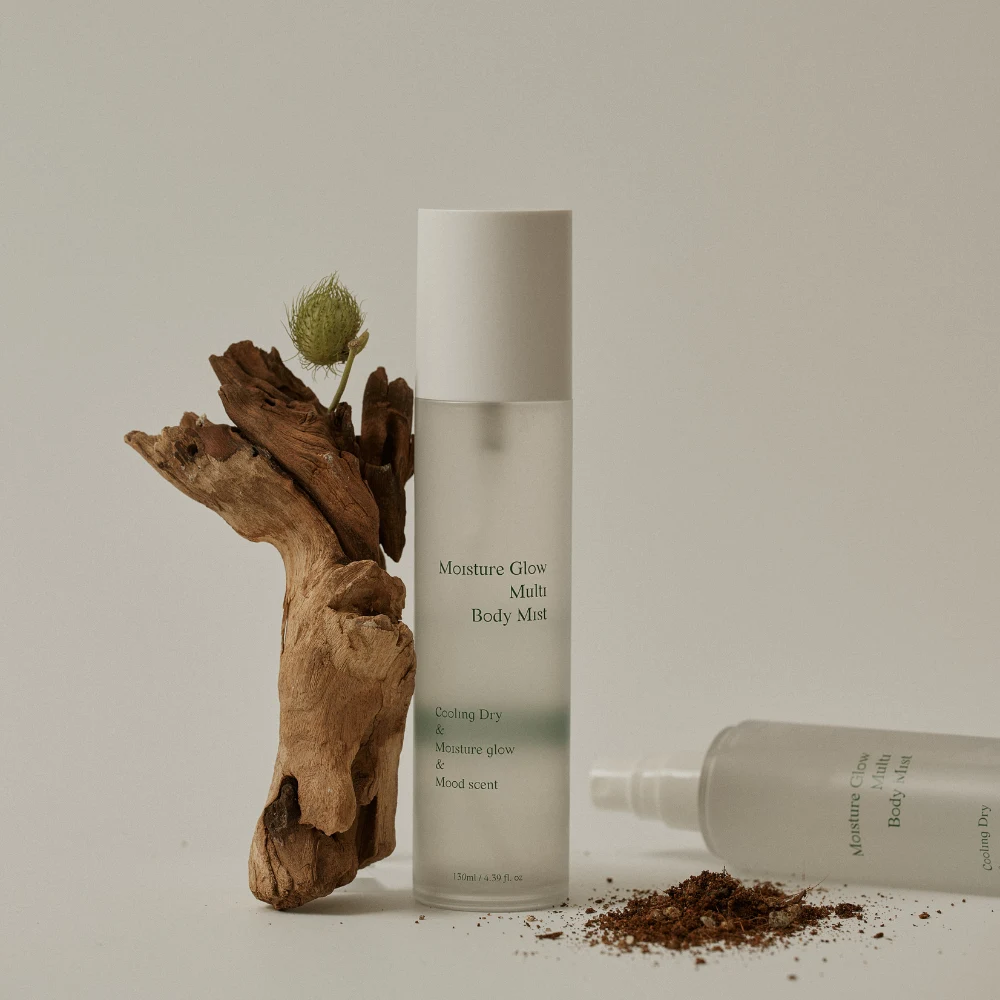

Compare PET, glass & aluminum body mist bottle packaging options, spray pumps, box design & wholesale suppliers to cut landed cost and win the shelf.
A body mist can smell incredible and still die on the shelf. Nine times out of ten the culprit isn't the juice — it's a spray head that spits instead of hazes, a bottle that yellows under fluorescent lighting, or a carton that shows up dented after a rough transit. I've spec'd hundreds of these SKUs, and the fragrance is rarely what kills a launch. The packaging is.
So let's skip the fluff and talk about the decisions that actually move product off the shelf.
Start Here: What Makes Body Mist Packaging Different from Perfume
People borrow perfume packaging logic and get burned. Body mist is its own category, and treating it like a scaled-down EDP leads to over-engineered, over-priced builds that don't fit how the product is used.
Lower fragrance load, higher volume
Body mists usually carry 1–3% fragrance oil. Compare that to 15–20% for an eau de parfum and the whole downstream spec changes. You're filling bigger — 100 to 250ml is the commercial sweet spot — and you don't need the heavy, precision atomizer a concentrated perfume demands.
Lower alcohol and oil load also means you get more forgiving material compatibility. That opens the door to PET and lighter closures that would be risky with an aggressive perfume formula.
The buyer's real question: what's the total landed cost per unit?
Everything else is noise until you can answer this. On a typical build, the cost splits roughly like this before freight: bottle around 40%, closure and pump about 25%, secondary packaging near 20%, and decoration the remaining 15%. Freight then layers on top, and glass punishes you here more than any line item on the BOM.
Keep that ratio in your head. When a supplier pushes an expensive foil-stamped rigid box for a $2 retail mist, you'll instantly see why the math breaks.
Body Mist Bottle Packaging Options: PET, Glass & Aluminum Compared
The material choice sets the ceiling for everything — perceived value, freight, breakage, shelf life. Here's how I actually decide between the three body mist bottle packaging options.
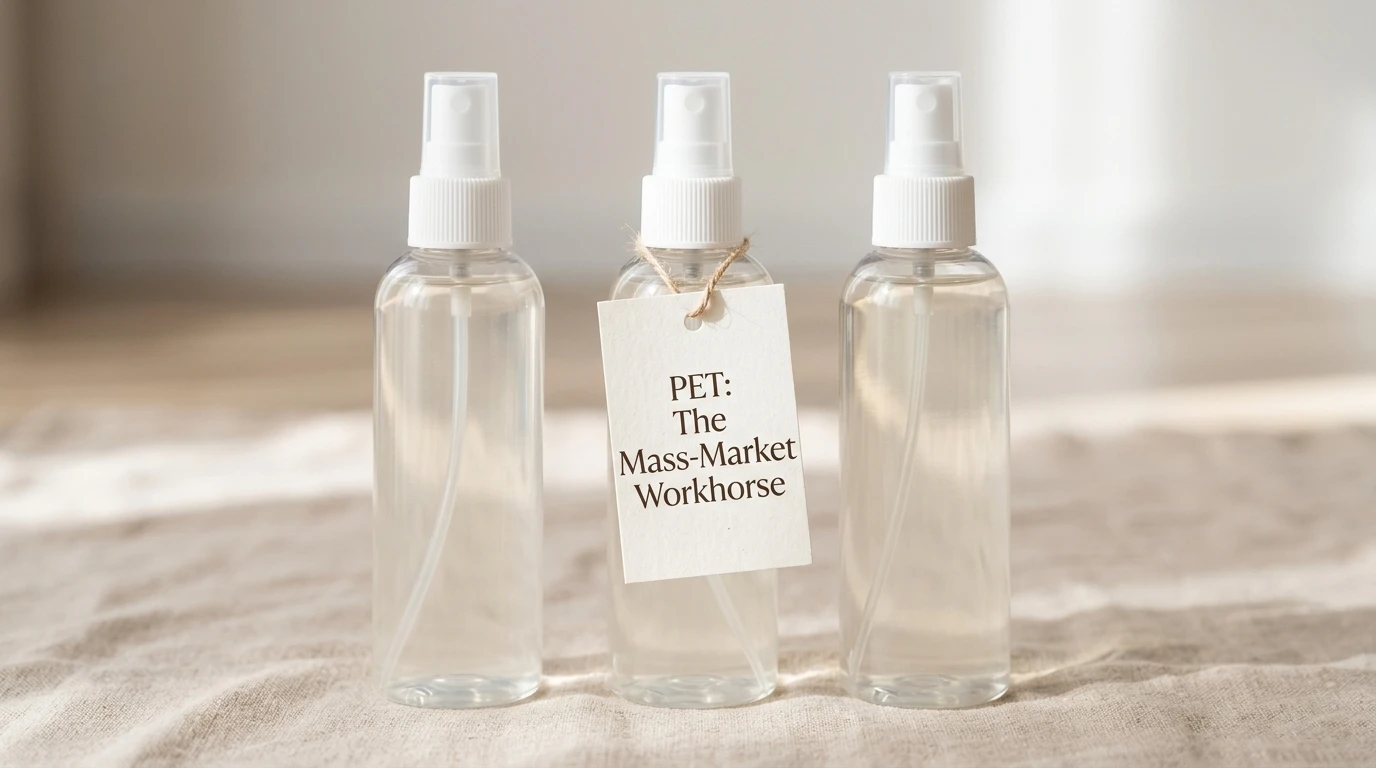
PET plastic — the workhorse for mass-market mist
PET is shatterproof, light to ship, and cheap at scale — often $0.15 to $0.40 per bottle once you're past a 10k order. For drugstore, gifting multipacks, and fast-fashion beauty, it's the default and there's no shame in it.
The trade-off is perceived value and long-term clarity. Cheap PET can haze or take on a faint yellow cast under prolonged fluorescent or UV exposure, so specify virgin resin and, if the juice has a natural colorant, budget for a UV stabilizer.
Glass — when you're selling the ritual
Nothing says "premium" faster than the weight of glass in hand. Flint (clear) glass runs from roughly $0.60 to $1.50 and climbs from there with heavier bases and custom shapes. You pay again in freight and in breakage allowances — plan for 1–2% loss across shipping and filling.
Use glass when the price point and the story justify it. A $28 body mist marketed around a self-care ritual earns its glass; a $5 impulse buy does not.
Aluminum — the sustainability play with caveats
Aluminum has a genuinely strong recyclability narrative and gives you full opaque UV protection, which is great for light-sensitive fragrances. But it hides the liquid completely, so consumers can't see how much is left, and it needs a compatible internal liner. Skip the liner and certain fragrance components will react with bare metal over months.
Quick-reference table: material vs. cost, weight, perceived value
| Material | Unit cost (10k+) | Freight weight | Perceived value | UV protection |
|---|---|---|---|---|
| PET plastic | $0.15–$0.40 | Very low | Entry / mid | Low (needs additive) |
| Flint glass | $0.60–$1.50+ | High | High | Low (clear) / high (amber) |
| Aluminum | $0.45–$0.90 | Low–medium | Mid / high | Excellent |
Sizing and neck finish — the spec people forget
I've watched buyers fall for a bottle silhouette and then discover the neck won't accept their chosen pump. Body mist bottles commonly use a 20/410 or 24/410 neck finish. Lock the finish to your pump first; the pretty shape comes second.
Fine Mist Pump Sprayer & Atomizer Nozzle Selection
This is where field experience separates a decent mist from an annoying one. Fragrance houses obsess over the scent; the spray mechanism is what the customer actually feels every morning.
Spray output: what dosage and particle size actually mean
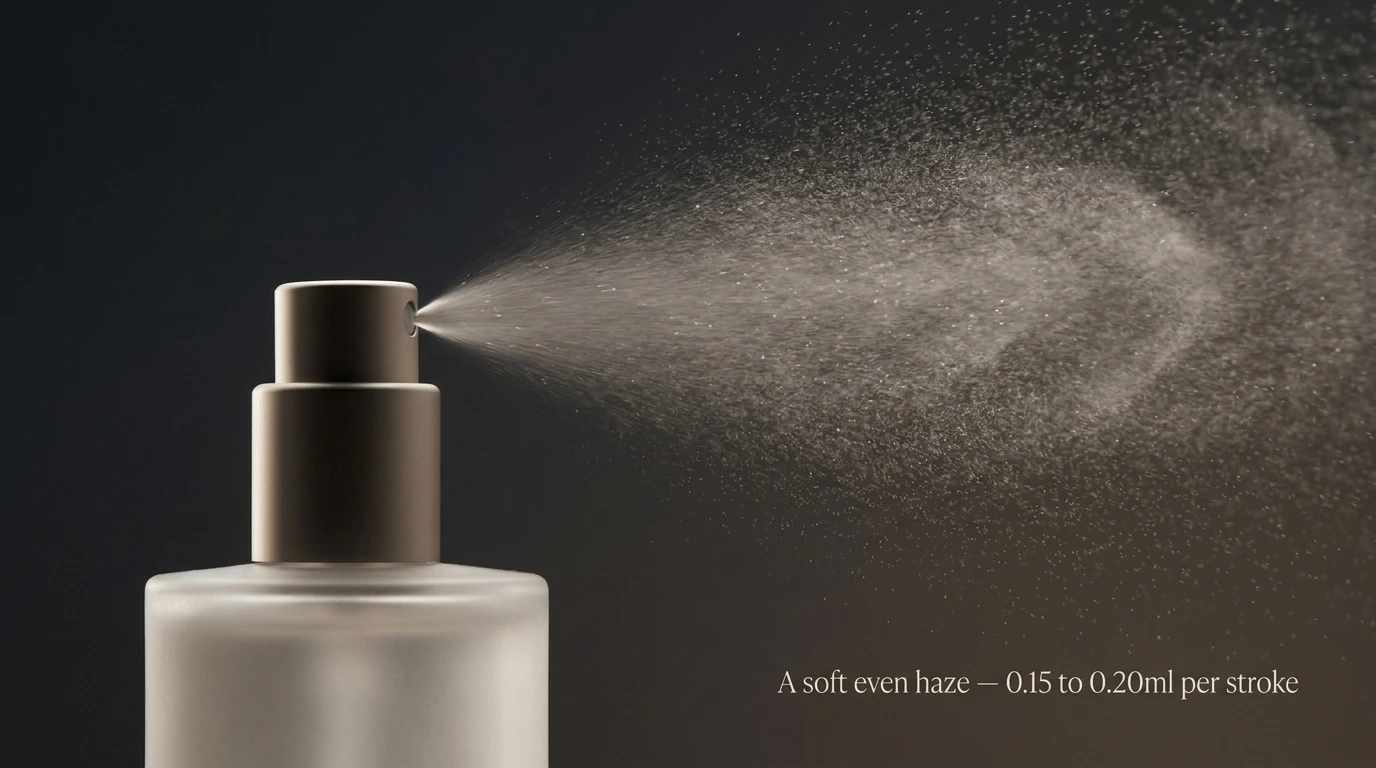
A body mist pump typically dispenses 0.15 to 0.20ml per stroke. Push the particle too fine and it reads like an expensive perfume the buyer didn't pay for; go too wet and it runs down the arm and empties the bottle in a week. You want a soft, even haze that lands and stays.
Fine mist pump vs. trigger vs. continuous atomizer
A standard fine mist pump sprayer is right for the overwhelming majority of body mists — it's cheap, reliable, and familiar. Trigger sprayers suit large 250ml+ hair-and-body formats where broad coverage matters. Continuous or "bag-on-valve" atomizers give a spa-like uninterrupted spray but add real cost and complexity; reserve them for prestige.
Dip tube length and the "last 10%" problem
Here's a small detail that generates outsized complaints: an uncut dip tube. If the tube doesn't reach the true internal depth of the bottle, that last 10% never sprays and customers feel cheated. Always confirm the supplier trims the dip tube to your exact bottle, not a generic length.
Actuator and overcap options
The overcap and actuator finish quietly carry the whole look. Full-cover overcaps protect the actuator and read cleaner; half-cover caps show off a decorative pump. A metallized or matte soft-touch actuator ties a custom body mist spray pump to the brand's aesthetic far more than most buyers expect for the small price bump.
Custom Body Mist Packaging Box Design
Secondary packaging does two jobs — it survives the supply chain and it wins the shelf moment. Get either wrong and the bottle inside doesn't matter.
Folding carton vs. rigid box — matching structure to price point
Folding cartons in SBS or kraft cover almost all mass and mid-tier launches. They're economical, print beautifully, and ship flat. Rigid boxes belong to gifting sets and prestige lines where the unboxing is part of the purchase. Sound body mist packaging box design starts by matching the structure to the retail price, not to your ambition.
Board weight, coatings and finishes that survive shipping
For cartons, 300–350gsm board is the practical range for a bottle this size. Soft-touch lamination has become the default premium cue, with spot UV or foil reserved for the logo or a single accent. Restraint reads more expensive than a box covered in effects.
Inserts and unboxing — protecting glass without over-packing
If you're shipping glass, an insert isn't optional. Molded pulp is the sustainability-forward choice, EVA foam gives the tightest hold, and a simple paper cradle balances cost with a decent unbox. Weigh the protection against the growing retailer and consumer pushback on excess material — over-packing is now a liability, not a flex.
Compliance and label real estate
Don't design the artwork before you've mapped mandatory copy. You need room for the INCI ingredient list, batch code, the PAO (period-after-opening) symbol, net content declaration, and any regional warnings. North America, the EU, and the GCC each have their own quirks — the EU expects full INCI and allergen disclosure, so plan label real estate accordingly.
Wholesale Body Mist Bottles: Sourcing & Supplier Checklist
Once the spec is set, procurement is where margins are quietly won or lost. A few things I check on every project before releasing a PO.
MOQs, lead times and tooling costs
Stock bottles usually ship in 2–3 weeks with modest minimums. A fully custom mold changes the calculus — expect $3,000 to $15,000 in tooling plus 6–10 weeks before first article. If your volume can't amortize a mold across at least a couple of production runs, stay with a stock shape and differentiate through decoration.
Fragrance compatibility testing you can't skip
This step gets rushed constantly, and it's where launches quietly fail three months in. Run a 4–6 week stability test on your exact juice-in-package combination — same bottle, same liner, same pump, same fragrance concentration. Watch for discoloration, gasket swelling, spray-rate drift, and scent shift. A rendering can't tell you a component leaches; only the real test will.
Vetting suppliers on E-E-A-T you can verify
Trust nothing you can't check. Ask any candidate among wholesale body mist bottles suppliers for material certificates, references to SKUs they've actually run, and a physical golden sample rather than a glossy render. Certifications worth confirming include ISO, GMP, FDA registration where relevant, and SMETA for social compliance — and a serious factory will hand these over without hesitation.
Putting It Together: Three Sample Specs by Budget Tier
Theory is easy. Here are three copy-able builds I'd actually quote, so you can see how the pieces fit.
Value, mid, and prestige builds
- Value tier (~$0.75–$1.10/unit): 150ml PET bottle, standard 24/410 fine mist pump, full-cover PP overcap, 300gsm SBS folding carton with a single-color print. Ships light, breaks rarely.
- Mid tier (~$1.80–$2.60/unit): 120ml flint glass bottle, matte-finish pump with metallized collar, soft-touch laminated carton with spot UV logo, paper cradle insert. The everyday premium look.
- Prestige tier (~$4.50–$7.00/unit): 100ml heavy-base glass, custom actuator, rigid box with foil stamping and EVA foam insert, custom fragrance packaging with a printed inner tray. Built for gifting and hero SKUs.
Costs are ballpark at moderate volume and exclude freight and duties — treat them as a starting frame, then refine against your real quantities and decoration.
Next Steps: Spec Your Body Mist Packaging with Confidence
Good packaging is a series of small, correct decisions — the right neck finish, a trimmed dip tube, board that survives transit, a compatibility test you didn't skip. Get those right and the fragrance finally gets a fair shot on the shelf.
If you're ready to move from spec to sample, we can help. Boymay has manufactured bath and personal care products since 1995 out of a 40,000㎡ facility with 16 automated lines, backed by GMP, ISO, FDA, and SMETA certification, with minimum orders from 1,000 units. Request a physical golden sample, book a fragrance compatibility test on your exact formula, or ask for a per-unit quote across all three budget tiers. Send us your target size, price point, and market, and we'll return a build sheet and realistic lead time — custom samples typically ready in 7–14 days.
Frequently Asked Questions
Q: What is the best packaging for body mist?
A: There's no single answer — the best packaging for body mist depends on your price point. PET with a folding carton wins for mass-market value; flint glass with a soft-touch box suits mid-tier; heavy glass in a rigid box fits prestige. Match the material to the retail price and the brand story rather than defaulting to the most premium option.
Q: How much does custom body mist packaging cost per unit?
A: A complete unit — bottle, pump, and box — typically lands between $0.75 and $7.00 depending on tier. Add $3,000–$15,000 in one-time tooling if you go with a custom mold. Volume moves these numbers significantly, so always price against your real order quantity.
Q: What bottle size sells best for body mist?
A: The 100–150ml range is the commercial sweet spot. It's large enough to feel like value, small enough to keep freight and shelf space reasonable, and it fits standard 20/410 and 24/410 pumps without special tooling.
Q: Is PET or glass better for body mist?
A: Neither is universally better. PET is lighter, shatterproof, and far cheaper — ideal for mass volume. Glass carries higher perceived value and protects the fragrance better, at the cost of freight and breakage. Choose based on where the product sits in the market.
Q: Do I need a UV coating or amber bottle to protect the fragrance?
A: For most body mists at 1–3% oil load, standard clear packaging is fine for typical shelf life. If your formula uses light-sensitive naturals or you expect long storage under bright retail lighting, an amber bottle, a UV additive in PET, or opaque aluminum is worth the small premium.