
Walk down any body care aisle and you'll notice something odd: dozens of bars and bottles all promising "gentle" and "moisturizing," yet plenty leave skin feeling tight within minutes of a shower. For women, that gap between the marketing and the results matters more than most brands admit.
Women's skin isn't a marketing category—it behaves differently. Hormonal shifts, a naturally lower sebum output in many age groups, and a thinner epidermal layer in certain areas all shape how a soap should perform. This guide covers what actually separates a decent soap from a genuinely good one, compares the main product types on the market, and ends with one bar worth your attention.
Understanding Women's Skin Needs Before You Choose
The "best" soap is never universal. It depends on your skin's baseline moisture, its pH tolerance, and how reactive it is to surfactants. Healthy skin sits around a mildly acidic pH of 4.7–5.5, and soaps that push it toward alkaline (many traditional cold-process bars land at pH 9–10) can disrupt the acid mantle that keeps bacteria and moisture in balance.
Skin Types and Their Unique Requirements
Dry skin loses water quickly and needs occlusive fats—shea butter, cocoa butter, or glycerin-rich formulas. Oily skin benefits from gentle clarifying agents without heavy stripping. Combination skin often does best with a balanced, pH-conscious cleanser. Sensitive skin reacts to fragrance and harsh detergents, so shorter ingredient lists win.
Key Ingredients Women Should Look For
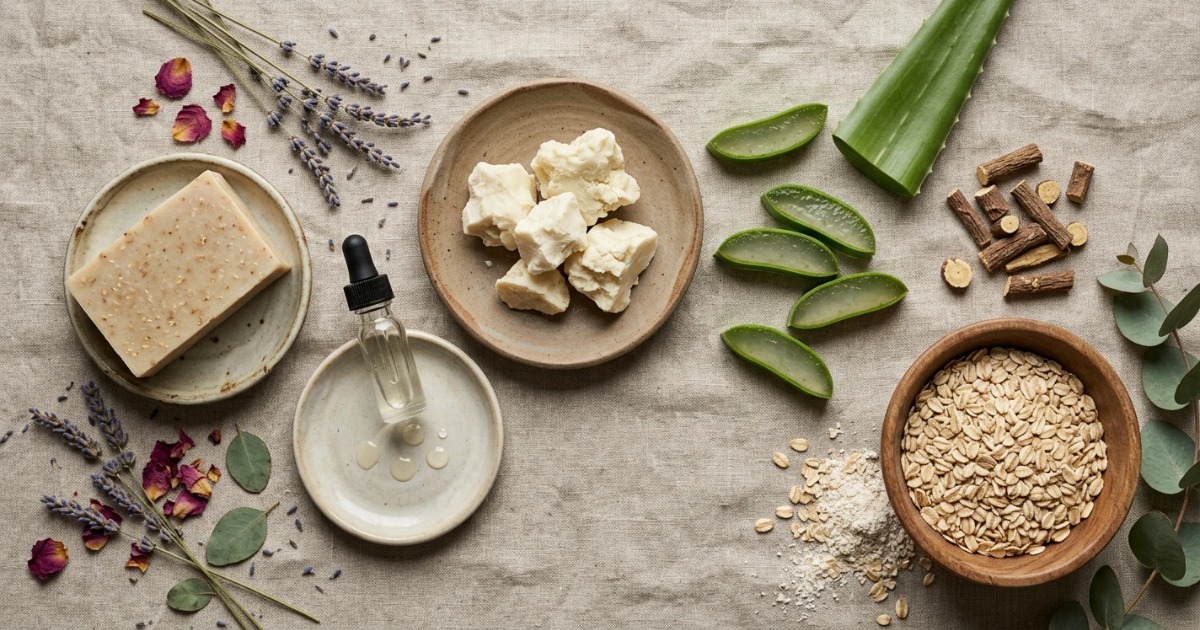
Look for humectants like glycerin and sodium PCA, emollients such as plant butters and oils, and soothing botanicals—oat extract, aloe, chamomile. For brightening claims, ingredients like niacinamide, licorice root, and vitamin C derivatives have genuine research behind them for evening out skin tone.
Ingredients to Avoid
Sulfates like SLS strip lipids aggressively. Also worth skipping: synthetic dyes, high concentrations of drying alcohols (SD alcohol 40), and heavy synthetic fragrance loads that trigger contact dermatitis in reactive skin.
Types of Body Soaps on the Market Today
Consumers today face five broad categories, each with a different strength.
Moisturizing Body Wash for Women
A liquid moisturizing body wash for women suits daily use and layers well with lotions. It's convenient but often water-heavy, which dilutes the active ingredients.
Natural Body Soap for Sensitive Skin
Botanical, minimal-ingredient bars—this is the go-to for reactive skin. A natural body soap for sensitive skin typically avoids sulfates and synthetic dyes altogether.
Hydrating Bar Soap for Dry Skin
Concentrated and long-lasting, a hydrating bar soap for dry skin delivers rich emollients per wash and tends to outlast liquid options in cost-per-use terms.
Sulfate-Free Body Cleanser for Women
A sulfate-free body cleanser for women protects the skin barrier with milder surfactants like coco-glucoside, cleaning effectively without that squeaky-tight feeling.
Best-Smelling Shower Gel for Women
For a spa-like ritual, the best-smelling shower gel for women prioritizes layered fragrance. Just check that the scent isn't masking a stripping base formula.
Comparison Table: Body Soap Categories at a Glance
| Soap Type | Best For | Hydration Level | Fragrance | Ideal Skin Type |
|---|---|---|---|---|
| Moisturizing Body Wash | Daily softness | Medium-High | Moderate | Normal to dry |
| Natural Sensitive Bar | Reactive skin | Medium | Low / unscented | Sensitive |
| Hydrating Bar (Dry Skin) | Barrier repair | High | Low-Moderate | Very dry |
| Sulfate-Free Cleanser | Barrier protection | Medium-High | Moderate | All, esp. sensitive |
| Fragrance Shower Gel | Sensory experience | Low-Medium | High | Normal |
What the Market Trends Say
Consumer behavior has shifted decisively toward transparency. Recent personal care research through 2026 consistently shows shoppers reading full ingredient panels, favoring sulfate-free and clean-label formulas, and expecting a single product to do more than clean.
The Rise of Multifunctional Bar Soaps
The line between "soap" and "skincare" is blurring. Buyers increasingly want a bar that cleanses while also brightening, soothing, or protecting—effectively folding a treatment step into the shower routine.
Growing Demand for Skin-Brightening & Antifungal Bars
Targeted-benefit soaps are one of the fastest-moving subcategories, especially across warmer climates where fungal skin concerns and uneven tone are common daily issues. Bars that combine a whitening effect with antifungal actives address two problems at once, which explains their traction with retailers.
Our Top Recommendation: Handmade Whitening Antifungal Bar Soap
After weighing hydration, barrier safety, and multifunction value, the standout is the Handmade Whitening Antifungal Bar Soap. It pulls together the qualities discussed above into a single, practical bar.
Why This Bar Soap Stands Out for Women
It cleanses gently while working on two visible goals—more even skin tone and protection against the surface fungal issues that cause itching and rough patches. The handmade format allows richer emollient content than mass-extruded bars, so skin stays comfortable rather than tight.
Key Benefits Table
| Benefit | What It Does | Who It's For |
|---|---|---|
| Skin Brightening | Helps even out tone over consistent use | Uneven or dull skin |
| Antifungal Protection | Reduces surface fungal irritation and odor | Humid climates, active lifestyles |
| Gentle Cleansing | Cleans without stripping the acid mantle | Normal to sensitive skin |
| Emollient-Rich Base | Leaves skin soft, not tight | Dry to combination skin |
How It Compares to Standard Body Soaps
Where a typical drugstore bar cleans and stops, this one adds two functional layers. Standard soaps often run alkaline and dry. A well-formulated handmade whitening antifungal bar keeps pH friendlier while delivering targeted benefits—so you replace two products with one.
Buying Guide: How to Choose the Right Body Soap for You
Match the Soap to Your Skin Goal
Decide your priority first. Chronic dryness points to a rich hydrating bar. Reactivity? Reach for a fragrance-free natural bar. Uneven tone or fungal concerns point to a multifunctional whitening antifungal option.
Check Certifications and Quality Standards
Certifications aren't decoration. GMP governs hygienic, consistent production. ISO reflects systematic quality control. FDA compliance matters for market access. A soap made under these standards is far more predictable batch to batch.
Looking for a Reliable Body Soap Manufacturer? Partner With Boymay
If you're a brand or retailer rather than an end shopper, the real question shifts—from which soap to buy to who can produce it at scale, on spec, and on time. That's where Boymay comes in.
Why Brands Choose Boymay
Since 1995, Boymay has focused on OEM/ODM manufacturing of bath bombs, shower steamers, and personal care products. The operation runs across a 40,000㎡ facility with 16 automated production lines and 200+ employees, reaching a daily output of 160,000 sets.
Just as important, production is backed by GMP, ISO, FDA, and SMETA certifications—the same standards this guide told consumers to look for—and orders start at a low MOQ of 1,000, which keeps launches practical for growing brands.
Full Customization & Private Label Solutions
Boymay supports custom formulas, bespoke packaging, and private label branding, with stable lead times built for buyers across North America, Europe, and the Middle East. Whether you want to develop a whitening antifungal bar or a full body care line, the formulation and design work is handled in-house.
Get a Quote or Free Sample
Sourcing a dependable partner for your next product line? Reach out to Boymay for a quote or a free sample. It's the fastest way to see the quality and customization in person before you commit.
Frequently Asked Questions
Q: What is the best body soap for women with dry skin?
A: A hydrating bar soap for dry skin with plant butters and glycerin works best, since concentrated emollients replenish lipids that dryness depletes without over-stripping.
Q: Is bar soap or body wash better for women?
A: Both work—it depends on your goal. Body wash offers convenience, while a well-made bar delivers more concentrated actives per use and less packaging waste. For targeted benefits like brightening or antifungal care, bars usually pack a stronger punch.
Q: Are antifungal whitening bar soaps safe for daily use?
A: Yes, when properly formulated with skin-friendly actives and a pH-balanced base. Look for products made under GMP conditions, and if you have highly sensitive skin, patch test first.
Q: Can I create my own private label body soap brand?
A: Absolutely. Boymay's OEM/ODM services let you build a private label line with custom formulas and packaging, starting from a low MOQ of 1,000—accessible even for newer brands.
Q: What certifications should a quality body soap have?
A: GMP for hygienic manufacturing, ISO for quality management, FDA compliance for regulatory and market access, and SMETA for ethical, audited production. Together they signal a soap that's safe, consistent, and responsibly made.