
Discover eco-friendly handmade soap packaging ideas: how to wrap soap, breathable materials, custom labels, and biodegradable supplies that boost sales.
At a weekend market, a shopper reaches past a dozen bars and picks up yours. Their thumb runs over a kraft sleeve, they lift it to their nose before the label even registers — and in those two seconds the packaging has already made a promise on your behalf. Get it right and the wrap sells the soap before the customer smells it. Get it wrong and a beautifully cured bar reads as amateur, or worse, arrives at a doorstep sweating and cracked.
Packaging is not the thing you slap on at the end. It protects a hand-cut bar, carries the maker's story, and slows the slow leak of essential oil and fragrance into the air. The real tension every soaper feels is this: how do you stay compliant and eco-conscious without stripping away the handmade feel that made someone stop at your table in the first place?
- Cold-process and melt-and-pour bars need packaging that breathes — sealing a still-curing bar too tightly invites sweating and eventual rancidity.
- Kraft sleeves, glassine, shrink bands, and cigar bands each solve a different problem — match the wrap to the bar's cure stage and its scent load.
- Labeling isn't optional. An ingredient (INCI) list, net weight, and maker contact are baseline expectations in most markets.
- "Eco-friendly" and "shelf-appealing" are no longer opposites — biodegradable materials now compete on looks, not just conscience.
- Design for the shelf and the shipping box. A gorgeous wrap that arrives crushed loses the sale twice.
Why Packaging Decides Whether a Handmade Bar Sells
Soap packaging does two jobs at once, and beginners usually only plan for one. The first is protection: guarding scent throw, slowing oxidation, and keeping the bar clean through handling. The second is persuasion — carrying your brand across a crowded market table or a thumbnail-sized Etsy listing where you have maybe half a second to earn a click.
The constraints are physical and specific. Cured soap still holds moisture. Fragrance molecules migrate and evaporate. Glycerin, being a humectant, pulls water from the air and beads on the surface — the "glycerin dew" or sweating that plagues humid workshops. Any packaging decision that ignores these realities will fail no matter how pretty it looks.
Does Handmade Soap Need to Breathe?
Yes — at least until it has fully cured. Cold-process soap keeps losing water and finishing its saponification for weeks after it comes out of the mold. Wrap it airtight too early and you trap moisture against the bar, which can trigger dreaded orange spots (DOS), the rancid pinprick marks that ruin a batch. Use breathable wraps like kraft or glassine for freshly cured bars, and reserve fully sealed packaging for bars that are properly hardened and dry.
Choosing the Right Packaging Materials
Every material trades something off. Here's how the common options actually behave in a working soap studio, described by feel and use rather than by the penny.
Kraft Paper Sleeves and Bands
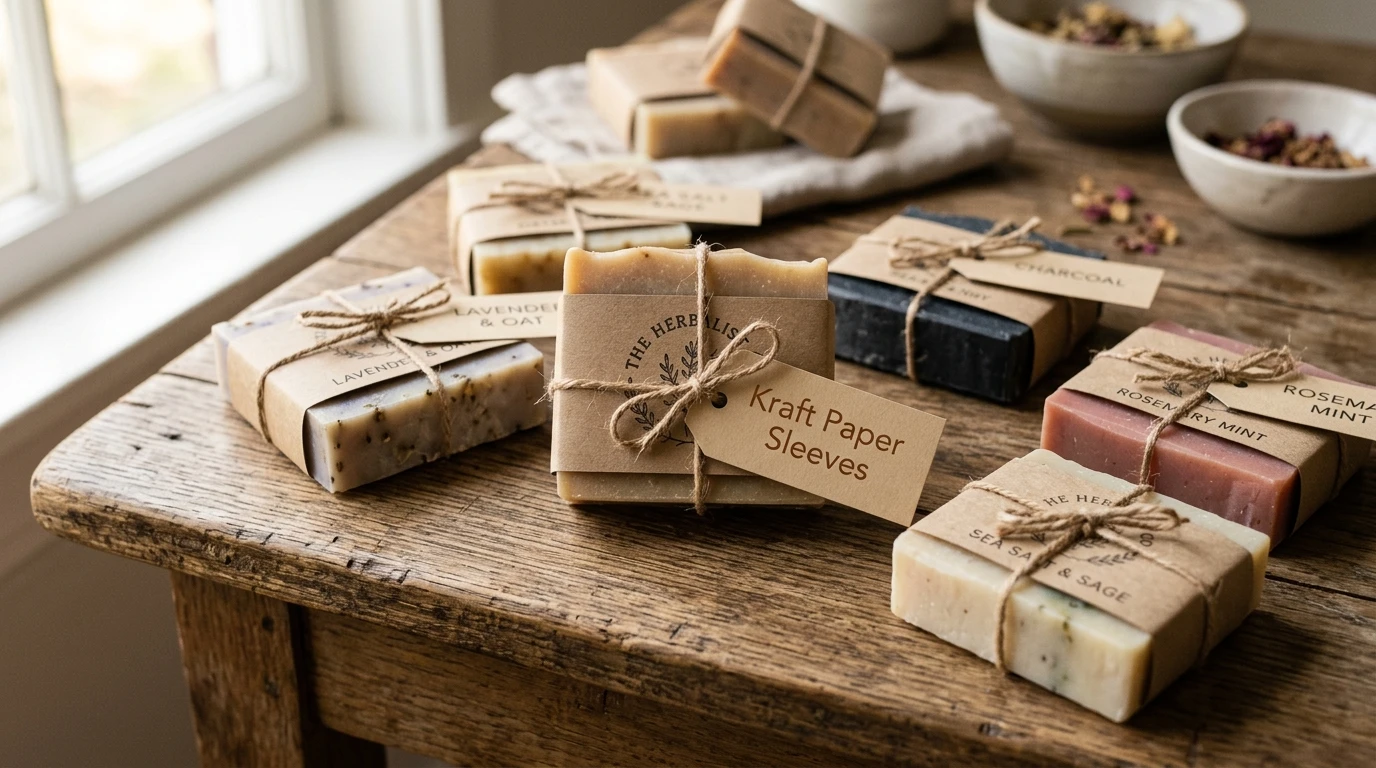
This is the workhorse of handmade branding. Kraft paper soap sleeves, cigar bands, and belly bands are inexpensive to customize, fully recyclable, and take an ink stamp or printed label cleanly. Among the most reliable handmade soap packaging ideas, they're hard to beat for cost and character. The trade-off is coverage — a band or sleeve leaves part of the bar exposed, so it handles well but offers less protection in a jostling shipping box.
Glassine, Wax Paper, and Breathable Wraps
For scent-forward bars, glassine earns its keep. It resists grease and oil bleed — important with high-superfat or heavily fragranced recipes — while still letting the bar breathe. It's my go-to for a freshly cured, high-fragrance bar that isn't ready for a full seal yet but needs a barrier against oil ghosting onto a label.
Shrink Wrap and Sealed Options
When you need tamper-evidence or a crisp spa-line finish, shrink bands and full shrink wrap deliver. They photograph well and reassure gift buyers. The caveats are real, though: it's a plastic film with a weaker eco profile, and it should only ever go on a fully cured bar. Seal a green bar and you're building a little humidity chamber around it.
Biodegradable and Compostable Materials
Demand here is growing fast, and this is where a maker can genuinely differentiate. Compostable cellulose film, seed paper labels, and recycled kraft all exist and perform well. But "biodegradable" is a word doing a lot of quiet lifting. Home-compostable and industrially-compostable are not the same certification, and a film that only breaks down in a commercial facility isn't much use to a customer with a backyard bin. When you shop eco friendly soap packaging supplies, ask what standard the material is actually certified to — that honesty is itself a selling point, and it's how you avoid quietly greenwashing.
| Material | Breathability | Eco Profile | Best For | Watch-outs |
|---|---|---|---|---|
| Kraft sleeve | High | High ($) | Everyday branding, stamping | Partial coverage |
| Glassine | High | Medium ($$) | Oily, high-fragrance bars | Not fully sealed |
| Shrink band | Low | Low ($$) | Spa lines, tamper-evidence | Cured bars only; plastic |
| Compostable film | Medium | High ($$$) | Eco-forward brands | Check compost standard |
| Cigar band | High | High ($) | Showing off swirls | Minimal protection |
How to Wrap Handmade Soap (Step by Step)
If you've ever wondered how to wrap handmade soap so it looks intentional rather than improvised, the trick is in a few small habits. Here are two methods I reach for constantly.
The Belly Band Method
- Cut a strip of kraft long enough to circle the bar with about a centimeter of overlap.
- Center your stamp or printed label on the strip before wrapping.
- Wrap snugly around the middle, leaving the top and bottom faces open to breathe.
- Secure the overlap with a small sticker or a knotted length of twine.
It's the fastest, most economical, most recyclable option, and it lets natural colors and swirls do the talking.
The Full Wrap and Fold
- Lay the bar face-down on the paper and fold the long sides over like a gift.
- At each end, pleat the corners inward for a clean, squared finish.
- Leave a few millimeters of overhang rather than pulling the paper drum-tight — it looks crafted, not shrink-wrapped.
- Fix the fold with a label placed so no tape ever touches the printed face, which prevents that scarred, peeled look when a customer opens it.
Labeling: What the Law and the Buyer Both Expect
This is where trust is won or lost. Whether a product is regulated as true "soap" or as a cosmetic changes what you legally must disclose. In the U.S., the FDA draws a line between genuine soap and cosmetic claims; the moment you market moisturizing or other cosmetic benefits, fuller cosmetic labeling rules apply. In the EU, Regulation (EC) No 1223/2009 governs cosmetics and expects a full ingredient list in INCI format, among other requirements. Don't overstate the specifics — but do assume a buyer, and a regulator, will look.
Soap Label Ideas That Read as Handmade
The look and the compliance can coexist. Hand-stamped logos on kraft, twine ties, restrained typography, and a visible batch number all signal craft and care at once. Batch or lot numbers are a quiet trust signal too — they say you can trace a recipe. Thoughtful custom soap packaging labels turn a legal requirement into part of the brand.
| Element | Required? | Notes |
|---|---|---|
| Product name | Yes | Clear identity of the bar |
| Net weight | Yes | Metric and/or imperial per market |
| Ingredients (INCI) | Usually | Mandatory for cosmetics |
| Maker contact | Yes | Name and address |
| Batch/lot | Recommended | Traceability and trust |
| Warnings | If applicable | Allergens, cautions |
Custom Soap Box Design and Shipping Protection
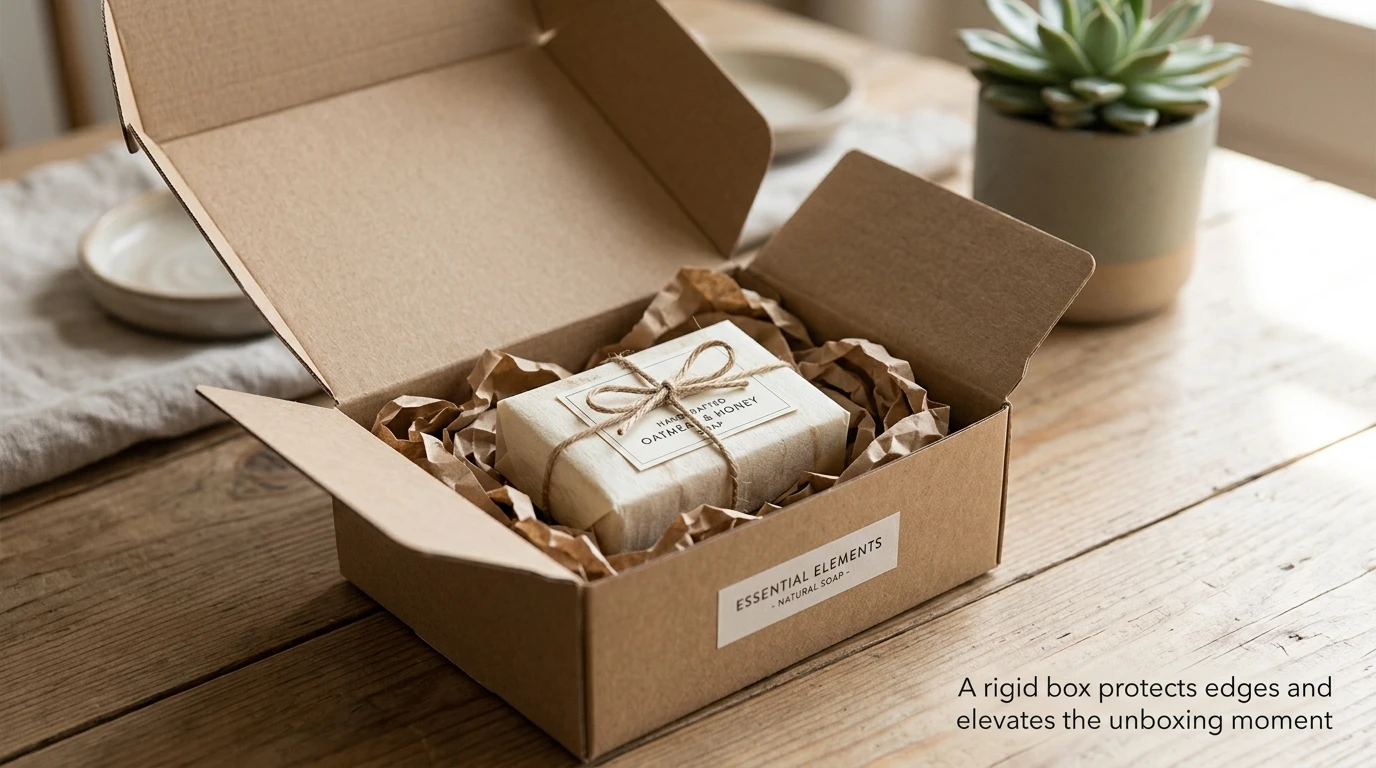
A wrap that wins the shelf still has to survive a courier. Custom soap box design bridges the two: a rigid box protects edges, adds void fill room, and turns arrival into an unboxing moment that drives repeat orders. If you're ordering custom printing, expect minimum order quantities and lead times — small custom sample runs first, then bulk once the artwork is locked. Plan those timelines into a launch rather than discovering them the week before a market.
Balancing Cost, Sustainability, and Brand Feel
Experience mostly shows up as good trade-off judgment. Early on, a beautiful rubber stamp on recycled kraft often beats an expensive printed box you can't yet order in volume. As sales climb, phase upgrades one at a time — swap to compostable film, then commission a printed sleeve, then a rigid gift box for your hero line. Chase every upgrade at once and margins vanish; ignore them all and the brand stalls.
Bring Your Packaging Up to Market Standard
Run your current wrap against the material and label checklists above and pick one weak point to fix this season — nothing more. Then order a small sample run before you commit to bulk, so you can feel the paper and check the print in your own hands.
If you're scaling past the kitchen table and want packaging and formulation handled together, BOMAY has manufactured bath and personal care products since 1995, with GMP, ISO, FDA, and SMETA certification, low MOQs from 1,000 units, and custom samples typically ready in 7–14 days. Reach out for material sourcing guidance and a printable label checklist to get your line shelf-ready.
Frequently Asked Questions
Q: How do I stop handmade soap from sweating in packaging?
A: Cure the bars fully, wrap in breathable materials like kraft or glassine rather than sealing them, and store somewhere cool and low-humidity. A dehumidifier in the curing room does more than any wrap can.
Q: Can I use plastic wrap for handmade soap?
A: You can, but only on fully cured bars — sealing a green bar traps moisture and risks rancidity. It also carries a weaker eco profile, so weigh it against breathable, recyclable alternatives.
Q: What is the cheapest eco-friendly way to package handmade soap?
A: A kraft belly band finished with a rubber stamp. Among biodegradable soap wrapping materials it's near-unbeatable on cost, it's recyclable, and it still looks distinctly handmade.
Q: Do I legally need an ingredient list on my soap?
A: It depends on classification. True soap making no cosmetic claims has lighter requirements, but anything marketed as a cosmetic generally needs a full INCI ingredient list. When unsure, label as though cosmetic rules apply.
Q: How long should soap cure before wrapping?
A: For most cold-process recipes, plan on roughly four to six weeks. The bar should feel hard and read low on a moisture check before you wrap it tightly.