
These are the questions you need to know before you do this: from the moment you send a brief to the day cargo leaves the factory, plan on roughly 4 to 6 weeks. That's sampling (7–14 days) plus bulk production (25–30 days). Shipping is on top of that, and it varies a lot by destination.
But the number itself isn't the interesting part. What matters is that lead time is a lever you can pull, not a wall you run into. Buyers who understand this negotiate better, spend smarter, and hit their launch windows. Buyers who don't either overpay for rush jobs or miss their retail dates entirely.
- Factory-side timeline: about 4–6 weeks total (sampling + production), before freight.
- The real bottleneck is usually your approval speed, not the manufacturer.
- MOQ, budget, and lead time are one decision — you can't optimize them separately.
- Custom's extra weeks buy margin and differentiation you can't get off-the-shelf.
- Plan backward from your sales deadline and build in a buffer.
The Short Answer: Your Realistic Timeline From Inquiry to Delivery
Most sourcing questions boil down to "when will I have product I can sell?" So let's map the whole chain instead of quoting a vague range.
Timeline at a Glance
| Stage | Typical Duration | What Drives It |
|---|---|---|
| Quote & formula confirmation | 1–3 days | Complexity of the brief |
| Sample development | 7–14 days | Formula, fragrance, mold, packaging |
| Sample approval & revisions | Variable (buyer-side) | Feedback speed, number of rounds |
| Bulk production | 25–30 days | Order size, customization level |
| QC & packing | Included in production | Inspection standard |
| Ocean / air freight | 3–35 days | Destination and method |
Why This Article Frames Time as a Cost Decision
I've watched two failure patterns repeat for years. One buyer over-optimizes for speed, air-freights everything, and quietly bleeds margin on shipping. Another under-plans, confirms the formula three weeks too late, and misses the Q4 shelf reset.
Neither problem is really about the factory. Both come from treating lead time as a fixed unknown instead of a variable tied to MOQ, budget, and risk. So that's the argument here: your calendar is negotiable if you understand what actually moves it.
Context: What "Custom" Actually Means for Your Timeline
"Custom" is a spectrum, and where you sit on it decides your calendar more than any other single factor.
Standard Formula vs. Fully Custom Formula
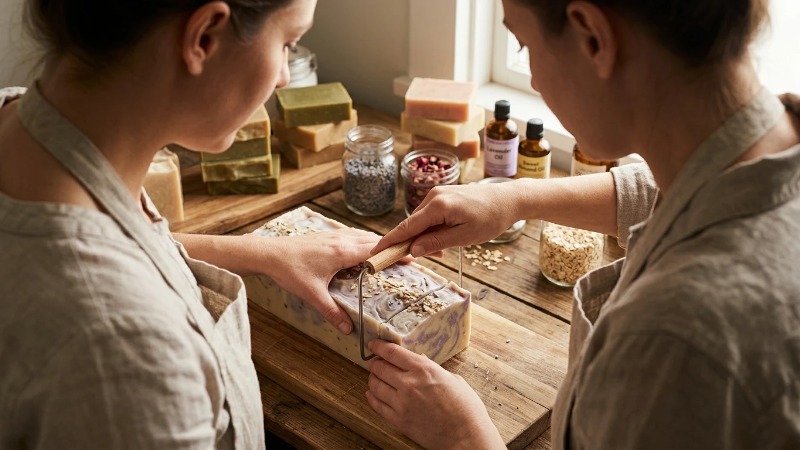
Start from a proven base recipe and you skip most of the R&D loop — you're really just adjusting scent, color, and branding. Ask for a brand-new bespoke formula plus a custom mold and you add sampling rounds, because each variable has to be tested, cured, and signed off.
The Three Customization Tiers
| Tier | Example | Added Lead Time |
|---|---|---|
| Label-only (private label) | Your brand on a stock recipe | Fastest |
| Semi-custom | Custom scent/color, stock mold | +5–10 days sampling |
| Full custom | New formula + custom mold + gift box | +10–20 days sampling |
Knowing your tier before you inquire saves everyone a week of back-and-forth. It also tells you honestly whether your launch date is realistic.
Argument 1: The Sampling Phase Is Where Timelines Are Won or Lost
If a project runs late, the delay usually lives in the approval loop, not on the production floor. Factories move fast once they know what to build. The waiting happens while briefs are vague and feedback trickles in.
The OEM Soap Sampling Process, Step by Step
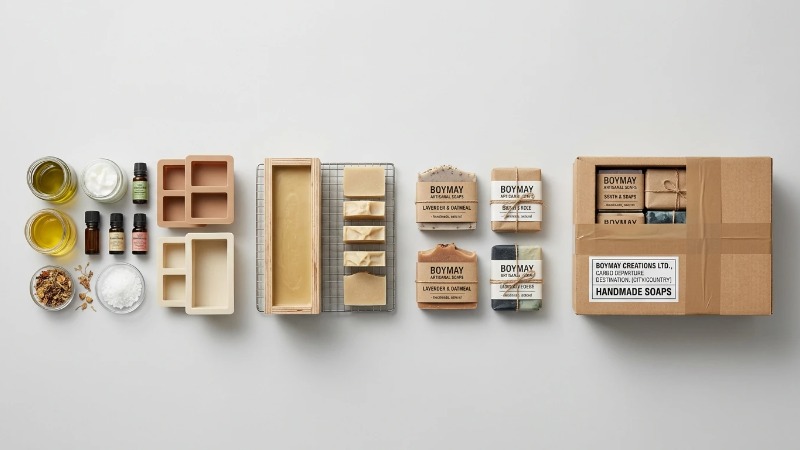
The sampling flow is straightforward: brief in, formula draft back, first physical sample, revision round, final sign-off. Our window for this is 7–14 days per sample cycle, depending on fragrance sourcing and mold work.
What blows it up is round count. A single revision is normal. Four revisions because the brief kept shifting is how a two-week phase becomes six weeks.
How to Compress Sampling Without Cutting Corners
Three habits shorten this phase reliably. Send a reference sample so the OEM soap sampling process starts from a physical target, not a description. Lock your fragrance early, since scent changes force full re-cures. And approve packaging artwork in parallel with the sample, not after — those two tracks don't need to be sequential.
Argument 2: MOQ, Budget, and Lead Time Are the Same Conversation
You cannot separate these three. Pick a run size and you've quietly decided your unit economics, your cash exposure, and part of your minimum order quantity custom soap timeline.
500 vs. 1,000 vs. 5,000: What Each Really Costs
| Order Size | Unit Cost Trend | Cash Commitment | Best For |
|---|---|---|---|
| ~500 (test / hybrid) | Highest per unit | Lowest | New brand market test |
| 1,000 (our MOQ) | Balanced | Moderate | Amazon sellers, launches |
| 5,000+ | Lowest per unit | Highest | Established brands scaling |
We set our MOQ at 1,000 because it's the point where tooling and setup costs stop dominating the unit price, yet the cash outlay stays sane for a launch. Below that, fixed costs get spread too thin and your per-piece cost climbs sharply.
Where Your Money Actually Goes
It helps to see the spend broken out. Formula complexity and fragrance grade drive raw-material cost. Custom mold tooling is a one-time charge that amortizes over volume — order more, pay less per bar. Packaging is often the biggest swing factor, and certification-grade QC is baked into the price of a factory that holds GMP, ISO, FDA, and SMETA standards.
If you want to cut cost, the highest-leverage move is usually simplifying packaging, not the soap itself. Downgrading the formula to save a few cents rarely pays off once returns and reviews come in.
Standard Packaging vs. Gift Box: The Time & Margin Trade-off
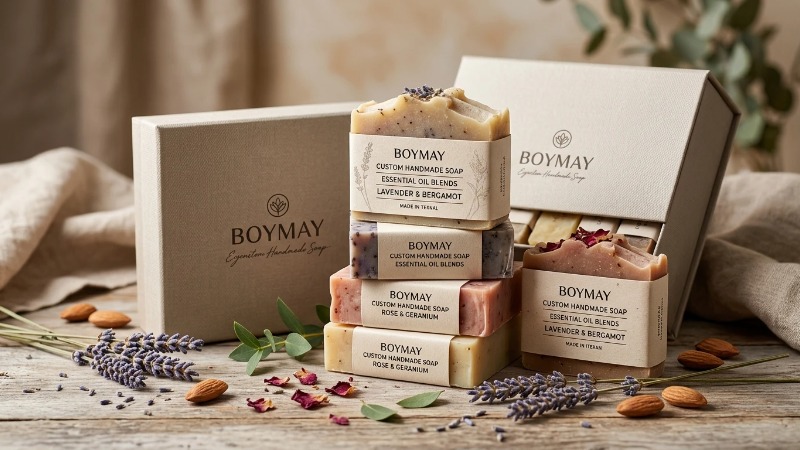
Shrink-wrap ships fast and costs least, but it reads as commodity. A printed carton lifts perceived value modestly with a small lead-time bump. A rigid gift box adds real sampling and print time — yet it's what lets you price at a premium tier. The right answer depends on which shelf you're fighting to win.
Argument 3: The Risks That Blow Up Timelines — and How They're Controlled
No honest supplier pretends nothing goes wrong. The professional difference is catching problems before they trigger a re-run, because a re-run is what quietly adds two or three weeks to your calendar.
Common Failure Points Buyers Underestimate
The usual suspects: bars cracking during curing, powder shedding from bath products, fragrance fading over a long shelf life, packaging crushed in transit, and capacity crunches during peak season. Each of these can force rework if it's discovered after production instead of during it.
How Production Control Prevents Rework
Curing discipline is the quiet hero — rushing the cure is how you get cracking and shedding later. In-line QC catches formula and cosmetic defects before the whole batch is committed. Drop-test validation on packaging prevents the transit-damage disaster that only shows up when the customer opens the box. Catch a fault at the sample or first-article stage and you lose a day; catch it after packing and you lose weeks.
The Certification Factor
For regulated markets — the EU, North America, the Middle East — compliance delays are a real timeline risk. Working within GMP, ISO, FDA, and SMETA-aligned processes means documentation and testing are handled as part of production, not scrambled together at customs. That's less a marketing badge than a scheduling insurance policy.
The Opposing View: "Just Buy Faster, Off-the-Shelf"
It's fair to challenge the whole premise. Why wait weeks for custom at all?
The Case for Skipping Custom
Stock soap is genuinely faster and cheaper upfront. You skip sampling, skip tooling, and often ship in days. For a pure price play or a fast test, that's a legitimate route, and I won't pretend otherwise.
Why It Usually Costs More Later
The catch is what you give up. An off-the-shelf bar has no differentiation, which means you compete on price against everyone else selling the same product. Margins stay thin, reorders get poached by cheaper listings, and you build no brand equity. The extra weeks a custom private label soap production timeline demands are what buy you a defensible position — a product a competitor can't just click and copy.
Real Sourcing Scenarios: Which Timeline Fits You?
Scenario A — New Brand Running a Low-Cost Test
Start semi-custom on a stock mold with a distinctive scent and clean label. Expect roughly 4–5 weeks factory-side. Keep packaging simple so your budget goes into product quality and photography, not rigid boxes you can't yet justify.
Scenario B — Amazon Seller Controlling MOQ & Cash Flow
The 1,000-unit run is your friend here. It keeps unit cost reasonable while limiting cash tied up in inventory. The trick is restock cadence: reorder when you're at roughly 30 days of stock left, since bulk production runs 25–30 days plus freight. Miss that window and you go out of stock — the fastest way to lose ranking.
Scenario C — Established Brand Launching a Custom Gift Set
Full custom — new formula, custom mold, rigid gift box — needs the longest runway. Add the full custom soap manufacturing lead time to freight, then work backward from your holiday shelf date. For a Q4 launch, that usually means confirming samples by late summer, not autumn.
Implications: Planning Backward From Your Sales Deadline
The single most useful habit in this whole business is refusing to plan forward from "now." Plan backward from the day you need product on the shelf.
The Reverse-Timeline Method
- Fix your on-shelf date.
- Subtract freight time to your market.
- Subtract 25–30 days for bulk production.
- Subtract your sampling and approval window (7–14 days plus your feedback rounds).
- Add a 1–2 week buffer for the unexpected.
The result is your real order-by date. It's usually earlier than people assume — and that's exactly why so many launches slip.
Seasonal Capacity Planning
Lead times inflate before peak seasons because every brand books the same slots at once. If you're targeting a holiday or gifting window, reserve capacity early. The best production calendar in the world can't manufacture time that's already been sold to someone who booked ahead of you.
Key Takeaways
- Budget about 4–6 weeks factory-side — sampling plus production — before shipping.
- Your approval speed, not the factory, is often the real bottleneck.
- MOQ, budget, and lead time are one decision; optimize them together.
- Custom's extra weeks buy margin and differentiation off-the-shelf can't.
- Plan backward from your sales deadline and keep a buffer.
Ready to Lock In Your Timeline?
The clearest way to protect your launch date is to start the clock early with the right run size. Tell us your target market, budget, and deadline, and we'll map a realistic production calendar around them.
Get MOQ Recommendation — find the right run size for your budget and cash flow.
Ask for a Cost Estimate — see exactly where your money goes, line by line.
Request a Factory Quote — confirm your production calendar and lock in capacity.
Send your brief today, and we'll come back with a timeline you can actually plan against — not a vague promise.
Frequently Asked Questions
Q: How long does custom handmade soap production take in total?
A: Plan on roughly 4–6 weeks from approved sample to finished goods — about 7–14 days for sampling and 25–30 days for bulk production. Ocean or air freight is additional and depends on your destination.
Q: Can I get samples before committing to a full order?
A: Yes. Samples are typically prepared within 7–14 days, depending on formula, fragrance, appearance, and packaging. Reviewing a physical sample first is the smartest way to de-risk a bulk run.
Q: What is the minimum order quantity for custom soap?
A: Our MOQ is 1,000 units. That's the level where tooling and setup costs stop inflating your per-unit price, while keeping the cash commitment manageable for a launch or a controlled market test.
Q: Does a custom fragrance or mold add to the lead time?
A: It does. A custom scent, color, or stock-mold change adds modest sampling time, while a brand-new formula paired with a custom mold and gift box can extend sampling by 10–20 days because each element needs testing and sign-off.
Q: How do I avoid production delays for a seasonal launch?
A: Use the reverse-timeline method: count back from your on-shelf date through freight, production, and sampling, then add a buffer. For peak seasons, book capacity early — slots fill fast and can't be reclaimed once taken.