
Solid shampoo isn't a fading trend—learn why syndet vs. soap-based bars, pH science & market forces make it stick. A pro's guide.
Walk into any independent beauty retailer right now and you'll notice something that would have looked odd a decade ago: a wall of little wrapped pucks sitting where liquid bottles used to dominate. The shift didn't happen overnight, and it isn't the flimsy trend some skeptics predicted back around 2020. Something more durable is going on.

This piece is written for the people building, selling, and recommending these products — formulators wrestling with preservation systems, salon owners fielding client questions, and brand strategists trying to figure out whether solid formats deserve real shelf space. I'm going to skip the influencer gloss and get into why this category is holding on, where it genuinely delivers, and where it still stumbles.
The Quiet Shift From Bottle to Bar
The rise of solid shampoo is best understood as a convergence, not a single cause. Three forces met at roughly the same moment: consumers grew tired of plastic guilt, surfactant chemistry matured enough to make gentle solid bases commercially viable, and packaging economics started punishing brands that shipped water in heavy bottles.
None of those alone would have done it. Together, they created a category with staying power. And for an industry audience, the interesting part isn't the "eco" halo — it's how quietly the technical case caught up with the marketing one.
What Exactly Is a Shampoo Bar (And What It Isn't)
Here's a distinction most consumer articles gloss over, and it matters a great deal for anyone formulating or advising. Not every solid bar in the "shampoo" aisle is actually a shampoo in the technical sense.
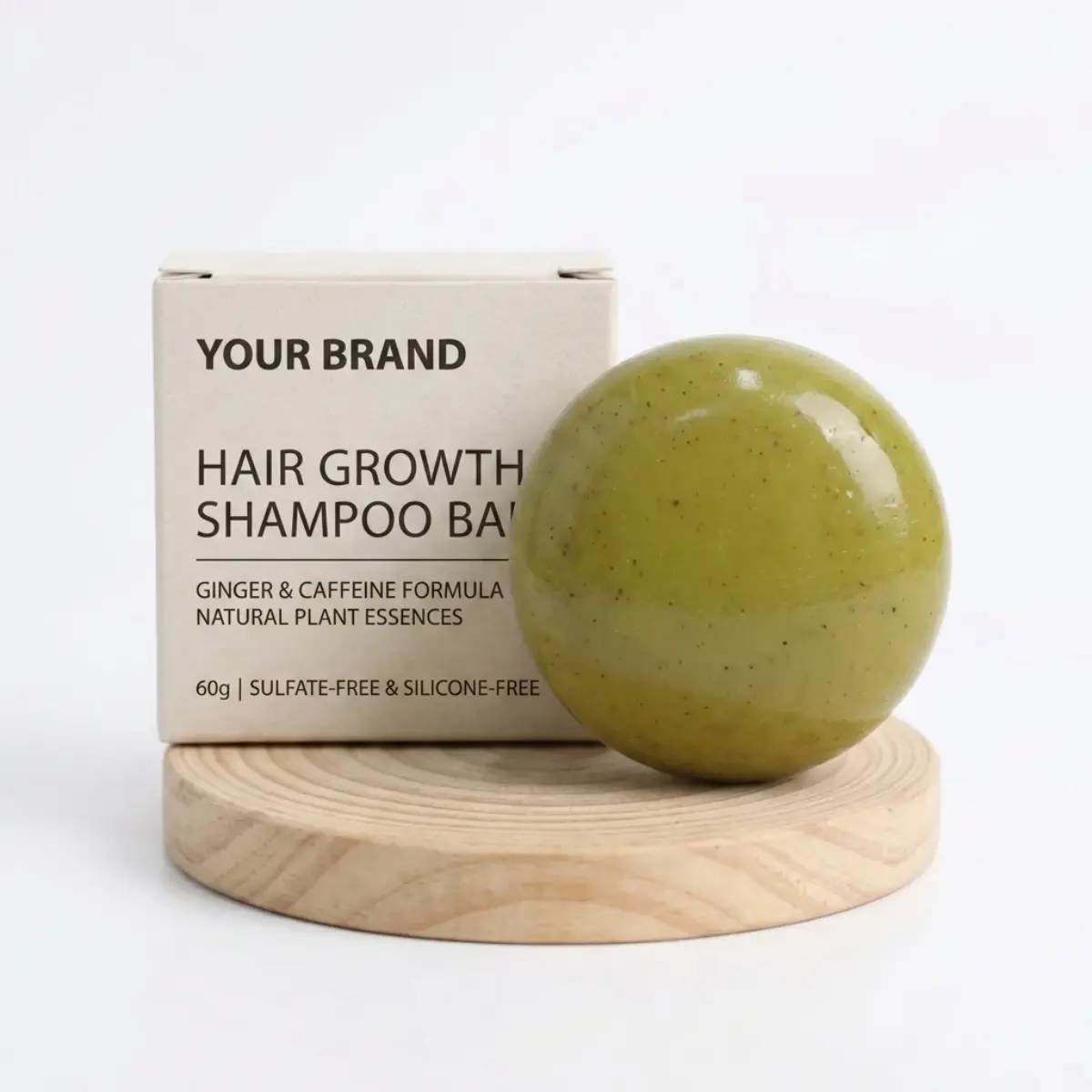
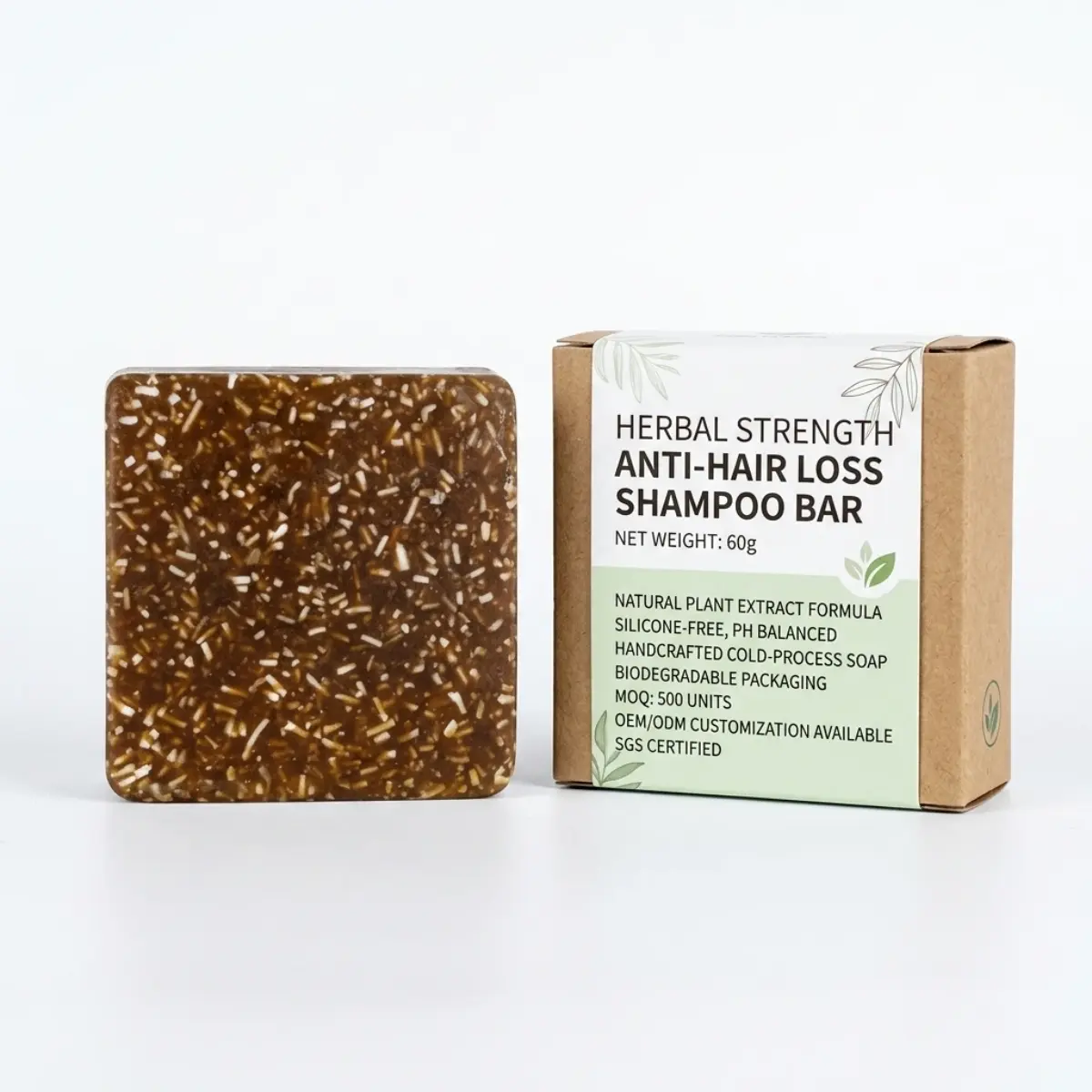
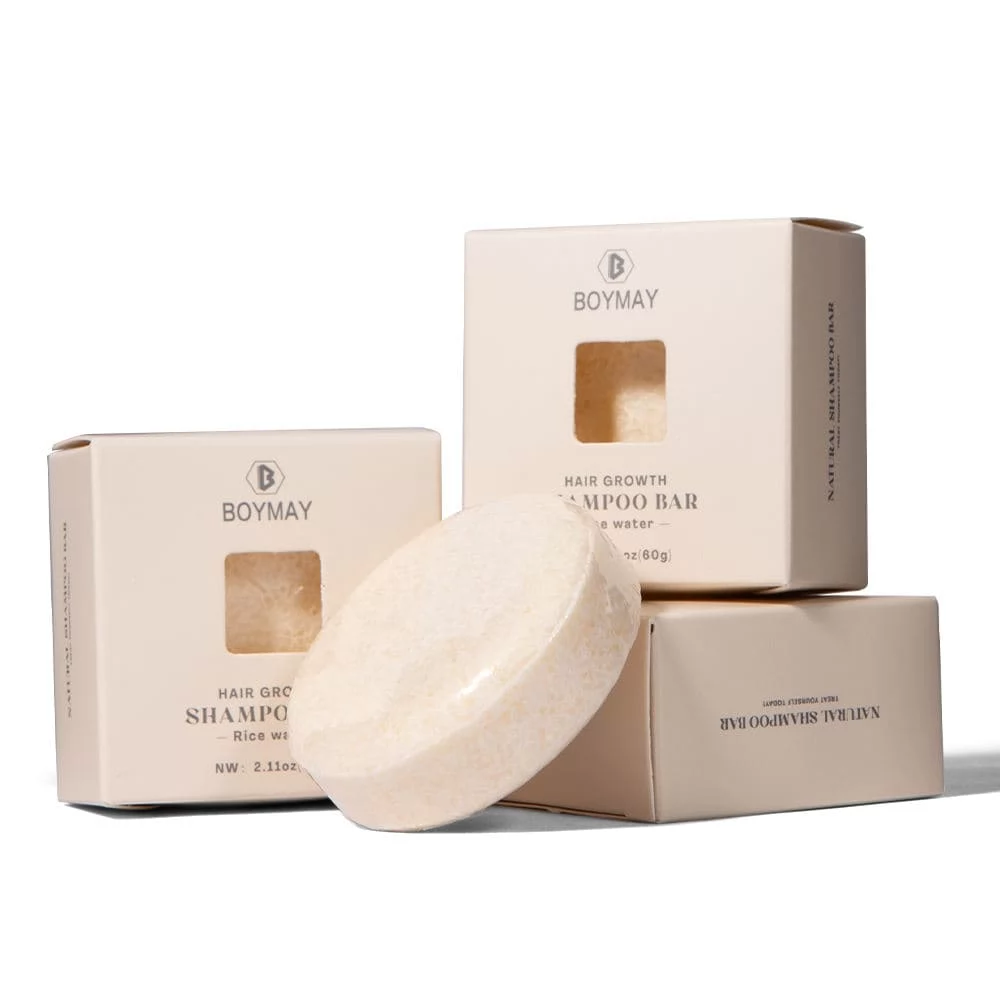
You're really looking at three different things. A true solid shampoo is a concentrated version of a liquid formula with the water removed. A soap-based bar is essentially saponified oils — closer to a bar of body soap that someone decided to market for hair. A syndet bar is built on synthetic detergents (the "syndet" contraction) engineered to clean at a hair-friendly pH.
Lumping these together is where a lot of consumer disappointment starts. Someone buys a cold-process soap bar, expects it to behave like their sulfate-free liquid, and ends up frustrated within two washes.
Soap-Based vs. Syndet Bars — The pH Question
The hair cuticle behaves best in a mildly acidic environment, roughly pH 4.5 to 5.5. When the cuticle sits in that range, its scales lie flat, the strand reflects light, and it feels smooth.
Soap-based bars typically land at pH 9 or higher. That alkalinity swells the cuticle, lifts the scales, and — especially in hard-water areas — leaves behind an insoluble film of fatty-acid salts. That's the notorious "waxy" residue people complain about.
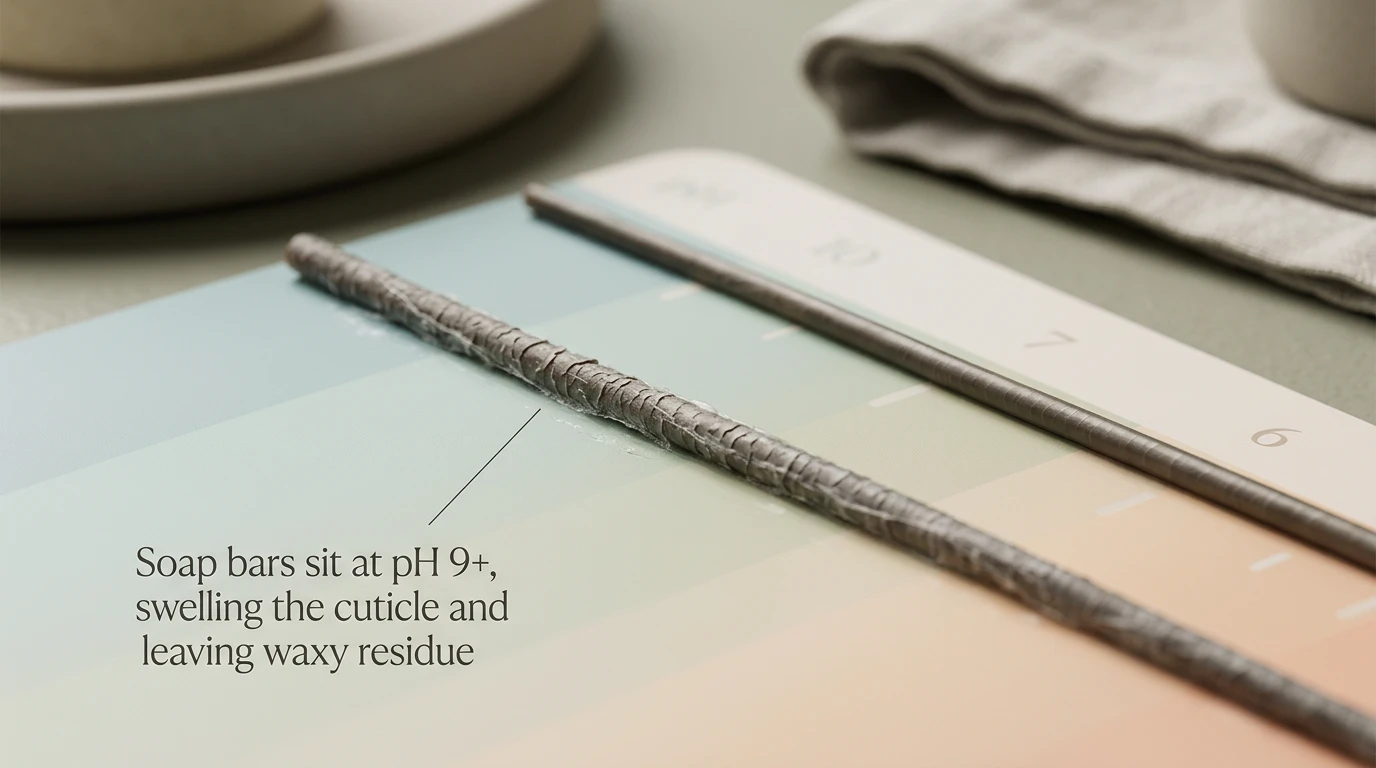
Syndet formulations sit far closer to the hair's own pH. This single difference explains most of the gap between a bar people love and one they abandon in the shower caddy.
Reading the Market — What's Actually Driving Demand
It's easy to wave at "sustainability" and call it a day. That's lazy analysis. The demand behind solid cosmetics as of 2026 is being pushed by several concrete, separately measurable forces — and understanding which one you're riding shapes how you position a product.
Broadly, the solid-cosmetics segment has kept expanding through the mid-2020s, tracking alongside the wider sulfate-free hair care market. I won't pretend to quote a precise figure I can't stand behind, but the directional trend is unambiguous: retailers are reallocating shelf space, and legislation targeting single-use plastic keeps tightening across the EU and parts of North America.
The Data Behind the Movement
| Demand Driver | What It Signals for the Category | Relevance to Natural Hair |
|---|---|---|
| Plastic reduction pledges | Retail shelf-space reallocation | Positions bars as zero-waste hair products |
| Sulfate-free formulation growth | Shift toward gentler surfactants | Directly benefits curly and coily textures |
| Travel and "solid format" convenience | Broader mainstream adoption | Lowers the barrier to a first purchase |
| Concentrated actives per gram | Higher wash-count value | Improves cost-per-use messaging |
Read this table as a strategy map, not just data. If you're building a product line, the driver you lean on dictates your whole message. A brand leaning on "plastic pledges" competes on ethics and packaging design. A brand leaning on "sulfate-free formulation growth" competes on performance for textured hair — a much stickier, more defensible position.
The "concentrated actives per gram" row is the one most brands underuse. Because you've stripped the water, a well-made bar can carry a higher payload of conditioning agents per gram than its liquid equivalent. That's a genuine performance story, not a green one, and it converts skeptics faster.
The Real Benefits of Shampoo Bars for Natural Hair
Let's answer the question people actually type into search: are shampoo bars good for hair? The honest answer is "yes, often, but not universally" — and being straight about the limits is what earns trust. So here's the balanced version.
Gentler Cleansing for Textured and Curly Hair
Curly, coily, and high-porosity hair shares a common enemy: over-cleansing. Aggressive anionic surfactants like SLS strip sebum indiscriminately, and textured hair doesn't distribute that sebum down the strand easily to begin with. The result is dryness, frizz, and breakage.
A good syndet bar built on milder surfactants — think sodium cocoyl isethionate or sodium coco-sulfate handled carefully — cleans without that scorched-earth effect. For natural hair cleansing, retaining a bit of the scalp's natural lipids is a feature, not a flaw.
This is precisely why the benefits of shampoo bars for natural hair get talked about most in curly-hair communities first. Those users feel the difference on the second or third wash.
Concentrated Formulas, Fewer Fillers
Liquid shampoo is mostly water — commonly 70 to 80 percent. That water is a carrier, a preservation liability, and dead freight on a shipping truck.
Remove it, and two things happen. Active ingredients occupy a larger share of the formula, and the microbial risk drops sharply because water-free environments are hostile to most spoilage organisms. That doesn't eliminate the need for a preservation strategy, but it changes the calculus considerably.
The Sustainability Case
I'll keep this grounded rather than preachy. A solid bar typically ships in paper, card, or nothing at all, and it weighs a fraction of the liquid it replaces. Less weight and no water mean lower transport emissions per wash.
For a customer trying to build an eco-friendly haircare routine, that's a tangible, defensible improvement — not just a vibe. The zero-waste angle works best when you can show the math on plastic bottles avoided over a year, rather than gesturing vaguely at the planet.
Where Bars Fall Short (The Honest Part)
Now the part competitor content skips because it's inconvenient. Bars are not magic.
Soap-based versions can leave a transition film, especially where water is hard. Even good syndet bars can feel odd during an adjustment period while the scalp recalibrates its oil production. And storage matters — a bar left sitting in a pool of shower water turns to mush and grows unfriendly.
Naming these problems openly does two things. It sets realistic expectations, and it signals to a savvy reader that you actually know the category. That's the difference between authority and advertising.
How to Use Shampoo Bars Without the Learning-Curve Frustration
Most people who "hate" bars simply used them wrong. Technique accounts for a huge share of complaints. So here's the practical, hands-on guidance — the kind that comes from actually washing hair with these things, not reading a spec sheet.
The Application Methods That Actually Work
There are three methods, and the right one depends on hair type and length.
- Direct-to-scalp: Rub the wet bar straight onto the scalp in sections, then massage. Best for short hair and oilier scalps that need real cleansing contact.
- Lather-in-hands: Work up a lather between palms, then apply the foam. Gentler and more controlled — ideal for longer, drier, or curly hair where you don't want to rough up the cuticle.
- Lather-in-water: Swish the bar in a cup of warm water to create a diluted wash. Kind on fine hair and easier to distribute evenly.
If someone with waist-length curls rubs a bar directly on their lengths, of course they'll get tangling and patchy cleansing. Match the method to the head.
The Hard-Water Problem and the Acidic Rinse Fix
Hard water is the silent saboteur. Calcium and magnesium ions react with certain surfactants and soap molecules to form insoluble deposits that cling to the hair — that's your waxy feel.
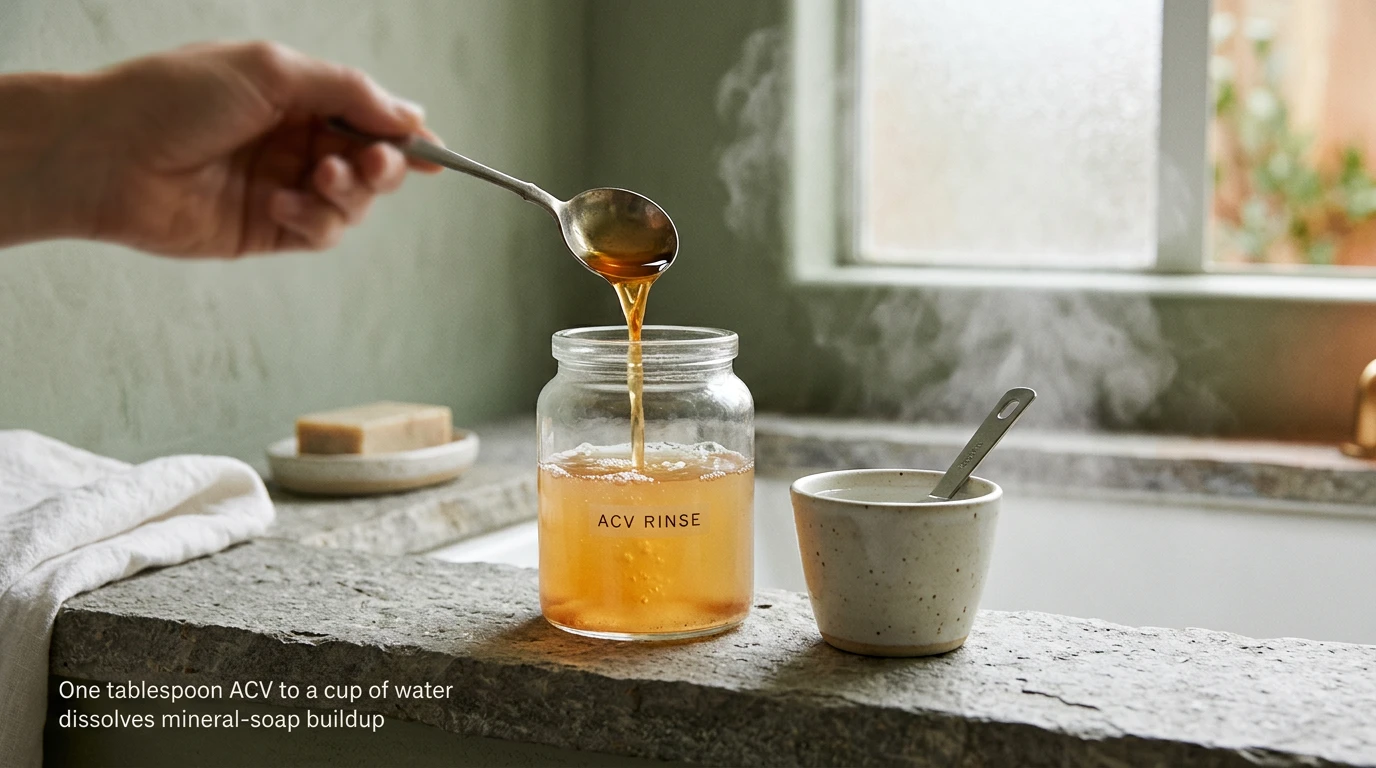
The fix is chemistry, not luck. A diluted acidic rinse — apple cider vinegar or a citric acid solution around pH 3 to 4 — dissolves those mineral-soap deposits and simultaneously helps re-flatten the cuticle. One tablespoon of ACV to a cup of water, poured through after washing, resolves the complaint for most people. It isn't folklore; it's straightforward acid-base behavior.
The Transition Period — Setting Client Expectations
This one is for the salon professionals. When a client switches from a sulfate-heavy liquid to a gentle bar, their scalp may spend two to four weeks adjusting oil output. During that window, hair can feel heavier or waxier before it settles.
Tell them this before they buy. A client warned about a two-week adjustment stays the course. A client blindsided by week-one weirdness returns the product and tells five friends it doesn't work. Managing that expectation is worth more than any ingredient claim.
Matching the Right Bar to the Right Hair Type
Generic advice — "pick a natural one!" — helps no one. Professionals need a matching framework, so here's one.
Selecting the Best Shampoo Bars for Curly Hair
For the best shampoo bars for curly hair, the ingredient deck tells the story. You want humectants like glycerin to pull in moisture, emollients such as shea or cocoa butter for slip, and a mild primary surfactant. You want to avoid harsh secondary sulfates and high-alkalinity soap bases that rough up an already thirsty cuticle.
Curl-prone hair rewards restraint. The bar that "does less" aggressively often performs better than the one packed with a dozen actives.
A Quick-Reference Matching Table
| Hair Concern | Look For | Avoid |
|---|---|---|
| Dry / coily | Shea, glycerin, coco-based cleansers | Harsh coconut-derived sulfates |
| Fine / oily-prone | Lightweight syndet base | Heavy butters |
| Color-treated | pH-balanced, sulfate-free | Alkaline soap bars |
| Sensitive scalp | Minimal fragrance, syndet | Essential-oil-heavy blends |
Use this as a retail conversation tool. When a customer says "my hair's fine and gets greasy fast," you don't reach for the shea-loaded moisture bar — you point them to a light syndet base and spare them the flatness they'd otherwise blame on the format. Color-treated clients are the highest-stakes group: an alkaline soap bar can accelerate fade, so a pH-balanced, sulfate-free option protects both the color and the sale.
Formulation & Retail Insights for Industry Professionals
This is where a piece written for practitioners has to earn its keep. Consumer content stops before this section.
Ingredient Sourcing and Cost-Per-Use Positioning
The shelf price of a good bar often looks high next to a liter of drugstore liquid, and that scares off first-timers. Your job — and your retail staff's job — is to reframe it around wash count.
A well-formulated bar delivers somewhere in the range of 50 to 80 washes depending on hair length, water temperature, and storage. Reframed that way, a bar that costs more upfront frequently undercuts liquid shampoo on cost-per-use. That's the number that closes the sale, not the sticker.
On sourcing: gentle isethionate-based surfactants and quality butters cost more than commodity soap noodles, and that shows up in your margin. Be deliberate. A cheaper cold-process base saves cents and costs you the return rate.
Common Formulation Pitfalls to Avoid
Three problems trip up new solid-format brands more than any others.
- Brittleness: Too little binder or plasticizer and the bar cracks in transit. Buyers judge quality by whether it arrives in one piece.
- Sweating in humidity: Formulas heavy in humectants like glycerin can weep in warm, damp climates. Balance your humectant load against your target markets.
- Preservation in "anhydrous" formats: A bar may be water-free on paper, but it lives in a wet shower. Splash exposure reintroduces contamination risk, so a robust preservation approach is non-negotiable even when the label suggests it isn't needed.
Every one of these is fixable at the bench. But each has sunk products from brands that treated a bar as "just a solid version of the liquid." It isn't.
Where This Leaves Us — And Your Next Move
Shampoo bars aren't going to wipe liquid shampoo off the shelf, and anyone claiming otherwise is selling something. What's actually happened is quieter and more durable: solid formats have earned a permanent seat in the natural hair care category, backed by real surfactant science, genuine cost-per-use logic, and a sustainability story that holds up under scrutiny.
The brands and salons that win here won't be the loudest about being "green." They'll be the ones who match the right bar to the right hair, coach clients through the transition, and formulate around the real pitfalls instead of pretending they don't exist.
Call to Action
If you build, sell, or recommend hair products, the next step is concrete. Audit your current lineup this quarter: where does a solid format widen your margin, sharpen your sustainability position, or serve a texture your liquids underperform on?
Then take it further — request a sample formulation consultation to pressure-test a syndet base against your target market, or download our ingredient-selection checklist to brief your bench team or train your retail floor. Pick the move that fits your role, and make it before your competitor claims the shelf space first.
Frequently Asked Questions
Q: Do shampoo bars work for all natural hair types?
A: Not uniformly, and it's mostly down to porosity and texture. High-porosity, coily hair usually thrives with moisture-rich, gentle bars, while fine or oily-prone hair needs a lighter syndet base to avoid buildup. The format works across the spectrum — but the specific bar has to match the specific head. A single "natural" bar marketed to everyone will disappoint someone.
Q: How long does a shampoo bar last compared to liquid shampoo?
A: A typical bar replaces roughly two to three standard bottles of liquid, delivering around 50 to 80 washes depending on length and habits. Stored properly — dry, on a draining dish, out of the water stream — it lasts noticeably longer. On a cost-per-use basis, that often makes bars the cheaper choice over time, even when the shelf price looks higher.
Q: Why does my hair feel waxy after using a shampoo bar?
A: Almost always a combination of hard water and a soap-based bar. Mineral ions react with the soap to form an insoluble film that clings to the strand. Switching to a syndet bar helps, and a diluted acidic rinse — apple cider vinegar or citric acid in water — dissolves existing residue and smooths the cuticle. The waxiness is a chemistry problem with a chemistry solution, not a permanent flaw.
Q: Are sulfate-free shampoo bars better for curly hair?
A: Generally, yes, though "better" depends on the goal. Sulfate-free hair care avoids the harsh stripping that leaves curls dry and frizzy, helping high-porosity textures hold onto moisture. That said, a sulfate-free label alone guarantees nothing — an alkaline soap bar can still be sulfate-free and still rough up your curls. Read the full ingredient list, not just the front claim.
Q: Can shampoo bars replace conditioner?
A: For most textured or dry hair, no — and it's fair to say so. A shampoo bar cleanses; it doesn't deliver the cationic conditioning agents that detangle and smooth. Pairing a shampoo bar with a companion conditioner bar gives you the full routine in solid format. Set that expectation early so customers don't judge a cleanser for failing to do a conditioner's job.