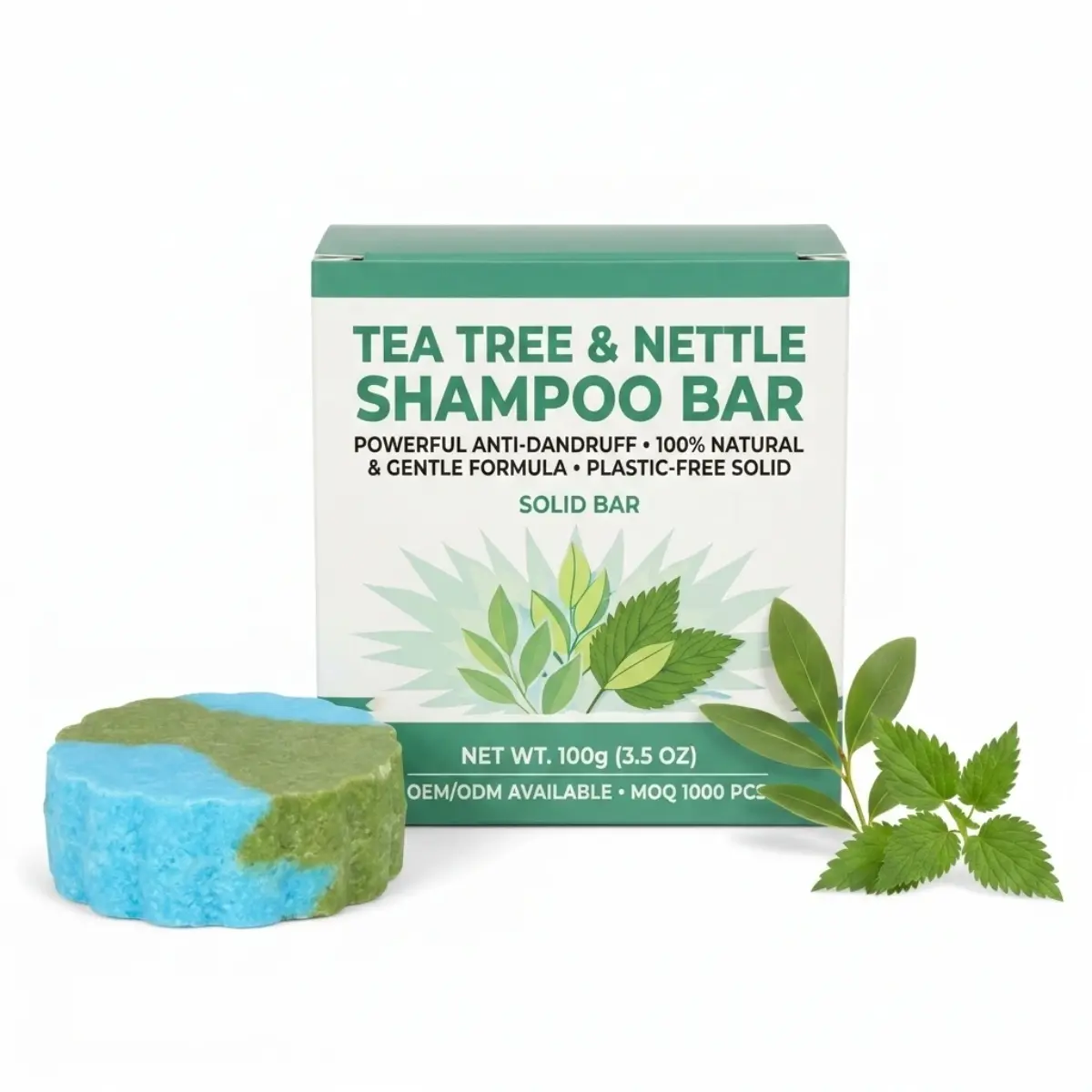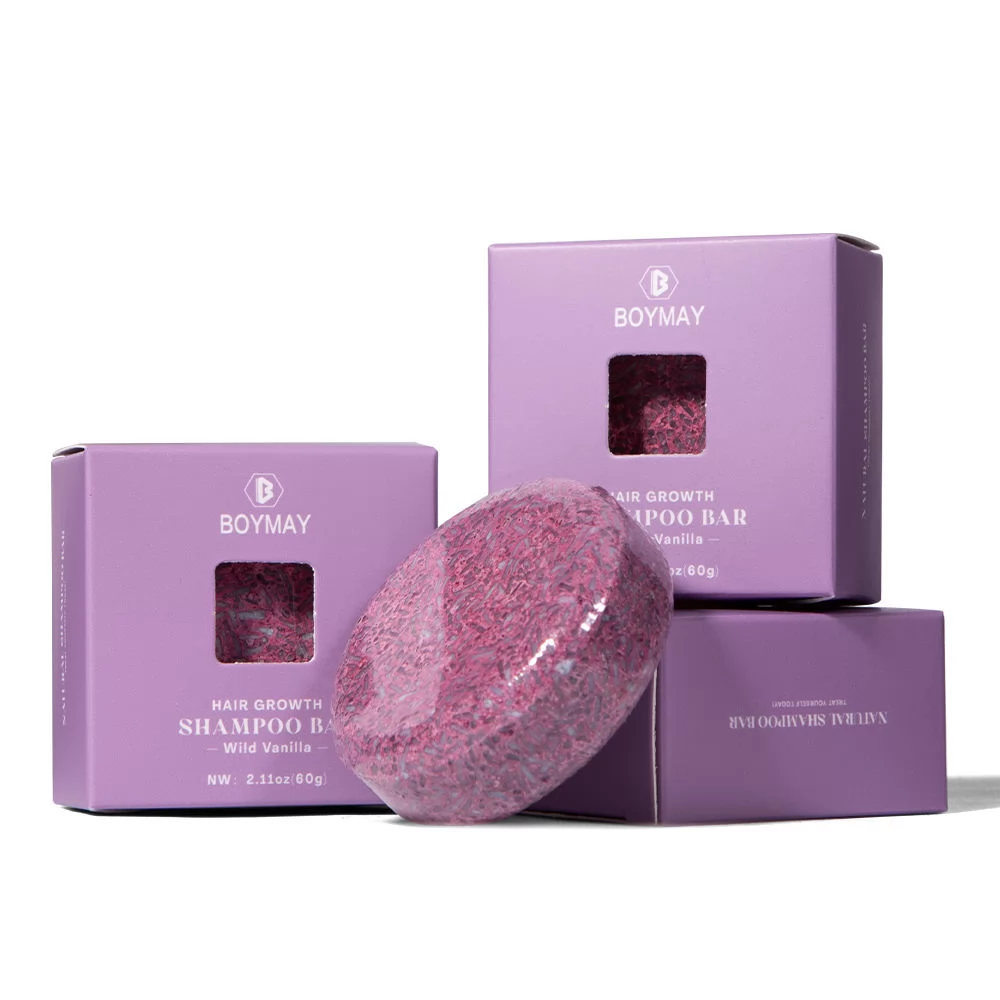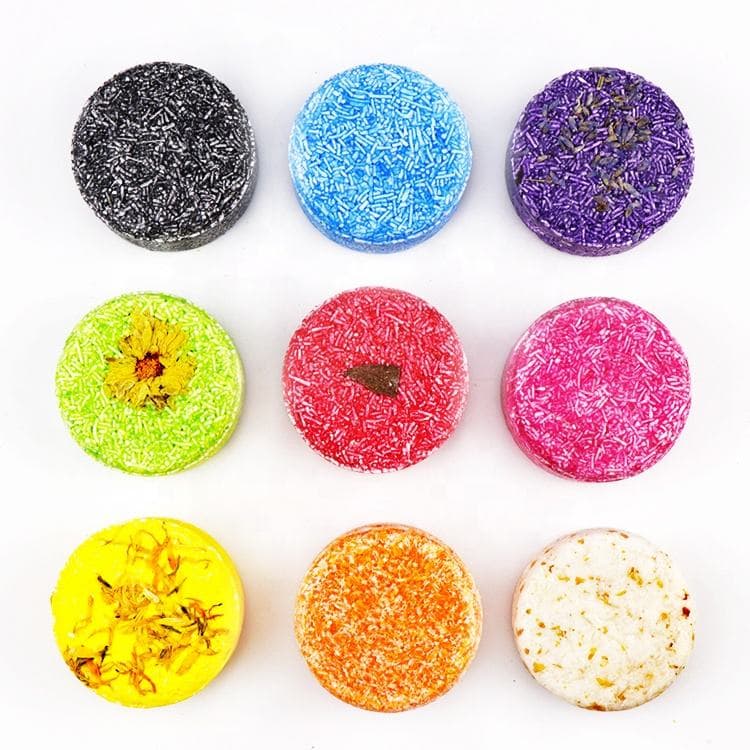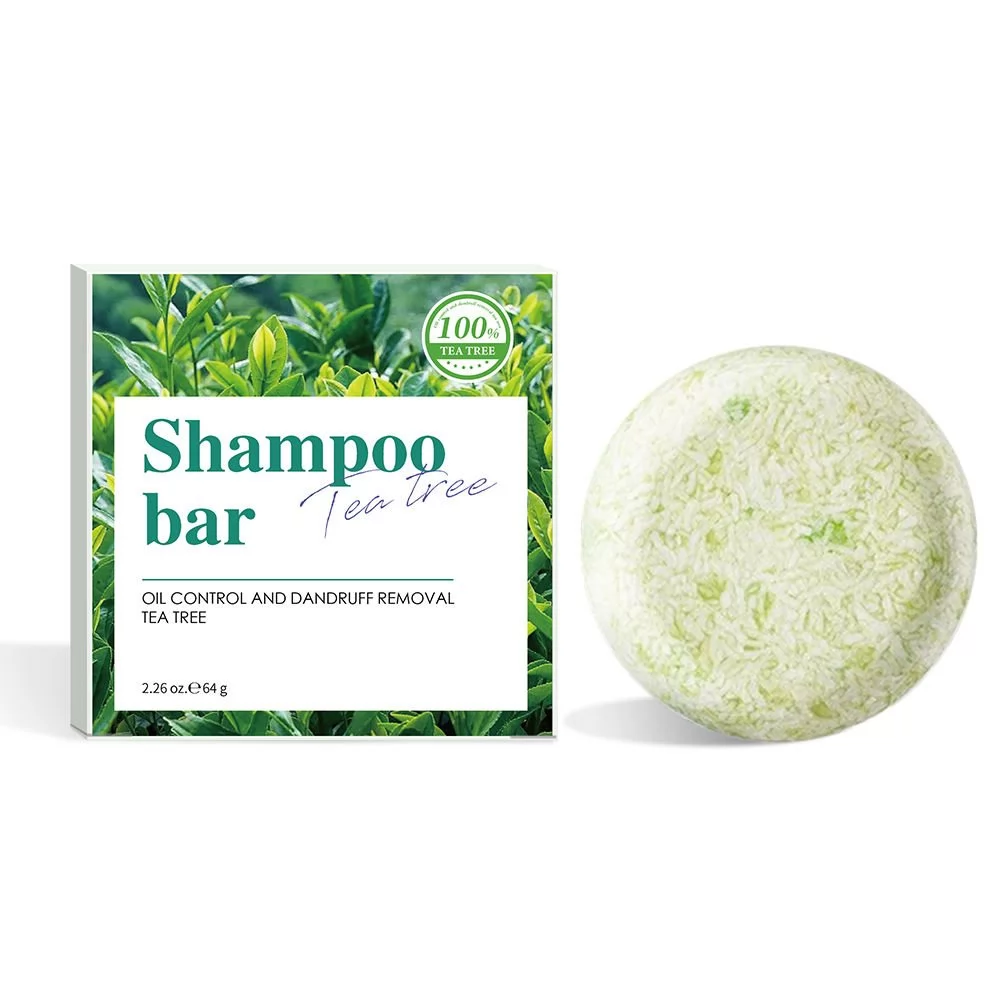

A practical procurement guide for brands, retailers, and private label buyers sourcing solid shampoo bars from OEM/ODM suppliers.
Introduction: Why These 10 Questions Matter Before You Order
Sourcing solid shampoo bars looks simple on the surface — until your first order arrives inconsistent, over budget, or three weeks late. The difference between a smooth launch and a costly mistake usually comes down to the questions you ask before signing anything.
This guide turns the entire vetting process into a risk-driven, question-by-question framework. Each question is designed to expose weak suppliers early and confirm the strong ones fast.
The Real Risks of Skipping Due Diligence
- Quality inconsistencies across batches that damage repeat sales.
- Hidden costs such as tooling, sample fees, freight surcharges, and compliance testing.
- Lead time delays and failed customization that miss your launch window.
- Brand reputation damage from non-compliant or mislabeled products.
Who This Guide Is For
This checklist is built for private label shampoo bar buyers, retail brand managers, distributors, and e-commerce sellers who need dependable OEM/ODM partners in North America, Europe, and the Middle East.
How to Use This Question Checklist
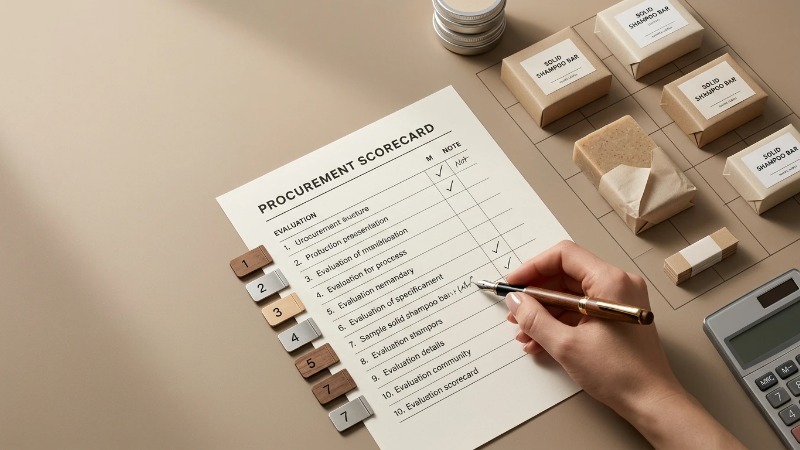
Treat the 10 questions as a vetting scorecard. A capable manufacturer answers each one clearly, in writing, and without hesitation. Vague or evasive responses are your earliest warning sign.
Question 1: What Is Your MOQ (Minimum Order Quantity)?
MOQ is your first budgeting and inventory filter. It determines whether a supplier fits a market test or only serves large-volume orders.
Why MOQ Varies by Product and Packaging
MOQ is rarely a single number. Formula complexity, custom mold requirements, and packaging type all shift the minimum. A stock formula in a paper sleeve almost always carries a lower MOQ than a bespoke formula in custom-printed rigid packaging.
Manufacturers with automated production lines and mature formulation libraries can offer a low MOQ starting at 1,000 units — a meaningful advantage when you want to validate a product before scaling.
Sample MOQ Comparison Table
| Product / Packaging Type | Typical MOQ Range | Notes |
|---|---|---|
| Standard bar, stock formula | 1,000 units | Fastest path to market testing |
| Custom formula, standard mold | 1,000–3,000 units | Depends on active ingredients and fragrance |
| Custom mold / unique bar shape | 3,000–5,000 units | Higher MOQ offsets tooling investment |
| Fully custom printed packaging | 1,000–5,000 units | Print runs influence packaging minimums |
Question 2: Do You Offer OEM and ODM Services?
This single answer defines your customization ceiling. Some factories only fill and pack; true partners can develop products from concept.
OEM vs. ODM: What's the Difference for Shampoo Bars?
OEM (Original Equipment Manufacturer): you bring the design and specifications, and the factory manufactures under your brand — the classic private label shampoo bar manufacturer scenario.
ODM (Original Design Manufacturer): the factory develops the formula and design, then manufactures it. This is the custom shampoo bar OEM scenario, ideal for brands without in-house R&D.
Can the Factory Develop a Custom Formula from Scratch?
Full-service manufacturers combine formulation, mold-making, packaging, and QC under one roof. Consolidating these steps reduces sourcing complexity, shortens communication chains, and lowers the risk of things falling through the cracks between vendors.
Question 3: Can I Customize the Formula?
Formula flexibility is where your brand differentiation lives. Ask exactly how far the manufacturer can go.
Ingredients and Functional Direction
Confirm support for sulfate-free, silicone-free, and vegan bases, plus active benefits such as strengthening, anti-dandruff, moisturizing, or clarifying. Your functional claims must be backed by the actual formulation.
Fragrance and Hair-Type Targeting
Strong suppliers offer custom scent profiles and formulas tailored to oily, dry, color-treated, or curly hair. Segmenting by hair type lets you launch a coherent product range rather than a single generic bar.
Vegan and Clean Formulation Options
Vegan and cruelty-free formulations are no longer niche — they are baseline expectations across North America and Europe. Partnering with a proven vegan shampoo bar supplier that can formulate without animal-derived ingredients or animal testing gives you a clear market advantage.
Question 4: Can You Provide Samples?
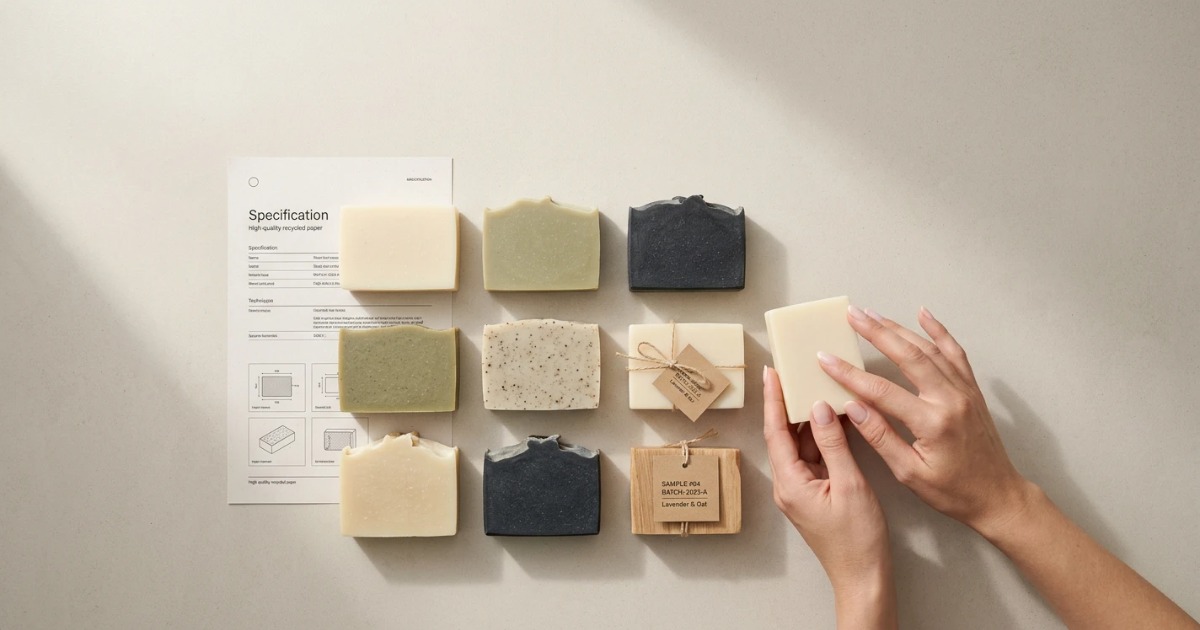
Samples are your single most important risk-reduction tool. Never commit to bulk on a spec sheet alone.
Free vs. Paid Samples
Stock samples are often free or low-cost, while fully custom development samples typically carry a fee that reflects R&D time. Many manufacturers refund sample fees against a confirmed bulk order — always ask.
Sample Development Timeline and Revisions
Set realistic expectations. Custom samples are often prepared within 7–14 days depending on formula, fragrance, appearance, and packaging complexity.
Just as important: ask how many revision rounds are included so you can refine scent, lather, and hardness without surprise charges.
Sample Terms Quick-Reference Table
| Sample Type | Cost | Lead Time | Revision Rounds |
|---|---|---|---|
| Stock formula sample | Free / low fee | 3–7 days | N/A |
| Custom formula sample | Paid, often refundable | 7–14 days | 2–3 rounds |
| Custom formula + packaging | Paid, refundable on order | 10–14 days | 2–3 rounds |
Question 5: What Certifications Do You Have?
Certifications de-risk compliance and prove factory credibility. They are also non-negotiable when you sell into regulated markets.
Factory-Level Certifications
Look for GMP (Good Manufacturing Practice), ISO quality systems, and social compliance audits such as SMETA. These prove the factory operates to documented, auditable standards rather than ad hoc processes.
Product and Market-Specific Compliance
FDA relevance matters for North America, EU cosmetic regulation (including safety assessments and CPNP notification) applies in Europe, and the Middle East often requires specific import and conformity documentation. Your manufacturer should understand each destination.
Certification Checklist Table
| Certification | What It Covers | Target Market Relevance |
|---|---|---|
| GMP | Manufacturing hygiene and process control | All markets |
| ISO | Quality management systems | Global B2B credibility |
| FDA | Cosmetic product compliance | North America |
| SMETA | Ethical and social compliance audit | Europe & retail buyers |
Question 6: What Is the Production Lead Time?
Lead time transparency protects your launch dates and inventory cycles. Ambiguous timelines are a common source of disputes.
Sampling vs. Bulk Production Timelines
Separate the stages. Sampling runs a few days to two weeks, while bulk production lead times of 25–30 days are typical for planning once your design is locked.
Peak Season and Capacity Considerations
Ask how many automated production lines the factory runs and how capacity holds up during high-demand periods such as Q4. Manufacturers with 16 automated lines absorb seasonal spikes far better than small workshops.
Lead Time Breakdown Table
| Stage | Estimated Duration | Notes |
|---|---|---|
| Sample development | 7–14 days | Varies by formula and packaging |
| Design & artwork approval | 3–7 days | Depends on buyer feedback speed |
| Bulk production | 25–30 days | After deposit and approvals |
| Peak-season buffer | +5–10 days | Plan ahead for Q4 demand |
Question 7: What Packaging Options Do You Offer?
Packaging drives shelf appeal, sustainability positioning, and unit cost. It is often where buyers under-plan.
Standard Packaging Formats
Common options include paper boxes, paper sleeves and wraps, tins, and pouches. Each balances protection, cost, and presentation differently.
Custom and Eco-Friendly Packaging
For solid shampoo bar sustainability positioning, prioritize plastic-free, recyclable, and biodegradable materials. Eco packaging aligns naturally with the zero-waste appeal that drives shampoo bar demand in the first place.
Packaging Options Comparison Table
| Packaging Type | Sustainability Level | Customization Potential | Cost Impact |
|---|---|---|---|
| Paper sleeve / wrap | High | Medium | Low |
| Recyclable paper box | High | High | Medium |
| Metal tin | Medium (reusable) | Medium | Medium–High |
| Biodegradable pouch | Very High | Medium | Medium |
Question 8: Can You Help With Product and Packaging Design?
Design support signals a true partner rather than a basic contract factory. It saves you from hiring separate design vendors.
Branding: Logo and Label Design
Ask for artwork support, dieline templates, and print-ready file guidance. A capable supplier prevents costly print errors before they reach production.
Custom Molds and Bar Shapes
The ability to create custom molds for unique bar shapes and embossed logos turns a generic product into a recognizable brand asset. Confirm mold costs and MOQ implications upfront.
Design Support Levels
Clarify whether the factory provides full-service ODM design or only manufactures from buyer-supplied artwork. Knowing this early prevents scope-gap surprises mid-project.
Question 9: How Do You Control Product Quality?
Quality control systems separate reliable suppliers from risky ones. Consistency is what protects your reorders.
Raw Material Inspection
Confirm incoming ingredient testing and supplier vetting. Quality starts long before the first bar is pressed.
In-Process and Finished-Goods QC
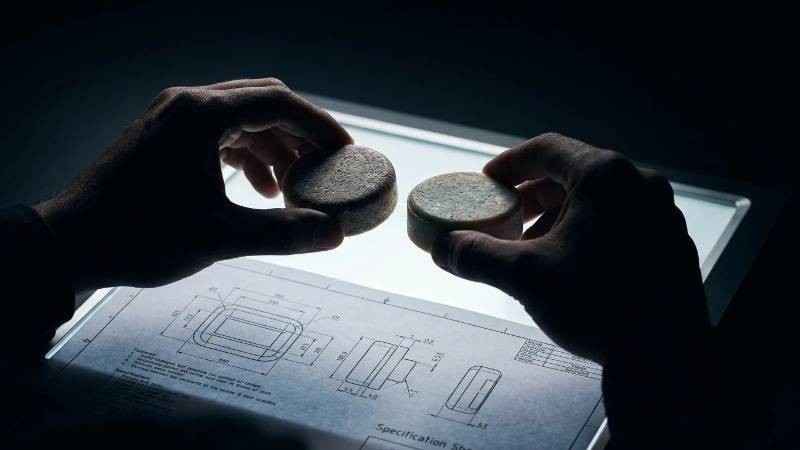
Ask about line checks during solid shampoo bar production and final inspection protocols covering weight, hardness, appearance, fragrance, and packaging integrity.
Batch-Level Quality Assurance
The strongest suppliers document QC for every batch and maintain traceability, so any issue can be isolated and corrected quickly.
QC Checkpoint Table
| QC Stage | What Is Checked | Documentation Provided |
|---|---|---|
| Incoming materials | Ingredient purity, supplier COA | Material inspection report |
| In-process | Weight, hardness, fragrance load | Line check logs |
| Finished goods | Appearance, packaging, labeling | Final QC report |
| Per batch | Full spec conformity | Batch QC certificate |
Question 10: What Are the Payment and Shipping Terms?
Financial and logistics terms determine your total landed cost and risk exposure. Never leave these to assumption.
Accepted Payment Methods and Deposit Structures
Common terms include T/T and L/C, usually split as a deposit before production and balance before shipment. Confirm the exact percentages and payment triggers.
Trade Terms (Incoterms) and Freight Options
Understand EXW, FOB, CIF, and DDP so you know precisely where responsibility and cost transfer from supplier to you as a B2B buyer.
Shipping Terms Comparison Table
| Incoterm | Who Handles Freight | Buyer Risk Level | Best For |
|---|---|---|---|
| EXW | Buyer (from factory) | High | Buyers with own forwarders |
| FOB | Buyer (from port) | Medium | Experienced importers |
| CIF | Seller (to destination port) | Medium–Low | Simpler ocean freight |
| DDP | Seller (door delivery) | Low | Hands-off buyers |
Summary: What Separates a Good Manufacturer from a Risky One
After ten questions, patterns emerge. Reliable partners answer directly, quote transparently, and back claims with documentation. Risky ones stall, deflect, or promise everything with nothing in writing.
The Trustworthy Supplier Formula
Clear Answers + Transparent Pricing + Consistent Quality + Reliable Lead Time = A Manufacturer Worth Ordering From.
Supplier Evaluation Scorecard Table
| Evaluation Criteria | Red Flag Signal | Green Flag Signal |
|---|---|---|
| MOQ clarity | Vague or shifting numbers | Clear MOQ from 1,000 units |
| Customization | "Stock only" responses | Full OEM/ODM formula development |
| Certifications | No proof on request | GMP, ISO, FDA, SMETA on file |
| Lead time | No committed timeline | 25–30 day bulk with buffer plan |
| Quality control | No batch documentation | Per-batch QC certificates |
Call to Action: Ready to Source Your Shampoo Bars?
Still looking for the right shampoo bar manufacturer? With OEM/ODM capabilities since 1995, a 40,000 m² factory, 16 automated production lines, and full GMP, ISO, FDA, and SMETA certification, we help brands launch with confidence.
Request a Sample
Test formula, lather, fragrance, and packaging quality before committing to bulk production.
Get a Custom Quote
Receive transparent pricing based on your MOQ, custom formula, and packaging choices — no hidden costs.
Contact Our Team
Connect with our OEM/ODM specialists to start your private label shampoo bar project today.
Frequently Asked Questions
Q: What is a typical MOQ for private label shampoo bars?
A: Many manufacturers set the shampoo bar minimum order quantity at 1,000 units for standard formulas. A low MOQ from 1,000 units helps new brands test the market without heavy upfront inventory risk, while highly customized formulas or molds may require higher quantities.
Q: How long does it take to develop a custom shampoo bar sample?
A: Custom samples are typically prepared within 7–14 days, depending on formula complexity, fragrance, appearance, and packaging requirements. Stock samples move faster, while multi-round custom development naturally takes longer.
Q: What certifications should a shampoo bar manufacturer have?
A: Prioritize GMP and ISO for manufacturing and quality systems, SMETA for ethical compliance, and FDA relevance for the North American market. Buyers selling into Europe should also confirm EU cosmetic regulation readiness.
Q: Can I get a vegan or cruelty-free shampoo bar formulated?
A: Yes. A capable vegan shampoo bar supplier can formulate without animal-derived ingredients and without animal testing, which is increasingly expected across North America and Europe. Confirm this as a documented customization option before ordering.
Q: What is the standard bulk production lead time?
A: Bulk production lead times of 25–30 days are typical once your formula, artwork, and packaging are approved. Build in extra buffer during peak seasons to protect launch dates.