
Solid grooming formats have gone from niche curiosity to a serious shelf contender. What started with human haircare bars has crossed into the pet aisle, and buyers who missed the first wave now have a clearer window to move deliberately rather than react late.
This guide is written for pet care brand owners, product developers, and procurement buyers weighing whether a natural pet shampoo bar belongs in their assortment. It covers sourcing models, formulation quality, customization, procurement logistics, and a practical launch roadmap.
Why Pet Shampoo Bars Are a Growing Opportunity for Pet Care Brands
The commercial case for solid pet grooming rests on three overlapping pressures: retailer sustainability targets, consumer fatigue with plastic, and margin room in a format that ships lighter and stores denser than liquid.
The Shift to Solid Pet Care
A shampoo bar concentrates active cleansing ingredients without the 70–80% water content typical of liquid shampoo. That concentration means a smaller, lighter unit that resists microbial spoilage and often outlasts a comparable bottle in wash count.
For travel-oriented and outdoor pet owners, a bar sidesteps airline liquid restrictions and leak risk entirely. That practical angle gives brands a genuine functional story rather than a purely cosmetic one.
Reducing Plastic Packaging and Meeting Sustainability Demand
Plastic-free positioning is no longer a differentiator on its own. In several North American and European retail channels it's becoming a shelf requirement. Buyers increasingly ask suppliers to document packaging composition and recyclability during onboarding.
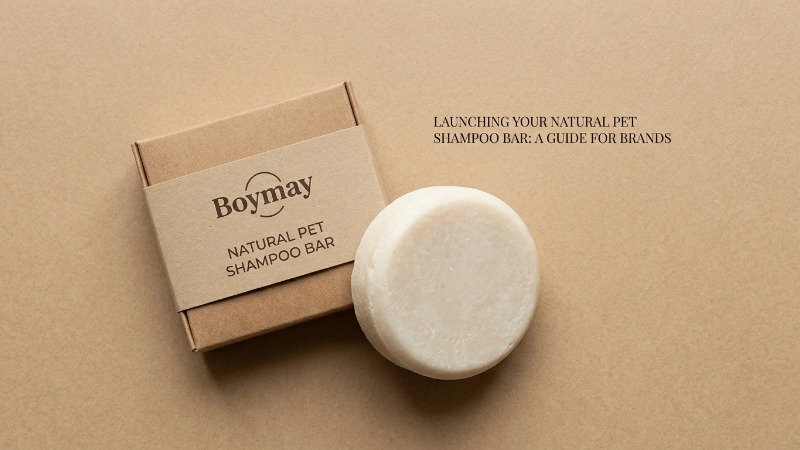
A bar wrapped in a printed carton or compostable sleeve removes the pump, bottle, and cap from the equation. That change reads well in retailer scorecards and resonates with the shopper who already buys refill and solid formats in their own bathroom.
Product Differentiation in a Crowded Pet Category
Liquid pet shampoo is a saturated shelf. A well-formulated natural pet shampoo bar lets a brand occupy visual and conceptual space competitors haven't claimed, particularly in the premium and clean-ingredient segments.
Differentiation here is structural, not just cosmetic. The format itself signals a different value system, which makes the marketing narrative easier to write and harder to copy quickly.
Expanding Your SKU Range with Low Risk
Adding a bar rarely requires abandoning an existing liquid line. It works as a complementary SKU that captures the sustainability-minded buyer without cannibalizing core revenue.
Because low minimum order quantities are now available through experienced manufacturers, brands can test the format with limited capital exposure before committing to full-scale distribution.
What Makes a Good Natural Herbal Pet Shampoo Bar
Before evaluating any supplier, it helps to know what separates a competent bar from a mediocre one. These benchmarks apply whether you buy a ready formula or commission a custom one.
Botanical and Herbal Ingredients
Plant-derived inputs such as oat-based conditioning agents, aloe, chamomile, coconut-derived surfactants, and skin-soothing botanical extracts appeal to the natural pet care shopper. These ingredients carry recognizable, reassuring names that support a clean-label narrative.
The point isn't to load a bar with as many botanicals as possible, but to pick a coherent set that supports a defined benefit—coat softness, gentle cleansing, or a calming wash experience.
Gentle Cleansing for Sensitive Skin
Canine and feline skin has a different pH profile than human skin, and surfactant harshness is a common failure point in cheap formulas. A quality bar uses mild, pH-appropriate surfactant systems that clean without stripping natural oils.
Sulfate-free or low-irritation surfactant blends are increasingly the default expectation in the natural segment. This is a formulation detail worth confirming during sampling rather than assuming.
Coat and Skin Care Benefits
Beyond cleansing, thoughtful formulation supports coat manageability, shine, and post-wash skin comfort. Conditioning agents and humectants can reduce the dry, brittle feel that some solid formats produce when poorly balanced.
A good bar rinses clean without leaving residue that dulls the coat. Rinseability is one of the more overlooked quality markers, and it's easy to test on your own sample.
Responsible Claims and Ingredient Transparency
Marketing language deserves discipline. Untested claims such as "anti-flea," "antifungal," or any medical-treatment promise invite regulatory scrutiny and erode trust when a bar predictably fails to deliver a pharmaceutical outcome.
Position the product honestly around grooming, cleansing, and care benefits. Transparent ingredient disclosure and modest, defensible claims build more durable brand equity than aggressive promises you can't substantiate.
Private Label vs. Custom OEM Pet Shampoo Bars
Sourcing models run along a spectrum, from fast-and-simple to slow-and-bespoke. Match your ambition, budget, and timeline to the right model, and you avoid costly mid-project pivots.
Ready Formula / White Label
The quickest route to market puts your brand on an existing, proven formula. You skip R&D entirely and inherit a product already validated in production. It suits brands that need to launch fast and test demand.
Private Label
Private label puts your brand identity on established products while allowing select adjustments—fragrance choice, color, or packaging—without opening full formula development. It balances speed with some ownership over how the product presents.
OEM Manufacturing
Under an OEM arrangement, the manufacturer produces to your specifications with technical support along the way. You bring the concept and requirements; the factory's R&D and production teams turn them into a manufacturable product.
ODM and Fully Custom Formula
ODM and fully custom development is end-to-end: the manufacturer helps design a unique formula, appearance, and packaging from the ground up. This path fits brands seeking a proprietary signature product they can defend competitively.
Comparison Table: White Label vs. Private Label vs. OEM vs. ODM
| Model | Speed to Market | Customization Depth | Relative Cost | Typical MOQ Sensitivity | Ideal Brand Stage |
|---|---|---|---|---|---|
| White Label | Fastest | Branding only | Lowest | Low | New / testing demand |
| Private Label | Fast | Select options | Low–Moderate | Low–Moderate | Early growth |
| OEM | Moderate | Spec-driven | Moderate | Moderate | Scaling with defined vision |
| ODM / Custom | Slowest | Full formula & design | Highest | Higher | Established / seeking signature product |
Customization Options for Pet Care Brands
How much customization you can access shapes how distinctive your final product feels on shelf. Understand the levers, and you can brief a manufacturer efficiently.
Formula and Fragrance
Base formulas can be adjusted for conditioning level, lather profile, and ingredient emphasis. Fragrance is often the fastest way to align a product with brand positioning. A calming lavender-forward scent and a fresh, clean botanical scent communicate very different brand values.
Fragrance for pets calls for restraint—lower intensity than human products—since strong scents can overwhelm animals. A capable formulator will steer you toward pet-appropriate concentrations.
Color, Shape, and Weight
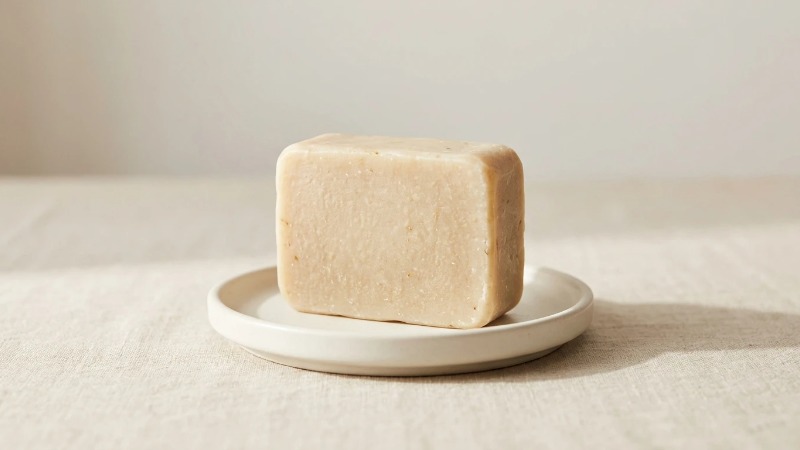
Visual differentiation strengthens shelf appeal and reinforces brand identity. Custom molds allow distinctive shapes, while color and bar weight can be tuned to hit a target price point or premium impression.
Weight decisions carry cost implications: a heavier bar signals value but raises unit cost and shipping weight. Model this trade-off before finalizing.
Logo, Single-Box Packaging, and Eco-Friendly Options
Branding surfaces include embossed or debossed logos on the bar itself, printed single-box cartons, and sleeves or wraps. Eco-friendly packaging—recycled board, compostable film, or plastic-free construction—reinforces the sustainability story that draws many buyers to bars in the first place.
Customization Options Overview Table
| Category | Typical Options | Considerations |
|---|---|---|
| Formula | Conditioning level, surfactant blend, botanical emphasis | Requires sampling to validate performance |
| Fragrance | Custom scent profiles, unscented | Keep pet-appropriate intensity |
| Color | Custom tints, natural / uncolored | Natural inputs can limit color range |
| Shape | Standard or custom mold | Custom molds add tooling lead time |
| Weight | Adjustable to price target | Affects unit cost and freight |
| Branding | Embossed logo, printed carton, sleeve | Confirm print resolution and materials |
| Packaging | Recycled board, compostable film, plastic-free | Align with retailer sustainability requirements |
MOQ, Sampling, and Bulk Production
For B2B buyers, procurement logistics often decide the supplier more than the product itself. Clear numbers here let you build a realistic launch calendar.
Understanding MOQ and Why It Matters
Minimum order quantity determines how much capital you commit before selling a single unit. A low MOQ—starting from 1,000 units—lets new and scaling brands validate demand without overextending inventory, which matters when you're testing a new format.
Lower minimums also make it feasible to run multiple variants, such as two fragrances, and let the market decide which earns a reorder.
The Sampling Process and Timelines
Sampling is where you confirm formula performance, fragrance, appearance, and packaging fit before scaling. Custom samples are typically prepared within 7–14 days, with the range depending on formula complexity, fragrance, appearance, and packaging requirements.
Use this stage rigorously. Wash-test the bar on the intended coat types, evaluate rinseability, and assess how the scent behaves once wet. Iterating now is far cheaper than after a bulk run.
Bulk Production Lead Times
Once a sample is approved, bulk production typically runs 25–30 days. Build this into your launch calendar alongside freight transit time to your market, and add buffer for peak-season factory demand.
Procurement Reference Table: MOQ, Sampling & Production
| Stage | Reference Figure | Depends On |
|---|---|---|
| Minimum Order Quantity | From 1,000 units | Formula and packaging configuration |
| Sample Lead Time | 7–14 days | Formula, fragrance, appearance, packaging |
| Bulk Production Lead Time | 25–30 days | Order volume, customization, season |
Treat these figures as planning references. Confirm exact timelines against your specific specification during quotation.
How to Choose a Pet Shampoo Bar Manufacturer
Vetting a manufacturing partner is risk management. The criteria below separate a dependable long-term partner from a one-order transaction.
Manufacturing Experience and Track Record
Decades of OEM/ODM personal care experience lower launch risk, because the hard problems—stability, moldability, surfactant balance—have already been solved many times over. A manufacturer producing bath and body products since 1995, for instance, holds institutional knowledge a new entrant can't replicate quickly.
Formula Development Capability
For anything beyond white label, in-house R&D strength is decisive. Ask how formulas are developed, how many iterations a sample cycle typically allows, and whether the team can adapt a base to your specific coat-care goals.
Quality Control Systems
Batch-to-batch consistency is what protects your brand once you're reordering at scale. Look closely at testing procedures, raw-material inspection, and how the factory documents each production run.
Production Capacity and Scalability
A partner should be able to grow with you. A facility spanning tens of thousands of square meters with multiple automated production lines and a substantial workforce can absorb volume increases without the quality drift that plagues capacity-strained suppliers.
Certifications and Documentation
Credentials such as GMP, ISO, FDA registration, and SMETA signal audited processes and ethical operations. They also smooth retailer onboarding, since many buyers require documentation before listing a product.
Packaging Support and Export Experience
Full-service packaging support saves you from coordinating separate vendors. Proven export experience into North America, Europe, and the Middle East means the factory understands documentation, labeling, and shipping norms for your destination.
Manufacturer Evaluation Checklist Table
| Criterion | What to Verify | Why It Matters |
|---|---|---|
| Experience | Years in personal care OEM/ODM | Reduces technical risk |
| R&D | In-house formulation team | Enables custom development |
| Quality Control | Testing and batch records | Ensures consistency |
| Capacity | Lines, floor space, staffing | Supports scaling |
| Certifications | GMP, ISO, FDA, SMETA | Eases retail onboarding |
| Packaging | Full-service design & supply | Simplifies coordination |
| Export | Track record in your market | Smoother logistics & compliance |
How Pet Brands Can Position Shampoo Bars
The same physical bar can support several distinct positioning strategies. Pick the one that fits your existing audience rather than chasing every angle at once.
Natural Pet Care
Lead with botanical inputs, clean-ingredient messaging, and transparent labeling. This positioning suits brands whose customers already scrutinize ingredient lists on their own products.
Premium Grooming
Elevate the product with refined packaging, a distinctive fragrance, and quality cues that justify a higher price. Premium positioning depends heavily on packaging design and a coherent, restrained brand aesthetic.
Sustainable Pet Care
Make plastic-free construction and eco-conscious packaging the headline. This angle aligns naturally with retailers running sustainability programs and shoppers already committed to low-waste living.

Gift Sets and Travel Pet Care
Bundle bars into gift sets or offer compact travel formats to unlock retail occasions beyond routine grooming. Seasonal gifting and travel convenience open incremental sales without new formula work.
How to Start Your Own Pet Shampoo Bar Line
With the strategy clear, the operational path is straightforward. Each step de-risks the next.
Step 1: Choose Your Formula
Decide between a ready base for speed or custom development for a signature product. Your sourcing model and timeline largely dictate this choice.
Step 2: Request Samples
Confirm performance, scent, and appearance before scaling. Test on real coats and validate rinseability and post-wash feel rather than judging on looks alone.
Step 3: Customize Packaging
Finalize branding surfaces and eco-friendly packaging design, making sure artwork, materials, and any sustainability claims are locked before production.
Step 4: Confirm Your Bulk Order
Align quantities, pricing, and timelines. Confirm the exact MOQ, unit cost, and production window against your approved specification.
Step 5: Move to Production
Kick off manufacturing and prepare your market launch—marketing assets, listings, and logistics—so finished stock lands into a ready channel.
Ready to Launch Your Private Label Pet Shampoo Bar?
A natural pet shampoo bar is one of the lower-risk, higher-differentiation additions a pet care brand can make to its lineup right now. The format story writes itself, and low minimums mean you can prove the concept before scaling.
With OEM and ODM capability, in-house formula development, low MOQs from 1,000 units, and GMP, ISO, FDA, and SMETA credentials, Boymay helps brands move from concept to shelf with reliable, well-documented production.
Start with a formula consultation and a sample request today. Tell us your target positioning, fragrance direction, and packaging goals. From there, our team maps out the right sourcing model, timeline, and next steps to move your custom dog shampoo bar into production. Contact us to get started.
Frequently Asked Questions
Q: What is the minimum order quantity for private label pet shampoo bars?
A: Minimum order quantities start from 1,000 units, which keeps launch risk low for new and scaling brands. This lets you test the format—or run more than one fragrance variant—without committing to heavy inventory.
Q: How long does sampling and bulk production take?
A: Custom samples are typically prepared within 7–14 days depending on formula, fragrance, appearance, and packaging requirements. After sample approval, bulk production generally runs 25–30 days, to which you should add freight transit time for your market.
Q: Can the formula be vegan and cruelty-free?
A: Yes. Formulas can be developed with vegan ingredients and are not cruelty-tested on animals, which supports clean-label and ethical positioning that resonates strongly in North American and European markets.
Q: What certifications should a pet shampoo bar manufacturer have?
A: Look for GMP, ISO, FDA registration, and SMETA. These credentials indicate audited quality systems and ethical operations, and they simplify retailer onboarding since many buyers require documentation before listing.
Q: Can I fully customize the formula, scent, and packaging?
A: Through OEM and ODM programs, you can customize formula, fragrance, color, shape, weight, logo, single-box packaging, and eco-friendly packaging materials. The scope ranges from select adjustments under private label to fully bespoke development for a signature product.