
I will whiskey-inspired soap using safe, proven methods—plus the science behind why bourbon soap smells so irresistible.
The first time I pulled a batch of bourbon soap from the mold, I honestly had no idea what to expect. I'd read a dozen recipes online, and half of them contradicted each other. I want to spare you that confusion. This is the guide I wish I'd had when I started—part hobby notebook, part chemistry lesson.
What Is Bourbon Soap (And Why Everyone's Talking About It)
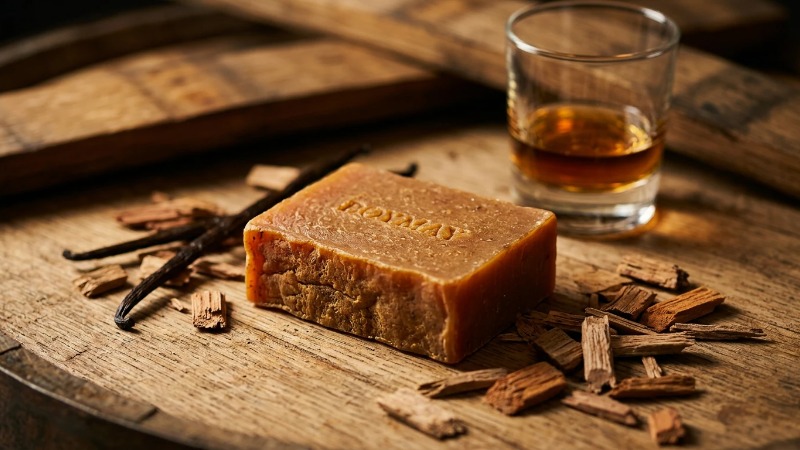
Bourbon soap is exactly what it sounds like: a handmade bar built around the warm, spicy-sweet character of a good whiskey. Picture amber tones, a slightly rustic surface, and a scent that lands somewhere between a leather armchair and a bakery.
It's become a favorite in the craft community for gifting—Father's Day, groomsmen boxes, holiday hampers. There's something a little masculine and a little cozy about it, and that combination sells itself.
The "Bourbon" Scent Explained
Here's what most people don't realize: the aroma rarely comes from liquor alone. That signature woody, caramel-vanilla profile is usually built from fragrance oils and essential oil blends.
Actual bourbon smells more like ethanol than dessert once it's in soap. The romantic "whiskey barrel" note you're chasing is really vanilla, oak, and a touch of smoke—layered on purpose.
Does Real Bourbon Go Into the Soap?
You can add real bourbon, and I sometimes do, but it plays a supporting role. The sugars in the liquor help boost lather and give a gentle amber tint. The scent contribution, though, is minor at best.
Plenty of experienced makers skip the liquor entirely and rely on a good bourbon-scented fragrance oil. There's no shame in that—it's often more reliable.
The Science: How Alcohol Behaves in Soap Making
Soap forms through saponification, a reaction where fats and oils meet an alkali (lye) and transform into soap and glycerin. It's a controlled chemical process, and anything you add to the mix can nudge that reaction in one direction or another.
Alcohol is a solvent. When you introduce bourbon, you're adding water, sugar, trace flavor compounds, and ethanol all at once—each of which behaves a little differently in your pot.
Why Alcohol Can Accelerate Trace
In cold process soap making, "trace" is the point where your batter thickens to a pudding-like consistency. Alcohol and sugar can speed this up dramatically, sometimes seizing the batch before you're ready to pour.
My rule: work faster than usual, keep your fragrance and colorant pre-measured, and don't blend to a heavy trace. Stop earlier than instinct tells you.
Boiling Off Alcohol First
My preferred prep step is simmering the bourbon gently in a pan for several minutes. This burns off most of the volatile ethanol while concentrating the sugars and color.
You end up with a syrupy reduction—maybe a third of your starting volume—that's far kinder to your batch and less likely to trigger a runaway reaction.
Choosing Your Method: Melt and Pour vs. Cold Process
There are two realistic paths here, and the right one depends on your patience and your comfort with chemicals.
Melt and Pour Soap Base (Best for Beginners)
A melt and pour soap base is pre-saponified, meaning the lye work is already done for you. You melt it, add your extras, pour, and wait a few hours. It's genuinely hard to mess up, which makes it my top recommendation for a first batch.
Cold Process (For Full Control)
Cold process gives you total command over every oil, ratio, and additive. That artisan finish and custom lather profile is worth it—but you'll be handling lye and waiting weeks to cure. It's rewarding, not casual.
Ingredients and Tools You'll Need
Here's a checklist covering both routes so you can gather everything before you start.
Core Ingredients
A melt and pour base, or your chosen oils plus lye for cold process
Bourbon (optional, reduced)
Skin-safe amber or brown colorant, or natural clays
Silicone molds
Essential Oils for Soap and Fragrance Blends
To build an authentic natural bourbon scent soap, I lean on cedarwood, sandalwood, and vanilla, with a whisper of tobacco-leaf fragrance oil for that barrel-aged depth. A drop of clove or cinnamon leaf adds the spicy warmth.
When using essential oils for soap, remember they're more volatile than synthetic fragrance oils—so you may need to layer or anchor them to hold their scent over time.
Safety Gear Checklist
For cold process especially: nitrile gloves, splash goggles, long sleeves, and real ventilation. Lye fumes are no joke for the first minute after mixing. Keep vinegar nearby for spills and children and pets out of the room.
Step-by-Step Bourbon Soap Recipe (Melt and Pour Method)
This is a simple bourbon soap recipe you can knock out in an afternoon.
Step 1: Prep and Reduce the Bourbon
Simmer about half a cup of bourbon down to a couple of tablespoons. Let it cool completely before it touches your base.
Step 2: Melt the Soap Base
Cut the base into cubes and melt in short microwave bursts or a double boiler. Stir gently—you want it fluid, not boiling.
Step 3: Add Color, Bourbon, and Fragrance
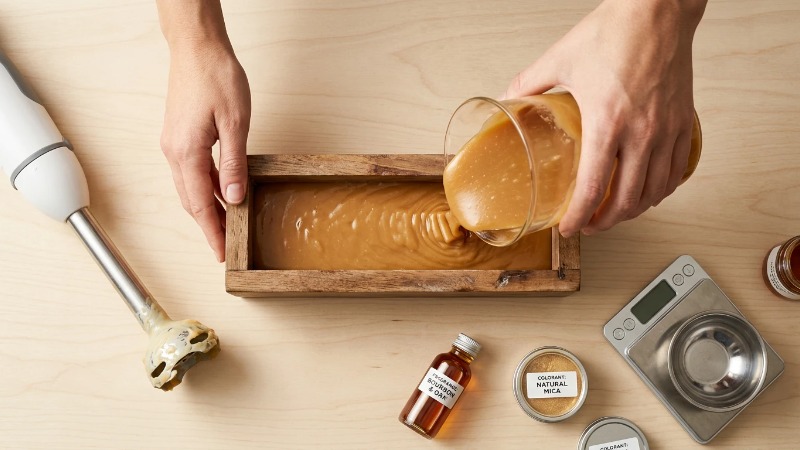
Stir in your reduced bourbon, colorant, and roughly one teaspoon of fragrance per pound of base. Add the fragrance last, once the base has cooled slightly, to protect the scent.
Step 4: Pour, Set, and Cure
Pour into molds, spritz the top with rubbing alcohol to pop air bubbles, and let it set for a few hours. Melt and pour needs no long cure, though a day or two of air-drying firms up the bars nicely.
Step-by-Step Bourbon Soap Recipe (Cold Process Method)
For those ready to level up, here's the more involved route.
Mixing Lye Safely
Always add lye to liquid, never the reverse. Work in a ventilated space, and expect the mixture to heat rapidly and give off fumes. Let it cool to around 100–110°F before combining with your oils.
Reaching Trace and Adding Bourbon
Blend oils and lye solution until light trace. Add your reduced bourbon and fragrance quickly—remember, this speeds up trace, so keep your blender pulsing and move with purpose.
Molding and the 4–6 Week Cure
Pour into your mold, insulate, and wait 24–48 hours before unmolding. Then cure the bars for four to six weeks. This waiting period lets excess water evaporate and produces a harder, milder, longer-lasting bar.
Pro Tips to Make Your Bourbon Soap Stand Out
These are the details I learned the hard way.
Preventing Discoloration and "Bourbon Browning"
Vanilla-heavy fragrances naturally darken soap to a rich brown over weeks. Instead of fighting it, I design around it—embracing the amber shift as part of the "aged" aesthetic. If you want to stay pale, choose a vanilla-stabilized fragrance oil.
Layering Scents for Depth
A single note falls flat. Build a top, middle, and base: citrus or spice on top, vanilla-caramel in the middle, and cedar or oakmoss anchoring the bottom. That structure is what separates a hobby bar from a boutique one.
Creating a Rustic, Marbled Look
Swirling two shades of amber, or dusting the top with a little activated charcoal, gives that whiskey-barrel character. Uneven, hand-cut edges lean into the rustic vibe rather than working against it.
Common Mistakes to Avoid
Adding Too Much Alcohol
Dumping in a full glass of un-reduced bourbon is the fastest way to a seized, crumbly, or overly soft batch. Less is genuinely more.
Skipping the Cure Time
With cold process, rushing the cure gives you a soft, harsh bar that dissolves too fast. Patience is a non-negotiable ingredient.
Fragrance Fade Over Time
Delicate essential oils fade within weeks if unanchored. Blend them with longer-lasting base notes or a small amount of skin-safe fragrance oil to keep the scent alive.
Storing, Gifting, and Selling Your Bourbon Soap
Packaging Ideas for Gifts
Kraft paper sleeves, twine, and a simple stamped label sell the whole rustic-distillery story. A mini "tasting notes" card describing the scent profile is a charming touch that people remember.
Shelf Life and Storage Tips
Store bars in a cool, dry, airy spot—not sealed in plastic, which traps moisture. Well-cured cold process soap easily lasts a year or more; melt and pour is best used within six to twelve months.
Ready to Craft Your Own Signature Bourbon Soap?
Making your first bar is genuinely one of the most satisfying weekend projects out there. Start with the melt and pour method, take notes, and don't be afraid to tweak your fragrance blend until it feels like yours.
And if your hobby starts outgrowing your kitchen—if friends keep asking to buy bars, or you're dreaming up a full product line—that's where scaling up comes in. At Boymay, we've focused on OEM/ODM personal care manufacturing since 1995, with a 40,000-square-meter GMP-, ISO-, FDA-, and SMETA-certified facility built for exactly this kind of custom work.
We offer highly customizable, vegan-capable formulas that aren't tested on animals, custom molds, low minimums starting at 1,000 units, samples in 7–14 days, and reliable bulk lead times of 25–30 days. Whether you're a startup brand or an established retailer, reach out and let's turn your bourbon soap idea into a shelf-ready private-label product.
Frequently Asked Questions
Q: Can I use any type of bourbon or whiskey?
A: Yes. Any bourbon or whiskey works since you're reducing it anyway, so save the top-shelf bottle for drinking and use something modest for the pot.
Q: Is bourbon soap safe for sensitive skin?
A: It can be, provided you use skin-safe fragrance loads and dilute properly. The reduced bourbon itself is mild, but always patch test, and consider a fragrance-free base variant for very reactive skin.
Q: How long does homemade bourbon soap last?
A: Properly cured and stored, cold process bars last twelve months or longer. Melt and pour bars are best enjoyed within a year while the scent is at its peak.
Q: Does the finished soap smell like alcohol?
A: No. The ethanol largely evaporates during reduction and curing. What remains is the warm woody-vanilla fragrance you designed, not a boozy note.
Q: Can I make bourbon soap vegan or cruelty-free?
A: Absolutely. Choose plant-based oils and a vegan melt and pour base, skip animal-derived additives, and source cruelty-free colorants and fragrances. Many bourbon-inspired formulas are naturally vegan-friendly.