
Here's a fun little fact that tends to catch people off guard: your immune system has been churning out a powerful germ-killer your whole life, and you probably never knew its name. It's called hypochlorous acid. Sounds like something confined to a chemistry lab. It isn't — it's happening inside your body right now.
Lately the stuff is everywhere. Skincare aisles, wound-care kits, pet grooming sprays, even produce rinses. So what exactly is it, and why the sudden buzz? Let's clear up the confusion together, no chemistry degree required.
The Simple Answer: What Hypochlorous Acid Actually Is
Hypochlorous acid — chemists write it as HOCl — is a weak acid disinfectant that happens to be one of nature's most effective germ fighters. The name sounds intimidating. The compound itself is remarkably gentle.
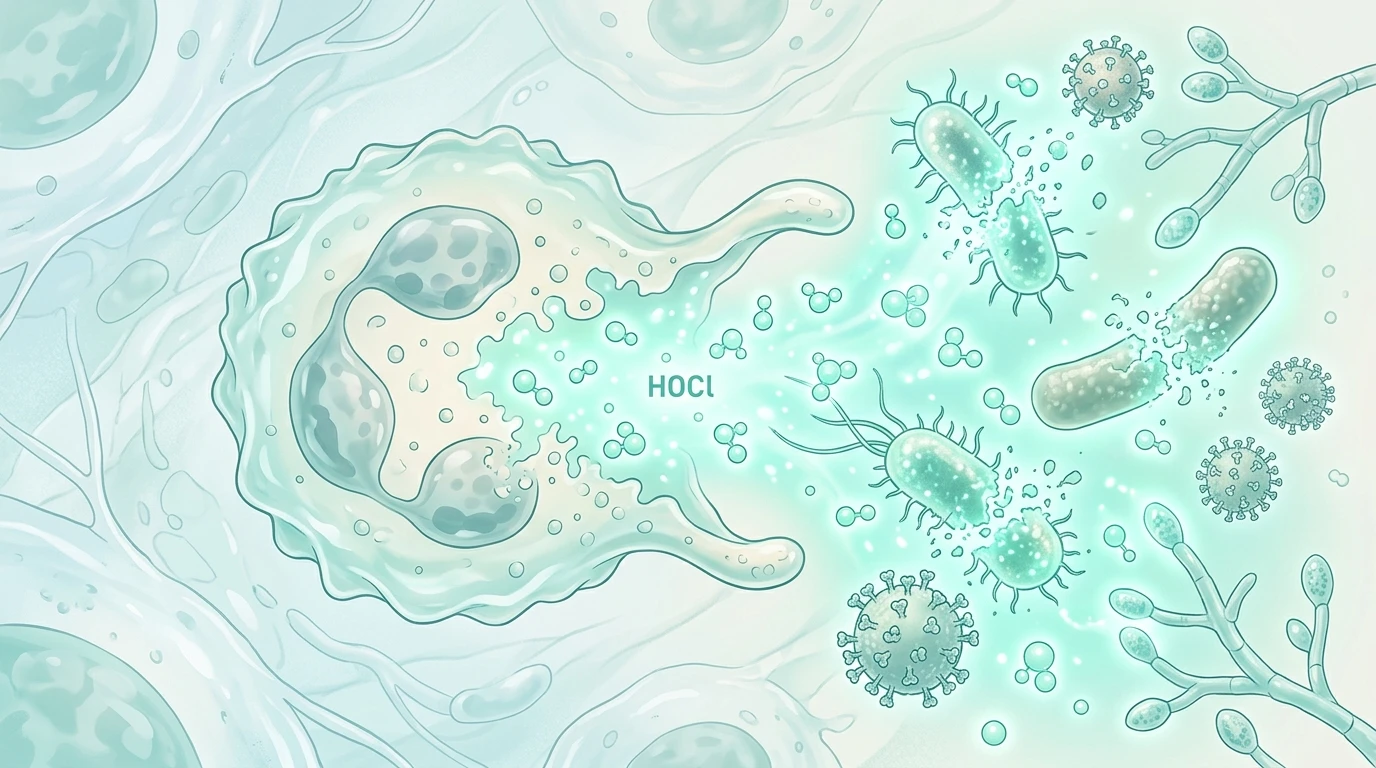
The wild part? Your white blood cells make it on purpose. When your body spots an invader, certain immune cells (called neutrophils) release HOCl to destroy bacteria, viruses, and fungi. In other words, this isn't some synthetic chemical humans dreamed up — we just figured out how to bottle what your body already does naturally.
That's the angle a lot of articles skip over, and honestly, it's the most reassuring thing about it. You're not slathering something foreign onto your skin. You're using a compound your body already trusts.
The Chemistry Made Human-Friendly
Okay, let's break down the molecule without putting anyone to sleep. HOCl is made of hydrogen, oxygen, and chlorine — three atoms holding hands. It forms when chlorine meets water. And here's where things get interesting.
People often assume "chlorine" means the harsh pool smell or the bottle of bleach under the sink. Not the same thing at all. Dissolve simple salt (sodium chloride) in water, run a small electric current through it, and the reaction produces hypochlorous acid. Salt, water, electricity — that's genuinely the whole recipe.
So while bleach and HOCl are cousins in the chlorine family, they behave completely differently. More on that shortly.
Why It's Called a "Weak Acid" (And Why That's Actually Good)
The phrase "weak acid" throws people off. Sounds like it barely works, right? Not the case.
In chemistry, "weak" describes how the acid behaves in water — specifically how much it breaks apart into ions — not how effective it is. A weak acid can still be a ferocious germ killer. In fact, HOCl is reportedly far more effective at wiping out microbes than plain bleach at the same concentration, and it manages that while staying gentle enough to spray near your eyes.
Think of it this way: "weak acid" means it plays nice with your skin. It does not mean it plays nice with bacteria.
How Does Hypochlorous Acid Work?
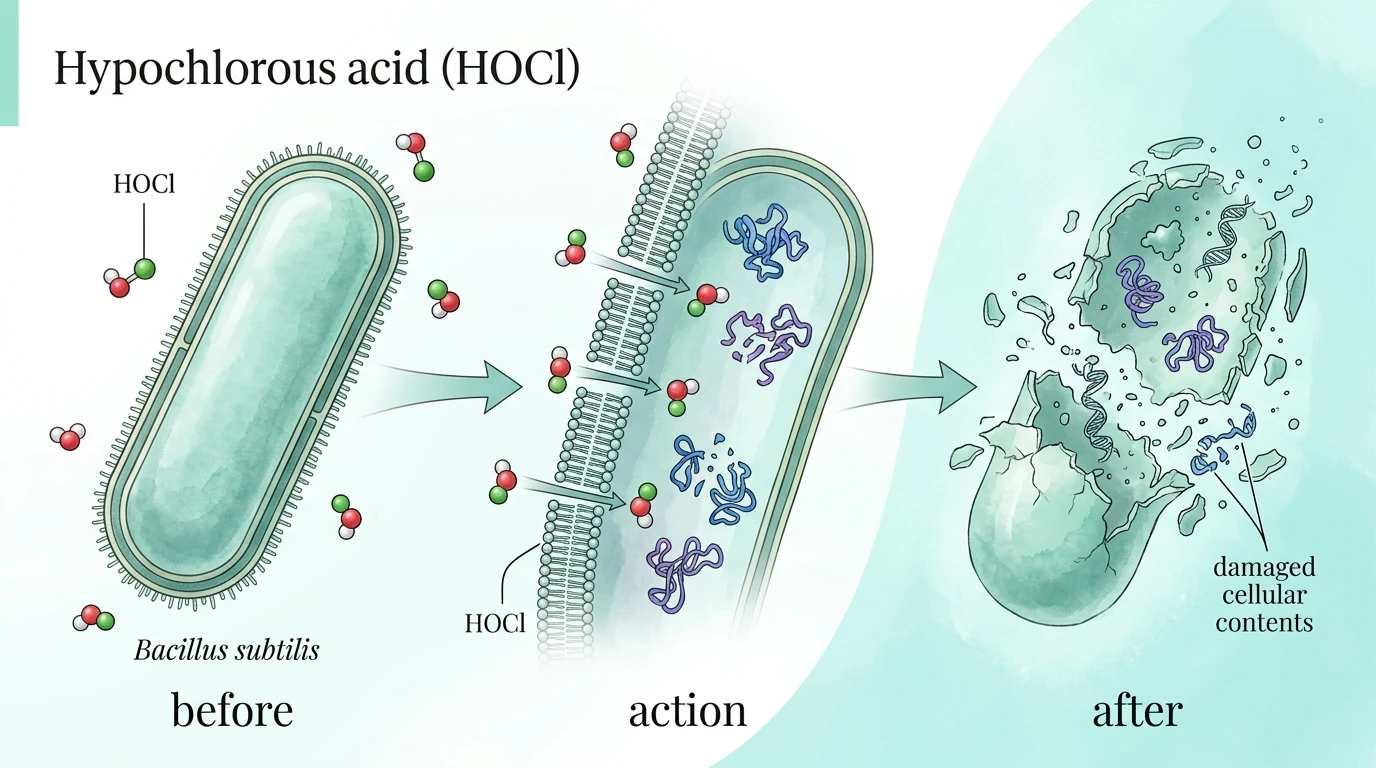
Picture bacteria as tiny water balloons wrapped in a protective outer skin. HOCl punches straight through that outer membrane, scrambles the proteins inside, and essentially causes the microbe to fall apart before it can adapt or fight back.
What sets it apart is the speed. HOCl neutralizes many germs in seconds to minutes, and because it acts so fast and so broadly, bacteria get little chance to build resistance the way they might with some antibiotics.
A simple analogy: bleach is a sledgehammer — it gets the job done but leaves a mess and can wreck what's around it. HOCl is more like a precision tool that dismantles the target, then breaks down into harmless salt water.
The pH Sweet Spot That Makes It Effective
Here's a detail that separates a good HOCl product from a useless one: pH level. Hypochlorous acid is only at its strongest within a specific pH window. Step outside that range and it either turns unstable or shifts into a much weaker form.
| pH Level | Dominant Form | Disinfecting Power |
|---|---|---|
| Below 3 | Chlorine gas | Unstable / unsafe |
| 5–6.5 | Hypochlorous acid (HOCl) | Strongest |
| Above 7.5 | Hypochlorite (OCl⁻) | Much weaker |
This is exactly why buying a properly made product matters. That slightly acidic 5–6.5 range is the golden zone where HOCl is both powerful and skin-friendly. Push the pH too high and you're basically spraying weak bleach water.
Hypochlorous Acid vs Bleach: Clearing Up the Confusion
This is where most people get tangled up, and understandably so. Both come from the chlorine family, so the assumption is they must be similar. They really aren't.
The core difference in the whole hypochlorous acid vs bleach debate comes down to pH and concentration. Bleach (sodium hypochlorite) is strongly alkaline, harsh, and capable of burning skin, irritating lungs, and ruining fabrics. HOCl is mildly acidic, gentle, and safe enough that hospitals use it on open wounds.
Side-by-Side Comparison Table
| Feature | Hypochlorous Acid (HOCl) | Bleach (Sodium Hypochlorite) |
|---|---|---|
| Safe on skin | Yes | No |
| Fumes / harsh smell | Minimal | Strong |
| Speed of action | Very fast | Slower |
| Eye / wound safe | Yes | No |
| Shelf stability | Shorter | Longer |
So which one do you grab? They're built for different jobs, plain and simple. Deep-cleaning a moldy grout line or disinfecting a garbage bin? Bleach's long shelf life and raw power earn their keep there. But anything that touches your skin, your face, your pets, or your kids' toys — HOCl wins, easily. It's the gentle pick that doesn't demand gloves and a mask.
Is Hypochlorous Acid Safe? What the Evidence Says
Let's tackle the big question head-on, because "is hypochlorous acid safe" is exactly what most people type into a search bar before they buy anything.
Short answer: yes, when used properly. And this isn't marketing spin. The FDA has cleared certain HOCl-based products for wound care and eye-related uses, and the EPA has registered hypochlorous acid solutions as legitimate disinfectants that work against a range of pathogens. Research over the past several years keeps backing its safety for topical use — a big reason it made the jump from hospital settings into everyday consumer products.
That regulatory recognition counts for something. Real oversight. Not just hype.
Safety Around Kids, Pets, and Sensitive Skin
This is where HOCl genuinely shines. It's non-toxic and breaks down into plain salt water, so it's widely considered safe around children and pets. Spray it on a toddler's toys, a pet's bedding, or your own irritated skin — no anxiety, none of the dread that comes with harsher cleaners.
That said, let's stay honest. A couple of sensible cautions apply: don't inhale large amounts of any spray directly (common sense for all mists), and use products formulated at the right concentrations for the eye area instead of guessing. Gentle doesn't mean "ignore the label."
Any Downsides or Limitations?
No product is perfect, and pretending otherwise would do you a disservice. HOCl has a few real drawbacks:
Short shelf life. It naturally degrades back into salt water over time, so it won't last for years the way bleach does.
Light sensitivity. Sunlight speeds up that breakdown, which is why quality bottles are opaque.
It's not a miracle cure. It's a great sanitizer and skin-calmer. But it won't erase deep acne scars or replace prescribed medication for serious conditions.
Being upfront about these limits matters. Anyone pitching HOCl as a cure-all is overselling it.
Hypochlorous Acid Benefits for Skin
Now for the part trending hard in skincare circles. The hypochlorous acid benefits for skin are real, and dermatologists quietly used HOCl for years before it landed on mainstream shelves.
Acne, Redness, and Irritation
One standout among the HOCl for skin advantages is how it goes after acne-causing bacteria without wrecking your skin barrier. Harsh acne treatments tend to strip your skin — dry, tight, and, oddly, more prone to breakouts afterward. HOCl takes a gentler route. It lowers the bacterial load and calms inflammation while your natural moisture stays put.
Redness and general irritation usually settle down too. That's why so many people mist it on after a sweaty workout or a long day.
Eczema, Rosacea, and Post-Procedure Care
Because it soothes and fights inflammation, HOCl shows up often in routines for eczema-prone and rosacea-prone skin. It can help manage the bacteria that sometimes worsen flare-ups. Dermatologists also reach for it after procedures like microneedling or laser treatments, since it keeps the area clean without stinging freshly treated skin.
Keep expectations grounded, though: it's a supportive tool, not a standalone fix for chronic skin conditions. For those, always loop in a dermatologist.
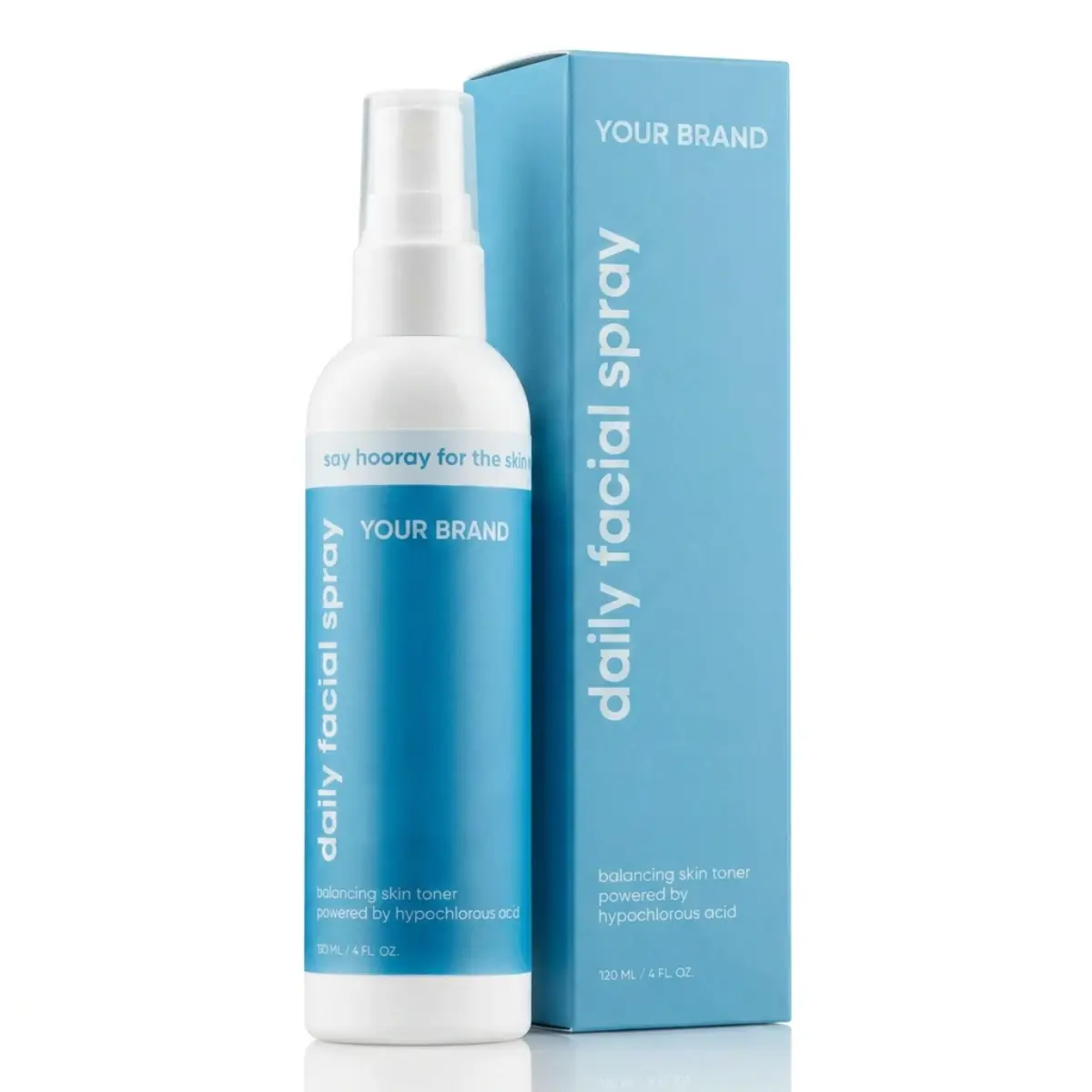
How to Use a Hypochlorous Acid Spray in Your Routine
Working a hypochlorous acid spray into your day is refreshingly simple:
- Cleanse first. Wash your face as usual and gently pat it dry.
- Mist the HOCl. Spray a light layer over clean skin, holding the bottle a few inches away.
- Let it air dry. No rinsing, no wiping — just give it a moment to absorb.
- Follow with your serums and moisturizer. HOCl sits happily under the rest of your routine.
Plenty of folks keep a bottle handy for a quick midday refresh after masks, helmets, or the gym.
Hypochlorous Acid for Wound Healing
Long before it became a skincare darling, hypochlorous acid for wound healing was already a hospital staple. Wound-care clinics adopted it because it pulls double duty: it clears out bacteria and supports the body's natural healing process.
Why Doctors Use It on Cuts and Burns
Anyone who's ever winced while pouring hydrogen peroxide on a scrape knows the sting. HOCl doesn't burn. It's gentle enough to flush minor cuts, scrapes, even burns — without the harsh reaction older antiseptics dish out.
There's also evidence that older, stronger antiseptics can actually harm the healthy tissue your body relies on to repair itself. HOCl clears germs but treats that fragile new tissue gently, which keeps healing on track. Effective and non-damaging. That's exactly why clinicians made the switch.
Everyday Hypochlorous Acid Uses Around the Home
The list of hypochlorous acid uses stretches well beyond skin and wounds. Once you have a bottle, you'll start reaching for it constantly.
Cleaning, Deodorizing, and Surface Sanitizing
Because it's food-contact safe and rinse-free, HOCl is genuinely handy in the kitchen and beyond.
| Use Case | Why HOCl Works Well |
|---|---|
| Kitchen surfaces | Food-contact safe, no rinse needed |
| Pet areas | Non-toxic, controls odor |
| Fresh produce rinse | Gentle sanitizing without chemicals |
| Household deodorizing | Neutralizes odor at the source |
Here's what people love: it deodorizes by actually neutralizing the odor-causing molecules rather than masking them with fragrance. No perfume cover-up. No lingering chemical smell.
Pet Care and Odor Control
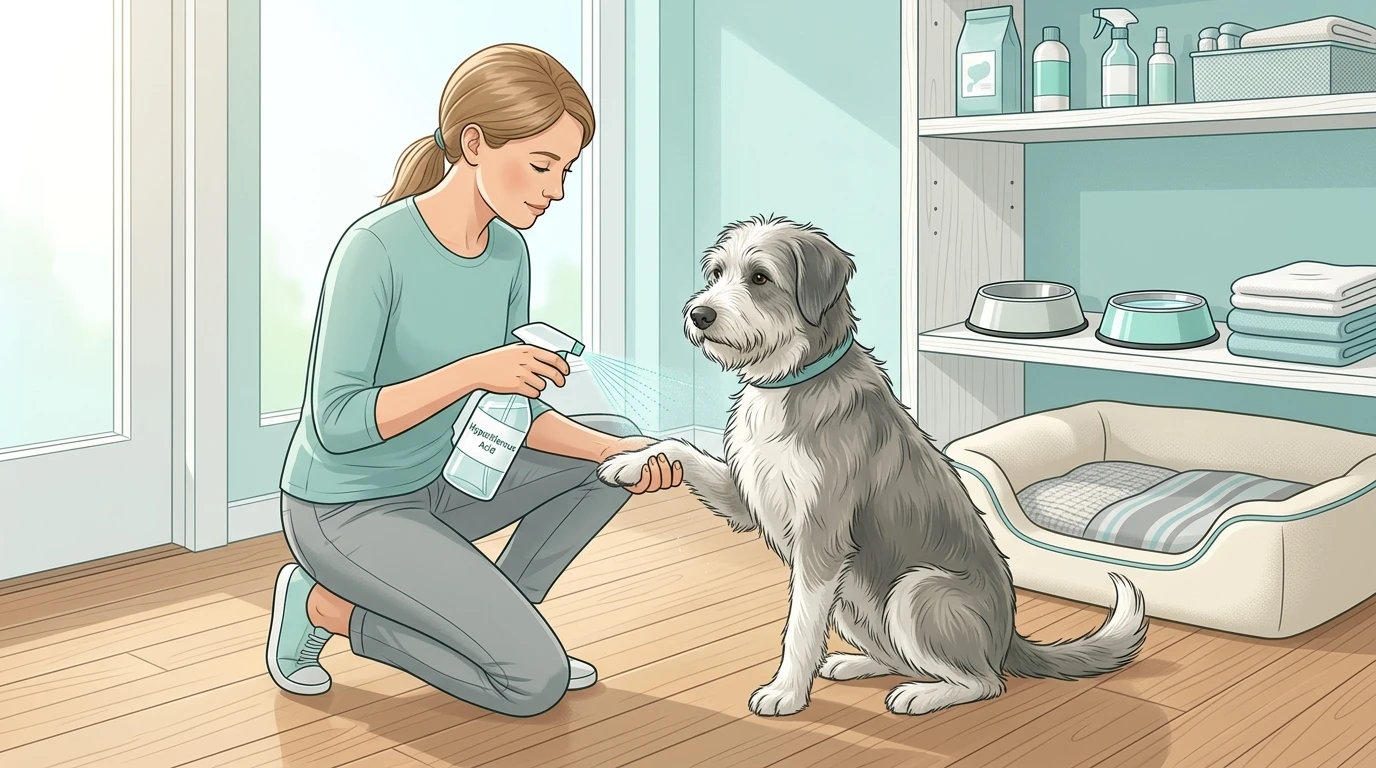
Pet owners, this one's for you. HOCl is fantastic for wiping down paws after walks, freshening up litter areas, and spritzing bedding. It's non-toxic and leaves no harsh residue, so you don't have to worry about your dog licking a surface you just cleaned. It also works for minor pet skin irritations, though your vet should always weigh in on anything serious.
How to Make Hypochlorous Acid (And Whether You Should)
Curious about how to make hypochlorous acid at home? The concept is genuinely simple. Using a small device called an electrolysis generator, you combine water, a pinch of salt, and sometimes a splash of vinegar, then run a low electric current through it. That reaction produces HOCl on the spot.
DIY vs Store-Bought: An Honest Comparison
Here's where I'll be straight with you. Making it yourself sounds appealing and can save money over time, but there are real trade-offs.
The biggest challenge is concentration and pH control. Get the ratios or pH slightly wrong and you might produce a weak, ineffective solution — or drift toward that unsafe low-pH zone. DIY generators vary wildly in quality, and the resulting solution can be inconsistent from batch to batch.
Store-bought products, on the other hand, are formulated to a stable, tested concentration with a controlled pH, and reputable ones list all of that on the label. For skincare and wound use especially, that consistency is worth paying for.
My honest take: if you just want a reliable, gentle product for your face or your family, buy a quality one. If you're a tinkerer who wants large volumes for household cleaning and you're willing to learn the process properly, a DIY generator can make sense. Neither answer is "wrong" — it depends on how you'll use it.
How to Store and Choose a Good HOCl Product
Since HOCl degrades over time and in light, a little buying know-how goes a long way. Here's what to actually check:
- Concentration (ppm). Look for the parts-per-million listed. Different uses call for different strengths, so the label should be clear.
- pH range. Aim for products in that 5–6.5 sweet spot for maximum effectiveness and skin friendliness.
- Opaque packaging. Clear bottles let in light that breaks HOCl down faster. Dark or opaque bottles protect potency.
- Expiration date. A real one, printed clearly. If a product claims a multi-year shelf life with no caveats, be a little skeptical.
- Storage. Keep it cool, sealed, and out of direct sunlight to make it last.
A quality product with a clearly labeled ppm, an appropriate pH, and light-blocking packaging is your best bet for getting the real benefits.
The Bottom Line — And Your Next Step
So there you have it. Hypochlorous acid is that rare thing — a genuinely effective germ-killer that's also gentle enough for your face, your kids, your pets, and even open wounds. Your own immune cells have been making it all along. Now you can keep a bottle within arm's reach.
It's not magic. It won't solve every skincare or cleaning problem. But as a versatile, low-fuss, skin-friendly disinfectant, it earns its spot in your bathroom cabinet and under your kitchen sink.
Ready to give it a try? Grab a reputable HOCl spray — check that ppm, pH, and opaque bottle we talked about — and see how it fits into your routine. Dealing with a specific skin condition like eczema or stubborn acne? Talk to a dermatologist about how HOCl might complement your treatment. And if this guide cleared things up, bookmark it or pass it along to a friend who's still puzzled by that mysterious bottle everyone's raving about. Your skin, and your whole household, will thank you.
Frequently Asked Questions
Q: Can I use hypochlorous acid every day on my face?
A: Yes, most people can safely use it daily. It's gentle enough for regular use and won't strip your skin barrier the way harsher products can. Start once a day, see how your skin responds, and adjust from there. If you have a diagnosed skin condition, check with your dermatologist first.
Q: Does hypochlorous acid expire?
A: It does. HOCl naturally reverts back into salt water over time — and breaks down faster with light and heat — so it has a shorter shelf life than most cleaners. Always note the expiration date and store the bottle somewhere cool and dark to keep it potent.
Q: Can I mix hypochlorous acid with other skincare products?
A: You don't mix it directly in your palm, but it layers beautifully in a routine. Use it after cleansing and let it dry, then apply your serums and moisturizer on top. It generally plays well with other products, which is part of its appeal.
Q: Is hypochlorous acid the same as saline?
A: No, though they're both gentle. Saline is simply salt water and mainly rinses or hydrates. Hypochlorous acid is an active disinfectant that kills germs. HOCl eventually breaks down into something saline-like, but while it's active, it's doing much more work.
Q: Will it bleach my clothes or towels?
A: Unlike actual bleach, HOCl at the concentrations most consumer products use won't strip color from your fabrics. It's mild enough for skin. That means your towels and clothes are safe. This is one of the biggest practical gaps between it and its harsh cousin.