
Walk down the hair care aisle of almost any retailer in London, Toronto, or Dubai these days, and you'll notice something that wasn't there five years ago: rows of solid shampoo bars sitting where plastic bottles used to dominate. Tea tree variants, in particular, have carved out a loyal following. But not every bar labeled "tea tree" delivers what it promises — and the gap between a genuinely good bar and a mediocre one comes down to formulation science that most shoppers never see.
This guide unpacks what actually makes a tea tree shampoo bar worth buying, where the market is heading, and what brands should look for when they decide to produce their own.
The Growing Market Demand for Tea Tree Shampoo Bars
Solid shampoo stopped being a niche curiosity somewhere around 2020. What started as an eco-conscious experiment has become a mainstream category, and tea tree formulations sit right at the center of that shift.
Why Consumers Are Switching to Solid Shampoo
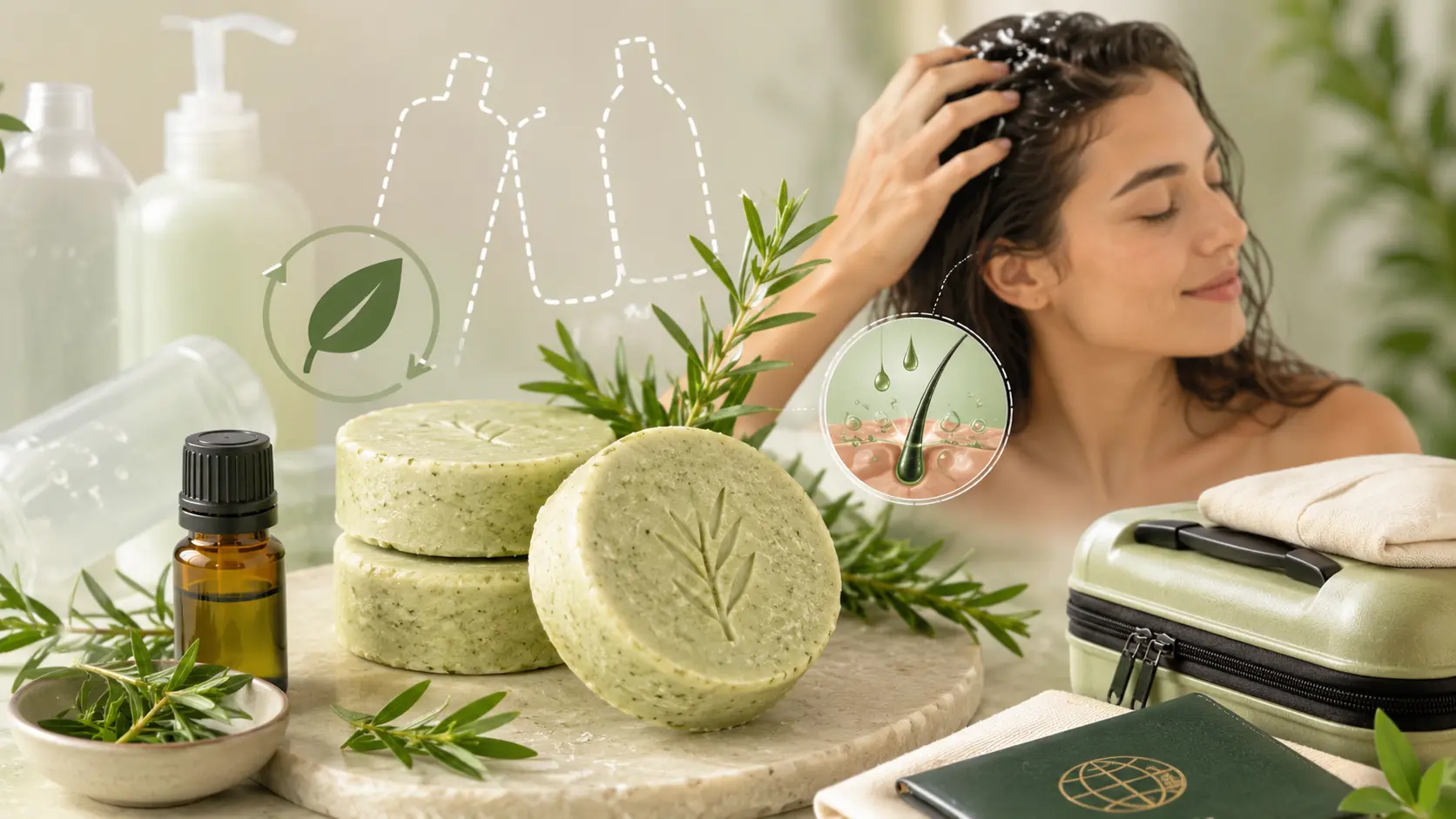
The plastic problem is the obvious driver. A single shampoo bar typically replaces two to three plastic bottles, and it ships without the water weight that inflates carbon footprints during transport.
Then there's the practical side. Travelers love that a solid bar sails through airport security with no liquid restrictions. And because these bars are concentrated — you're not paying for the 80% water content that fills a liquid bottle — a small bar goes a surprisingly long way.
Frequent buyers also report a subtler benefit: fewer ingredients they can't pronounce. That "clean label" instinct has fueled demand across every age group, not just younger shoppers.
The Special Appeal of Tea Tree Oil
Tea tree oil (from Melaleuca alternifolia) earns its place in scalp care because of its terpinen-4-ol content — the active compound responsible for most of the essential oil's antimicrobial properties for scalp care. Research over the past two decades has repeatedly linked this compound to reduced surface microbial activity and calmer, less flaky scalps.
For people dealing with itchiness, occasional dandruff, or that tight, irritated feeling after washing, a well-made tea tree bar offers relief without the medicinal harshness of some anti-dandruff liquids. That's a meaningful part of why the ingredient has such staying power.
Market Snapshot: Solid Shampoo & Natural Hair Care Trends
The numbers back up what shelf space already suggests. Below is a snapshot reflecting the natural and solid hair care landscape as of mid-2026.
| Metric | Data Point | Notes |
|---|---|---|
| Solid shampoo market growth | Estimated ~8–10% CAGR | Reflects sustained 2026 momentum in solid & sustainable formats |
| Top consumer motivations | Sustainability, scalp health, travel convenience | Consistent across recent consumer surveys |
| Leading demand regions | North America, Europe, Middle East | Key B2B buyer markets for private label |
| Fastest-growing sub-segment | Botanical & essential-oil bars | Tea tree among the top requested actives |
The Middle Eastern market deserves a mention here. Rising retail sophistication in the Gulf, combined with a strong appetite for premium personal care, has made the region a growing outlet for well-formulated botanical bars — something many suppliers still overlook.
What Makes a High-Quality Tea Tree Shampoo Bar?
Here's where things get technical — and where the good products separate themselves from the pretenders. A shampoo bar isn't just soap with a splash of essential oil. Getting it right involves several interlocking decisions.
The Right Tea Tree Oil Concentration
More is not better. Tea tree oil is potent, and pushing concentration too high can leave the scalp irritated rather than soothed. Too little, and you lose the antimicrobial benefit that made the ingredient appealing in the first place.
The workable window for tea tree oil concentration in shampoo bars generally sits in the low single-digit percentages — typically around 0.5% to 2% of the finished formula, depending on the surfactant base and intended use. That range delivers noticeable efficacy while staying comfortably within tolerability limits for most scalps.
Sulfate-Free and Gentle Surfactants
The surfactant is the workhorse of any shampoo — it's what actually lifts oil and dirt away. Cheaper bars lean on aggressive sulfates like SLS, which foam impressively but strip the scalp's natural oils, often leaving hair squeaky and brittle.
Higher-quality bars use sulfate-free surfactants for solid shampoo, such as sodium cocoyl isethionate (SCI) or sodium coco-sulfate blends chosen for mildness. These produce a rich, creamy lather while respecting the scalp's moisture barrier. The trade-off is that they're harder to formulate and cost more — which is precisely why budget bars avoid them.
The Saponification Process Explained
Some solid bars are true "soap" bars produced through saponification — the chemical reaction where fats or oils meet an alkali (like sodium hydroxide) to form soap plus glycerin. The saponification process for shampoo bars matters because it determines the final pH, hardness, and how the bar behaves on hair.
Traditional saponified bars run alkaline, which can roughen the hair cuticle over time. That's why the best modern tea tree bars often combine or replace saponified soap with syndet (synthetic detergent) systems that let formulators dial in a gentler, hair-friendly pH. Understanding this distinction is a quick way to gauge whether a manufacturer knows what they're doing.
Getting the pH Balance Right
Hair and scalp are naturally slightly acidic, sitting around pH 4.5 to 5.5. Wash with something too alkaline and the cuticle swells, hair tangles, and the scalp can feel irritated.
Proper pH balance in natural shampoo formulation keeps the finished bar close to the scalp's natural range. A well-made tea tree bar should test in the mildly acidic-to-neutral zone — a detail that separates a formulation designed by chemists from one thrown together to a recipe.
Ingredient Quality and Clean Formulation
Beyond the headline ingredients, quality shows up in the details: cosmetic-grade rather than industrial-grade tea tree oil, conditioning agents that keep hair manageable, and the absence of unnecessary fillers, artificial dyes, or harsh preservatives.
Certification-backed purity — where raw materials are traceable and tested — is the difference between a marketing claim and a verifiable one.
Quality Comparison Table
| Attribute | High-Quality Bar | Low-Quality Bar |
|---|---|---|
| Tea tree oil concentration | Balanced (~0.5–2%), effective and safe | Too low to work, or high enough to irritate |
| Surfactant type | Sulfate-free, mild (e.g., SCI) | Harsh sulfates (SLS) |
| pH level | Scalp-friendly, mildly acidic | Unbalanced, often too alkaline |
| Longevity & lather | Long-lasting, rich foam | Crumbles quickly, weak lather |
Common Formulation Challenges (and How the Best Products Solve Them)
Anyone who's tried making a shampoo bar at home knows the frustration: it either turns to mush in the shower or cracks apart on the shelf. Solving these problems at scale takes real formulation and manufacturing know-how.
Preventing Crumbling and Ensuring Longevity
Hardness comes from the balance of solid versus liquid ingredients and the way the bar is compressed or cured. Bars that crumble usually contain too much liquid oil or weren't cured long enough. A durable bar holds its shape through weeks of wet-then-dry cycles — which is why proper drainage on a soap dish still matters, but the formula does most of the heavy lifting.
Maintaining Fragrance and Efficacy Over Time
Essential oils are volatile — they evaporate. Tea tree's active compounds and scent can fade if the bar is poorly packaged or if the formula lacks the right stabilizers. Good manufacturers account for shelf life, using appropriate antioxidants and packaging that limits air and light exposure so the bar you buy still smells and performs like the day it was made.
Balancing Cleansing Power with Gentleness
This is the eternal tightrope. A bar that cleans aggressively often over-dries; one that's ultra-gentle can leave hair feeling coated or unwashed. The best formulations pair mild surfactants with conditioning agents and the right tea tree dose, so hair comes out clean but not stripped — comfortable rather than compromised.
Meeting Market Demand: Delivering High-Quality Tea Tree Shampoo Bars at Scale
Understanding what makes a great bar is one thing. Producing it consistently, tens of thousands of units at a time, is another challenge entirely — and it's where most small operations fall short.
Why Manufacturing Expertise Matters
A formula that works perfectly in a lab beaker can behave very differently on a production line. Batch-to-batch consistency, precise ingredient dosing, temperature control during pressing, and reliable curing all depend on process discipline built up over years. This experience is what keeps the thousandth bar identical to the first.
Certifications That Guarantee Quality and Safety
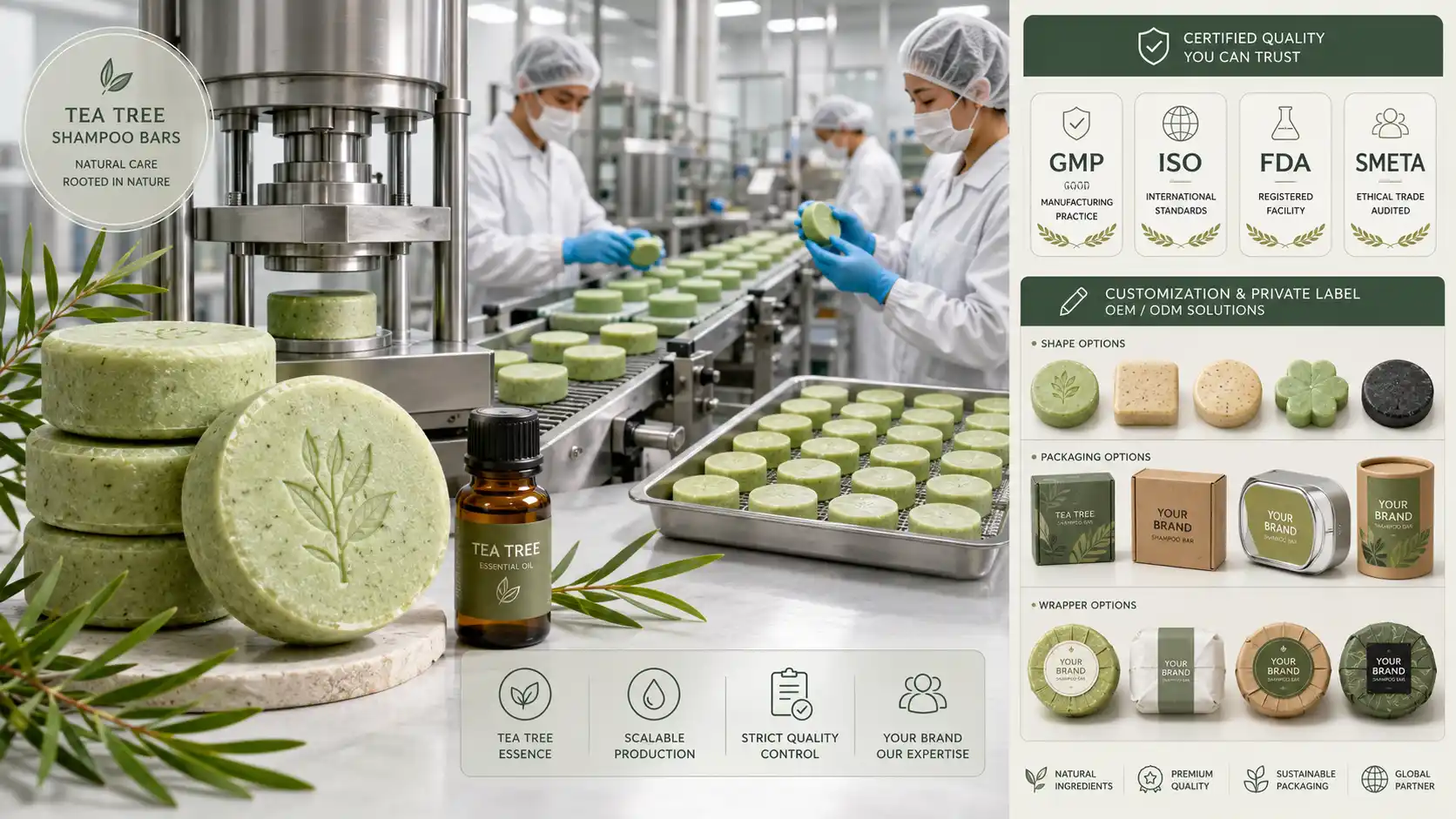
For B2B buyers, certifications aren't paperwork — they're risk management. GMP (Good Manufacturing Practice) confirms controlled, hygienic production. ISO signals systematic quality management. FDA registration matters for products entering the US market. And SMETA audits address ethical and social compliance, increasingly a requirement from European and North American retailers. A manufacturer holding all four gives brands a defensible answer when their own customers ask hard questions.
Customization for Private Label and Global Brands
No two brands want exactly the same product. OEM and ODM services let a brand specify its own tea tree concentration, complementary botanicals, fragrance profile, color, bar shape, and packaging — right down to eco-friendly wrapping that supports the sustainability story most solid shampoo brands are built on.
Finding the Right Manufacturing Partner: How Boymay Can Help
If you're a brand looking to bring a high-quality tea tree shampoo bar to market, the manufacturer you choose will shape everything your customers experience. This is where Boymay fits in.
Proven Experience Since 1995
Boymay has focused on OEM/ODM manufacturing of bath bombs, shower steamers, and personal care products since 1995. Three decades in solid personal care means the formulation and production challenges described above aren't theoretical here — they're problems the team has solved repeatedly across product lines.
Production Capacity and Reliability
Scale and consistency go hand in hand. The table below summarizes what that capacity looks like in practice.
| Capability | Boymay Detail |
|---|---|
| Established | 1995 |
| Facility size | 40,000㎡ |
| Production lines | 16 automated lines |
| Daily output | 160,000 sets |
| Minimum order quantity | From 1,000 units |
| Certifications | GMP, ISO, FDA, SMETA |
| Team | 200+ employees |
Flexible MOQ and High Customization
A minimum order starting at 1,000 units is unusually accessible for a manufacturer of this scale. That low threshold lets emerging brands test a market without committing to warehouse-filling quantities, while the same lines can scale up to serve established retailers ordering by the container. Combined with deep customization, it means the partnership grows with the brand.
Serving Global Markets
Boymay's B2B clients span North America, Europe, and the Middle East — the same regions driving demand for natural solid shampoo. Experience shipping into these markets means familiarity with their regulatory expectations, labeling norms, and retailer audit requirements, which removes a lot of friction for brands entering unfamiliar territory.
Frequently Asked Questions
Q: Is a tea tree shampoo bar suitable for all hair types?
A: Most hair types tolerate a well-formulated tea tree bar well, and its scalp-soothing properties make it especially appealing to those with oily scalps or occasional flaking. People with very dry or color-treated hair should look for versions that pair tea tree with conditioning agents, and anyone with sensitive skin can patch-test first. Concentration and formulation quality matter more than hair type alone.
Q: How long does a single shampoo bar last?
A: A quality bar typically lasts through 50 to 80 washes, which for many users equals two or three standard 250ml liquid shampoo bottles. Longevity depends heavily on formulation hardness and on storing the bar somewhere it can dry between uses. That efficiency is a big part of the value proposition.
Q: What tea tree oil concentration is ideal in a shampoo bar?
A: A range of roughly 0.5% to 2% of the finished formula tends to hit the sweet spot — enough to deliver tea tree's antimicrobial and scalp-calming benefits without risking irritation. The exact figure depends on the surfactant base and the target user, which is one reason working with an experienced formulator pays off.
Q: Are sulfate-free shampoo bars less effective at cleaning?
A: No. Sulfate-free surfactants such as sodium cocoyl isethionate clean effectively and produce a rich lather; they simply do so without stripping the scalp's natural oils the way harsh sulfates can. Many users find their hair and scalp actually feel healthier after switching, without any loss in cleansing power.
Q: Can I order custom-formulated tea tree shampoo bars for my brand?
A: Yes. Through OEM/ODM services, you can specify tea tree concentration, added botanicals, scent, color, shape, and packaging to match your brand. With MOQs starting at 1,000 units, custom production is realistic even for newer or boutique brands, not just large retailers.
Q: What certifications should I look for in a manufacturer?
A: Prioritize GMP for production hygiene and consistency, ISO for quality management, FDA registration if you're selling into the United States, and SMETA for ethical sourcing — a growing requirement among European and North American retailers. A manufacturer holding all four gives you verifiable assurance rather than marketing claims, which protects both your brand and your customers.