
Learn how to start a soap business with OEM manufacturing, custom soap formula development, MOQs, and packaging design to create your own soap brand.
Two years ago, a skincare founder I'll call Mara had a beautiful pitch deck, a name she loved, and mood boards full of oat-toned packaging. What she didn't have was an answer when a factory rep emailed back a single line: "What's your MOQ, and do you have a formula?" She stared at it for three days. The brand felt real in her head, but the manufacturing side sat behind a locked door she didn't have the key to.
That gap—vision on one side, production reality on the other—is where most soap brands stall. This guide walks through exactly how OEM manufacturing bridges it, and what you personally need to hand over at each step.

The Real Pain Points Before You Ship a Single Bar
The excitement of building a brand fades fast when the questions get technical. Here are the three that trip founders up most often.
"I Don't Know My MOQ or Where to Start"
Minimum order quantity scares new brands because it ties up cash before a single sale. Ranges vary by method: cold process bars often start around 500–1,000 units per SKU, while syndet (synthetic detergent) bars and melt-and-pour runs can climb to 2,000–3,000 due to equipment setup. Lower MOQs usually mean higher per-unit cost—that trade-off is the first real business decision you'll make.
"I Have No Formula — Just an Idea"
Plenty of founders know the feeling they want—gentle, exfoliating, quietly luxurious—but not the chemistry behind it. That's normal. Custom soap formula development is the manufacturer's job, not yours. You bring the intent; they translate it into a base recipe with the right superfat level, hardness, and lather profile.
"Packaging, Sampling, and Lead Times Feel Like a Maze"
Coordinating design files, physical prototypes, and delivery dates without a partner is where launch timelines quietly slip by months. Most of this maze disappears once you're working with someone who does it weekly.
What OEM Soap Manufacturing Actually Solves
OEM (original equipment manufacturer) simply means a factory produces goods to your specification, under your brand. For someone trying to create own soap brand from scratch, OEM is the bridge between a mood board and a shelf-ready product. You own the concept and the label; they own the machinery, the compliance knowledge, and the batch discipline.
OEM vs. White Label vs. Private Label — Quick Comparison
| Model | What you get | Best for |
|---|---|---|
| White label | A ready-made bar, your logo added | Fastest, lowest-cost launch |
| Private label | Existing formula, your branding and some tweaks | Speed with light differentiation |
| OEM (full custom) | Bespoke formula, scent, shape, packaging | Distinct brands willing to invest in R&D |
Many founders start closer to private label soap manufacturing to test the market, then move to full OEM once demand is proven.
What You Can Actually Customize: The 7 Levers
Think of each of these as a decision you control—no chemistry degree required.
Formula
Pick a base: cold process (artisanal feel, long cure), melt-and-pour (fast, glycerin-rich), or syndet (pH-balanced, gentle for sensitive skin). Then set the functional goal—moisturizing, acne-focused with something like salicylic acid, or fragrance-free for reactive skin.
Fragrance
You can develop a signature scent from essential oils, fragrance oils, or a blend. Ask your manufacturer to keep formulations within IFRA usage limits—this isn't optional, it's how you stay legal for skin-contact products.
Color
Natural colorants (clays, activated charcoal, spirulina) read differently from cosmetic-grade micas and pigments. Color should echo your brand identity: a muted botanical palette signals something very different from bright candy tones.
Size & Shape
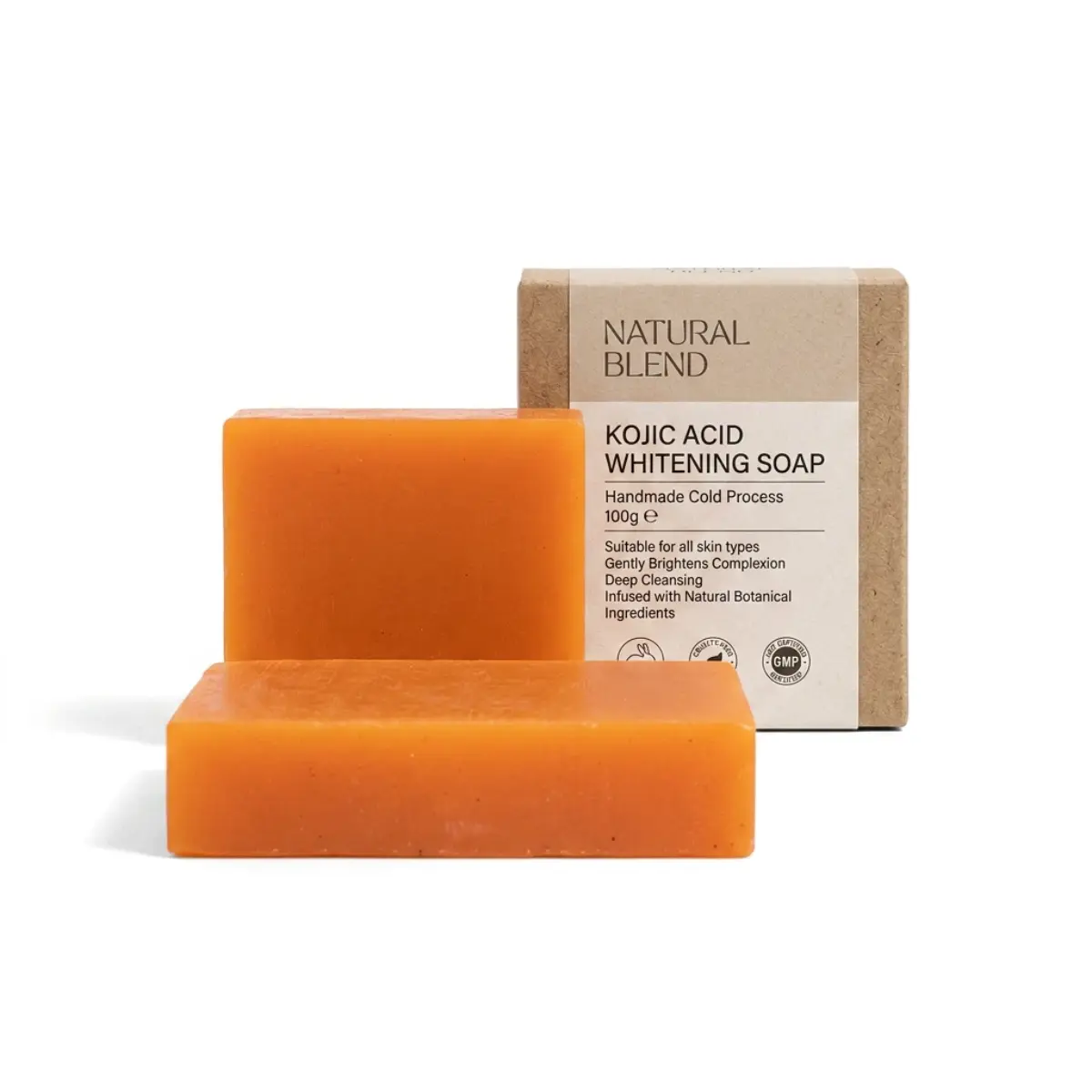
Bar weight commonly lands between 100g and 150g. Heavier bars feel more premium but raise shipping cost. Custom molds add personality, though they carry tooling fees you'll want quoted upfront.
Packaging
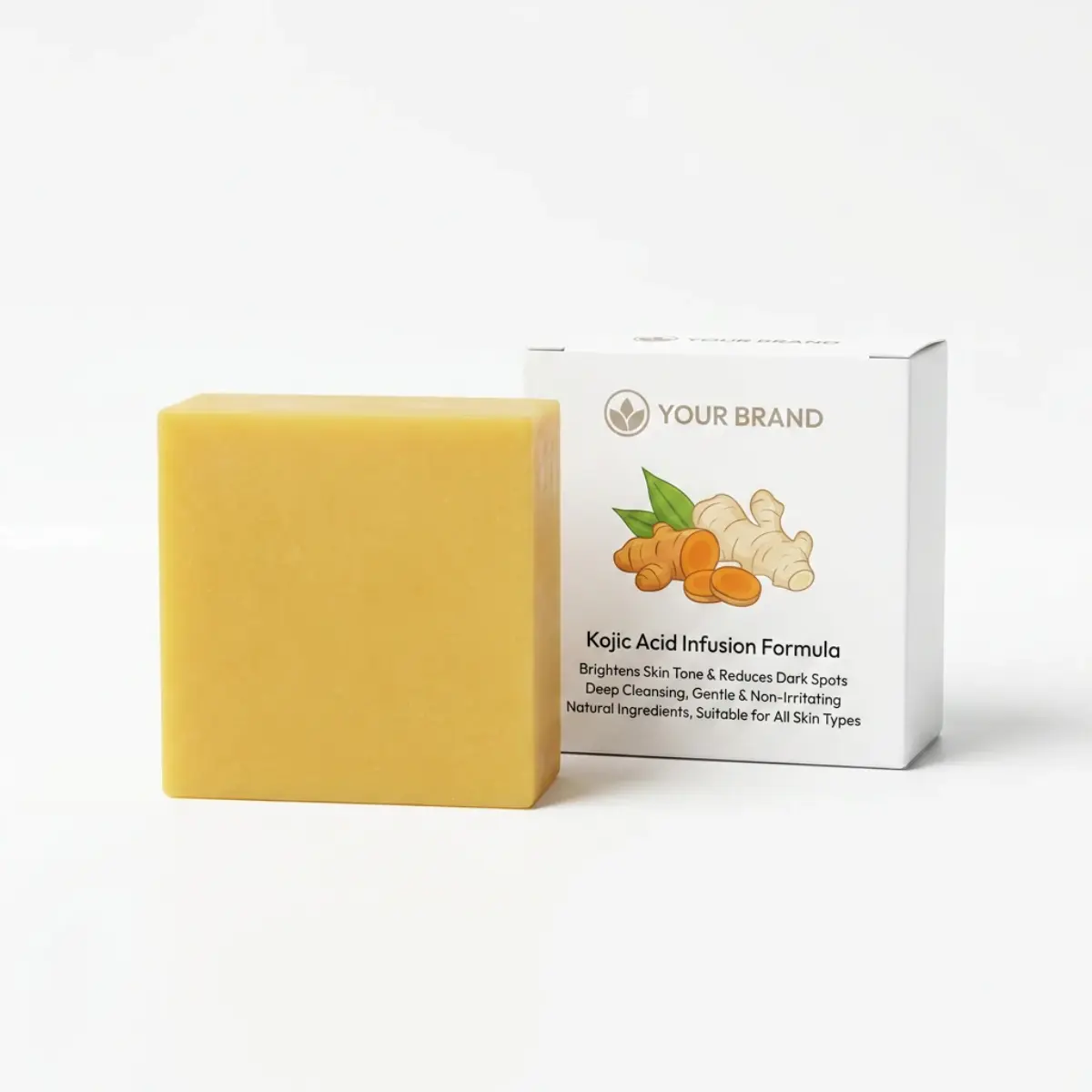
Choices range from kraft sleeves and folding cartons to compostable wraps. Smart private label soap packaging design also considers how the bar photographs—flat-lay-friendly boxes and legible type sell hard on e-commerce listings.
Logo & Branding
Embossed bars, printed sleeves, and debossed molds all build shelf recognition. On a crowded retail shelf or Amazon grid, a bar that visibly carries your mark earns a second glance.
Label
Your label needs a compliant INCI ingredient list, accurate net weight, and batch coding for traceability. Rules differ by region—EU cosmetics require a Responsible Person and CPNP notification, while US products follow FDA and MoCRA labeling expectations. Get this right before printing.
The Simple 6-Step OEM Process
Step 1 — Share Your Brief
You provide: target customer, scent and texture direction, budget range, and two or three reference products. A tight brief saves weeks. The strongest ones I've seen include a sentence like "should feel like a boutique hotel bar, not a supermarket one"—vivid intent beats vague adjectives.
Step 2 — Custom Soap Formula Development
What happens: the lab proposes a base recipe; you approve the skin claims and key actives. Expect 1–2 weeks for a first pass on a straightforward cold process soap recipe.
Step 3 — Sampling & Prototyping
You provide: honest feedback on scent strength, lather, hardness, and packaging mockups. Sample fees typically run $80–$300 and are often credited against your bulk order—confirm that in writing.
Step 4 — Confirm Packaging & Label Design
You provide: vector logo files, brand colors (Pantone, ideally), and all compliance details. Approve a physical proof, not just a PDF—this is where costly reprints are avoided.
Step 5 — Production & Quality Checks
What happens: the bulk batch runs. Cold process bars need 4–6 weeks of curing to harden and mellow. Request QC on weight tolerance, pH, and visual defects, and ask for a retention sample from your batch.
Step 6 — Shipping & Lead Time
Total lead time is commonly 6–10 weeks from approved sample. Plan your launch date backward from delivery, then add a two-week buffer for customs and the inevitable small surprise.

A Realistic Cost & Timeline Snapshot
Industry-typical finished-bar costs land roughly between $1.20 and $3.50, depending on formula complexity and packaging. Natural actives, premium fragrance, and custom cartons push you toward the top of that band. MOQ matters: doubling your order often trims per-unit cost by 15–25%, because setup and tooling get spread across more units.
How to Choose the Right Private Label Soap Manufacturer
Judge a private label soap manufacturer on evidence, not promises. Ask for relevant certifications (GMP/ISO 22716 for cosmetics), request a paid sample before committing, and watch their communication speed—slow replies now predict slow production later.
Red flags: no willingness to support a modest first order, vague answers on IFRA or labeling, or reluctance to name the base ingredients. A partner who genuinely wants your brand to succeed will talk openly about trade-offs.
Turn Your Concept Into a Shelf-Ready Bar
Mara eventually sent a one-page brief instead of overthinking it—and had approved samples in her hands within a month. If you know the feeling you want your brand to give people, that's genuinely enough to start.
Send us your brief for a free consultation and sample quote. We'll handle the formula, packaging, and lead times, so you can focus on the part only you can do: building the brand.
FAQ
Q: What is the typical MOQ for custom soap?
A: Cold process bars often begin at 500–1,000 units per SKU; melt-and-pour and syndet bars commonly sit at 1,000–3,000 because of equipment setup. Some factories flex lower for a first order at a higher unit price.
Q: Can I start with my own recipe?
A: Yes. You can bring your own tested formula for the factory to scale, or co-develop one from your brief. Bring-your-own is faster if it's already stable; co-development gives you the manufacturer's compliance and sourcing expertise.
Q: How long does it take to launch?
A: Budget 8–14 weeks end to end: 1–2 weeks for formula, 2–3 for sampling and approvals, and 6–10 for production and shipping—longer if a cold process cure is involved.
Q: Do I need to design my own packaging?
A: Not necessarily. Most established manufacturers offer in-house or partner design support for private label soap packaging design, though bringing your own brand assets gives you tighter creative control.
Q: Is custom soap manufacturing profitable for a new brand?
A: It can be. Retail margins on well-branded bars often run 50–65%, but profitability depends on hitting volume that lowers unit cost and keeping fragrance and packaging spend disciplined. Small first runs rarely make money on their own—they buy you validation for a bigger, cheaper second order.