
Concentrated cleaning tablets offer a practical alternative to certain ready-to-use liquid products. Instead of transporting a fully diluted cleaner, brands can supply measured doses that consumers dissolve or use during a cleaning cycle. However, the commercial advantages depend on the application, formulation, packaging, and customer experience.
For businesses considering wholesale cleaning tablets or private label product development, understanding these trade-offs is essential before committing to a new product line.
This article examines the key cleaning tablet trends shaping product decisions in 2026, including formulation technology, sustainable packaging, regulatory expectations, and OEM manufacturing.
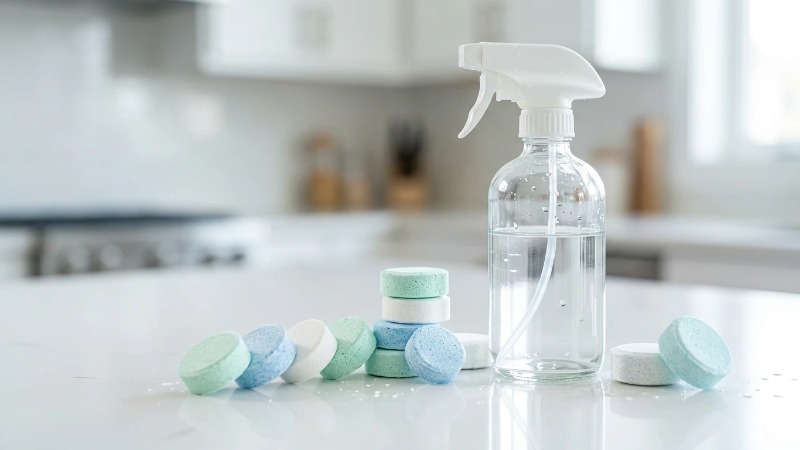
Why Cleaning Tablets Continue to Attract Interest in 2026
Traditional ready-to-use liquid cleaners often contain significant amounts of water and require individual bottles. Concentrated tablets can reduce the amount of water transported with a product and may allow brands to introduce reusable containers and compact refill packs.
These features create several potential business advantages:
- More compact inventory: Tablets can require less storage space than an equivalent number of ready-to-use liquid bottles.
- Flexible product formats: Manufacturers can develop tablets for surface cleaning, appliance maintenance, toilet care, and other specific applications.
- Refill opportunities: Brands can offer an initial container alongside recurring tablet refill purchases.
- Private label differentiation: Formula, fragrance, appearance, packaging, and usage instructions can help distinguish competing products.
However, smaller packaging does not automatically mean lower total costs or a smaller environmental footprint.
Brands must consider protective packaging, cleaning performance, manufacturing costs, refill usage, and product stability before making commercial or environmental claims.
For 2026, the most important question is not simply whether consumers will try cleaning tablets. It is whether the product delivers enough convenience and consistent performance to encourage repeat purchases.
Trend 1: Cleaning Tablet Formulation Becomes a Competitive Advantage
One of the most important developments in cleaning tablets manufacturing is the increasing attention paid to formulation performance.
A tablet must deliver the intended cleaning function while remaining stable during storage and distribution. Achieving both requires careful ingredient selection, manufacturing control, and packaging design.
Effervescent Tablets vs. Non-Effervescent Tablets
Cleaning tablets can be produced using different formulation approaches.
Effervescent tablets generally contain ingredients that release gas when they contact water. This reaction can help break apart the tablet and disperse the cleaning ingredients.
Non-effervescent formulations rely on mechanisms such as water penetration, ingredient solubility, and tablet disintegration.
Both types may be manufactured by compression. Therefore, "effervescent" and "compressed" are not mutually exclusive product categories.
The appropriate formulation depends on the intended application.
| Application | Formulation consideration | Performance priority |
|---|---|---|
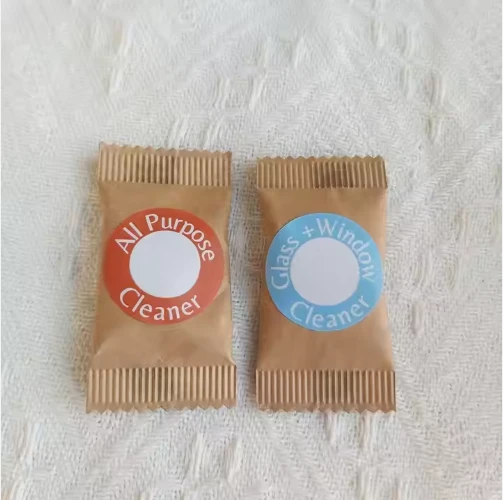
| Multi-surface refill cleaners | Effervescent or readily dissolving formulations | Complete dispersion in the specified water volume |
| Washing machine cleaning tablets | Formulations designed for the selected cleaning cycle | Residue removal and compatibility with intended use |
| Dishwasher machine-cleaning tablets | Formulations matched to operating conditions | Effective cleaning and controlled ingredient release |
| Toilet tank cleaning tablets | Controlled-release formulations where appropriate | Consistent release and material compatibility |
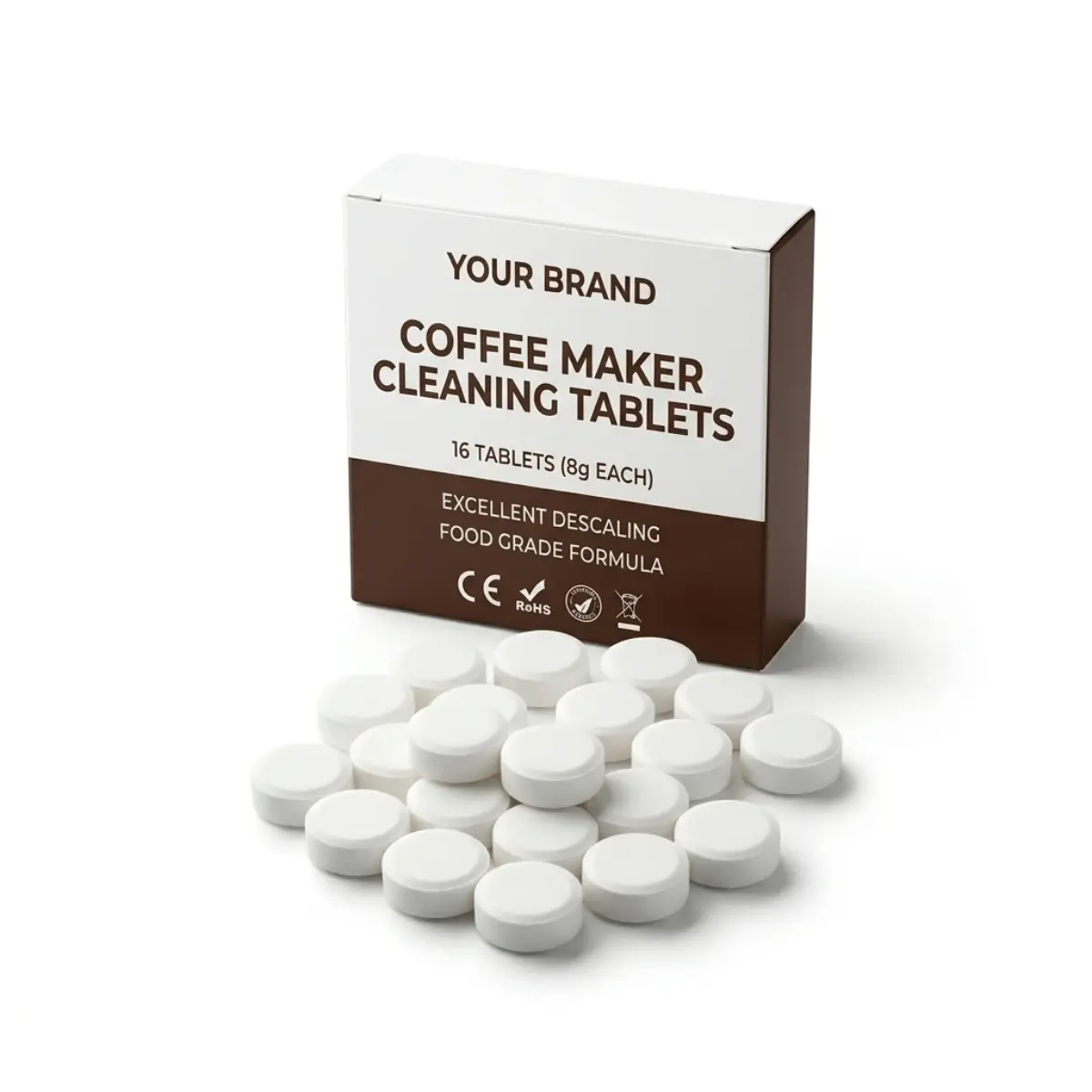
| Coffee maker cleaning tablets | Formulations suitable for the relevant appliance | Descaling or residue removal and adequate rinsing |
These examples represent product development considerations rather than universal formulation requirements.
A cleaning tablet manufacturer should evaluate the intended use, water conditions, tablet size, ingredients, and packaging before recommending a formulation.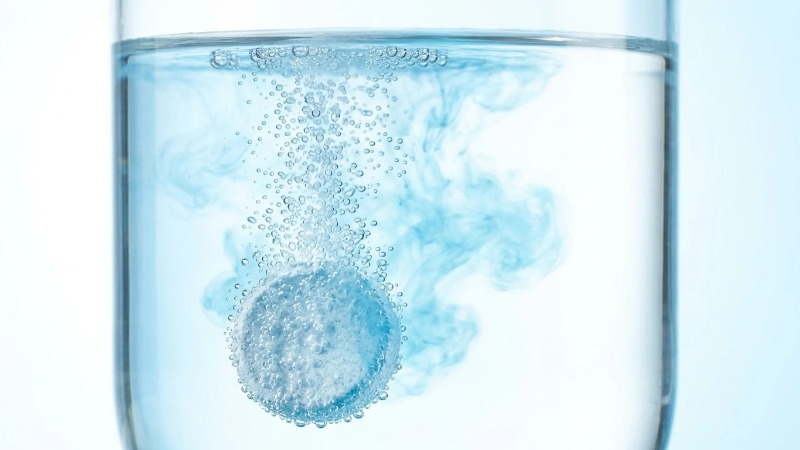
Dissolution Performance Requires Realistic Testing
Dissolution behavior can affect the user experience, especially with refillable spray cleaners.
For example, a tablet intended for a reusable spray bottle should disperse under the conditions described on its label. Persistent residue, excessive waiting time, or incomplete dissolution can create customer dissatisfaction.
Brands developing new cleaning tablet formulations should request testing under relevant conditions, including:
- Water temperature and hardness
- Recommended water volume
- Tablet weight and dimensions
- Complete dissolution or dispersion behavior
- Residue formation
- Performance after storage
There is no single ideal dissolution time for every cleaning tablet.
A toilet tank tablet designed for gradual release and a spray-bottle refill designed for rapid preparation require different performance standards.
For B2B buyers: Define the acceptable dissolution and cleaning performance before approving a production sample. This provides a measurable basis for comparing manufacturers.
Biodegradable Ingredients and Cleaning Performance
Environmental considerations continue to influence cleaning tablet formulation.
Brands may explore readily biodegradable surfactants, alternative builders, and other ingredients selected for particular environmental characteristics.
However, claims about biodegradability require careful interpretation.
For example, OECD Test Guideline 301 provides methods for evaluating the ready biodegradability of chemicals. Evidence that a particular ingredient meets a criterion does not automatically establish that an entire cleaning tablet is biodegradable under all disposal conditions.
Similarly, biodegradable ingredients are not inherently less effective than conventional alternatives. Cleaning performance depends on the complete formulation and the soils or residues it is designed to remove.
For private label cleaning tablets, the appropriate approach is to evaluate environmental characteristics alongside cleaning performance, material compatibility, and applicable product claims.
Trend 2: Sustainable Cleaning Tablet Packaging Must Also Protect the Product
Packaging is another important area of cleaning tablet development in 2026.
Concentrated tablets may reduce the need for disposable bottles, but they can also be sensitive to moisture.
For some formulations, exposure to humidity can affect tablet hardness, appearance, disintegration, or chemical stability.
This creates a practical challenge: packaging must protect the product while supporting the brand's environmental and commercial objectives.
Comparing Cleaning Tablet Packaging Options
Common cleaning tablet packaging formats include flexible pouches, individual blister packs, tubes, and rigid containers.
| Packaging format | Potential advantage | Important consideration |
|---|---|---|
| Individual blister packs | Separates individual doses and can offer moisture protection | Material composition, recyclability, and packaging waste |
| Barrier pouches | Compact packaging for refill products | Seal quality, barrier performance, and material structure |
| Reusable jars or containers | Convenient storage and repeat-refill opportunities | Container durability, moisture protection, and refill system design |
| Paper-based packaging | May reduce certain plastic components | Moisture barrier performance and compatibility with the formula |
| Tubes | Convenient dispensing and compact presentation | Closure integrity and protection after opening |
No packaging format is automatically the most sustainable or the most suitable for every formulation.
A paper-based package with inadequate moisture protection may cause product deterioration and waste. Conversely, protective packaging that keeps tablets usable throughout distribution may offer practical benefits even when it contains materials that require careful disposal.
The right choice depends on the complete packaging system.
Moisture Protection and Cleaning Tablet Shelf Life
Shelf life should be determined through appropriate stability testing, not assumed from the tablet's appearance or packaging material.
A manufacturer may need to evaluate:
- Tablet hardness and appearance after storage
- Moisture uptake and changes in physical stability
- Packaging seal integrity
- Dissolution or release performance after aging
- Cleaning performance throughout the proposed shelf life
- Storage and transport conditions relevant to the destination market
Accelerated testing can support product development, but shelf-life decisions should use a justified testing approach and, where appropriate, real-time stability data.
This is particularly important when products will be transported or stored in humid environments.
For wholesale cleaning tablets distributed across different climates, packaging selection and stability testing should be considered together rather than as separate purchasing decisions.
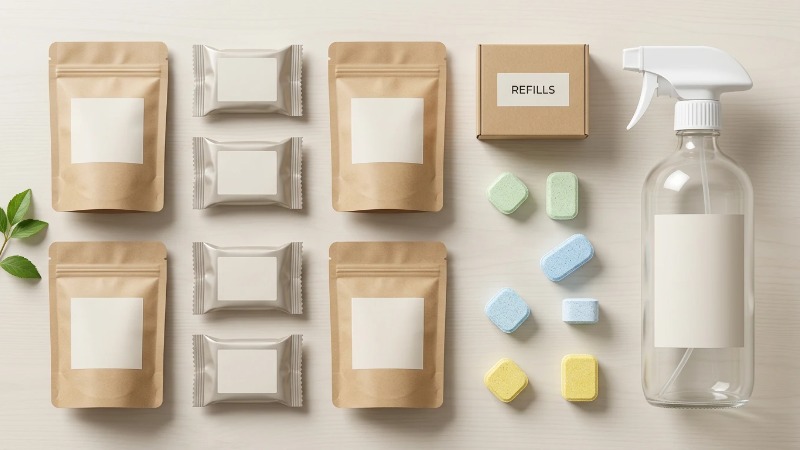
Refill Systems Need to Work Commercially
Refillable cleaning tablet packaging is attractive because it can combine a reusable container with compact replacement products.
However, the commercial model must make sense for both retailers and end users.
Buyers should compare the cost of the initial bottle, refill packaging, individual doses, shipping, and replacement purchases.
Brands should also consider whether the consumer can easily understand the refill instructions.
A refill product that requires complicated preparation or produces inconsistent results may struggle to retain customers, even when its packaging concept is appealing.
Trend 3: Regulations and Environmental Claims Influence Product Development
Cleaning tablet brands targeting international markets must consider product classification, chemical labeling, packaging requirements, and the evidence supporting marketing claims.
These requirements vary by country and product type.
European Union: Packaging and Product Compliance
The EU Packaging and Packaging Waste Regulation, Regulation (EU) 2025/40, entered into application on August 12, 2026, with additional provisions taking effect on phased timelines.
The regulation addresses packaging design, waste prevention, recyclability, and related requirements.
For cleaning tablet brands entering the European market, packaging decisions should be reviewed against the applicable provisions and implementation dates.
Official information is available from the European Commission's packaging and packaging waste guidance.
Cleaning tablets may also be subject to relevant chemical classification, labeling, and detergents requirements, depending on their composition, intended use, and market.
Manufacturers and importers should determine which rules apply to the specific product rather than assuming that one certificate covers all regulatory obligations.
United States: Substantiating Environmental Claims
For brands selling cleaning tablets in the United States, environmental marketing claims require particular attention.
The Federal Trade Commission's Green Guides explain how businesses should substantiate claims related to recyclability, biodegradability, compostability, and other environmental benefits.
For example, broad claims such as "eco-friendly" may be misleading if they are not properly qualified and supported.
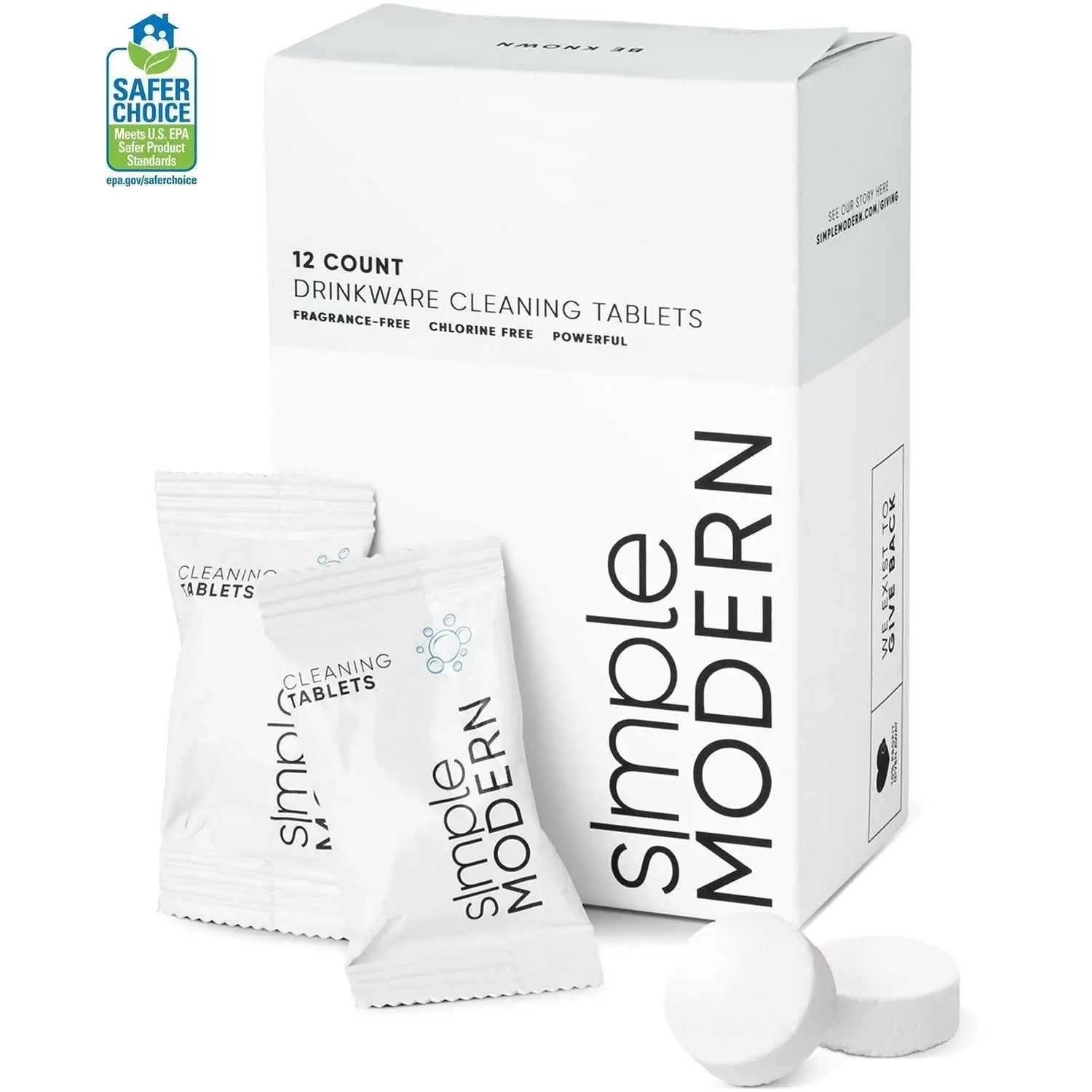
Brands interested in particular ingredient and product safety criteria may also review the US Environmental Protection Agency's Safer Choice Standard. Participation is not equivalent to a universal regulatory approval, and a manufacturer should not claim certification without product-specific evidence.
Other International Markets
For markets outside the EU and United States, buyers should verify the relevant national requirements for ingredients, labeling, product registration, transport, and marketing claims.
Climate and distribution conditions may also influence formulation and packaging choices.
For example, a buyer supplying products to a hot or humid region may need additional stability data for the proposed packaging system.
The broader lesson for international buyers is straightforward: product development should begin with the requirements of the destination market, not end with a compliance check immediately before shipment.
Trend 4: Private Label and Wholesale Buyers Focus on Reliable Manufacturing
For brands introducing new cleaning tablet products, the manufacturing relationship has a direct effect on product quality, launch planning, and inventory risk.
An attractive initial quotation does not necessarily indicate that a supplier can deliver consistent products at commercial scale.
This makes manufacturing capability an important consideration for businesses sourcing OEM cleaning tablets and wholesale cleaning tablets.
What to Evaluate in a Cleaning Tablet Manufacturer
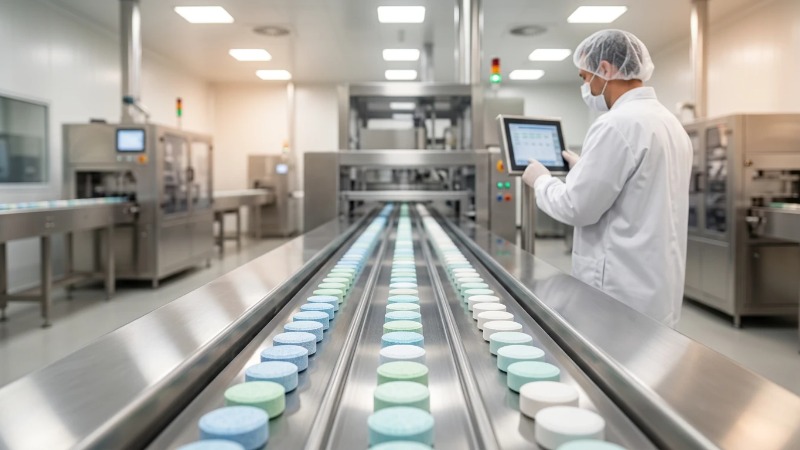
A manufacturer should be able to explain how its production and quality control processes relate to the buyer's product requirements.
Before selecting a supplier, consider the following areas.
1. Formulation development
Can the supplier explain which formulation options are suitable for the intended cleaning application?
Ask whether the proposed formula can be tested for cleaning performance, dissolution behavior, and relevant material compatibility.
2. Tablet production and consistency
Tablet dimensions, weight, hardness, and appearance should be controlled according to agreed specifications.
Ask how these characteristics will be checked during production and what acceptance criteria will be used.
3. Packaging compatibility
Determine whether the supplier can evaluate packaging options against the formula's moisture sensitivity and the intended distribution conditions.
4. Product documentation
Request the documents relevant to your market and product type, such as ingredient information, applicable safety data sheets, testing records, and packaging specifications.
Do not assume that a general factory certificate establishes compliance for every cleaning product.
5. Commercial terms
Confirm the minimum order quantity, packaging quantity, tooling requirements, sample arrangements, production schedule, and quality acceptance process.
The correct wholesale supplier is not necessarily the one offering the lowest unit price. It is the one capable of meeting the agreed specifications consistently at a commercially workable cost.
OEM and ODM Customization Opportunities
Private label cleaning tablets can be differentiated through several product characteristics.
These may include formula selection, intended cleaning application, fragrance, tablet weight, appearance, packaging configuration, and brand presentation.
However, every customization decision may affect cost, development time, production feasibility, or stability.
For example, changing tablet size can affect dissolution behavior. A new fragrance can require compatibility testing, while alternative packaging materials may need additional barrier evaluation.
Therefore, brands should prioritize the product features that matter most to their target customers before requesting extensive customization.
Wholesale Cleaning Tablets: Evaluate Cost per Use
Unit price alone may not provide an accurate comparison between different cleaning tablet products.
For procurement teams, cost per use is often a more meaningful purchasing measure.
A practical evaluation should consider:
| Cost component | Question for the buyer |
|---|---|
| Tablet unit cost | How many tablets are required for the intended cleaning task? |
| Packaging cost | What protective packaging is required per dose? |
| Freight and logistics | How does shipment weight and volume affect landed cost? |
| Storage and handling | Does the product require special storage conditions? |
| Product stability | Could damage or deterioration increase losses? |
| Consumer convenience | Are preparation and usage instructions straightforward? |
This approach helps buyers compare concentrated tablets with competing cleaning formats on a more consistent basis.
The Counterargument: Cleaning Tablets Will Not Replace Every Liquid Cleaner
Despite their practical advantages, cleaning tablets are not an ideal solution for every cleaning task.
A ready-to-use cleaner may be more convenient when customers need an immediate spray-and-wipe product.
Tablet refills require users to prepare the product correctly, and some formulations need time to dissolve.
Potential disadvantages include incomplete dissolution, incorrect dilution, moisture-related deterioration, and packaging costs.
Brands should not assume that consumers will accept these inconveniences solely because a product uses less conventional packaging.
Instead, cleaning tablet development should prioritize applications where the format offers a clear practical benefit.
Appliance maintenance tablets, measured-dose cleaning products, and selected refill systems can be suitable candidates when their cleaning performance and user experience have been validated.
The strongest product strategy is to select the right application rather than force every cleaning function into tablet form.
What B2B Buyers Should Do Before Launching Cleaning Tablets in 2026
Brands planning a new private label or wholesale cleaning tablet program should establish clear requirements before requesting a final quotation.
The following checklist can help structure discussions with a manufacturing partner.
| Development stage | Recommended action | Evidence or deliverable |
|---|---|---|
| Define product application | Specify the equipment, surface, or cleaning task | Product requirement document |
| Select formulation | Compare candidate formulas for intended performance | Approved formulation and sample |
| Evaluate dissolution | Test under relevant conditions | Test method and recorded results |
| Review packaging | Compare moisture protection and usability | Packaging specification |
| Validate stability | Review appropriate storage and aging data | Stability assessment |
| Check market requirements | Confirm product and packaging obligations | Compliance review and required documents |
| Confirm commercial terms | Clarify MOQ, price, tooling, and lead time | Written supplier quotation |
| Approve production | Define acceptance criteria and approved reference samples | Agreed quality specifications |
This process helps reduce misunderstandings between brands and manufacturers.
It also provides a better foundation for repeat orders, because both parties understand what the finished product must achieve.
Conclusion: The Future of Cleaning Tablets Depends on Performance and Trust
Cleaning tablet trends in 2026 highlight a central challenge for the category: sustainability features must be supported by practical product performance.
Brands may benefit from concentrated formulations, refill packaging, and flexible private label development, but these benefits depend on appropriate product design and reliable manufacturing.
For wholesale buyers, the most useful approach is to evaluate cleaning performance, tablet stability, packaging protection, regulatory requirements, and total purchasing cost together.
A well-developed cleaning tablet should offer more than an attractive environmental message. It should deliver consistent results, clear instructions, and a dependable experience throughout its intended shelf life.
For businesses exploring OEM or private label opportunities, working with a suitable cleaning tablet manufacturer can help translate these requirements into a realistic product development plan.
Explore OEM and Private Label Cleaning Tablet Options
Boymay offers cleaning tablet manufacturing and customization services for brands, retailers, and wholesale buyers. Explore our custom cleaning tablets manufacturer page to review available product categories and discuss your formulation, packaging, and sourcing requirements.
Frequently Asked Questions
Q: Are cleaning tablets more sustainable than liquid cleaning products?
A: They can offer environmental advantages in certain applications, particularly when they reduce transported water or support effective refill systems. However, the overall impact depends on the formulation, packaging, manufacturing, transportation, and product use. Comparative claims should be supported by appropriate evidence.
Q: What is the difference between effervescent and compressed cleaning tablets?
A: Effervescent tablets use a gas-producing reaction to help break apart and disperse the formulation when exposed to water. Compression refers to a manufacturing process used to form tablets. Effervescent tablets can also be compressed, so the terms describe different characteristics rather than mutually exclusive product types.
Q: How should buyers evaluate cleaning tablet shelf life?
A: Buyers should request stability information relevant to the formula, packaging, and intended storage conditions. Testing may evaluate moisture sensitivity, tablet integrity, cleaning performance, and dissolution behavior over time. Shelf life should not be inferred solely from the type of packaging.
Q: What should brands look for in a wholesale cleaning tablet manufacturer?
A: Important considerations include formulation capability, quality consistency, appropriate testing, packaging compatibility, documentation, communication, and clearly defined commercial terms. Buyers should request samples and agree on measurable acceptance criteria before placing bulk orders.
Q: What determines the MOQ and lead time for private label cleaning tablets?
A: Minimum order quantities and delivery schedules depend on the formula, tablet specifications, packaging, customization requirements, and production arrangements. Standard products may have different commercial terms from fully customized formulations. Buyers should confirm these details directly with their manufacturer before finalizing a launch schedule.