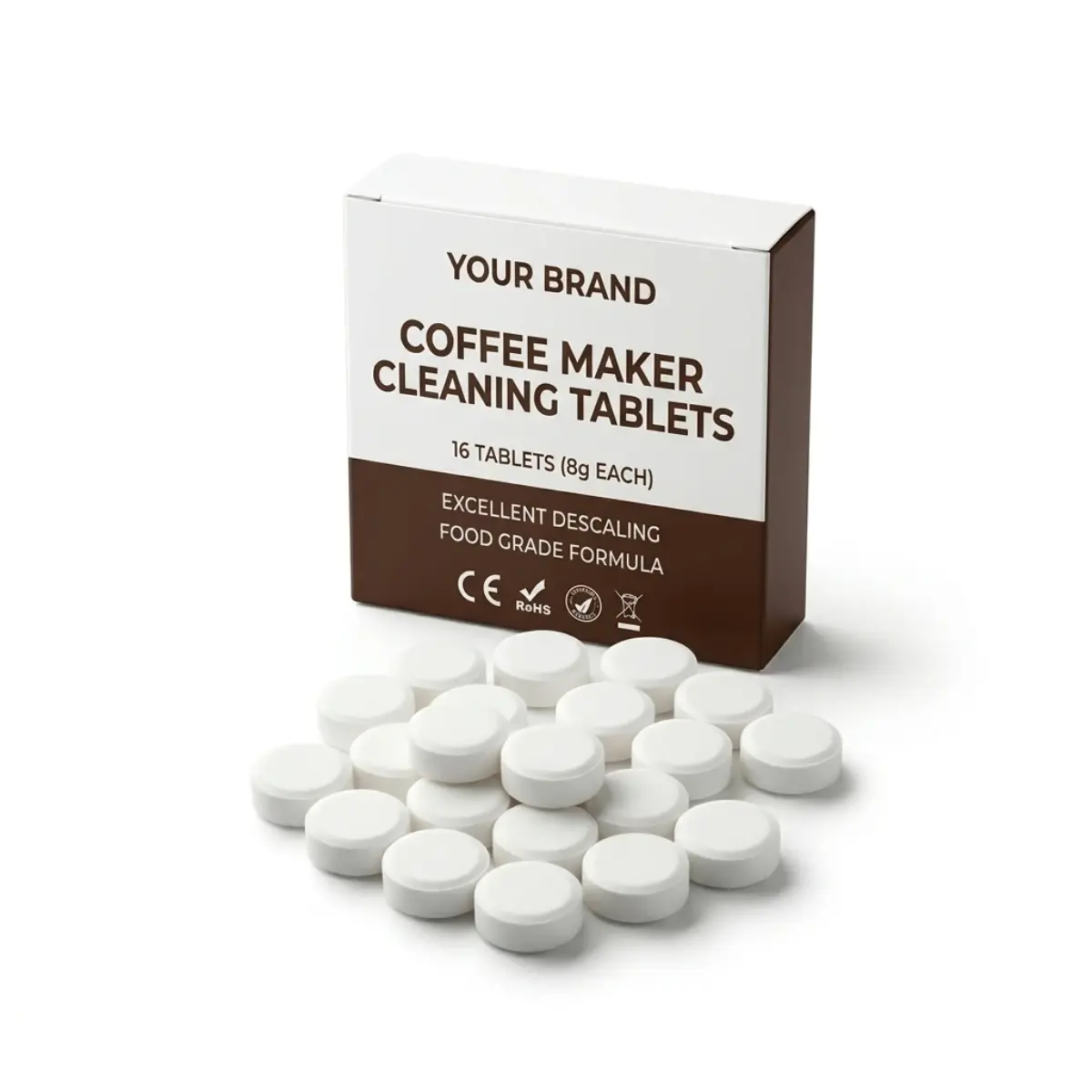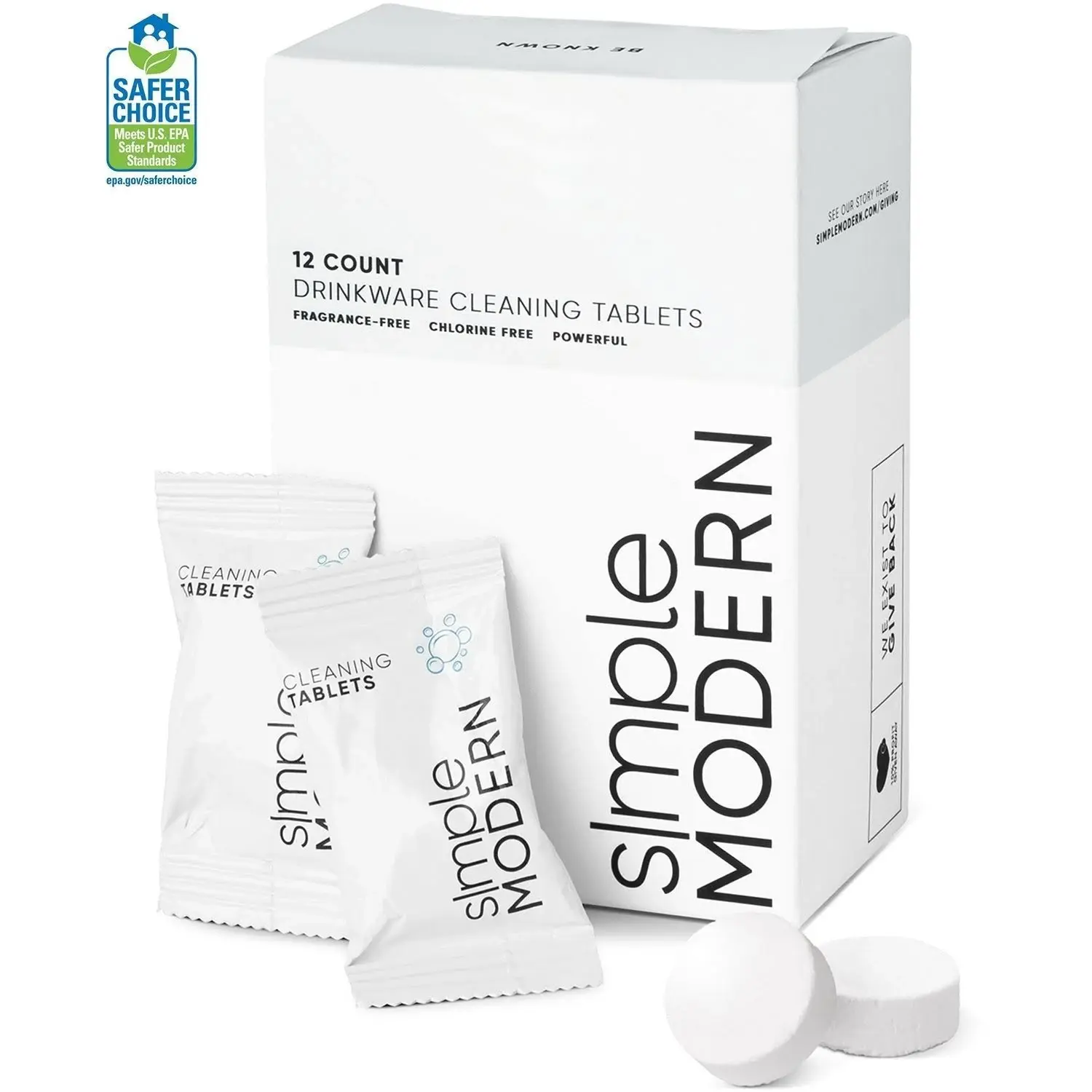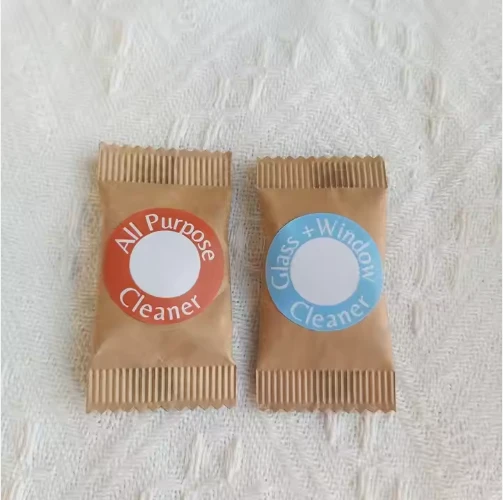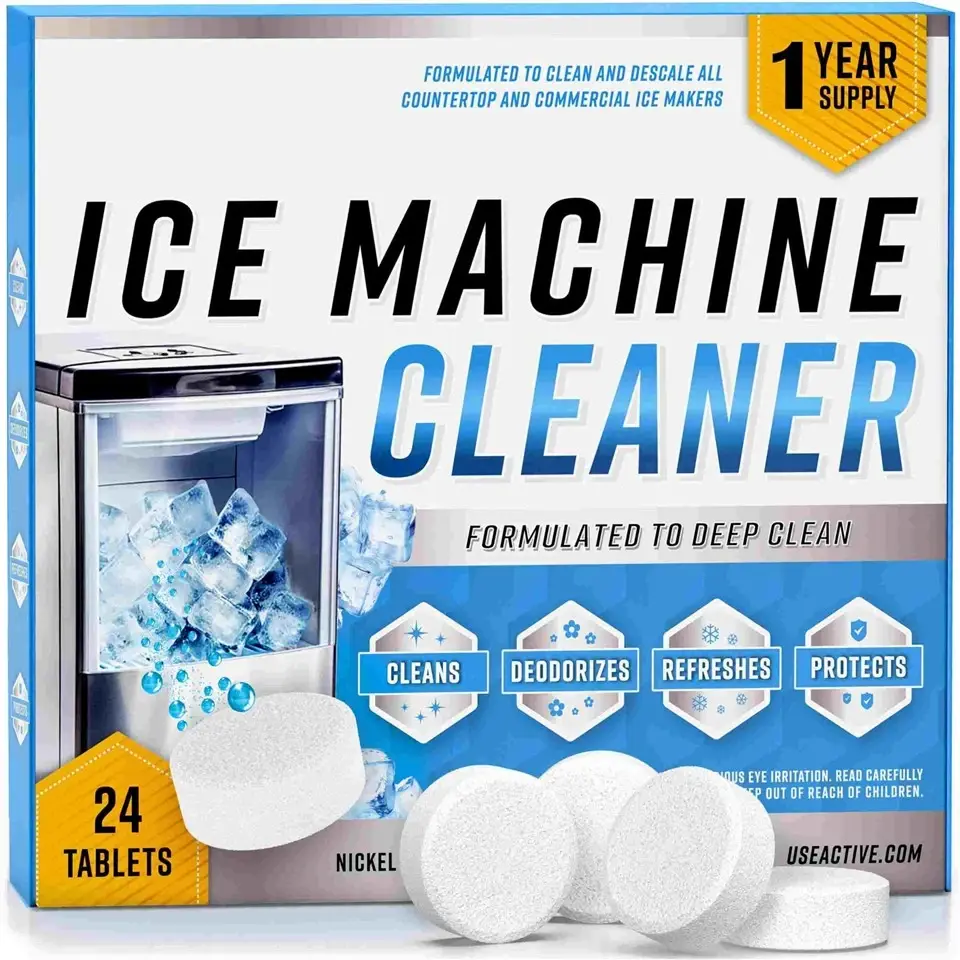

How we launched a product at 3,000 units instead of 50,000. Real levers to reduce MOQ, negotiate with suppliers, and find low MOQ manufacturing partners.
Yes — a founder can put an effervescent cleaning tablet on the market without wiring money for 50,000 units. I know because we did it last year, and the launch order that finally left our floor was around 3,000 pouches. I run production planning on a contract line that presses and packs personal care and household tablets, and this is the account of how one two-person brand got from "every supplier quoted me a number I can't afford" to a first pallet on a truck.
I'll walk through the exact levers we pulled, what it cost, and where I'd do things differently. If you're a startup staring at an impossible minimum order quantity, the mechanics here apply whether you talk to us or anyone else.
Key Takeaways
- The founder wanted 2,000 units; competing suppliers quoted 50,000. We structured a first run at roughly 3,000 pouches.
- MOQ is driven less by the tablet itself and more by tooling, formula batch minimums, and — most often — packaging film minimums.
- Three levers move MOQ the most: using a stock formula, slotting into a shared production run, and simplifying packaging.
- Expect a higher per-tablet cost at low volume — realistically $0.18–$0.42 per tablet at a few thousand units versus roughly $0.09–$0.15 at 50,000.
- Even a 3,000-unit batch still needs real stability, dissolution, and hazard labeling work — that isn't optional.
- From signed PO to first pallet, budget about 10–14 weeks, with packaging lead time as the usual bottleneck.
What MOQ Really Means for a First-Time Cleaning Product
Minimum order quantity is the smallest run a factory will accept before the economics stop making sense for them. Founders read it as a wall built to keep small brands out. From the plant side, it's arithmetic.
Why manufacturers set an MOQ (the honest version)
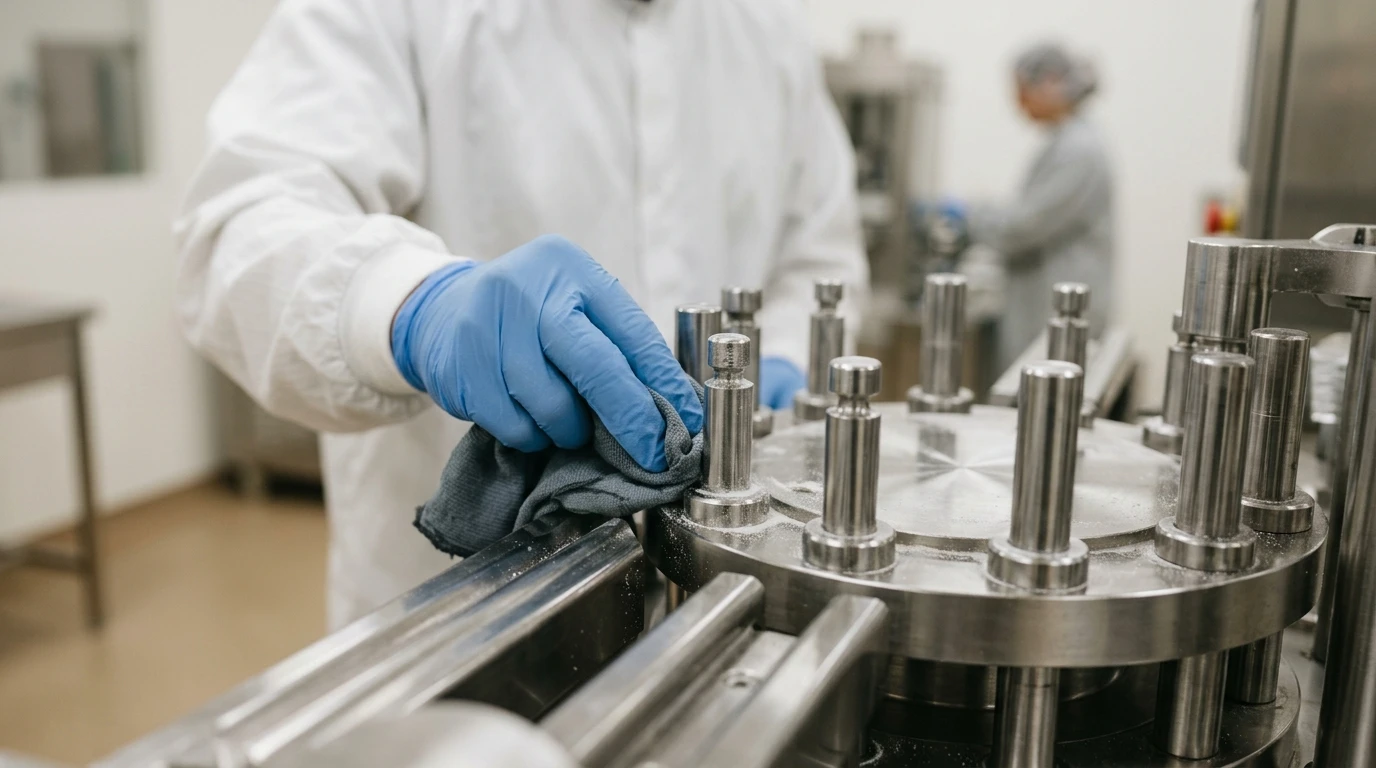
Every formula change means we stop the compression line, strip the tooling, and clean it down so the next product doesn't carry over citric acid dust or surfactant residue. That changeover eats two to four hours whether you're pressing 3,000 tablets or 300,000.
Then there are raw material minimums. Suppliers of nonionic surfactants and effervescent-grade sodium bicarbonate don't sell you a kilo — they sell you a drum or a pallet. And the film for your pouches usually ships in a printed reel that starts around 8,000–10,000 units of surface area. When a supplier quotes you a scary MOQ, more often than not it's the packaging film talking, not the tablet.
The MOQ that scared our client off — and the number we agreed on
The founder came in with three quotes ranging from 25,000 to 50,000 units, each demanding custom formula development on top. Her budget covered maybe 2,000. We landed on 3,000 pouches by killing the custom R&D batch and reusing a proven base — I'll get to how below. Not the 2,000 she hoped for, but a number her cash could actually clear.
The Client's Problem: One Formula, No Budget for 50,000 Units
Two people, one idea: a surface-cleaning effervescent tablet you drop into a reusable spray bottle with tap water. Good concept, tight capital, no room to gamble a full production run on a market they hadn't tested yet.
What they had vs. what they needed
| Dimension | Founder's starting position | Typical industry requirement |
|---|---|---|
| Budget | ~$3,500 for first run | $12,000–$20,000 at standard MOQ |
| Target units | 2,000 | 25,000–50,000 |
| Formula readiness | Concept only, no lab work | Locked, tested formula |
| Packaging | Undecided (wanted rigid tubes) | Custom tooling paid upfront |
The gap on paper looked fatal. It wasn't — most of it was fixable by changing decisions, not by finding more money.
How We Reduced Their MOQ: The 5 Levers We Actually Pulled
Lever 1 — Sharing a stock formula instead of custom R&D
Custom formulation means a minimum development batch, lab hours, and stability trials — costs that only spread out over big volume. We offered a proven base instead: citric acid and sodium bicarbonate as the effervescent couple, a nonionic surfactant for cleaning, and a light enzyme blend for organic soils. She got a working product without funding a formula from zero. The honest tradeoff: she doesn't own that formula outright, and a competitor could buy the same base.
Lever 2 — Buying into a shared production run
Her tablets ran the same week as another client's household batch using an adjacent formula. Because the line was already set up and cleaned for that chemistry, we split the changeover time between two purchase orders instead of loading it all onto her 3,000 units. That single scheduling move is one of the most reliable ways to reduce MOQ with suppliers, and few founders ever ask for it.
Lever 3 — Simplifying packaging to hit film minimums
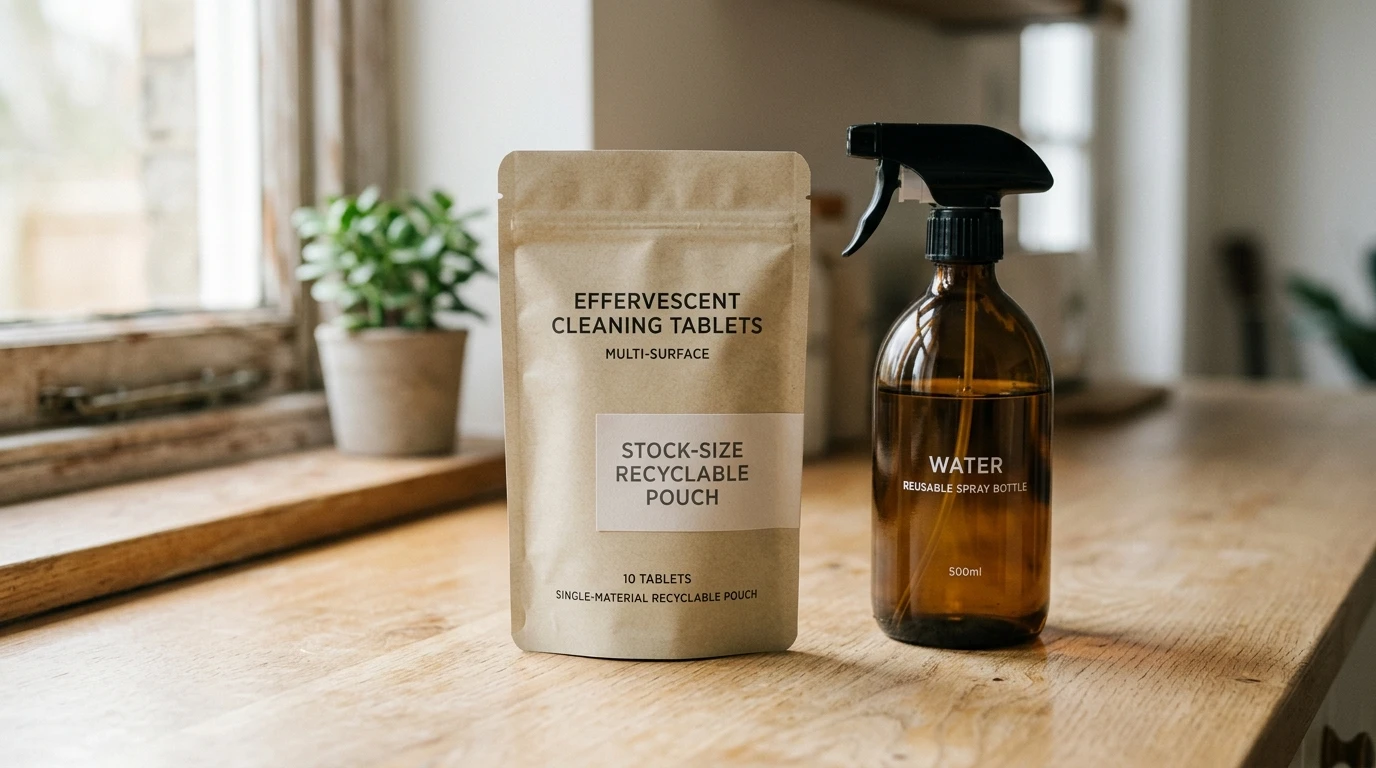
She wanted rigid tubes. Tubes mean custom tooling and a mold minimum that would have dwarfed her whole budget. We moved her to a stock-size mono-material recyclable pouch — a format the film supplier already stocked, so no custom print reel minimum applied. Packaging MOQ frequently outweighs the tablet MOQ itself; fixing this alone cut her required order in half.
Lever 4 — Staged ordering (deposit + call-off)
On paper she committed to 3,000 units, which kept the pricing honest. In practice we manufactured the full batch but released it as call-offs — an initial 1,200 pouches, the balance held in our warehouse against her sales. She paid a deposit, then drew down as revenue came in. It protected her cash flow without asking us to run an uneconomic batch.
Lever 5 — Right-sizing the batch to the equipment
We matched her order to a single full blend cycle in one hopper. Pressing 3,000 tablets used the batch cleanly with almost no leftover powder to write off. Order sizes that fall awkwardly between hopper cycles waste material, and that waste gets priced back into your quote — so aligning to the equipment's natural batch is quietly one of the better product launch strategy moves.
Cost breakdown at low volume
| Cost component | Per unit @ 3,000 | Per unit @ 50,000 |
|---|---|---|
| Formulation (stock base) | $0.03 | $0.01 |
| Compression + changeover | $0.09 | $0.02 |
| Packaging film | $0.11 | $0.04 |
| Filling + labor | $0.07 | $0.03 |
| Testing + compliance | $0.06 | $0.01 |
| Approx. total | $0.36 | $0.11 |
Low MOQ product manufacturing partners will always cost more per tablet — the fixed costs get divided by fewer units. The trade is real: you pay a premium per piece to avoid burying capital in inventory you haven't validated.
Compliance and Testing We Couldn't Skip
Small run or not, a cleaning product is a chemical product. Skipping this is how a startup gets a shipment held at customs or a recall in month three.
Labeling and safety requirements for cleaning tablets
For the EU shipment we classified and labeled under CLP (Regulation EC No 1272/2008), which aligns with the globally harmonized GHS pictograms and hazard statements. For the US market, OSHA's Hazard Communication Standard required a Safety Data Sheet for the concentrate. Because she made no antimicrobial or "kills 99.9%" claims, EPA pesticide registration under FIFRA did not apply — the moment a brand claims to kill germs, that changes, and it's an expensive door to open.
Stability and dissolution testing on a small batch
We ran accelerated stability to check moisture uptake, since effervescent tablets are notorious for absorbing humidity and going soft. We logged the effervescence rate — how fast the tablet fully dissolves in tap water — and checked shelf stability across a temperature cycle. Three thousand units doesn't lower the bar; a tablet that fizzes weakly or swells in the pouch fails the same way at any volume.
The Launch: From Signed PO to First Pallet
Realistic timeline table
| Stage | Realistic duration |
|---|---|
| Formula lock + sample sign-off | 1–2 weeks |
| Packaging proof + artwork | 2–3 weeks |
| First production run | 1–2 weeks |
| QC + stability/dissolution testing | 2–3 weeks |
| Pack, palletize, ship | 2–3 weeks |
| Total | ~10–14 weeks |
How to Negotiate a Lower MOQ With Any Manufacturer
Questions to ask before you accept a quote
- Do you have a stock or platform formula I can adapt, instead of full custom R&D?
- Can my order ride along on another client's scheduled production run?
- What's the real driver of this MOQ — the tablet, or the packaging film?
- Will you accept staged payment with call-off releases from your warehouse?
- Is a paid pilot or sample run possible before I commit to full volume?
Red flags that a low MOQ isn't real
Watch for a headline MOQ that hides setup, tooling, and "small batch" surcharges buried in the fine print — that's how a low number becomes an expensive one. Be wary of any factory that agrees to a tiny run with no mention of stability testing or an SDS; corners get cut somewhere, and it's usually quality or compliance. A genuine low minimum order quantity manufacturer will show you the cost math, not just a friendly number.
Ready to Launch Your First Product?
If you've got a cleaning tablet concept and a budget that doesn't stretch to 50,000 units, send it over. We'll run a low-MOQ feasibility review — tell us the formula direction, target market, and packaging idea, and we'll come back with an honest MOQ, a per-unit range, and a sample quote. No 50,000-unit ultimatum, just the real numbers for your first run.
Frequently Asked Questions
Q: What is a typical MOQ for cleaning tablets?
A: Standard runs often start at 25,000–50,000 units because of packaging film and raw material minimums. Manufacturers set up for shared runs or stock formats can go far lower — a first production batch of 3,000–5,000 pouches is realistic.
Q: Can I launch a product with fewer than 5,000 units?
A: Yes. Using a stock formula, a stock-size pouch, and a shared production slot, a launch around 3,000 units is achievable. Expect a higher per-unit price as the trade for lower risk.
Q: Do low-MOQ suppliers charge more per unit?
A: Almost always. Fixed costs — changeover, testing, tooling — divide across fewer units, so a tablet that runs about $0.11 at 50,000 can cost $0.30–$0.42 at 3,000. You pay a premium to avoid tying up capital in unsold inventory.
Q: How do I find low MOQ product manufacturing partners?
A: Look for contract manufacturers that openly advertise stock formulas, shared runs, and pilot batches, and ask directly whether packaging or the product drives their minimum. A partner willing to break down the cost math is usually the one who can genuinely flex on MOQ.
Q: How long does a first cleaning tablet run take?
A: Plan for roughly 10–14 weeks from signed PO to first pallet. Packaging lead time is the most common cause of delay, so confirm film availability before you lock your launch date.