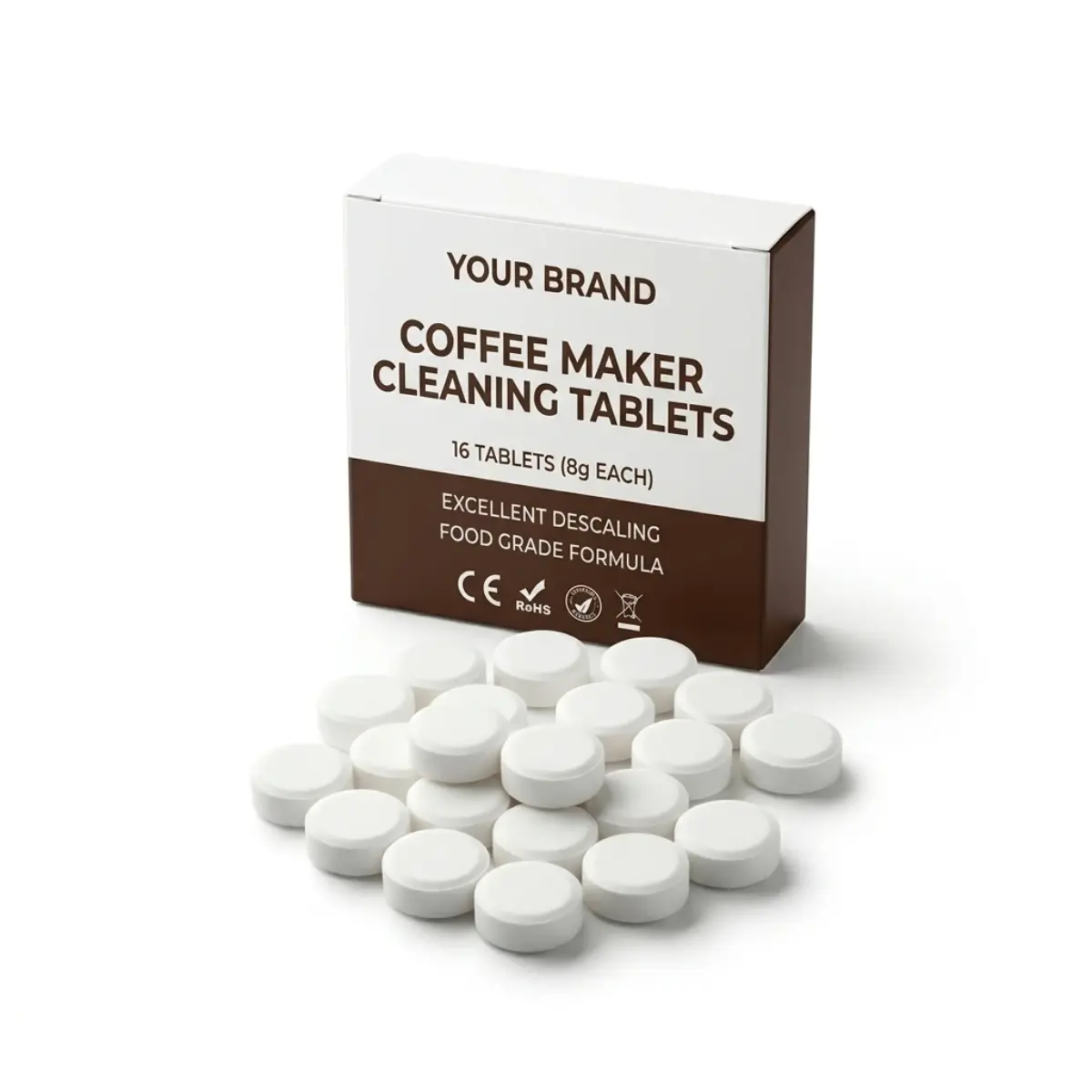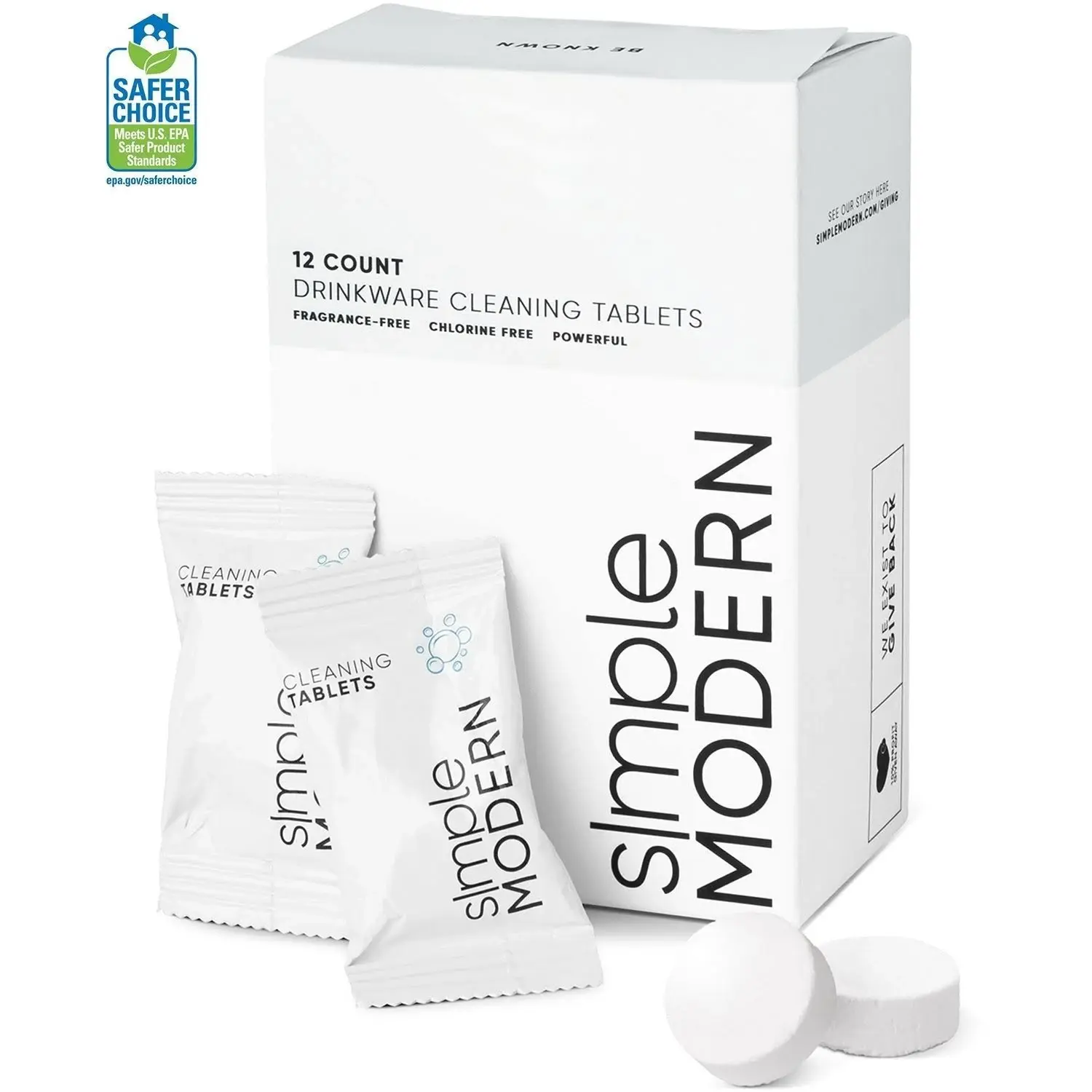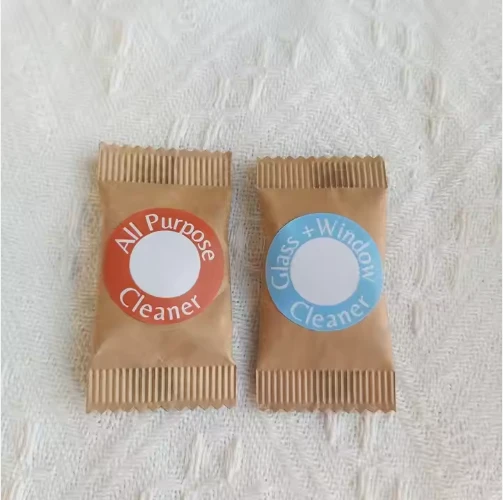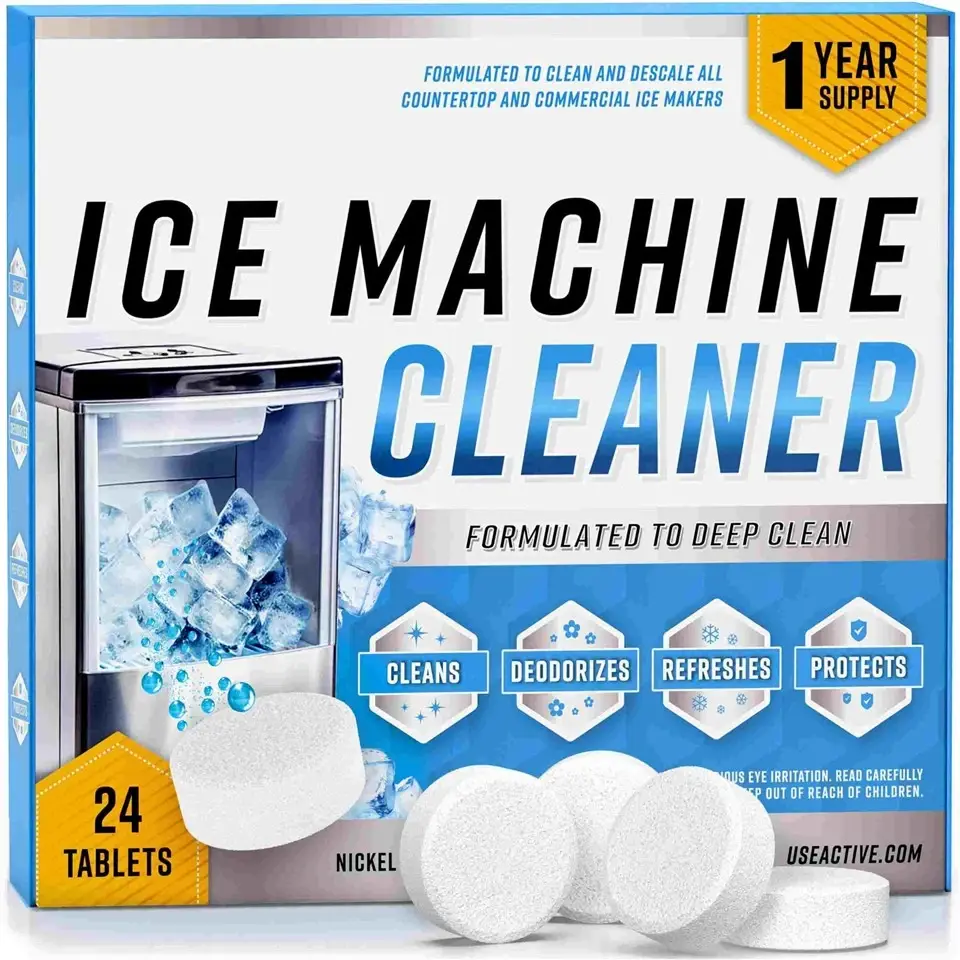

Learn how to make eco-friendly effervescent cleaning tablets, from ingredients and formula to finding a private label manufacturer and launching your brand.
You've watched three DTC brands sell the same little fizzing tablet, wondered why a coin-sized disc costs $9, and quietly suspected the margins are better than anything sitting in your Shopify catalog right now. You're not wrong. A single effervescent tablet the size of a poker chip replaces a full bottle of spray cleaner, and shoppers are handing over a 30–40% premium for the privilege of not shipping water around the country.
This is a build guide, not a pep talk. By the end you'll know whether a cleaning tablet line is viable for your budget, what the chemistry actually is, and the exact sequence from bench formula to first paid order. Short answer on viability: yes, if you respect the moisture problem and don't overclaim on the label. Everything else is execution.
Why Cleaning Tablets Are Winning Shelf Space
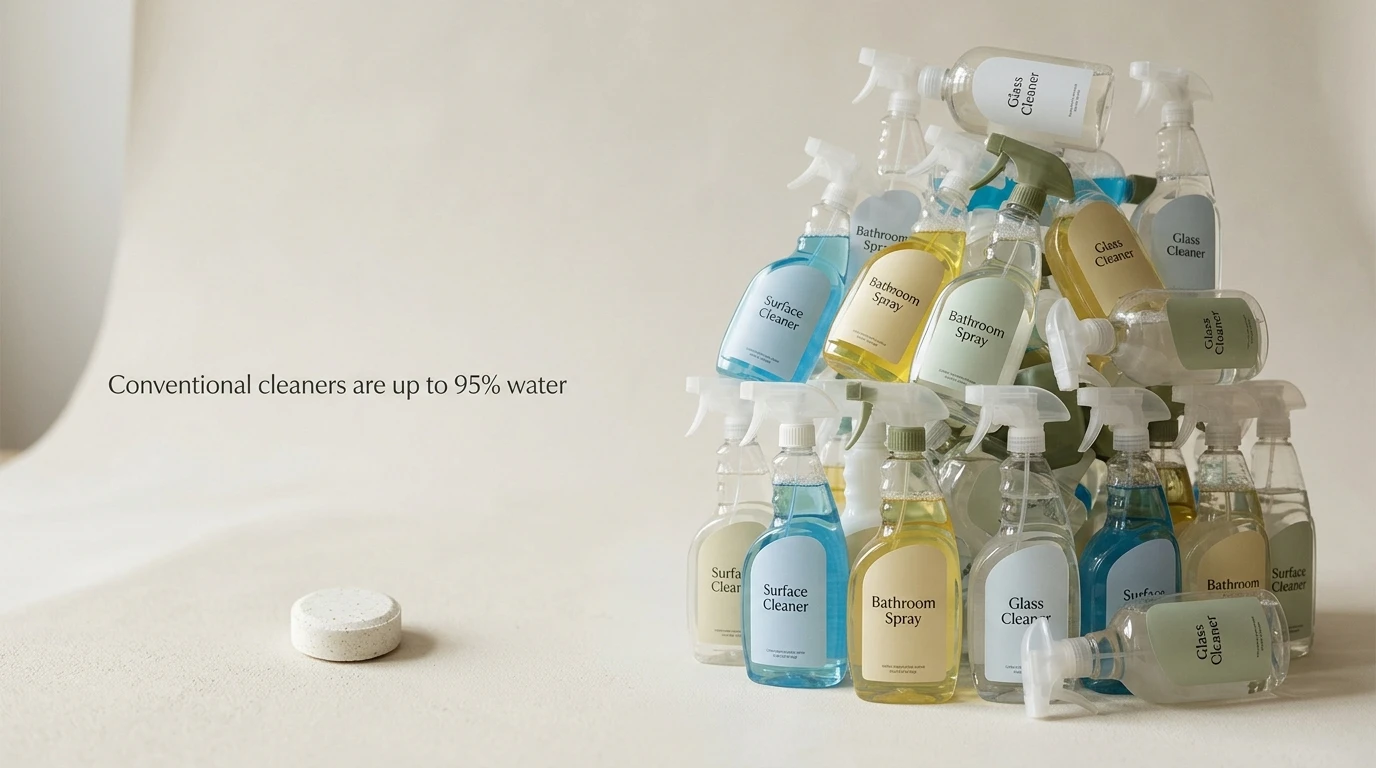
The whole category rides on one unglamorous fact — conventional cleaners are roughly 90–95% water, and water is dead freight. You pay to warehouse it, pay again to ship it, and the customer throws away the bottle it came in. Strip the water out, sell the concentrate, and let the buyer add tap water at home. That single move rewrites your logistics and your margin structure.
Then there's the plastic story, which regulators and retailers now take seriously. A refillable system means one durable bottle instead of a new one every month. That's the pitch that gets you onto a sustainability-focused retailer's shelf and into a subscription box. And subscriptions are the real prize here — refills are inherently recurring, which turns a one-time cleaner sale into a predictable revenue stream.
The Concentrated-Cleaning Opportunity in Numbers
Here's the commercial logic laid bare. The interesting column isn't price — it's the margin gap that opens once you stop shipping water.
| Metric | Traditional Spray | Tablet + Refillable System |
|---|---|---|
| Product weight shipped | ~800 g | ~5 g per tablet |
| Plastic per "bottle" | 1 new bottle each time | 1 reusable bottle |
| Typical retail price | $3–5 | $6–9 starter / $2–3 refill |
| Gross margin range | 45–55% | 60–75% |
Who Actually Buys Tablets — Know Your Segment
Three buyers dominate. The eco-conscious household is the loud one — they'll pay the premium and read your ingredient list, but they'll also punish vague green claims. The subscription-box shopper cares about convenience and the ritual of the refill; price them by the cartridge, not the bottle. And then there's B2B: cleaning services, boutique hotels, offices that want to shrink storage and virtue-signal to guests. That third segment is quieter but orders in volume and rarely churns.
Match the segment to the channel before you spend a dollar on inventory. Households live on DTC and Amazon. Hospitality accounts come through wholesale and direct outreach, and they'll want a case study and an SDS before they'll talk price.
Understanding the Tablet Itself: Effervescent vs. Dissolvable
Pick your format before R&D, because it dictates equipment, packaging, and shelf life. There are two families, and they solve different problems.
Effervescent Cleaning Tablet Ingredients
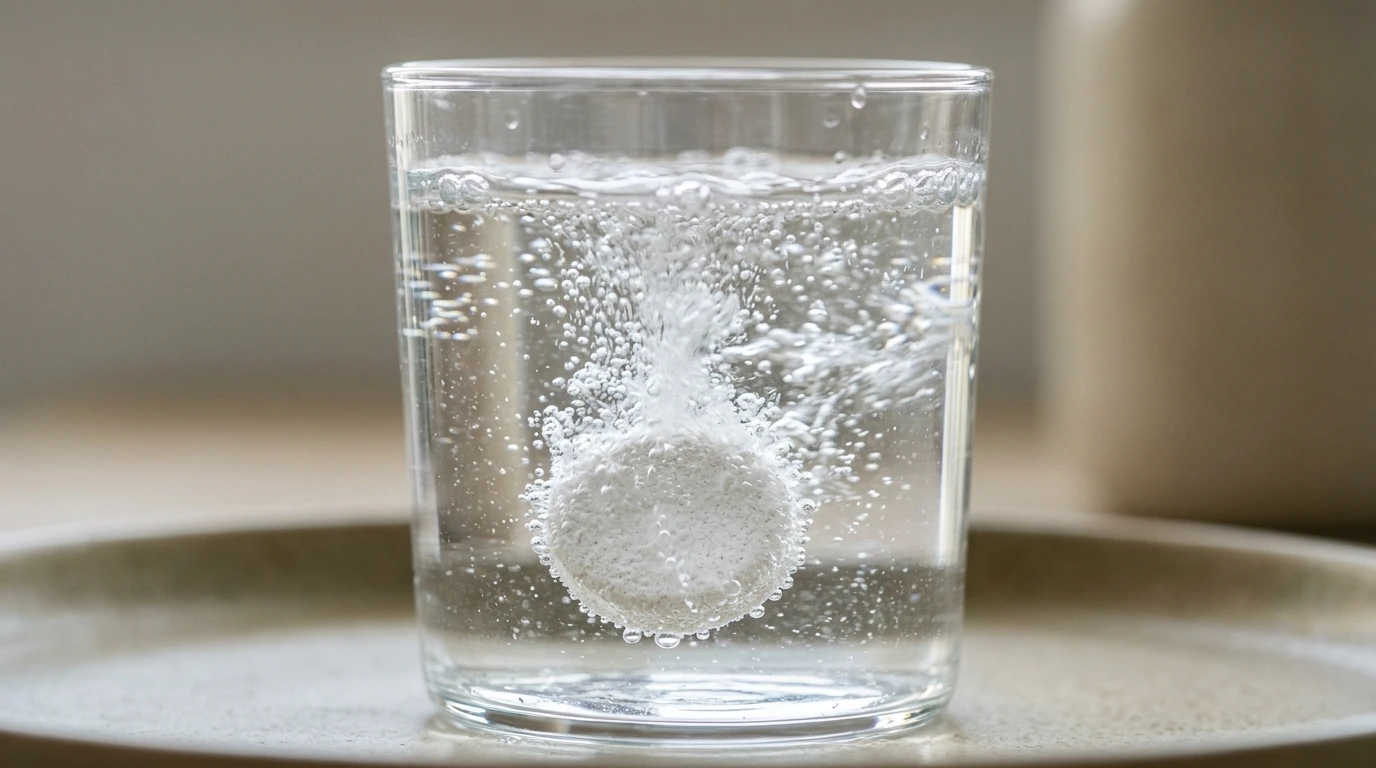
An effervescent tablet is a controlled acid–base reaction waiting to happen. Citric acid meets sodium bicarbonate the moment water hits, releasing carbon dioxide — that's the fizz. The gas isn't decorative; it physically breaks the tablet apart and disperses the actives so nothing settles at the bottom of the bottle. For oxygen-boosted cleaning you'll swap in sodium percarbonate, which releases hydrogen peroxide as it dissolves. Add a nonionic surfactant for the actual grease-cutting, and you have the backbone of most effervescent cleaning tablet ingredients.
The catch is that the reaction wants to start early. Any ambient humidity and your tablets begin fizzing quietly inside their packaging, going soft and dead before they ever reach a customer. Hold that thought — it's the single biggest reason first-timers get returns.
Dissolvable Cleaning Tablet Formulation Basics
Dissolvable tablets skip the fizz. These are compressed powders — or film-encased capsules — that simply melt into solution. Dissolvable cleaning tablet formulation leans on binders to hold the disc together under compression and disintegrants that pull water in and swell, so the tablet crumbles apart instead of sitting like a stubborn pebble. No gas means slower dispersion, which is fine for floor and hard-surface cleaners where the user is already stirring a bucket.
Format follows function. Glass and multi-surface sprays want fast, complete dispersion, so they go effervescent. A floor cleaner diluted in a mop bucket tolerates a slower dissolvable. Toilet and descaling products lean effervescent again, because the fizz helps the active reach under the rim.
Matching Formula to Use-Case
| Product | Key Active | pH Target | Format |
|---|---|---|---|
| Glass / multi-surface | Nonionic surfactant | 6–8 | Effervescent |
| Bathroom / descaler | Citric + sulfamic acid | 2–3 | Effervescent |
| Floor cleaner | APG surfactant | 8–9 | Dissolvable |
| Toilet | Sodium percarbonate | 9–10 | Effervescent |
Step 1: Develop and Validate Your Formula
Formulation is where founders either build a moat or set money on fire. Two numbers matter more than any marketing copy: dissolve time and stability. Aim for a tablet that fully disperses in 2–4 minutes in cool tap water — much slower and customers assume it's broken; much faster and you're probably sacrificing binder strength and shipping dust.
Stability testing is non-negotiable for effervescents. Run accelerated aging at 40°C and 75% relative humidity for a few weeks and watch what happens to weight, hardness, and dissolve time. Humidity is the enemy here, full stop. If your tablet softens in that chamber, it will soften in a warehouse in July.
DIY Bench Testing vs. Contract Formulator
Learn on your kitchen scale — it's genuinely useful for understanding how binder ratios and citric-acid-to-bicarbonate balance change the feel of a tablet. But don't ship a kitchen formula. When you're ready for something shelf-stable and compliant, bring in a household or cosmetic chemist. Contract formulation for a straightforward cleaning tablet typically runs somewhere in the $2,000–8,000 band per formula, depending on how many actives and iterations you need, and whether they include stability data.
That fee buys you two things worth more than the formula: documentation and repeatability. A garage recipe that works once is not a product.
Compliance and Safety Documentation
Know how to make cleaning tablets legally, not just chemically. Every product needs a Safety Data Sheet (SDS) — that's baseline, and retailers will ask for it. If you sell into the EU or UK, your labels fall under CLP/GHS rules, meaning correct hazard pictograms and warning text.
The one that catches people: the moment you claim to kill germs, sanitize, or disinfect in the United States, you've made an antimicrobial pesticide claim and you likely need EPA registration. "Cleans" is fine. "Kills 99.9% of bacteria" is a different regulatory universe with real cost and timeline attached. Decide early, because it reshapes your budget.
Step 2: Choose Your Manufacturing Route
You have two doors: rent someone else's factory or build your own capacity. Most first launches should rent.
Private Label Cleaning Tablet Manufacturer vs. In-House Production
Going with a private label cleaning tablet manufacturer gets you to market fast, with a proven formula and shared equipment, and it caps your downside if the product flops. The trade is thinner margin per unit and less control. Buying a rotary tablet press flips that — better unit economics once you're moving real volume, full control over the recipe — but you're now responsible for a humidity-controlled room, QC, and the capital.
Watch the MOQ math. A good private label cleaning tablet supplier will start you low — order minimums around 1,000 units are realistic for a starter run — so you can test demand before committing to a press that only pays off in the tens of thousands of units. Tooling and a decent single-station press start in the low five figures and climb quickly for automated lines.
What to Vet in a Contract Manufacturer
- GMP practices and ISO certification — ask to see the certificates, not just the logos on their homepage.
- Batch testing — do they document dissolve time and hardness per lot, and will they share the records?
- Humidity-controlled packaging — this is where effervescents live or die; ask about their RH set point on the line.
- Formula ownership and IP terms — get it in writing that your formula is yours and won't reappear under a competitor's brand.
Step 3: Packaging for a Refillable System
Packaging isn't the last step. For a cleaning tablet it's part of the product, because it's the only thing standing between your active ingredients and the water in the air.
Moisture Barrier Is Non-Negotiable
Effervescents need a real moisture barrier — foil sachets, blister packs, or a tube lined with desiccant. A pretty paper wrapper looks on-brand and will destroy your tablets in transit. Whatever shelf-life claim you print (12–24 months is standard) has to be backed by the packaging you actually ship, not the one you tested in a dry lab.
Designing the Refill Loop
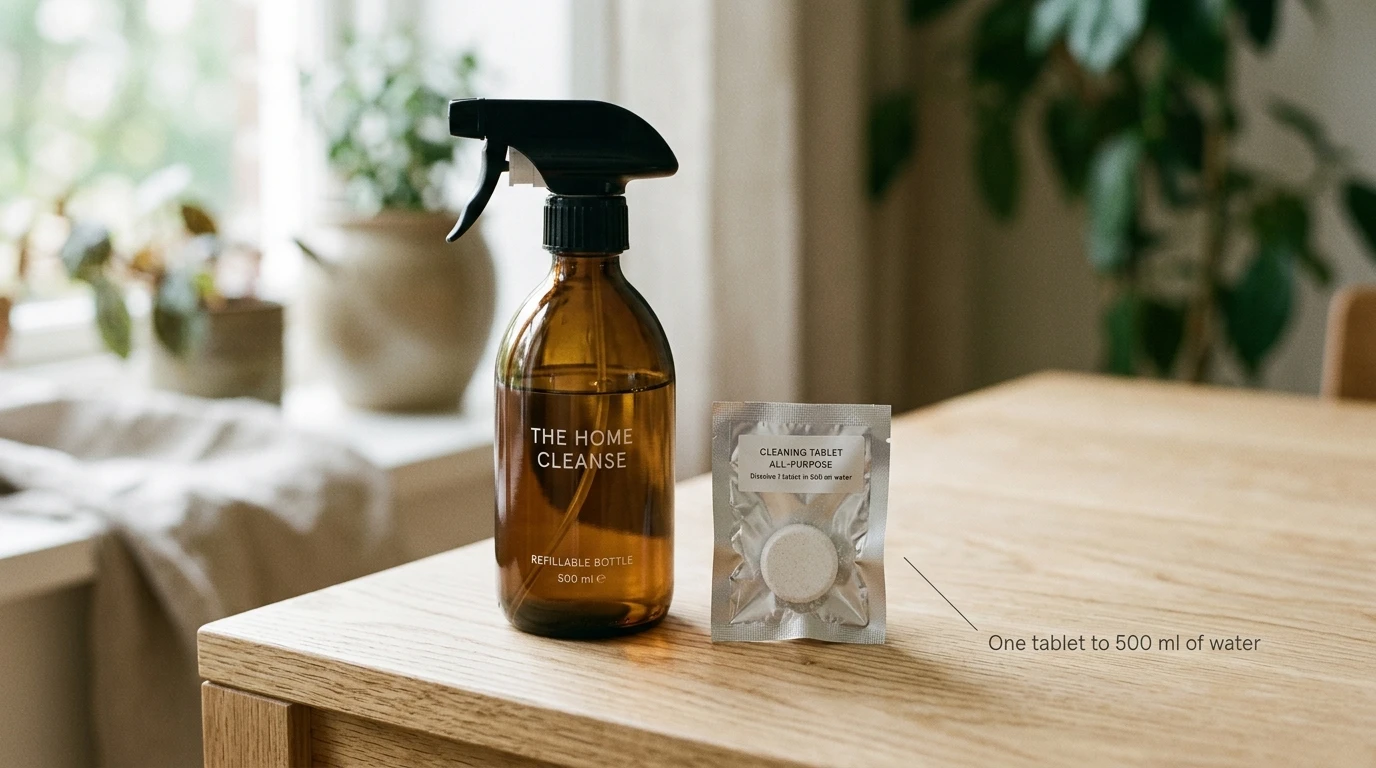
The refill loop is the business model. Sell a durable starter bottle once, then sell refills forever. Keep the dosing brutally simple: one tablet to 500 ml of water is a ratio people remember. Print it on the bottle, print it on the sachet, and mark a fill line right on the bottle so nobody has to measure. Confused customers under-dose, decide the product is weak, and don't reorder.
Step 4: Pricing, Margins, and Unit Economics
Here's a realistic cost stack for a private-label refill tablet. Numbers move with volume and region, but the shape holds.
| Cost Component | Approx. per Unit |
|---|---|
| Formula / actives | $0.15–0.35 |
| Manufacturing / pressing | $0.10–0.25 |
| Packaging (sachet) | $0.08–0.20 |
| Starter bottle (one-time) | $0.60–1.20 |
| Fulfillment | $0.40–0.90 |
Price the starter kit to cover the bottle and your acquisition cost — you can even run it near break-even, because the money is in the refills. A refill that costs you under a dollar landed and sells for $2.50 is a healthy repeat SKU. Model lifetime value over 12–18 months of monthly refills and the customer economics get genuinely attractive, which is exactly why subscriptions dominate this category.
Step 5: Positioning and Go-to-Market
If you want to start a cleaning product business that outlasts the trend cycle, differentiation has to be provable, not adjectival.
Building Trust With Claims You Can Prove
Greenwashing is the fastest way to lose this audience. Don't say "eco-friendly" — say your surfactants are readily biodegradable, state how many single-use bottles a year of refills saves, and if you qualify, pursue EPA Safer Choice certification and put that logo to work. An eco friendly cleaning tablet formula built on plant-derived surfactants earns its premium only when the buyer can verify the claim. Specifics build trust; adjectives get ignored.
Sales Channels: DTC, Marketplace, and Wholesale
Your own store gives you margin, data, and the subscription relationship — but you pay for every visitor. Amazon brings traffic and trust but compresses margin and hides your customer. Wholesale and refill-station partnerships move volume and legitimize the brand, at the cost of retail margin. Most durable brands run two of the three, usually DTC for subscriptions plus one high-volume channel.
Common Pitfalls First-Time Founders Hit
The failures repeat with almost boring consistency. Tablets that crumble into powder in the box — that's a binder ratio or compression-force problem, fixable but only before you print thousands. Dissolve times that swing wildly batch to batch, which means loose QC at the factory. Moisture failure in transit, because someone value-engineered the foil sachet down to paper. And the expensive one: printing "disinfects" or "kills germs" without the EPA registration to back it, which turns a product launch into a compliance headache.
Ready to Launch Your Line?
Validate a formula, lock down moisture-proof packaging, build the refill loop, and price for repeat purchase — that's the whole path from lab bench to first sale. The fastest, lowest-risk way to test it is a private-label run with a manufacturer who already controls humidity on the line and can start you at a low MOQ.
Talk to a manufacturing partner about samples and MOQ quotes. Bring your target format and use-case, request a sample batch, and get real numbers on tooling, timelines, and per-unit cost before you commit a dollar of inventory. The market is moving — the founders who ship a tested, honestly-labeled product first are the ones who own the refill relationship.
Frequently Asked Questions
Q: How much does it cost to start a cleaning tablet business?
A: A lean private-label launch — a validated formula, a first production run near a 1,000-unit MOQ, packaging, and basic branding — typically lands in the $8,000–20,000 range. Going in-house with your own tablet press, humidity control, and QC pushes initial outlay past $40,000 before you've sold a thing. Most founders start private-label to prove demand, then reinvest into equipment once refills are churning reliably.
Q: Do I need EPA registration for my cleaning tablets?
A: Only if you make antimicrobial claims. In the US, marketing a product as a disinfectant, sanitizer, or germ-killer triggers EPA pesticide registration. A cleaner sold purely to remove dirt, grease, and grime — with no kill claims — generally does not. Decide your positioning early, because registration adds meaningful cost and lead time.
Q: What's the shelf life of an effervescent cleaning tablet?
A: Typically 12–24 months, and packaging is the deciding variable. Sealed in foil sachets or desiccant-lined tubes and stored below moderate humidity, effervescent tablets hold up well. Exposed to ambient moisture, they can soften and lose fizz in weeks. Any shelf-life number you print must be backed by stability testing in the exact packaging you ship.
Q: Can I make eco-friendly cleaning tablets that actually work?
A: Yes, with honest trade-offs. Plant-based, readily biodegradable surfactants clean effectively for most household surfaces, though some heavy grease and specialized descaling jobs still favor stronger conventional actives. The realistic play is a strong plant-derived core formula, verified performance claims, and transparency about what the product is optimized for — rather than promising it out-cleans everything.