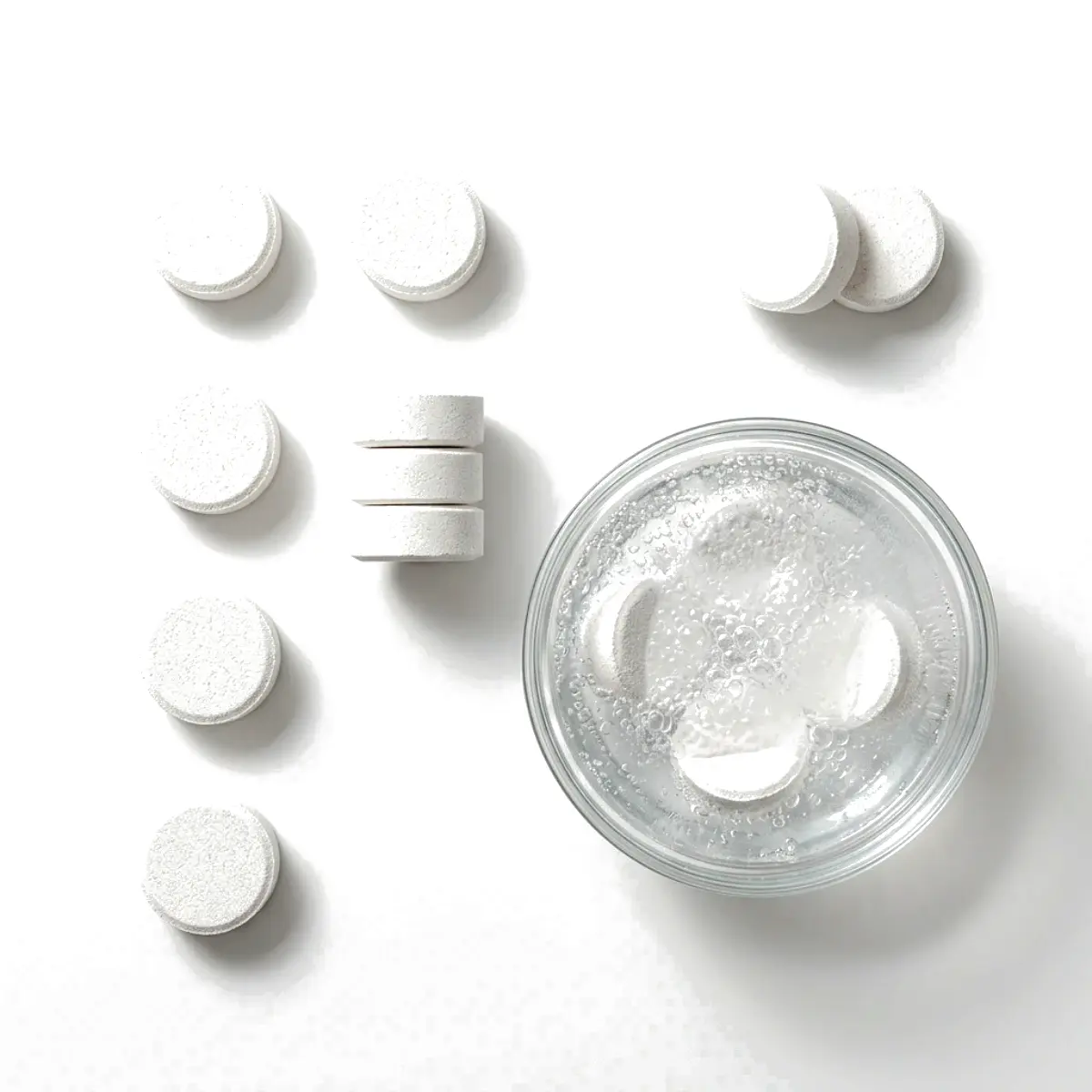

Short version: yes. If you're a brand selling fizzing bath tablets, cleaning tablets, or any dissolve-and-foam product across different regions, the water your customers pour over your product changes how it behaves. The main culprits are calcium and magnesium — the two minerals that define "hardness" — and they can quietly flatten lather, slow dissolution, and leave residue. For B2B buyers specifying a formula, ignoring the target market's water profile is one of the easier ways to ship a product that tests great in the lab and underperforms in someone's bathroom.
This matters most for anyone who sells into multiple countries at once. A formula tuned for soft-water Seattle can feel slimy in hard-water Dubai, and a formula built for the Gulf can feel weak and under-foaming in a soft-water region. Below is what actually happens, why, and what to do about it before you place an order.
Key Takeaways
- Water hardness genuinely affects tablet performance — calcium and magnesium ions react with surfactants and cut down foam and lather.
- Hard water increases residue and soap-scum risk; soft water can leave a slimy, over-foaming feel if the active load is too high.
- Dissolution rate shifts with both mineral content and water temperature, so fizz and break-up timing change by region.
- Chelating agents (like EDTA, citrate, or GLDA) sequester hard-water minerals and are often cheaper than a full base reformulation.
- Brands selling across North America, Europe, and the Middle East should either spec a hardness-tolerant universal formula or commission market-specific variants.
- Always validate dissolution and residue in a real sample tested against your target market's water profile.
The Short Answer: What Water Hardness Does to a Tablet
Water hardness is the amount of dissolved calcium and magnesium in water. In hard water, those positively charged ions bind to the surfactants in your tablet before the surfactants can do their job — so you get less foam, more scum, and sometimes a visible film. Formulas often should differ by region, or at least be built to tolerate a wide hardness range.
Hard Water vs Soft Water, Defined Simply
Hardness is usually measured in milligrams per liter (mg/L) of calcium carbonate, or in grains per gallon (gpg) in North America. Soft water sits below roughly 60 mg/L (about 3.5 gpg). Moderately hard runs 60–120 mg/L, hard is 120–180 mg/L, and very hard climbs above 180 mg/L.
You don't need to memorize the thresholds. Just know that "hard" means more minerals fighting your surfactants, and "soft" means fewer — which sounds better until you realize soft water can make a product feel like it won't rinse off.
Why Minerals Mess With Your Cleaning Tablet
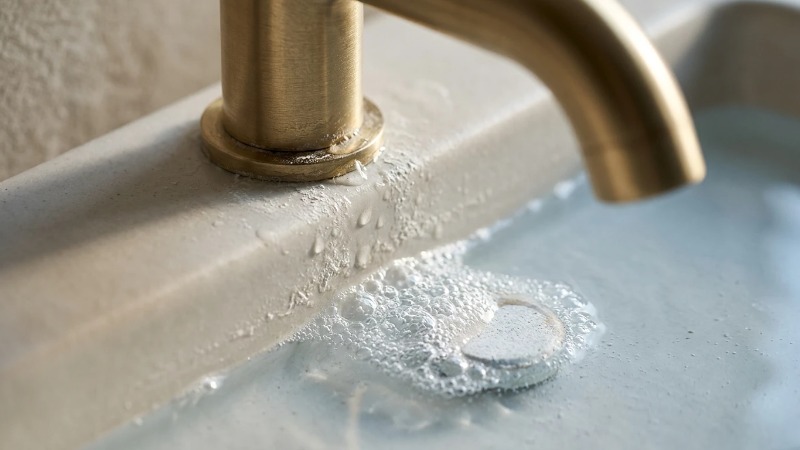
When a tablet dissolves, its surfactants are supposed to lift oils and generate foam. In hard water, calcium and magnesium ions grab onto the surfactant molecules and form insoluble compounds — the classic "soap scum" you see on shower glass and tap fittings.
That reaction consumes active ingredient. Part of your formula is essentially being wasted neutralizing minerals instead of cleaning or foaming. The harder the water, the more of your product is sacrificed before it ever reaches the skin or surface.
Surfactant Performance in Soft vs Hard Water
In soft water, surfactants work at close to full efficiency. There's little competition, so foam builds fast and lasts. The catch is that soft water doesn't "use up" surfactant, so an aggressive formula can feel slippery and hard to rinse — users describe it as slimy.
In hard water, you often need more active ingredient or a more hardness-resistant surfactant blend just to hit the same foam. Anionic surfactants are especially sensitive to hardness, while certain non-ionic and amphoteric surfactants hold up better. This is why a region-blind formula tends to disappoint somewhere.
Dissolution Rate: The Overlooked Variable
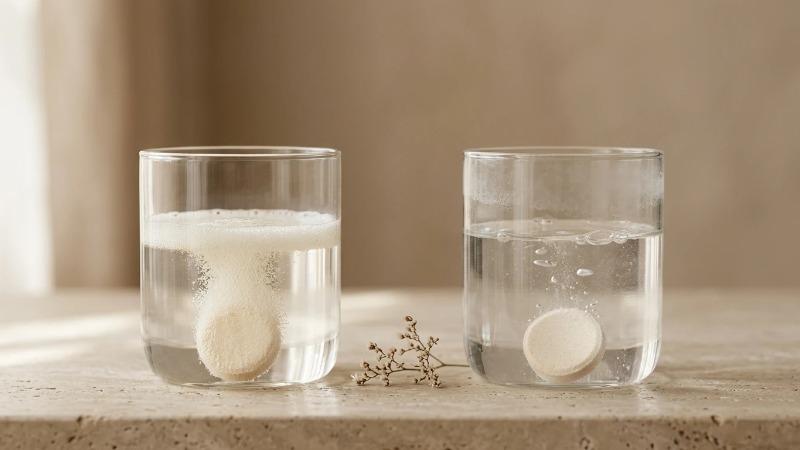
Everyone focuses on foam, but dissolution rate is just as important. Mineral content and water temperature both change how quickly a tablet breaks apart and fizzes. Hard, cooler water can slow the acid-base fizzing reaction in bath tablets; warmer, softer water tends to speed it up.
For a bath bomb or shower tablet, this is the difference between a satisfying slow fizz and one that either dumps everything in ten seconds or sits half-dissolved at the bottom of the tub. Dissolution timing is a design choice, and water chemistry quietly rewrites it.
The Data: How Performance Shifts by Water Type
Exact numbers vary by formula, but the directional trends below are well established in surfactant science and water-treatment literature.
| Water Type | Hardness Range (mg/L) | Lather / Foam Impact | Residue Risk | Formulation Adjustment |
|---|---|---|---|---|
| Soft | 0–60 | High, fast-building | Slimy / filmy feel possible | Reduce active load; balance rinse-off |
| Moderately hard | 60–120 | Slightly reduced | Low–moderate | Light chelation often sufficient |
| Hard | 120–180 | Noticeably reduced | Moderate scum | Add chelators + hardness-tolerant surfactants |
| Very hard | 180+ | Weak unless corrected | High scum / film | Robust chelation, builders, possible base reformulation |
Regional Water Profiles That Matter for B2B Buyers
Water hardness isn't random — it follows geology. Here's a rough map of what to expect in common export markets.
| Region | Typical Hardness Trend | Implication |
|---|---|---|
| US Midwest & Southwest | Hard to very hard | Needs chelation and robust foam system |
| Pacific Northwest (US) | Soft | Watch for slimy residue; moderate actives |
| Much of Western Europe | Moderate to hard (varies by city) | Mid-range hardness-tolerant formula |
| Gulf / Middle East | Hard, often with desalinated supply | Mineral and salt load both matter |
This is exactly why a single global formula underperforms across markets. The same tablet can feel premium in one city and disappointing a flight away.
How Formulators Adjust: Chelating Agents and Beyond
The main tool for hard water is chelation. Chelating agents — think EDTA, sodium citrate, GLDA, or phosphonates — grab calcium and magnesium ions and lock them away so they can't interfere with surfactants. The surfactant is then free to foam and clean.
Beyond chelators, formulators adjust surfactant selection (shifting toward hardness-tolerant blends), add builder systems that soften water in the moment, and tune pH to keep everything stable. These levers are usually combined rather than used alone.
When to Add Chelators vs When to Reformulate the Base
For moderate hardness, adding a chelating agent is usually the cheaper, faster fix — it addresses the symptom without rebuilding the product. There's a ceiling, though. In very hard water, chelation alone gets expensive and can start affecting texture or fizz.
At that point, reformulating the surfactant base or builder system makes more sense. The decision is a cost-versus-performance call, and it's worth having that conversation before locking a formula, not after a shipment of flat-foaming tablets lands.
Fragrance, Appearance, and Fizz Consistency
Hard water doesn't just hit foam. Minerals can dull colorants, cloud the water, and alter how fragrance releases — some top notes read differently when scum forms. For bath and shower products where color payoff and scent are selling points, water chemistry can undercut the exact features a brand paid to customize.
Expert Perspective
Formulation chemists in the personal care sector generally agree that there's no truly universal formula — only formulas built with a defined hardness tolerance in mind. The practical move is to decide early whether you're targeting a specific region or a broad hardness window, because that single decision shapes the surfactant system, the chelation level, and the cost.
Experienced OEM/ODM manufacturers build this into their sampling process. Rather than testing a formula in one convenient tap-water profile, a careful supplier will check performance against several hardness levels during development — so what passes in the lab actually holds up in the markets you're shipping to.
What This Means for Brands and Private-Label Buyers
If you sell in one region, match your formula to that region's water and move on. If you sell across North America, Europe, and the Middle East, you have two realistic paths: commission a hardness-tolerant universal formula that performs acceptably across a wide range, or produce market-specific variants tuned to each profile.
Both are legitimate. Universal is simpler for inventory; variants perform better per market. Either way, water-profile testing belongs in the sampling stage — typically a 7–14 day window where you can catch problems before committing to production. It's far cheaper to adjust a sample than to recall a run.
A Simple Checklist Before You Order
- Identify your target market's water hardness range (city water reports are a good start).
- Request formula testing against that hardness, not just generic tap water.
- Confirm chelation and builder specifications in writing.
- Validate dissolution timing and residue in a real-world sample before approving bulk.
The Forward Look
Demand is moving toward water-adaptive formulas and cleaner ingredient profiles — vegan, cruelty-free, and greener chelation chemistry are increasingly part of buyer briefs rather than nice-to-haves. As private-label manufacturing gets more precise, market-specific customization is becoming the norm for brands that take performance seriously across regions.
In practice, that means the question is shifting from "what's your formula?" to "what water is it built for?" Buyers who ask that question early tend to ship better products.
Let's Match Your Formula to Your Market
Since 1995, BOMAY has focused on OEM/ODM manufacturing of Bath bombs, shower steamers, cleansing tablets and bath and personal care products, with a 40,000 m² factory, 16 automated production lines, and GMP, ISO, FDA, and SMETA certification. We support high customization — custom molds, fragrance, appearance, and vegan formulations — with an MOQ of 1,000.
If you're planning to sell across hard- and soft-water regions, we're happy to discuss a water-profile-matched custom formula and prepare a tested sample (typically 7–14 days, depending on your requirements) so you can validate dissolution, foam, and residue before committing to a bulk run of 25–30 days. Reach out with your target markets and we'll talk through the options — no hard sell, just a straight conversation about getting the chemistry right.
Frequently Asked Questions
Q: Does hard water make cleaning tablets less effective?
A: Yes, usually. Calcium and magnesium ions bind to surfactants and form scum, so part of the active ingredient is consumed before it can clean or foam. A hard-water formula compensates with chelators and hardness-tolerant surfactants.
Q: Can one tablet formula work in both hard and soft water?
A: It can be built to tolerate a wide range, but there's a trade-off. A universal formula performs acceptably across the board rather than optimally in any single market. For demanding markets, region-specific variants deliver better results.
Q: What are chelating agents and are they safe?
A: Chelating agents sequester metal ions like calcium and magnesium so they can't interfere with surfactants. Common ones include sodium citrate, GLDA, and EDTA. Used at standard cosmetic levels, they are widely accepted in personal care formulations; options like citrate and GLDA are often preferred for greener profiles.
Q: Will soft water leave a slimy or filmy residue?
A: It can. Soft water doesn't consume surfactant the way hard water does, so an aggressive formula may feel slippery and resist rinsing. Soft-water formulas often use a lower active load to avoid that sensation.
Q: How do I find out my region's water hardness?
A: Local water utilities publish annual water-quality reports that list hardness. Home test strips give a quick ballpark, and for B2B development you can request lab-measured hardness data to match a formula precisely.
Q: Do bath bombs and shower tablets react to water hardness too?
A: Yes. Beyond foam, hardness and temperature affect the dissolution and fizzing rate, and minerals can dull color and shift fragrance release — all of which matter for bath and shower products.