
A clear, no-hype look at how turmeric soap actually interacts with your skin—what changes, when, and why.
Introduction: Why Turmeric Soap Deserves a Closer Look
Turmeric has been rubbed onto skin for weddings, wounds, and rituals across South Asia for well over a thousand years. That deep history is real. What's less reliable is the modern marketing that promises overnight glow-ups.
The truth sits somewhere in between. Turmeric soap can genuinely change how your skin looks and feels—but on a biological timeline, not a promotional one. This guide walks through what actually happens on your skin, week by week, based on how the ingredient behaves rather than what a label claims.
The Active Ingredient: What's Actually in Turmeric Soap
Here's a distinction most articles skip: the turmeric powder in your spice rack and the compound doing the work on your skin are not the same thing. Raw turmeric root is roughly 2–5% active by weight. The rest is starch, fiber, and pigment.
When you buy turmeric soap, what matters is how much of the functional compound survived the manufacturing process—and whether the formula kept it stable.
Curcumin: The Star Compound
Curcumin is the polyphenol responsible for most of turmeric's skin activity. It works as an antioxidant, neutralizing free radicals, and as an anti-inflammatory agent by dampening signaling molecules like NF-κB that drive redness and swelling.
The catch: curcumin is notoriously unstable. It degrades in light, heat, and alkaline conditions—and soap is often mildly alkaline. This is precisely why concentration and formulation quality matter more than the word "turmeric" on the front of the box.
Common Companion Ingredients
Turmeric rarely works alone in a bar. Kaolin clay is added to absorb excess oil and gently exfoliate. Coconut oil and glycerin counterbalance soap's drying tendency, keeping the barrier intact.
These companions aren't filler. A well-built formula uses them to offset turmeric's downsides—like potential dryness or staining—while letting the curcumin do its job.
What Happens in the First Few Days
The first week is an adjustment period, not a results period. Managing expectations here prevents people from quitting too early or overusing out of impatience.
Immediate Sensory Effects
Some people feel a faint tingling or warmth. That's usually the increased microcirculation and mild activity of the formula—not damage. A temporary yellow tint on lighter skin is also common and rinses off or fades within hours.
What's not normal: burning, stinging that lingers after rinsing, or bright red patches. Those signal irritation, and you should stop.
The "Purging" Question
People often ask whether early breakouts mean the soap is "working." Real purging happens when an ingredient speeds up cell turnover, pushing existing congestion to the surface faster. Turmeric soap isn't a strong exfoliant like retinoids, so genuine purging is uncommon.
More often, new bumps this early are irritation. The practical signal: purging appears where you already break out and clears quickly, while irritation shows up in new areas and feels tight or inflamed. If it's the latter, cut back frequency.
Skin Changes Over 2–4 Weeks
This is where consistent users start noticing something. The changes are subtle at first, then more obvious under good lighting.
Reduced Inflammation and Redness
The anti-inflammatory properties of turmeric tend to show up here first. Skin that was reactive or blotchy often looks calmer. This isn't a cosmetic illusion—curcumin measurably reduces inflammatory markers in skin research.
Impact on Acne-Prone Skin
Turmeric soap for acne and hyperpigmentation works through two overlapping actions. Curcumin has demonstrated antibacterial effects against Cutibacterium acnes, the bacterium tied to breakouts, while its anti-inflammatory action shrinks the redness around existing pimples.
Combined with kaolin clay's oil-absorbing effect, many acne-prone users see fewer new blemishes and calmer active ones by week three or four. It won't replace prescription treatment for severe cystic acne, but for mild-to-moderate cases it earns its place.
Early Signs of a More Even Skin Tone
Turmeric soap for even skin tone starts producing faint results in this window—usually softened edges on newer dark spots rather than dramatic fading. Post-inflammatory marks left by old pimples often respond first, since they're shallow.
Long-Term Effects with Consistent Use (6–12 Weeks)
Skin cell turnover runs on a roughly 28-to-40-day cycle, and it slows with age. That biology is why meaningful pigmentation change simply cannot appear in days—it needs multiple cycles.
Fading Hyperpigmentation and Dark Spots
Curcumin appears to interfere with tyrosinase, the enzyme that drives melanin production. Less new pigment, combined with natural cell turnover clearing old pigment, gradually softens dark spots over two to three months.
Natural Brightening Without Bleaching
This distinction is a safety point, not a marketing one. Natural brightening soap ingredients like turmeric work by slowing excess melanin and boosting radiance. They do not strip pigment the way harsh chemical lighteners (such as unregulated high-dose hydroquinone or mercury-based products) do.
That difference matters enormously for people with medium and deep skin tones, where aggressive lighteners can cause blotchy, permanent damage. Turmeric brightens the appearance of tone without bleaching the skin.
Overall Skin Texture and Radiance
The antioxidant effect is cumulative. Over weeks, reduced oxidative stress often translates into what people describe as "glow"—smoother texture and a healthier surface reflecting light more evenly.
Turmeric Soap Benefits for Skin: A Quick Summary Table
| Concern | What Turmeric Soap Does | Realistic Timeline |
|---|---|---|
| Mild acne | Antibacterial + anti-inflammatory; fewer new breakouts | 2–4 weeks |
| Redness / irritation | Calms inflammatory response | 1–3 weeks |
| Dullness | Antioxidant support, improved radiance | 3–6 weeks |
| Uneven tone / dark spots | Slows melanin, fades marks gradually | 6–12 weeks |
Who Should Be Cautious
Most turmeric content skips this part. It shouldn't. Honest limits are what separate useful advice from a sales pitch.
Sensitive and Reactive Skin Types
If your skin flares easily, start slow. Signs of overuse include persistent tightness, flaking, or new redness. Always patch test: apply to the inner forearm, wait 24–48 hours, and check for reaction before using on your face.
Realistic Limitations
Turmeric soap cannot erase deep scars, remove melasma triggered by hormones, or "whiten" skin. It supports healthier skin—it doesn't perform surgery. Anyone promising more is overselling.
How to Use Turmeric Soap for Best Results
Frequency and Contact Time
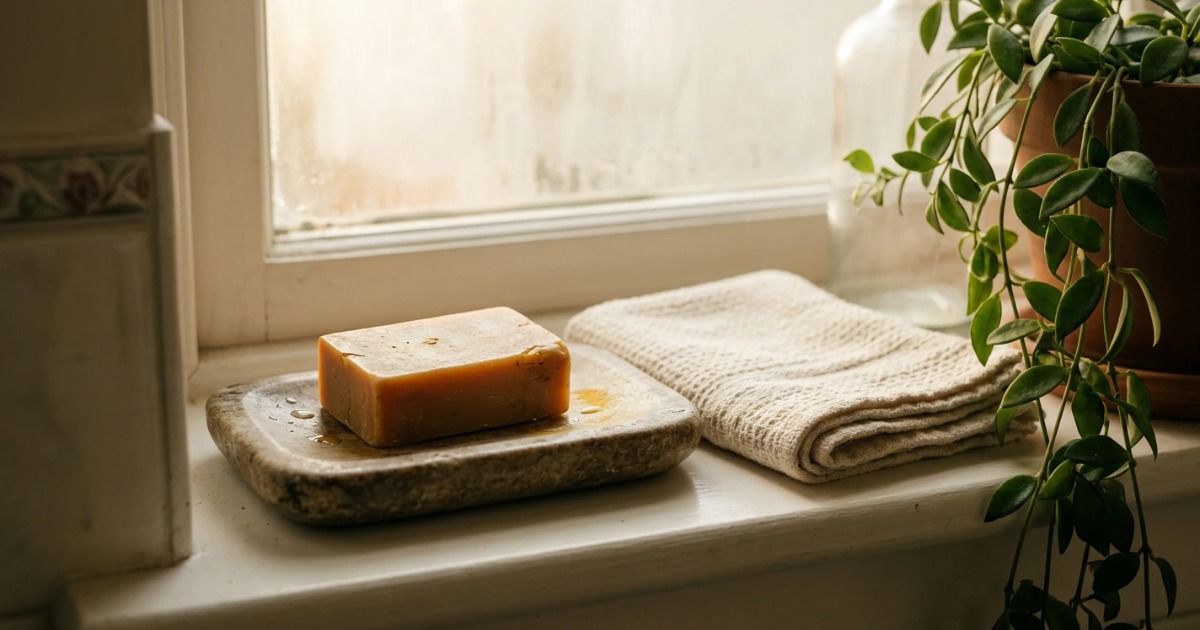
For oily or acne-prone skin, once or twice daily is usually fine. Dry or sensitive skin often does better with every-other-day use. Let the lather sit on your skin for 30–60 seconds so the actives have contact time, then rinse thoroughly.
Pairing with the Rest of Your Routine
Always follow with a moisturizer to protect the barrier. And this is non-negotiable: wear sunscreen daily. Fading dark spots while exposing them to UV is like bailing water from a leaking boat—sun exposure re-triggers the very pigmentation you're trying to reduce.
How to Choose a Quality Turmeric Soap
Ingredient List Red Flags and Green Flags
Green flags: turmeric or curcumin listed meaningfully (not just as a trace colorant), plus nourishing bases like coconut oil, shea butter, or glycerin. Red flags: undisclosed "fragrance" high on the list, artificial dyes mimicking turmeric's color, or vague "brightening complexes" with no named actives.
Formulation and Certification Matter
Because curcumin is chemically fragile, the way a soap is made determines whether it actually works. Stable pH, controlled processing, and quality-controlled sourcing preserve the active compound instead of degrading it.
This is where manufacturing standards become a consumer issue. Reputable OEM/ODM producers—Boymay, for example, has manufactured personal care products since 1995 under GMP, ISO, and FDA-recognized systems—give retail brands consistent, verifiable formulations. Certified production isn't a luxury; it's the difference between a bar that performs and one that's mostly yellow soap.
Final Takeaway
Strip away the hype, and turmeric soap does something quietly useful: it calms inflammation, supports acne-prone skin, and gradually evens tone—on a real biological timeline of weeks, not days.
Used consistently, paired with sunscreen, and chosen from a properly formulated, certified source, it earns its reputation honestly. Patience and realistic expectations, not marketing promises, are what actually transform your skin.
Frequently Asked Questions
Q: Does turmeric soap stain your skin yellow?
A: It can leave a faint temporary tint, mostly on lighter or drier skin. It's harmless and fades within a few hours. Rinsing thoroughly and moisturizing afterward minimizes it. Well-formulated bars with balanced oils rarely stain noticeably.
Q: How long until I see results?
A: Calmer, less red skin can appear within 1–3 weeks. Acne improvement typically shows around 2–4 weeks. Fading dark spots and more even tone takes 6–12 weeks, because it depends on your skin's natural renewal cycle.
Q: Can I use turmeric soap every day?
A: Oily and acne-prone skin usually tolerates daily use well. Dry or sensitive skin often does better every other day. Watch for tightness or flaking, and scale back if it appears.
Q: Is turmeric soap safe for dark skin tones?
A: Yes—and it's actually a safer choice than harsh chemical lighteners for deeper skin. Turmeric brightens by slowing excess melanin rather than bleaching, which reduces the risk of the blotchy, uneven results aggressive products can cause. Still, patch test first.
Q: Can turmeric soap help with body acne, not just the face?
A: Yes. The same antibacterial and anti-inflammatory actions apply to areas like the back, chest, and shoulders. Give the lather adequate contact time and rinse well, since body skin is often thicker.
Q: Will it help with old scars and dark spots?
A: It fades flat, pigment-based dark spots (like post-acne marks) gradually and modestly. It cannot flatten raised or indented scars, which are structural rather than pigment issues. Set expectations toward "softer, lighter marks," not "scar removal."