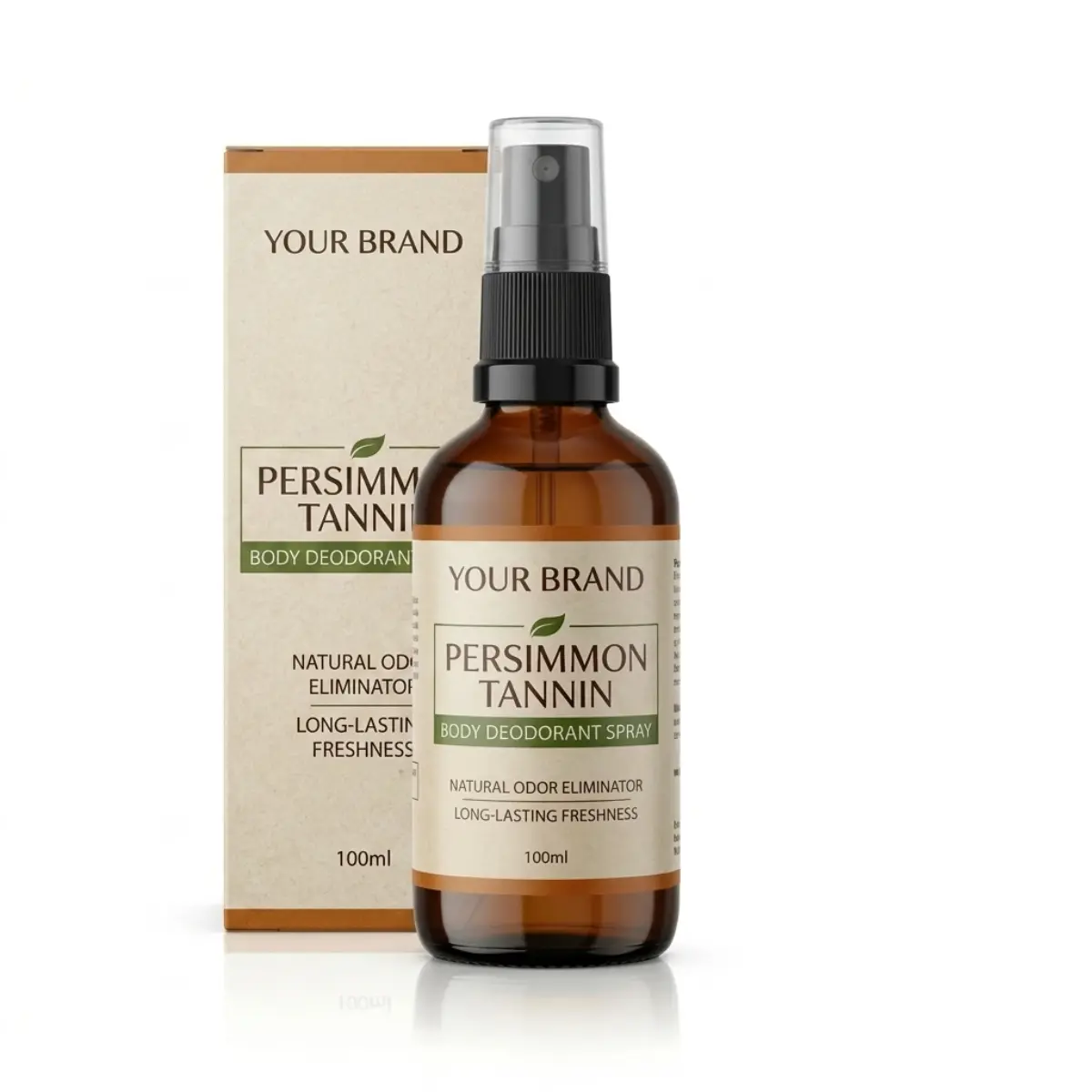

Within the contemporary natural skincare market, an unassuming orange or amber-hued bar has increasingly emerged among more elaborately marketed formulations. This is persimmon soap—a product that has, over recent years, established itself as one of the most frequently searched personal care items, reflecting a notable shift in consumer interest toward functional, botanically derived cleansing solutions.
So the obvious question: does it actually do anything, or is this just another wellness fad riding a wave of clever marketing? Let's dig into what the ingredient really is, what the evidence says, and why demand for it keeps climbing.
Why Everyone Is Talking About Persimmon Soap
Persimmon soap started as a fairly niche item in Japan, where it was marketed mostly to older men worried about a specific kind of "aging odor." For years it stayed regional. Then it crossed over.
The Surge in Consumer Demand
Search interest has climbed steadily across North America and Western Europe, and more recently the Middle East has picked up the trend too. Part of that is the broader shift toward plant-derived personal care. Part of it is simple word of mouth—people who tried it and told others.
Retailers have noticed. What was once a specialty import now shows up on mainstream e-commerce listings and in curated gift sets. That's usually a sign a product has moved past the early-adopter stage.
What This Article Covers
Here's the roadmap: we'll define the product, explain the actual chemistry behind its deodorizing claims, look at what reviewers report, share some data, and—for the buyers reading this—cover what to look for when sourcing it in bulk.
What Is Persimmon Soap?
At its core, persimmon soap is a cleansing bar (or sometimes liquid wash) formulated with extract from the astringent persimmon fruit. The fruit isn't chosen for scent or color—it's chosen for one compound in particular.
The Role of Persimmon Tannin (Shibuol)
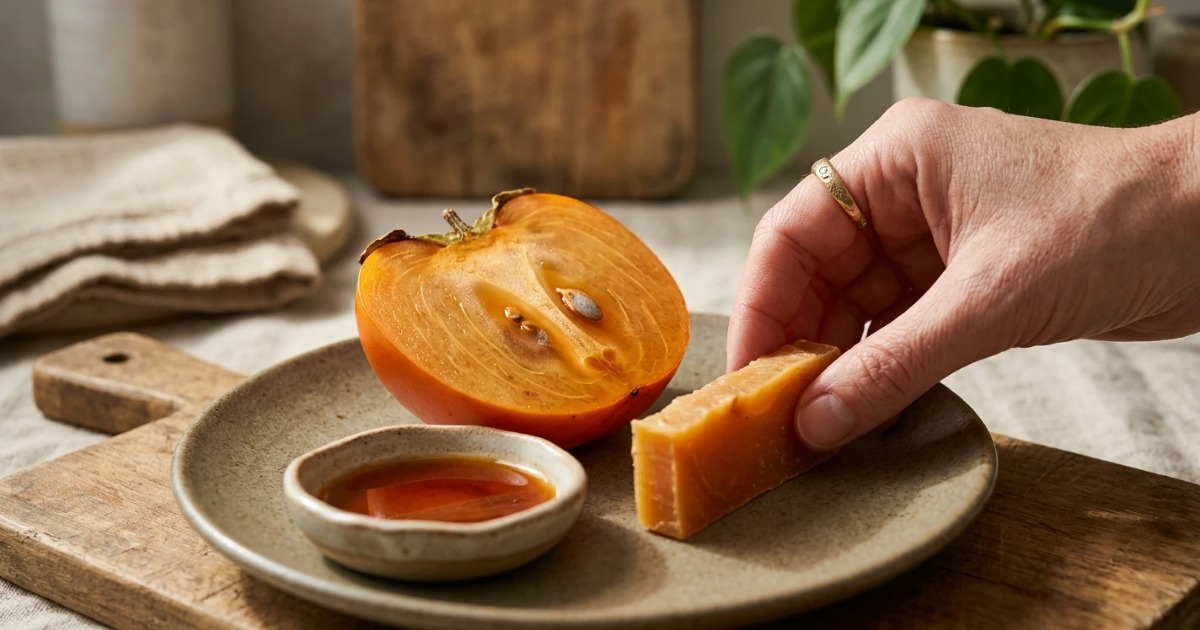
The active ingredient is persimmon tannin, sometimes referred to as shibuol. It's a naturally occurring polyphenol found in unripe astringent persimmons—the same stuff that makes a green persimmon pucker your mouth.
That astringency is the whole point. Tannins are reactive molecules, and they happen to bind readily with certain odor compounds. More on that mechanism shortly.
Common Formulation Variations
You'll find several versions on the market. The classic is a fragrance-free or lightly scented bar. Some manufacturers blend in activated charcoal for an extra cleansing angle, others add tea tree oil for its antibacterial reputation, and a few offer liquid body washes for people who dislike bar soap. Each variation targets a slightly different buyer.
Does Persimmon Soap Actually Work? The Science Explained
This is where honesty matters more than hype. The short version: yes, there's a plausible mechanism, and yes, many users report real results—but it's not magic, and results vary.
How Persimmon Tannin Neutralizes Odor
Body odor isn't sweat itself. Fresh sweat is nearly odorless. The smell comes when skin bacteria break sweat down into volatile compounds—fatty acids, thiols, and similar molecules.
Persimmon tannin works in two ways. It has a mild antibacterial effect, reducing the microbe population that produces odor. And its polyphenol structure can chemically bind to some of those odor molecules, effectively trapping them so they don't reach your nose. It's less about masking and more about neutralizing.
Does Persimmon Soap Remove Nonenal Smell?
This is the claim that made persimmon soap famous. Nonenal—specifically 2-nonenal—is a compound produced when skin lipids oxidize, and its presence increases with age. It's associated with that distinctive "old person" scent, and it's notoriously hard to wash away with ordinary soap.
Persimmon tannin has demonstrated an ability to bind with 2-nonenal in laboratory settings, which is exactly why the ingredient became a cult favorite in Japan for this purpose. Does that mean it eliminates the smell completely? Not necessarily—but reducing nonenal is one of the more scientifically grounded claims persimmon soap makes.
Persimmon Soap for Body Odor and Sweat
Beyond nonenal, users apply it to the usual trouble spots: underarms, feet, and general body odor after workouts. Because the tannin tackles both bacteria and the resulting odor compounds, it tends to perform reasonably well on sweat-related smells.
Realistic Expectations
One caveat worth stating plainly: this is a deodorizing cleanser, not a medical treatment. If someone has a clinical condition like bromhidrosis or hyperhidrosis, a bar of soap won't solve it. For everyday freshness, though, it's a legitimate tool.
Persimmon Tannin Soap Benefits at a Glance
Pulling the threads together, here's how persimmon soap stacks up against the deodorizing options most people already know.
Comparison Table: Persimmon Soap vs. Common Deodorizing Options
| Feature | Persimmon Tannin Soap | Regular Antibacterial Soap | Charcoal Soap |
|---|---|---|---|
| Targets nonenal odor | ✔ | Limited | Partial |
| Natural active ingredient | ✔ | ✘ | ✔ |
| Deodorizing duration | Moderate–High | Low–Moderate | Moderate |
| Suitable for sensitive skin | Often | Varies | Varies |
Persimmon Extract Deodorizing Properties Summarized
Binds with odor-causing molecules rather than just covering them up
Shows specific activity against 2-nonenal, the age-related odor compound
Plant-derived active, appealing to natural-ingredient shoppers
Generally gentle, making it usable on more of the body than a harsh antibacterial bar
What Do the Reviews Say?
Consumer sentiment tells you what the lab data can't—how people actually feel about a product after weeks of use. The picture is mostly positive, with a few consistent complaints.
Common Positive Feedback Themes
Reviewers mention noticeable odor reduction again and again, especially in the morning and after exercise. Many also praise how their skin feels afterward—clean, without that tight, stripped sensation some antibacterial soaps leave behind.
Common Criticisms and Limitations
Not everyone is thrilled. Some find the natural scent (or the added fragrance in certain versions) either too weak or too strong. Others note that results took a week or two to show, and a minority reported little difference at all—a reminder that skin chemistry is individual.
Reviews Data Snapshot
| Feedback Category | Approx. % of Positive Mentions | Notes |
|---|---|---|
| Odor control | High | Most cited benefit |
| Skin comfort | Moderate–High | Praised for gentleness |
| Value for money | Moderate | Depends on brand/price |
| Scent preference | Mixed | Subjective factor |
Illustrative summary of publicly available review trends as of 2026.
The Growing Market for Persimmon Soap
For brands and retailers, the story here isn't just chemistry—it's momentum. And the numbers around personal care point in one clear direction.
Rising Global Demand Across Key Regions
North America and Europe are driving much of the current growth, fueled by the natural-products movement. The Middle East is emerging as a strong secondary market, where premium personal care and gifting culture create real opportunity. For B2B buyers, that geographic spread reduces the risk of chasing a single-region fad.
Why Retailers and Brands Are Adding Persimmon Soap
It hits several trends at once. It's natural, it solves a specific problem—odor—and it slots neatly into gift sets and private-label lines. That combination is rare, and it's why buyers who ignored it a couple of years ago are now scrambling to add it.
Sourcing High-Quality Persimmon Soap: What Buyers Should Know
Rising demand attracts a lot of suppliers—not all of them equal. If you're planning to stock or private-label this product, the manufacturer you choose matters more than the trend itself.
Key Factors When Choosing a Manufacturer
Look for consistent batch-to-batch quality, since tannin concentration directly affects performance. Check certifications, confirm customization capabilities, ask about MOQ flexibility, and—maybe most underrated—verify their track record on delivery. A brilliant product that ships late still loses you sales.
Why Partner With an Experienced OEM/ODM Manufacturer
This is where experience pays off. We've been in personal care manufacturing since 1995, operating a 40,000 m² facility with more than 200 employees and a daily output of up to 160,000 sets. That scale means we can meet large orders without cutting corners on consistency.
Just as important for newer brands: our MOQ starts at just 1,000 units, our certifications are complete and in order, and our OEM/ODM service supports deep customization—formulation, scent, packaging, the works. Stable lead times keep your shelves stocked when demand spikes.
Ready to Meet Rising Demand
Persimmon soap isn't slowing down, and the brands that lock in reliable supply now will be ready when the next demand wave hits. If you need a manufacturer who can actually deliver on that promise, we're built for exactly this. Reach out and let's talk about your line.
Frequently Asked Questions
Q: Does persimmon soap really remove body odor?
A: It reduces it meaningfully for most people. The tannin both curbs odor-producing bacteria and binds to the smell molecules themselves, so it neutralizes rather than masks. Results vary by individual skin chemistry.
Q: How long does it take to see results?
A: Some notice a difference within the first few uses, while others need one to two weeks of consistent daily washing. Give it a genuine trial period before judging.
Q: Can persimmon soap remove nonenal (aging) smell?
A: This is one of its most researched applications. Persimmon tannin has shown the ability to bind with 2-nonenal, the compound behind age-related body odor, which is why the ingredient became popular in Japan for this exact reason.
Q: Is persimmon soap safe for sensitive skin?
A: It's generally gentle and well tolerated, and many users prefer it over harsher antibacterial bars. That said, formulations differ—so a quick patch test on the inner arm is always wise before regular use.
Q: What's the minimum order quantity for custom persimmon soap?
A: Our MOQ starts at just 1,000 units, so launching is realistic even for smaller and emerging brands. Full OEM/ODM support means you're never stuck with a generic formula.
Q: How can I start a private-label persimmon soap line?
A: The simplest path? Contact our team with your target market, preferred formulation, and packaging ideas. From there we handle customization, sampling, and production—so you can bring a branded product to market without building a factory yourself.