
There's something oddly satisfying about turning a fruit you'd normally eat into a bar you can wash with. If you've got a few ripe persimmons sitting on the counter, this guide will walk you through it — the easy way and the more traditional way — without pretending it's harder than it is.
Why Persimmons Ended Up in the Soap Pot
Fruit-based soaps have been having a bit of a moment lately. Search interest in things like tomato, cucumber, and yes, persimmon bars has climbed steadily, partly driven by the whole "clean label" wave and partly because people just like making things at home again.
Persimmon fits into that trend nicely. It's seasonal, it's got a warm color, and it feels a little more special than another lavender bar. That said — I'll be honest with you upfront — soapmaking rewards patience more than it rewards fancy ingredients. Get the basics right and the persimmon becomes a lovely bonus.
What Makes Persimmon Interesting for Skin
Persimmons carry tannins, vitamin C, and a handful of antioxidants. Tannins in particular have a mildly astringent quality, which is why the fruit gets linked to oily or blemish-prone skin.
Here's the reality check, though. Soap is a wash-off product. It's on your skin for maybe thirty seconds before it's rinsed away, so any benefit is gentle rather than dramatic. Real, but modest. Don't believe anyone selling a persimmon bar as a miracle cure.
Fresh Fruit vs. Persimmon Extract vs. Powder
Soapmakers usually reach for one of three forms. Each has a personality of its own.
| Form | Ease of Use | Shelf Stability | Best For |
|---|---|---|---|
| Fresh pulp | Moderate | Low (use fast) | Rustic, seasonal bars |
| Powder | Easy | High | Consistent color/scent |
| Extract/juice | Moderate | Medium | Adding to lye water |
For a first attempt, fresh pulp is the most fun and the most forgiving of mistakes. Powder gives you repeatable results once you're hooked.
Choosing Your Method: Melt-and-Pour or Cold Process
Before you buy a single thing, decide which road you're taking. They're genuinely different projects.
Melt-and-Pour: The No-Lye Shortcut
With a melt and pour soap base, someone else already did the risky chemistry. You melt it, stir in your persimmon, pour, and wait a couple of hours. No lye, no goggles, no drama.
If the idea of handling caustic chemicals makes you nervous, start here. There's no shame in it — plenty of long-time soapers still love the method for its speed.
Cold Process: The Traditional Route
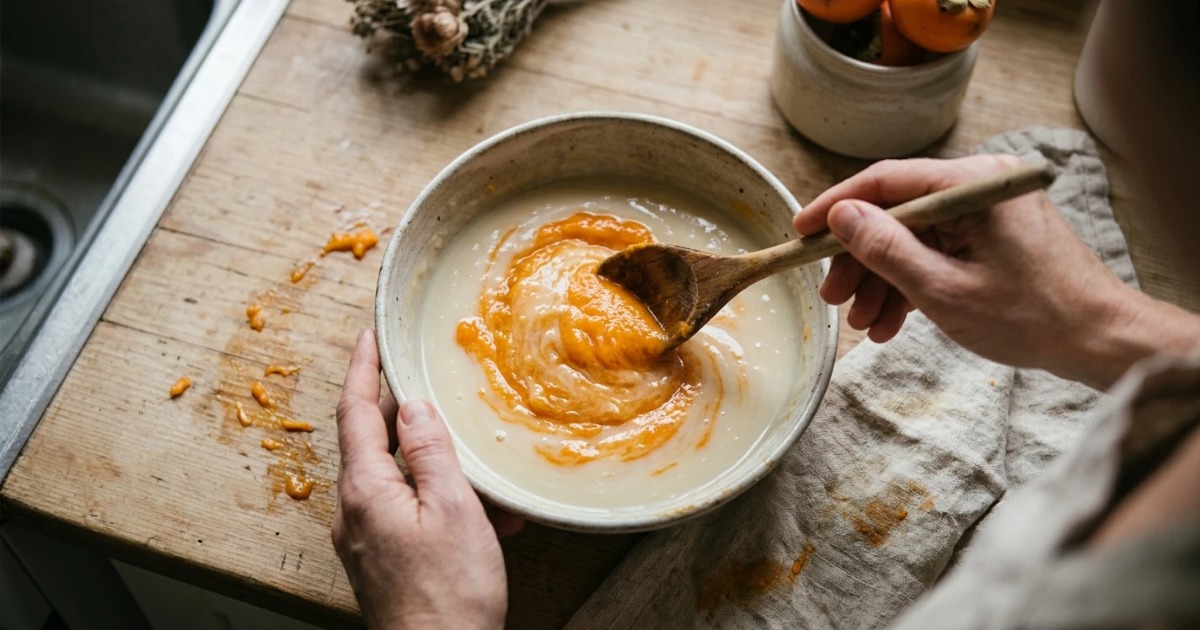
Making cold process persimmon soap means you build the bar from raw oils and lye yourself. You get full control over the recipe, a better feel on the skin, and honestly, a bit of pride.
The trade-off is real work: safety gear, careful measuring, and a curing wait that tests your patience. It's very doable, just not something to rush.
Quick Comparison Before You Commit
| Factor | Melt & Pour | Cold Process |
|---|---|---|
| Lye handling | None | Required |
| Time to use | 1–2 hours | 4–6 weeks cure |
| Skill level | Beginner | Intermediate |
| Customization | Limited | Full |
What You'll Need to Gather
Nothing derails a soap session faster than realizing you're missing something halfway through. Get everything laid out first.
Ingredients for a Basic Batch
Olive oil, coconut oil, and a bit of shea butter
Lye (sodium hydroxide) — cold process only
Distilled water, not tap water
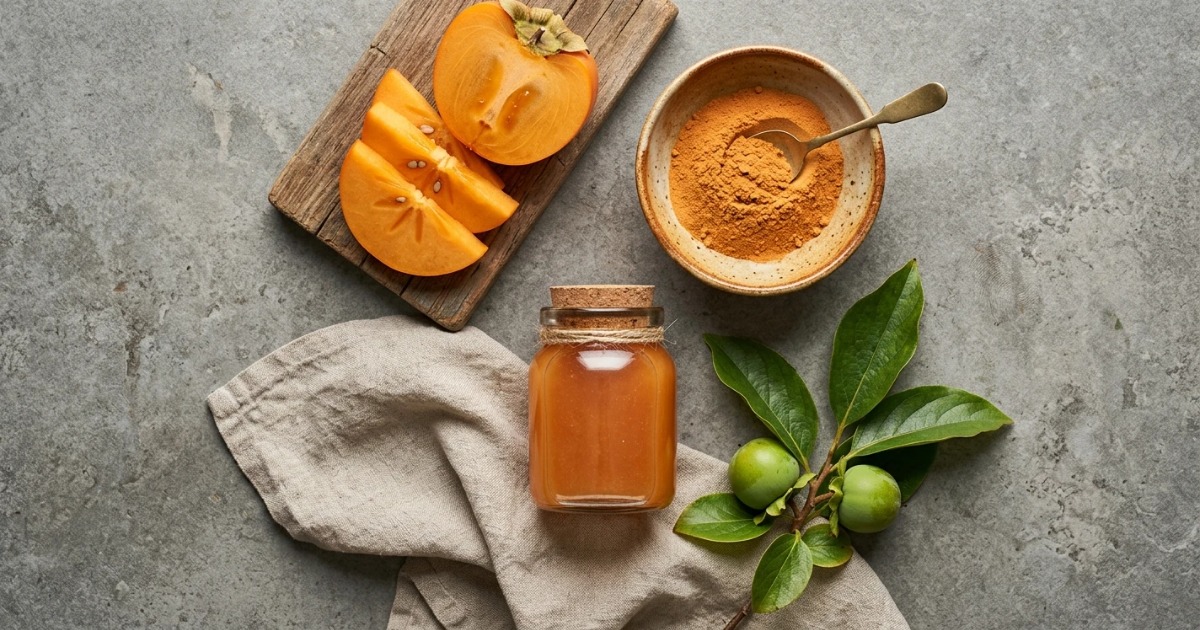
Your persimmon component: pulp, juice, or powder
One rule that isn't optional: measure by weight, not by cups. Soapmaking is chemistry, and volume measurements are wildly inconsistent. A cheap digital scale solves this.
Tools and Safety Gear
You'll want a digital scale, a stick blender, molds, and — for cold process — goggles, gloves, and a dedicated pot. Keep these tools separate from your kitchen ones. A pot you've made soap in should never go back to cooking dinner.
The Melt-and-Pour Method (Easy Version)
Let me walk you through this like I'm standing next to you at the counter.
Step 1: Prep the Persimmon
Scoop out the flesh and purée it, then push it through a fine strainer to catch fibers. If you're using powder, mix it with a tiny bit of water to make a paste.
Keep the liquid low. Too much fruit moisture makes a soft, weepy bar that sweats in humidity. A little goes a long way.
Step 2: Melt, Mix, and Pour
Cut the base into cubes and melt gently — microwave in short bursts or use a double boiler. Once it's liquid, fold in your persimmon and a few drops of essential oil if you like. Stir slowly so you don't whip in bubbles.
Pour into your molds and give the surface a light spritz of rubbing alcohol to pop any surface bubbles.
Step 3: Cure, Unmold, and Test
Melt-and-pour sets in an hour or two. Still, I'd give it a few days before heavy use. That short rest firms the bar up and makes it last longer in the shower. Patience, even here.
The Cold Process Method (For the Committed)
Alright — this is where things get serious, so read the safety notes twice.
Running the Numbers with a Lye Calculator
Every single cold process recipe must go through a saponification lye calculator before you mix anything. Different oils need different amounts of lye to turn into soap, and eyeballing it can leave you with a caustic, skin-burning bar.
Type in your oils and weights, and the calculator tells you exactly how much lye and water to use. Never skip this step, even with a recipe from a trusted source.
A Sample Persimmon Soap Recipe
Here's a gentle beginner formula to get you started. Consider it a persimmon soap recipe template rather than gospel.
| Ingredient | Amount | Purpose |
|---|---|---|
| Olive oil | 300g | Gentle, conditioning |
| Coconut oil | 150g | Lather, hardness |
| Shea butter | 50g | Creamy feel |
| Lye (NaOH) | ~67g | Saponification |
| Distilled water | 165g | Dissolves lye |
| Persimmon purée | 30g | Skin benefits, color |
Always re-run these figures through a lye calculator before mixing. My "~67g" is a starting point, not a promise.
Mixing, Reaching Trace, and Molding
Slowly add lye to water (never the reverse — it can erupt) in a well-ventilated space. Let it cool. Warm your oils separately, then combine the two when both sit around 100–110°F.
Blend with the stick blender until you reach "trace" — the point where the mixture thickens to a light pudding. Add the persimmon at this stage rather than earlier, so its nutrients aren't fully cooked by the lye's heat. Pour into your mold and cover.
The Curing Wait
Now the hard part: waiting. Cold process bars need four to six weeks to cure. During that time excess water evaporates and the bar becomes milder, harder, and longer-lasting. Use it too early and it'll be soft and harsh. This is where patience truly pays off.
Common Mistakes and How to Dodge Them
I've made most of these errors myself, so let me save you the trouble.
Why Your Soap Turned Brown or Smelled Off
Persimmon is full of natural sugars, and those sugars scorch. If your batch overheats, expect browning and sometimes a caramel-ish smell. Keeping temperatures moderate and using less purée helps. Some darkening is simply natural, though — it doesn't mean the soap is ruined.
Fixing Soft or Crumbly Bars
Soft bars usually mean too much liquid or trace that wasn't reached properly. Crumbly bars often point to too much lye or an under-mixed batch. Nail your measurements, blend to a solid trace, and give the full cure time. Most texture problems trace back to one of those three.
Making It Your Own
Once you've got a bar you're happy with, the fun begins. This is where natural fruit soap making becomes a genuine hobby rather than a one-off.
Add-Ins Worth Trying
Ground oatmeal adds gentle exfoliation. A spoon of honey brings a soft, humectant quality. A pinch of kaolin clay pairs beautifully with persimmon for a smoother, silkier lather. Start small — a little add-in changes a lot.
Scent and Color Without Chemicals
Skip synthetic fragrance if you're going for a clean-label bar. Essential oils like sweet orange or cinnamon complement persimmon's warmth. For color, the fruit itself does much of the work, and natural clays or a touch of annatto can nudge it further.
Frequently Asked Questions
Q: Can I use overripe persimmons for soap?
A: Yes, and overripe fruit is actually ideal — it purées easily and blends smoothly. Just strain out the fibers and skin so you don't end up with stringy bits in your bar.
Q: Does persimmon soap really help oily skin?
A: The tannins in persimmon have a mild astringent effect, which can feel nice on oily skin. But because soap rinses off quickly, don't expect a dramatic change. Think of it as a pleasant, gentle bonus rather than a treatment.
Q: How long does homemade persimmon soap last?
A: A well-cured cold process bar can last a year or more if stored dry and out of direct sunlight. Melt-and-pour bars, especially with fresh fruit, are best used within a few months since fruit sugars can spoil faster.
Q: Is it safe to make soap at home with children around?
A: Melt-and-pour is fine to do with kids, with supervision. Cold process is a firm no — lye is caustic and dangerous. If you're going the traditional route, do it when children and pets are elsewhere, and always wear your safety gear.
Q: Can I sell persimmon soap I make at home?
A: You can, but rules vary by country and region. Many places require proper labeling, ingredient disclosure, and sometimes safety testing or insurance. Check your local cosmetics regulations before selling anything, even to friends.