
Coconut oil has emerged as one of the most prevalent ingredients in contemporary natural personal care formulations, featuring prominently across a diverse range of products including shampoos, lotions, lip balms, and soap bars. Its widespread adoption reflects a growing consumer and industry interest in the ingredient's functional properties within the skincare and cosmetics sector.
But if you have sensitive skin, you're probably wondering whether all the hype actually holds up. Is coconut oil soap a gentle friend or a potential irritant? Let's break it down in plain language.
The Coconut Oil Skincare Craze
Coconut oil went from a kitchen staple to a beauty superstar in just a few years. Shoppers love its "natural" appeal and the idea of fewer synthetic chemicals touching their skin.
For people with easily irritated skin, though, the question is more urgent. Does coconut oil soothe redness and dryness, or can it make things worse? The honest answer is: it depends—and this guide will explain why.
What Is Coconut Oil Soap, Really?
Coconut oil soap is made when coconut oil reacts with an alkali (a process called saponification). This creates a cleansing bar that naturally produces a rich, bubbly lather.
Unlike many conventional soaps that rely on synthetic detergents, coconut oil soap can be formulated with simpler, plant-based ingredients. That's a big part of its appeal for sensitive-skin users.
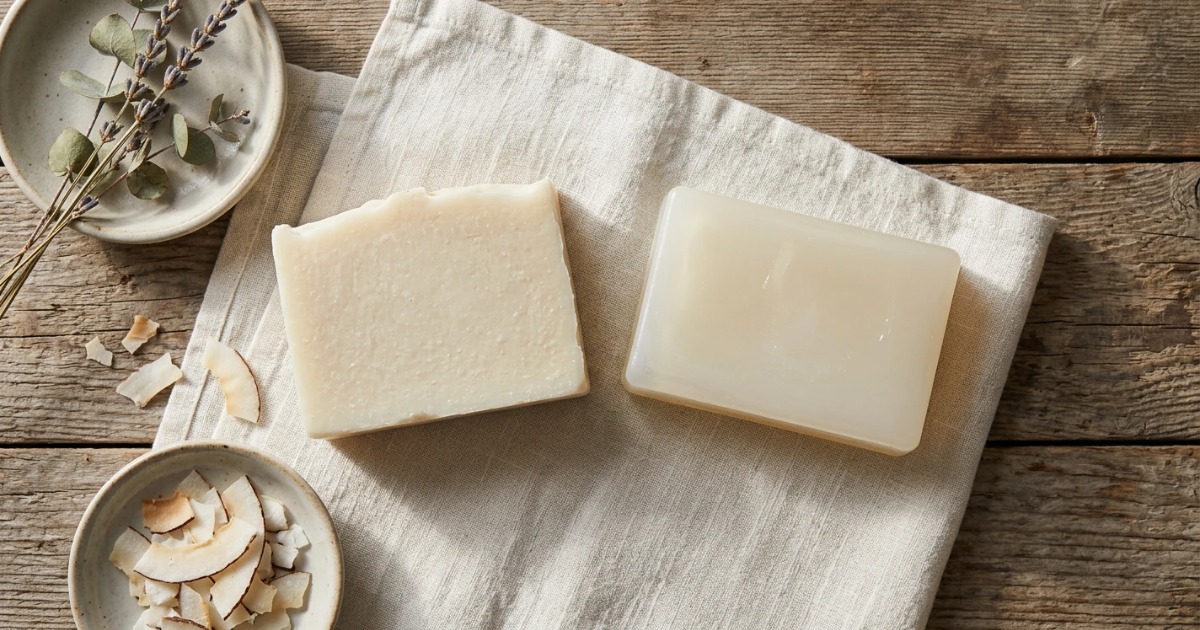
Cold-Process vs. Melt-and-Pour Coconut Oil Soap
Cold-process soap is made from scratch and cured over several weeks. This method retains natural glycerin, which helps keep skin hydrated.
Melt-and-pour soap uses a pre-made base that's melted and customized. It's convenient, but the gentleness depends heavily on what's already in that base. For sensitive skin, a well-formulated cold-process bar often feels milder.
Common Ingredients Paired with Coconut Oil
Coconut oil rarely works alone. Manufacturers often blend it with shea butter, olive oil, or added glycerin to balance its cleansing power.
These additions soften the final bar and reduce the chance of over-drying. When you're shopping, a soap that pairs coconut oil with moisturizing companions is usually a safer bet.
Is Coconut Oil Good for Skin? The Science Behind It
Coconut oil is packed with fatty acids—mainly lauric acid, along with caprylic and capric acids. These give it some genuinely useful properties for skin.
Antimicrobial and Antibacterial Benefits
Lauric acid has natural antimicrobial qualities. This means coconut oil may help keep certain unwanted bacteria in check, supporting a healthier skin barrier.
For people prone to minor breakouts or irritation, this gentle protective effect can be a real plus.
Moisturizing and Hydration Properties
Coconut oil is known for locking in moisture. It forms a light layer on the skin's surface that helps prevent water loss.
That's why coconut oil soap benefits for sensitive skin often center on hydration—especially for those dealing with tightness or flaking.
Coconut Oil Soap Benefits for Sensitive Skin
So what makes this soap appealing for reactive, easily irritated skin? Here are the standout advantages.
Gentle Cleansing Without Harsh Detergents
Many mainstream soaps contain sulfates and synthetic foaming agents that can strip skin. A quality coconut oil soap cleans effectively without those aggressive ingredients.
This gentler approach helps preserve the skin's natural oils rather than wiping them away.
Support for Dry, Flaky Skin
Because of its moisturizing profile, coconut oil soap can be a good soap for dry sensitive skin. It cleans while helping the skin retain hydration.
People who feel "squeaky clean" but uncomfortably tight after washing often find natural coconut soap more comfortable.
Reduced Chemical Exposure
Sensitive-skin shoppers frequently want fewer artificial fragrances, dyes, and preservatives. Natural soap for sensitive skin appeals to this crowd precisely because the ingredient list tends to be shorter and cleaner.
Coconut Oil Soap Side Effects to Watch For
Let's be balanced here. Coconut oil isn't magic, and it's not right for everyone. Here are the honest downsides.
Can Coconut Oil Clog Pores?
Coconut oil has a moderately high comedogenic rating, meaning it can clog pores for some people. Those with oily or acne-prone skin should be a little cautious.
The good news: in soap form, coconut oil is rinsed off rather than left on the skin, which reduces this risk compared to pure coconut oil applied directly.

Skin Tightness and Over-Drying Concerns
Here's a surprising twist—soap made with a very high concentration of coconut oil can actually strip skin. That's because coconut oil creates powerful lather that cleanses aggressively.
Well-formulated bars use "superfatting" (more on that below) to counteract this and keep the bar gentle.
Allergic Reactions and Patch Testing
Coconut allergies exist, though they're relatively uncommon. Before making any new soap a daily habit, do a simple patch test on your inner arm and wait 24 hours.
If there's no redness, itching, or irritation, you're likely in the clear.
Who Should (and Shouldn't) Use Coconut Oil Soap
Very dry skin often loves coconut oil soap, especially bars with added shea butter or glycerin. Eczema-prone skin can also benefit, but only from mild, fragrance-free formulations—patch testing is a must.
Oily and acne-prone skin should proceed with more care. Look for balanced formulas rather than high-coconut-content bars, or consider gentler alternatives if you notice congestion.
How to Choose a Natural Soap for Sensitive Skin
Not all "natural" soaps are created equal. Here's how to shop smart.
Read the Ingredient Label
Green flags include coconut oil, shea butter, olive oil, glycerin, and simple plant oils. Red flags include long lists of unpronounceable additives, artificial dyes, and heavy synthetic fragrances.
Shorter, clearer labels are usually kinder to sensitive skin.
Superfatting and pH Balance Matter
Superfatting means leaving extra unreacted oils in the soap. This adds a moisturizing cushion that prevents over-drying.
A balanced pH also matters—soaps that are too alkaline can disrupt the skin barrier. Gentle, pH-conscious bars are ideal for reactive skin.
Look for Trusted Certifications
Certifications like GMP, ISO, and FDA-compliant manufacturing signal that a product was made under strict quality and safety standards. For brands sourcing private-label soaps, these credentials indicate consistency batch after batch.
Manufacturers such as Boymay—who have specialized in personal care products since 1995 and hold GMP, ISO, FDA, and SMETA certifications—demonstrate the kind of reliable, quality-driven production that both retailers and consumers can trust.
How to Use Coconut Oil Soap for Best Results
Start slow if your skin is very sensitive—every other day is fine while you gauge how it feels. Use lukewarm (not hot) water to avoid stripping moisture.
Always follow up with a moisturizer while your skin is still slightly damp. This locks in hydration and complements the soap's own moisturizing qualities.
Coconut Oil Soap vs. Other Popular Options
How does it stack up against other favorites? Here's a quick comparison.
| Soap Type | Best For | Watch Out For |
|---|---|---|
| Coconut Oil Soap | Dry, flaky skin; hydration | Can be drying if high-concentration |
| Glycerin Soap | Deep hydration; very gentle cleansing | Melts quickly; can feel sticky |
| Oatmeal Soap | Soothing itchy or irritated skin | Less lather; milder cleansing |
| Fragrance-Free Bar Soap | Ultra-sensitive or allergy-prone skin | Fewer nourishing extras |
Coconut Oil Soap vs. Glycerin Soap
Glycerin soap is famously gentle and hydrating. Coconut oil soap offers stronger lather and antimicrobial benefits, but can be slightly more cleansing.
Coconut Oil Soap vs. Oatmeal Soap
Oatmeal shines at calming itchy, inflamed skin. Coconut oil soap focuses more on moisture and thorough cleansing. Some bars combine both for the best of each.
Coconut Oil Soap vs. Fragrance-Free Bar Soap
If fragrance is your trigger, a fragrance-free coconut oil soap gives you the moisturizing benefits without the scent risk. Always choose fragrance-free versions when reactions are a concern.
Final Thoughts: Is Coconut Oil Soap Worth It?
For most people with dry or sensitive skin, coconut oil soap is absolutely worth trying. Its moisturizing power, gentle cleansing, and reduced chemical load make it a strong natural choice.
The key is choosing a thoughtfully formulated bar—superfatted, pH-balanced, and ideally fragrance-free—and patch testing before you commit.
As demand for high-quality, custom-formulated natural personal care grows, so does the importance of reliable manufacturing. Whether you're a shopper or a brand building a product line, quality and consistency are what turn a good idea into a soap people love to use every day.
Frequently Asked Questions
Q: Is coconut oil soap good for sensitive skin every day?
A: For many people, yes—especially well-formulated, superfatted, fragrance-free bars. If your skin runs very oily or acne-prone, you may prefer using it a few times a week rather than daily.
Q: Can coconut oil soap cause breakouts?
A: It can for some, since coconut oil is moderately comedogenic. However, because soap is rinsed off, the risk is lower than with leave-on coconut oil products. Watch how your skin responds and adjust accordingly.
Q: Is coconut oil good for skin conditions like eczema?
A: Its moisturizing and antimicrobial properties can help some eczema sufferers, but skin varies widely. Choose a mild, fragrance-free formula, patch test first, and consult a dermatologist for persistent conditions.
Q: What's the best soap for dry sensitive skin?
A: Look for a superfatted, pH-balanced bar with moisturizing ingredients like coconut oil paired with shea butter or glycerin, and no harsh fragrances. These features make the biggest difference for dry, reactive skin.
Q: Does coconut oil soap have any side effects?
A: Possible side effects include clogged pores for acne-prone skin, over-drying with high-concentration bars, and rare allergic reactions. A patch test and choosing a balanced formulation minimize these risks.
Q: How can brands ensure their coconut oil soap is safe and consistent?
A: Partnering with a certified manufacturer is key. Facilities holding GMP, ISO, and FDA certifications—like Boymay, with over 25 years of OEM/ODM experience—maintain strict quality control and consistent formulations across every batch, which is essential for private-label and custom soap brands.