
Coconut oil holds an almost legendary status among soap makers, and for good reason. It produces a hard, long-lasting bar that lathers generously even in hard water—a quality most other oils struggle to match on their own.
In this guide, you'll walk through the entire process of making coconut oil soap from scratch. Then we'll explore its benefits and, for anyone thinking bigger, how to turn a kitchen batch into a genuine product line.
Understanding Coconut Oil in Soap Making
To make soap well, it helps to understand why certain oils behave the way they do. Coconut oil isn't a fashionable ingredient chosen for marketing—it's a workhorse fat with distinct chemical properties.
Properties of Coconut Oil in Soap
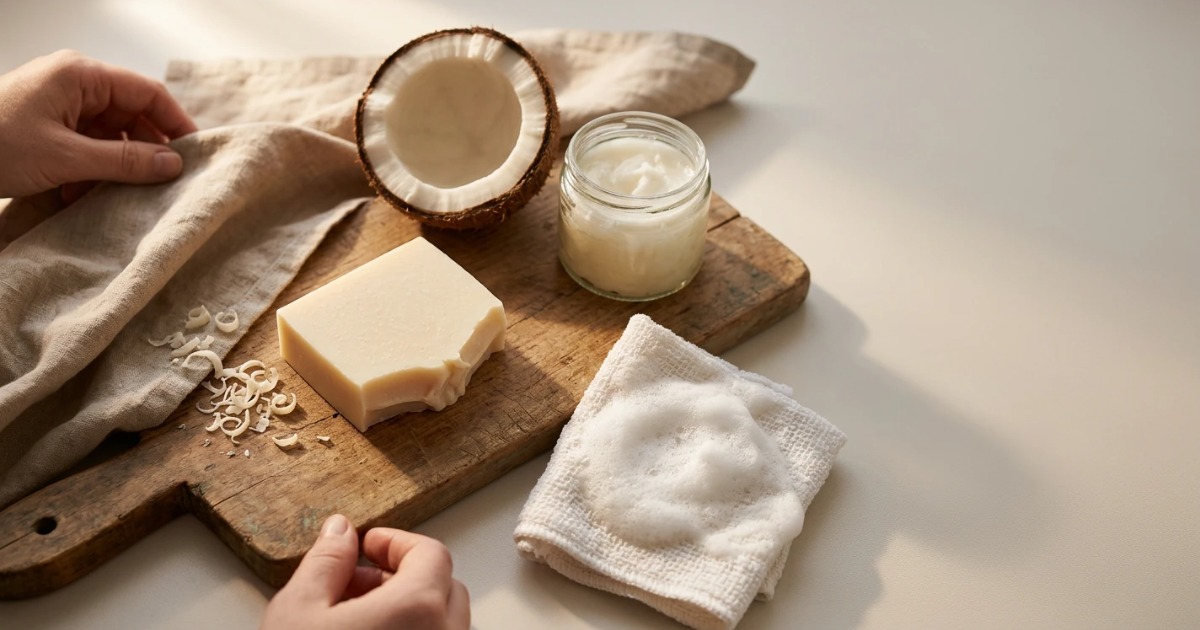
Coconut oil is rich in lauric and myristic acids, short-chain fatty acids that saponify quickly and create abundant, fluffy bubbles. This is why a bar high in coconut oil feels so satisfying to work up into a lather.
It also contributes exceptional hardness, so bars cure firm and resist turning to mush in a wet soap dish. One trade-off: coconut oil has a relatively high saponification value (around 0.183 for SAP by NaOH), meaning it demands precise lye calculations.
The Superfat Factor: Balancing Cleansing and Moisture
Here's the honest catch. A bar made from 100% coconut oil is a phenomenal cleanser—sometimes too good, stripping natural skin oils and leaving skin tight.
The solution is superfatting: intentionally leaving a percentage of oil unsaponified so free fatty acids remain to condition the skin. For coconut oil soap, a superfat percentage of 15–20% is standard, dramatically higher than the 5% typical for blended-oil recipes. That surplus oil is what transforms an aggressive cleanser into a bar people actually enjoy.
Ingredients and Equipment You'll Need
Gather everything before you begin. Once the lye is mixed, you don't want to be hunting for a spatula.
Core Ingredients
- Refined or virgin coconut oil (RBD refined is common for its neutral scent)
- Sodium hydroxide (lye), 100% pure
- Distilled water—never tap water, as minerals interfere with saponification
- Optional: essential or fragrance oils, natural colorants like clay or mica, botanicals
Essential Safety Equipment
Lye is caustic and deserves respect. Chemical-splash goggles, nitrile gloves, and long sleeves are non-negotiable.
Work in a well-ventilated space, since mixing lye releases fumes for the first minute or two. Keep a set of dedicated tools—a digital scale accurate to 1 gram, a stick blender, heat-safe containers, and a stainless steel or silicone pot. Never reuse these for food.
Step-by-Step Cold Process Coconut Oil Soap Recipe
The cold process method preserves the character of your oils and produces a smooth, professional bar. Follow each step in order.
Step 1: Prepare Your Workspace and Measure Ingredients
Everything in soap making is measured by weight, not volume. Run your recipe through a trusted lye calculator to confirm exact amounts for your chosen superfat.
A basic starting batch: 500g coconut oil, roughly 74g lye at a 20% superfat, and 190g distilled water. Always verify with a calculator before mixing.
Step 2: Mix the Lye Solution
Always add lye to water—never water to lye, which can cause a violent eruption. Pour slowly and stir gently.
The solution will heat rapidly to around 90°C (195°F). Set it aside in a safe spot to cool toward 40–45°C (about 100–115°F).
Step 3: Melt and Prepare the Coconut Oil
Coconut oil is solid below roughly 24°C (76°F), so melt it gently until fully liquid and clear. Let it cool to a similar temperature as your lye solution, ideally within 5–10°C of each other.
Step 4: Combine and Reach Trace
Slowly pour the lye solution into the melted oil. Pulse with your stick blender in short bursts, alternating with hand stirring.
Watch for "trace"—when the mixture thickens enough that a drizzle leaves a faint trail on the surface. Coconut oil moves fast, so light trace can arrive in under a minute. Stop blending at light trace to keep control.
Step 5: Add Fragrance, Color, and Additives
Now blend in essential oils, colorants, or exfoliants. A typical fragrance load is 3–5% of oil weight. Some fragrances accelerate trace, so work quickly if you're using them.
Step 6: Pour, Insulate, and Unmold
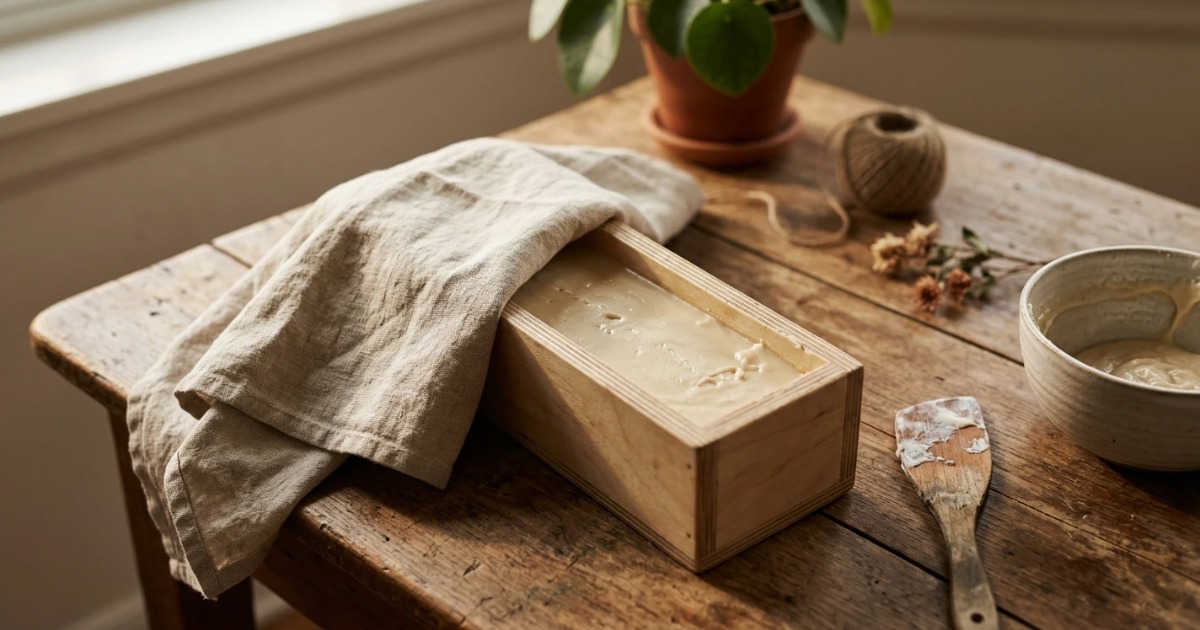
Pour into your mold and tap it to release air bubbles. Cover and insulate with a towel to encourage the gel phase, which deepens color and speeds early saponification.
Step 7: Cutting and Natural Handmade Soap Curing Time
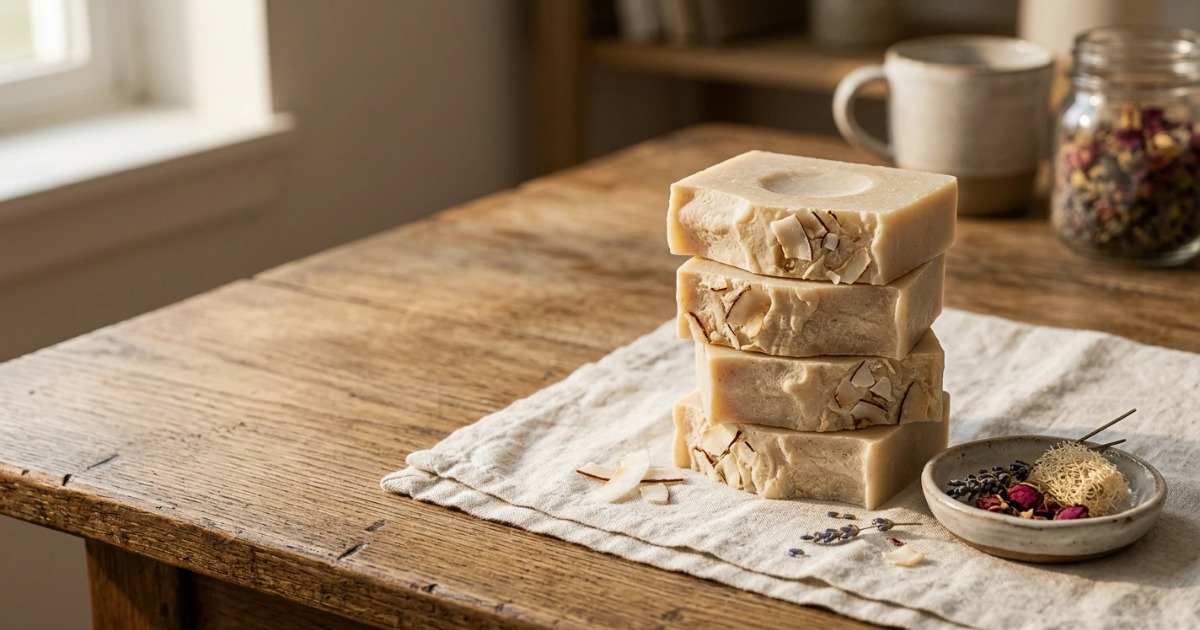
Cut the loaf into bars once firm. Then comes patience: cure the bars on a rack with good airflow for 4–6 weeks.
Curing isn't just about finishing the chemical reaction—it's about water evaporating out. A properly cured bar is harder, milder, and lasts far longer in the shower.
Benefits and Effects of Coconut Oil Soap
Once you've mastered the method, it's worth appreciating what makes this soap so appealing to end users.
Deep Cleansing Power
The lauric acid content gives coconut oil in soap an unmatched ability to cut through oil and grime. That's why it's a favorite for gardeners, mechanics, and anyone who works with their hands.
Creating a Moisturizing Coconut Oil Bar Soap
With correct superfatting, that same bar becomes surprisingly gentle. The unsaponified oils leave a light conditioning layer, turning a heavy-duty cleanser into a moisturizing coconut oil bar soap suitable for daily use.
Natural, Vegan, and Customizable Appeal
Coconut oil soap is inherently plant-based and free of animal fats, aligning neatly with vegan and clean-beauty demand. It also takes color and scent beautifully, giving makers endless room to develop signature products.
Common Mistakes to Avoid
Most beginner failures trace back to a handful of errors. Skipping the lye calculator leads to bars that are either lye-heavy and harsh or oily and soft.
"False trace" fools people when oils cool and thicken from temperature rather than saponification—stir gently and confirm before pouring. Fragrances can also cause sudden "seizing," turning batter into a solid clump. And impatience during curing produces a soft bar that dissolves in days. When in doubt, wait longer.
From Hobby to Business: The Coconut Oil Soap Market Opportunity
Making a great bar is one thing. Selling it consistently is another challenge entirely.
Market Demand for Natural Handmade Soap
Consumer appetite for natural personal care continues to climb heading into 2026, driven by ingredient transparency and interest in plastic-free, artisanal products. Bath and body remains one of the most resilient categories in retail, and natural bar soap has quietly reclaimed shelf space from liquid formats.
Challenges of Scaling Production Yourself
Here's where reality sets in. Making 50 bars in your kitchen is enjoyable; producing 5,000 identical, batch-consistent bars is a manufacturing problem.
Scaling brings issues most hobbyists underestimate: reproducible quality, safety and cosmetic certifications, regulatory labeling, packaging, and the sheer time required. These bottlenecks are where many promising brands stall.
Partnering with a Reliable Manufacturer
This is where a manufacturing partner becomes valuable. Boymay has specialized in OEM/ODM production of bath bombs, shower steamers, and personal care products since 1995.
Operating a 40,000㎡ facility with 16 automated production lines, Boymay holds GMP, ISO, FDA, and SMETA certifications and produces up to 160,000 units per day. With an MOQ starting from 1,000 units, stable lead times, and deep customization capability, it's a practical route for brands and retailers across North America, Europe, and the Middle East who want to launch without building a factory themselves.
Conclusion: Start Making — and Selling — Coconut Oil Soap
Coconut oil soap rewards attention to detail: precise measurements, careful lye handling, thoughtful superfatting, and the patience to cure properly. Master those, and you'll have a hard, cleansing, long-lasting bar that customers remember.
If your ambitions stretch beyond the workshop, you don't have to scale alone. With decades of experience and certified, high-capacity production, Boymay can help turn a well-crafted recipe into a market-ready product line—reliably and at volume.
Frequently Asked Questions
Q: Is 100% coconut oil soap too harsh for skin?
A: It can be, if made at a standard 5% superfat. Raising the superfat to 15–20% leaves enough unsaponified oil to condition the skin, transforming a stripping cleanser into a balanced, comfortable bar.
Q: How long does coconut oil soap take to cure?
A: Plan on 4–6 weeks. Although coconut oil hardens quickly, the full cure allows excess water to evaporate, producing a milder bar that lasts noticeably longer.
Q: Can I sell homemade coconut oil soap?
A: Yes, but rules vary by region. In many markets, true soap has different labeling requirements than cosmetics, and claims like "moisturizing" may trigger stricter oversight. Once demand outgrows your kitchen, partnering with a certified manufacturer simplifies compliance and volume.
Q: What is the ideal superfat percentage for coconut oil soap?
A: For a coconut oil-dominant bar, aim for 15–20%. This range keeps the strong cleansing action while offsetting its natural tendency to dry the skin.
Q: Can Boymay produce custom coconut oil soap formulas?
A: Yes. Boymay offers full OEM/ODM and private label services with custom formulation, scent, color, shape, and packaging—supported by low MOQs from 1,000 units and internationally recognized certifications.