
If your skin feels rough, looks a little dull, or seems to fight your moisturizer, the cause is usually the same: a layer of dead cells sitting on the surface. Exfoliating soap is one of the easiest ways to handle that without piling on extra steps.
At heart, it's a cleanser doing two jobs at once. It washes away dirt and oil like any bar of soap, and it gently sloughs off that top layer of tired skin. The payoff is a smoother feel and a fresher look. No ten-step regimen required.
This guide walks through what exfoliating soap actually is, how it works, the real benefits, and how to pick and use a bar that suits your skin. No jargon, no hype.
What Exactly Is Exfoliating Soap?
Regular soap cleans. Exfoliating soap cleans and buffs. The difference comes down to what's added to the bar and how those additions interact with your skin.
A standard soap lifts away surface grime through surfactants. An exfoliating bar goes a step further, adding something that physically scrubs or chemically loosens the dead cells clinging to the surface. That's the whole idea in one sentence.
Physical vs. Chemical Exfoliation
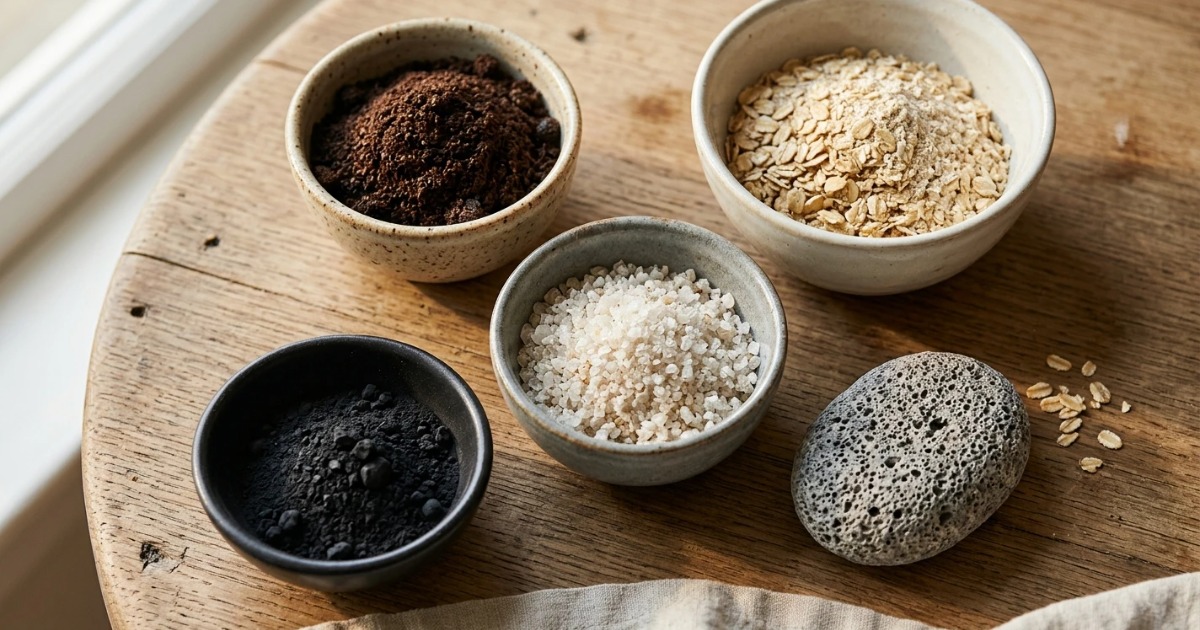
Physical exfoliants use tiny particles you can feel. Think ground seeds, sea salt, coffee, or pumice suspended in the bar. As you lather, those particles create friction and dislodge flaky skin.
Chemical exfoliants work differently. They use mild acids, usually alpha hydroxy acids (AHAs) like glycolic or lactic acid, or beta hydroxy acids (BHAs) like salicylic acid, to dissolve the bonds holding dead cells together. There's no scrubbing sensation. The chemistry does the work.
Some bars combine both. A charcoal bar with a little glycolic acid, for example, offers a scrub and a mild acid rinse in one wash. Neither method is universally "better." It depends on your skin and what you're after.
Common Ingredients You'll Find
Reading a label gets easier once you know what the usual suspects do:
Oatmeal — gentle scrubbing plus a soothing, anti-itch quality that suits sensitive skin.
Sea salt — coarser grit, good for tough spots like feet and elbows.
Coffee grounds — fine to medium texture, often paired with the claim that caffeine temporarily tightens skin's appearance.
Activated charcoal — binds to oil and grime, popular for oilier or breakout-prone skin.
Pumice — volcanic stone, one of the more aggressive options, best reserved for calloused areas.
Fruit acids — the chemical route, dissolving buildup rather than scrubbing it away.
How Does Exfoliating Soap Work on Your Skin?
Your skin is constantly making new cells at its lower layers and pushing older ones up to the surface. Ideally, those old cells shed on their own. In practice, they don't always cooperate.
Factors like age, dry weather, sun exposure, and even stress can slow that shedding down. The result is a stubborn layer of dead cells that makes skin look flat and feel rough. Exfoliating soap helps clear that layer so the fresher skin underneath shows through.
The Role of Dead Skin Cell Removal
The skin's natural turnover cycle runs roughly 28 days in younger adults, though it lengthens as we get older, sometimes stretching past 40 days by our 50s. When the cycle slows, buildup accumulates faster than it clears.
Consistent, gentle removal of dead skin cells supports that natural rhythm rather than forcing it. The goal isn't to strip your skin raw. It's to nudge along a process that's already happening, so the surface stays smooth and reflects light more evenly.
Key Exfoliating Soap Benefits
Understanding the mechanism is one thing. Here's what it translates to in the mirror and to the touch.
Smoother, Softer Skin Texture
Rough patches on elbows, knees, and heels are essentially concentrated buildup. Regular exfoliation softens these areas noticeably, often within a couple of weeks. Many people notice their skin simply feels nicer to touch first, before any visual change registers.
Brighter, More Even-Looking Tone
Dullness is frequently just light bouncing off an uneven, cell-clogged surface. Clear that away and skin looks fresher and more luminous. This is one of the more immediate exfoliating soap benefits, and a big reason people stick with it.
Help With Ingrown Hairs and Clogged Pores
If you shave or wax, you know the frustration of ingrown hairs. Exfoliation keeps the follicle openings clear so hair grows out instead of curling back under the skin. It also helps loosen the debris that leads to body breakouts on the back, chest, and shoulders.
Better Absorption of Lotions and Serums
Slathering moisturizer over a layer of dead cells is like painting a dusty wall. Once that layer is gone, your body lotion or serum has a clean surface to sink into, so the products you already own tend to work harder.
What Makes a Quality Exfoliating Soap?
Not all bars are created equal. Before judging any product, or any supplier, it helps to know the standard a good bar should meet.
Balanced, Non-Stripping Formula
A well-made bar cleanses and buffs without leaving your skin tight, squeaky, or itchy afterward. That tight feeling is a warning sign, not a badge of "clean." The formula should respect your skin barrier, not dismantle it.
The Right Level of Grit
Particle size matters enormously. A coarse salt scrub that feels great on your heels can be far too harsh on your face. Quality manufacturers calibrate grit to the intended use area, so a facial bar uses finer exfoliants than a body bar.
Skin-Nourishing Add-Ins
Exfoliation is inherently a little drying, so the best bars offset it. Look for moisturizing oils, shea or cocoa butter, or glycerin in the ingredient list. These keep skin comfortable rather than parched after each wash.
Clean, Transparent Ingredients
Shoppers today read labels, and rightly so. A good natural exfoliating bar soap keeps its ingredient list short, recognizable, and honest about what's inside. Transparency has quietly become one of the strongest signals of a trustworthy product.
How to Use Exfoliating Soap the Right Way
Technique matters more than most people expect. Overdoing it is the single most common mistake, and it can leave skin worse off than no exfoliation at all.
Step-by-Step Body and Face Routine
Wet your skin thoroughly with warm, not hot, water. Warm water softens the surface; hot water dries it out.
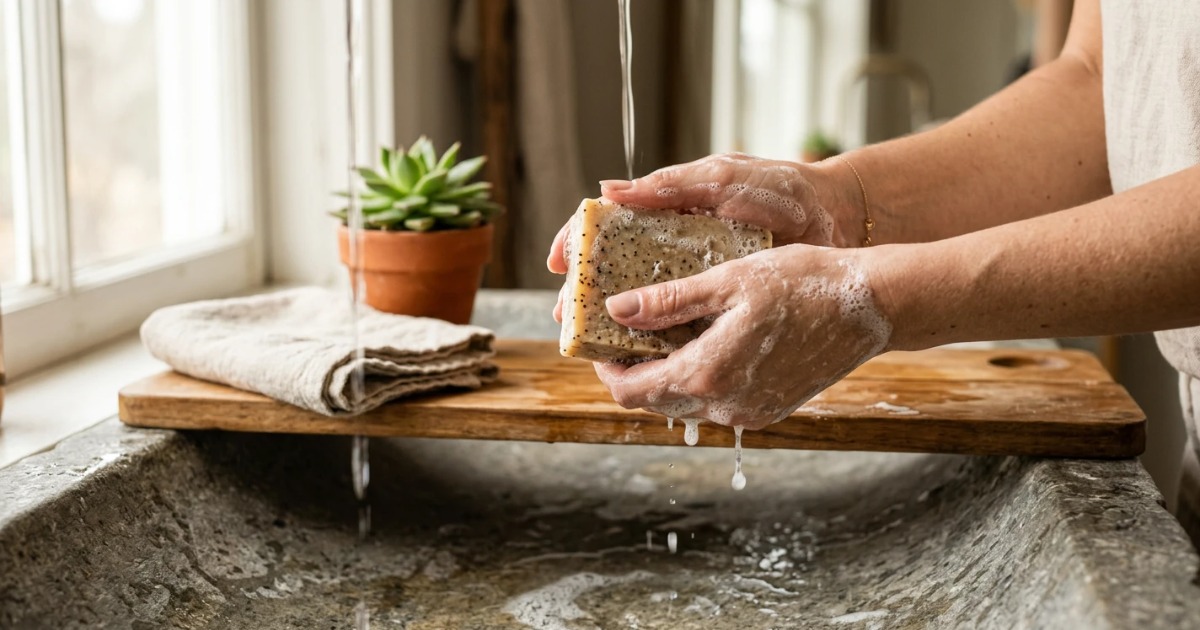
Work the bar into a lather, either directly on your skin or between your hands.
Massage in gentle, circular motions. Let the exfoliant do the work. No hard scrubbing.
Spend a little extra time on rough zones, and go easy on delicate areas.
Rinse completely, then pat dry and follow with a moisturizer while skin is still slightly damp.
How Often Should You Exfoliate?
For most people, two to three times a week is the sweet spot for the body. Sensitive skin may do better with once a week, while oilier skin can sometimes handle more.
Watch for signs of over-exfoliation: redness, stinging, unusual dryness, or a shiny, tight feeling. If you see those, scale back. More is genuinely not better here.
Choosing the Best Exfoliating Soap for Body vs. Face
The face and body have different needs. The best exfoliating soap for body use tends to be coarser, built to tackle thicker, tougher skin. Facial bars use finer particles or mild acids because facial skin is thinner and more reactive. When in doubt, match the grit to the area, and never bring a foot-grade salt scrub anywhere near your cheeks.
Who Should Use Exfoliating Soap (and Who Should Be Cautious)?
Most people benefit from some form of exfoliation, especially anyone dealing with rough texture, body breakouts, ingrown hairs, or that generally dull look. If you shave regularly, it's close to essential.
That said, a few groups should tread carefully. Those with eczema, psoriasis, rosacea, or very sensitive skin can find physical scrubbing irritating. If you have any active skin condition, a patch test on your inner arm is a smart first move, and a quick chat with a dermatologist is worth it before adding an acid-based bar to the mix.
Partner With a Manufacturer That Delivers on Quality
Everything above describes what a good bar should do. For brands and buyers, the real challenge is finding a production partner who can actually hit that standard, batch after batch. That's the gap we work to close.
High Product Standards From Formula to Finish
We hold our products to demanding benchmarks at every stage. From raw material selection through blending, curing, and final inspection, each bar is checked for consistency in grit, lather, hardness, and skin feel. The bar a customer receives in month one should perform identically in month twelve.
Full Customization to Match Your Brand
No two brands want the same thing, so we build around your vision rather than a fixed catalog. That covers tailored formulas, exfoliant type and coarseness, scent profiles, colorants, bar shapes, and packaging. Whether you're after a minimalist oatmeal facial bar or a bold charcoal-and-sea-salt body bar, the specifications are yours to set.
Low MOQ to Reduce Inventory Pressure
Large minimum orders force buyers to gamble on demand and tie up capital in stock that may sit for months. Our low minimum order quantities let you test a formula in the real market, gauge response, and reorder with confidence, without warehouses full of product you're not sure will sell. It's a practical way to launch or expand a line while keeping risk in check.
Frequently Asked Questions
Q: Can I use exfoliating soap every day?
A: Usually not, and daily use isn't the goal. Most skin does best with two to three sessions a week. Daily exfoliation can strip the skin barrier and cause irritation, so pay attention to how your skin responds and dial back if it feels tight or looks red.
Q: Is exfoliating soap good for acne-prone skin?
A: It can help, especially with body breakouts, by keeping pores clear of the oil and dead cells that clog them. Bars with charcoal or salicylic acid are often a good fit. But skip the aggressive scrubbing over active, inflamed pimples, since that can spread bacteria and worsen the flare. Go gentle.
Q: What's the difference between exfoliating soap and a scrub?
A: A scrub is usually a rinse-off cream, gel, or sugar-based paste used as its own step. Exfoliating soap folds that action into your regular cleansing in a single bar. The soap route is simpler and better suited to full-body use. A dedicated scrub sometimes offers a more intense, targeted treatment.
Q: Does natural exfoliating bar soap work as well as chemical exfoliants?
A: For everyday smoothing and texture, yes, a good physical bar handles the job well. Chemical exfoliants tend to work more evenly and reach further into pores, which makes them useful for tone concerns and finer facial skin. Many people end up using both: a physical bar for the body and a mild acid for the face.
Q: How long until I see results?
A: Smoother texture often shows up within one to two weeks of consistent use. Improvements in tone and brightness take a bit longer, usually three to four weeks, roughly matching a full skin turnover cycle. Patience and consistency beat intensity every time.