

Light a candle, breathe in that warm vanilla or fresh linen scent, and unwind. But somewhere in the back of your mind, a question nags: is this little flame quietly polluting your air? You're not the only one wondering.
Let's take a clear, no-panic look at what actually happens when you burn a scented candle—which ingredients raise real concern, and how to keep enjoying them without losing sleep over it.
Quick Answer: Should You Worry About Scented Candles?
Here's the bottom line for the impatient: for most healthy people, lighting a scented candle now and then in a well-ventilated room poses a low risk. You don't need to throw out your candle collection.
The picture shifts if you burn several candles daily in a closed, stuffy room—or if you have asthma, are pregnant, or live with infants or pets. In those cases, a little extra caution genuinely pays off.
Think of candles a bit like cooking on a gas stove. Routine use is fine for most people. But ventilation and moderation matter.
What's Actually Inside a Scented Candle
To understand the concerns, it helps to know what you're actually burning. A candle is simpler than you'd think—just a few core parts, each playing a specific role.
Wax: Paraffin, Soy, Beeswax, and Coconut
Wax is the fuel. The most common type is paraffin, a petroleum byproduct that's cheap, holds fragrance well, and burns brightly. Much of the safety debate centers on paraffin wax fumes, since it originates from crude oil.
Soy wax, made from soybean oil, is the popular plant-based alternative. Beeswax and coconut wax round out the natural options and are often marketed as cleaner choices.
Each wax burns a little differently. But as you'll see, the wax itself is only part of the story.

Fragrance and Synthetic Scents
That signature smell usually comes from a blend of fragrance compounds—many of them synthetic. This is where things get more interesting than most people expect.
When heated and burned, some fragrance ingredients release volatile compounds into your air. As a rule, the more heavily scented a candle is, the more fragrance material it gives off.
Essential-oil-scented candles aren't automatically safer, either. Burning any aromatic compound changes its chemistry.
Wicks and Dyes
Older candles sometimes used lead-core wicks, which released lead particles into the air. The good news: lead wicks were banned in the United States in 2003, so modern candles sold there use cotton or paper cores.
Dyes give candles their color but contribute little to air-quality concerns at normal use levels. If you want to be cautious, look for candles with cotton wicks and minimal added coloring.
What Burning a Candle Releases Into Your Air
Combustion is just controlled burning—and no burning is perfectly clean. When a flame consumes wax and fragrance, it produces a mix of gases and tiny particles.
This is the heart of the conversation around indoor air quality candles can affect. Let's break down the three main outputs.
VOC Emissions From Candles
Volatile organic compounds, or VOCs, are gases that evaporate easily at room temperature. Studies measuring VOC emissions from candles have detected compounds like formaldehyde, benzene, and toluene in some samples.
Those names sound alarming—and at high concentrations, they are concerning. The key detail is dose. Research generally finds that normal candle use produces these compounds at levels well below the thresholds linked to health harm.
Burning many candles in a sealed room is what pushes those numbers up. Airflow keeps them down.
Candle Soot Health Risks
That black smudge on your jar or ceiling? Soot. It's made of fine carbon particles from incomplete combustion. It tends to form when the flame flickers, the wick is too long, or there's a draft.
For healthy adults, occasional small amounts of soot aren't considered a major hazard. The concern with candle soot health risks grows with heavy, repeated exposure in poorly ventilated spaces.
A steady, calm flame produces far less soot than a tall, dancing one. That's why wick care matters so much.
Particulate Matter and Indoor Air Quality
Candles also release fine particulate matter—the same category of tiny particles that air-quality experts track outdoors. These particles are small enough to reach deep into the lungs.
For perspective, frying food or toasting bread often releases comparable or higher levels of fine particles than a single candle. Everyday cooking is a bigger indoor source than most people realize.
That comparison isn't meant to dismiss candles. It's meant to keep the risk in proportion with the rest of your daily life.
Soy Candles vs Paraffin: Is One Really Safer?
This is the question that launches a thousand marketing slogans. The soy candles vs paraffin debate is real, but the science is more nuanced than the labels suggest.
Some studies show soy and other plant-based waxes burn a bit cleaner, producing fewer certain emissions. Other research finds the differences shrink considerably once you account for fragrance and wick quality.
Here's the catch most people miss: fragrance load and burn conditions often matter more than the wax itself. A heavily scented soy candle burning in a closed room can release more into your air than a lightly scented paraffin one in a ventilated space.
What the "Clean Burning" Label Really Means
Words like "natural," "non-toxic," and "clean burning" show up on countless candle labels. The uncomfortable truth? None of these terms are tightly regulated for candles.
A candle can carry a "natural" label while still containing synthetic fragrance. "Non-toxic" has no strict legal definition in this context — it's largely a marketing claim.
Treat these labels as a starting point, not a guarantee. The actual ingredient list and burn behavior tell you far more than the buzzwords on the front.
Who Should Be Most Cautious
Risk isn't one-size-fits-all. Some people and situations call for more care than others.
People With Asthma or Respiratory Conditions
If you have asthma, allergies, or another respiratory condition, candle smoke and fragrance can trigger symptoms. Fine particles and strong scents are common irritants for sensitive airways.
Coughing, tightness, or congestion while a candle burns? That's your body telling you to ventilate or switch to a flameless option.
Pregnant People, Infants, and Pets
Developing lungs and bodies are more vulnerable to air pollutants. As a sensible precaution, pregnant people and households with infants should keep rooms well aired when burning candles.
Pets — especially birds — are highly sensitive to airborne particles and fumes. Birds have particularly delicate respiratory systems, so keep candles well away from their space.
Small or Poorly Ventilated Spaces
A tiny bathroom or sealed bedroom concentrates whatever a candle emits. The same candle that's harmless in an open living room can build up noticeable particle levels in a closet-sized space with the door shut.
If a room feels stuffy, that's a sign air isn't moving and emissions have nowhere to go.
How to Burn Candles More Safely
Good news: a few simple habits dramatically cut down on the stuff you'd rather not breathe. None of them require special equipment.
Trim the Wick and Avoid Tunneling
Trim the wick to about a quarter inch before each burn. A shorter wick produces a smaller, steadier flame and far less soot.
Let the wax melt evenly across the surface on the first burn to prevent tunneling — where a hole forms down the middle. Tunneling leads to an unstable flame and more smoke over time.
Ventilate the Room
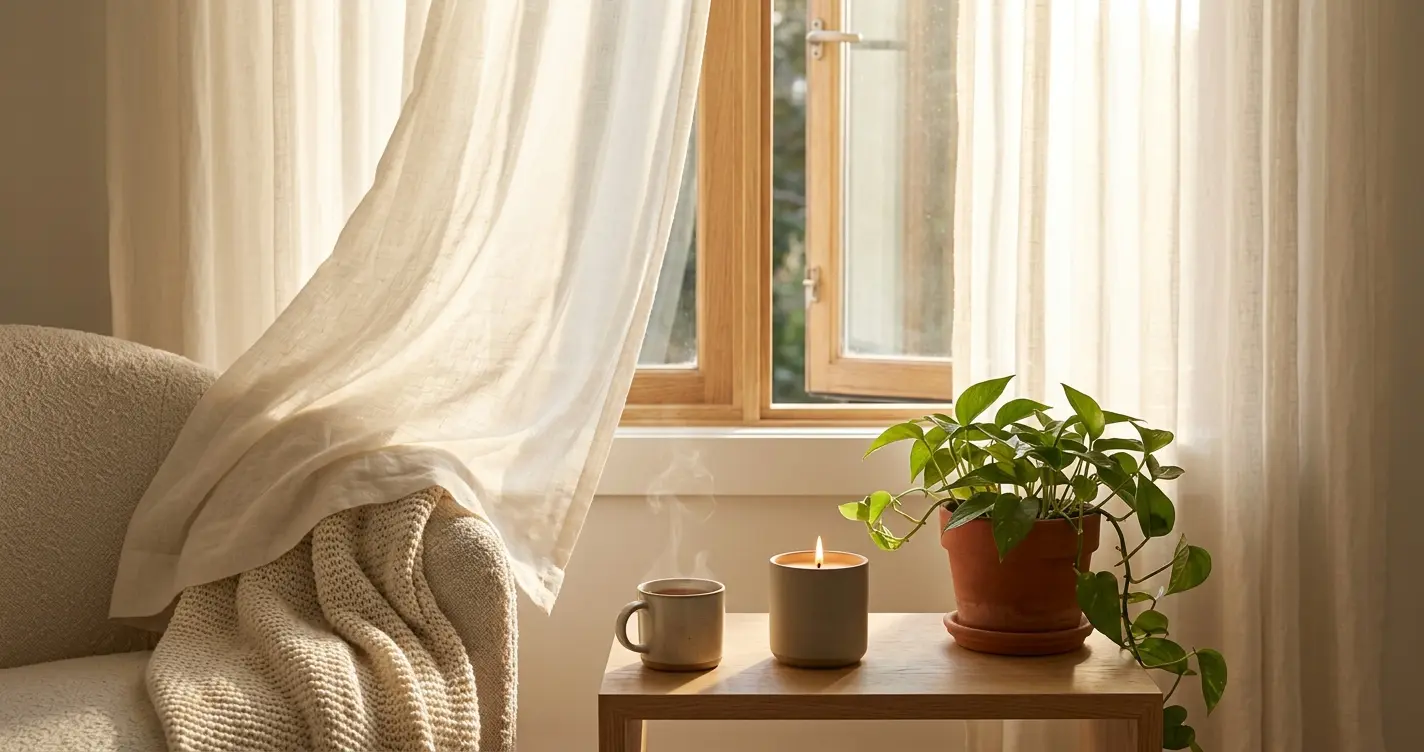
Crack a window or keep a door open so fresh air circulates. Ventilation is the single most effective way to keep candle emissions from building up.
Avoid placing candles in drafts, though. Flickering flames create more soot. The goal is gentle airflow, not a wind tunnel.
Limit Burn Time and Choose Quality Candles
Manufacturers often recommend burning for no more than three to four hours at a stretch. Shorter sessions reduce total exposure and help the candle burn cleaner.
Choosing quality candles with cotton wicks and lighter fragrance loads also helps. You don't need the strongest-smelling candle on the shelf to enjoy a pleasant room.
Safer Alternatives Worth Considering
If you'd rather skip the flame entirely, you have options. Reed diffusers and essential oil sprays scent a room without combustion or particles.
Flameless LED candles deliver the cozy glow without any emissions — great for homes with kids or pets. Beeswax candles are another popular pick for those who still want a real flame with a more natural fuel.
Simply opening windows and using gentle ventilation can freshen a space, too. No product required.
The Bottom Line
Scented candles aren't the silent health threat some headlines suggest, but they aren't entirely emission-free either. The reality sits comfortably in the middle.
For most people, the smart move is moderation and airflow — not fear. Trim your wicks, crack a window, and don't burn a dozen candles in a sealed room. Do that and you've handled the bulk of the risk.
If you fall into a higher-sensitivity group, lean toward lighter scents, shorter burns, or flameless alternatives. Enjoy the ambiance — just give your air some room to breathe.
Frequently Asked Questions
Q: Are scented candles bad for your lungs?
A: For healthy people, occasional use in a ventilated room is unlikely to harm your lungs. The fine particles and VOCs candles release stay low under normal conditions. Heavy daily burning in closed spaces—or use by people with asthma—deserves more caution.
Q: Do soy candles release fewer toxins than paraffin?
A: Soy candles may burn slightly cleaner in some respects, but the difference is smaller than marketing suggests. Fragrance load, wick quality, and ventilation often matter more than the wax type itself. A heavily scented soy candle isn't automatically safer than a lightly scented paraffin one.
Q: Is candle soot dangerous to breathe?
A: Soot is fine carbon particles produced by incomplete combustion. Small, occasional amounts aren't a major hazard for healthy adults. The concern grows with frequent, heavy exposure in poorly ventilated rooms. Keeping a steady flame and trimming the wick sharply reduces how much soot forms.
Q: Are scented candles safe to burn around pets and babies?
A: Infants and pets have more sensitive respiratory systems, so extra care is wise. Birds are especially vulnerable—keep them well away from candles. If you do burn candles, ventilate the room and go light on the scent, or consider flameless options instead.
Q: How many candles is too many to burn at once?
A: There's no exact number, but burning several candles in a small, closed room can noticeably raise particle and VOC levels. A sensible rule: match candle use to room size and airflow. One or two candles in a ventilated living room is very different from five in a sealed bathroom.
Q: Do "non-toxic" candle labels actually mean anything?
A: Not much, unfortunately. Terms like "non-toxic," "natural," and "clean burning" aren't strictly regulated for candles—they're largely marketing language. Check the actual wick type, wax, and fragrance details rather than trusting the buzzwords on the front of the jar.