
You light your favorite candle, settle in, and twenty minutes later you can barely smell it anymore. Or maybe that jar that filled the whole room last month now seems faint and tired. Sound familiar?
Lots of people assume their nose is just playing tricks. The truth is more interesting, and it comes down to one thing: heat. Heat is what makes a candle smell good in the first place, but it's also what can quietly drain the fragrance away. Let's unpack what's really going on.
The Short Answer: Yes and No
Do candles lose their scent when heated? Yes and no, and both halves matter.
Heat releases fragrance. Without it, the scent oils trapped in solid wax mostly stay put. But push the heat too far and those same oils start breaking down or evaporating off faster than your nose can enjoy them. So heat is both the hero and the villain of this story.
Why This Question Confuses So Many People
Here's the contradiction shoppers run into. You need warmth to actually smell a candle, yet too much warmth ruins the experience. That feels backwards.
It's a bit like cooking. A gentle simmer brings out flavor, but crank the burner too high and you scorch everything. Candles follow the same logic, just with fragrance instead of food.
How Candle Scent Actually Works
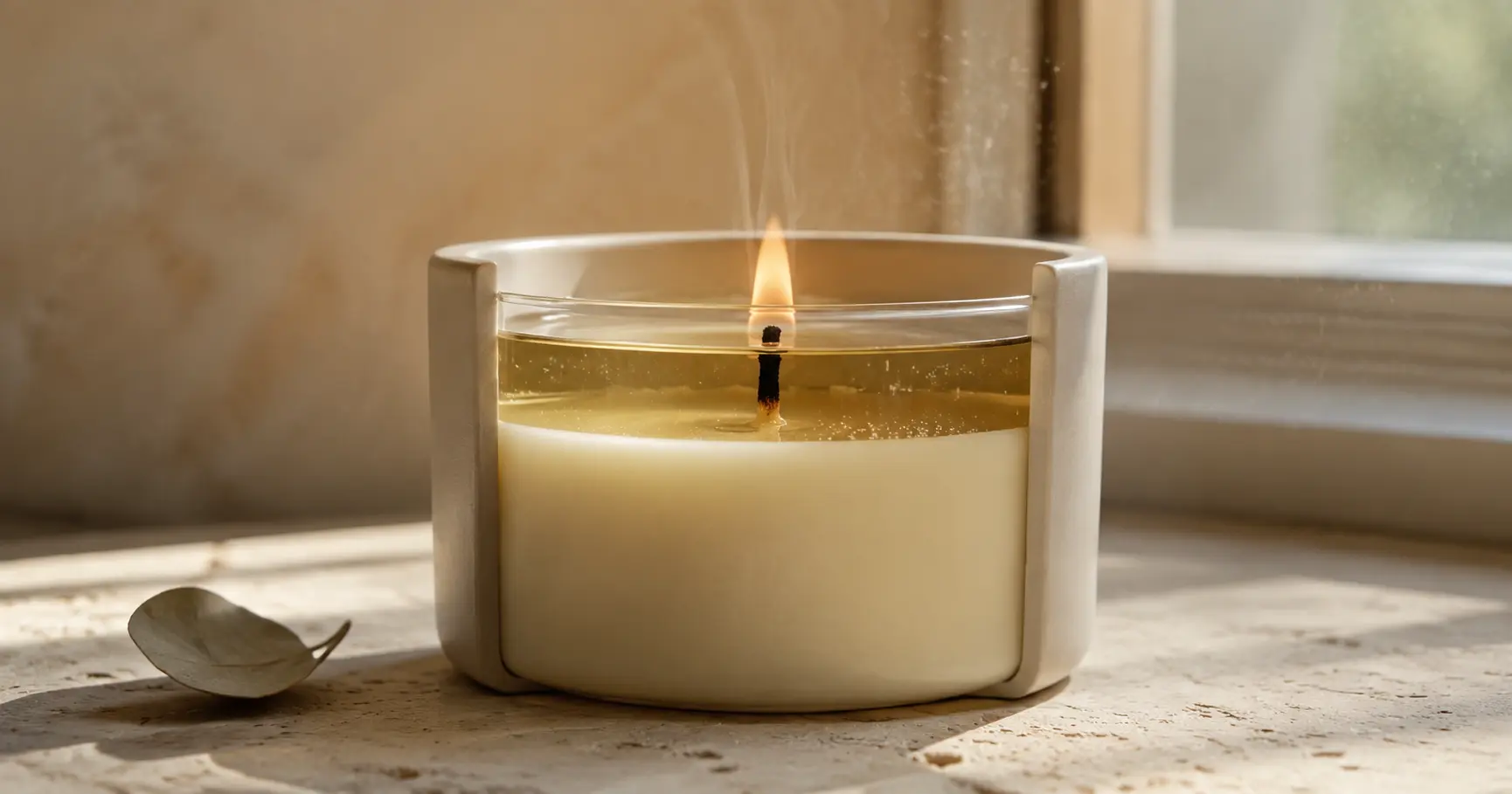
To make sense of the rest, it helps to know how a candle gives off scent at all. The fragrance isn't sitting on the surface waiting to float away. It's locked inside the wax itself.
Cold Throw vs Hot Throw
Two terms come up constantly in candle circles, and they're worth knowing.
Cold throw is the scent you pick up from an unlit candle, like when you sniff a jar on a store shelf. Hot throw is the scent that fills a room once the candle is burning and the wax has melted.
A candle can have a beautiful cold throw and a disappointing hot throw, or the other way around. They're driven by different forces, which is exactly why heat plays such a starring role.
How Fragrance Oil Bonds With Wax
When a candle is made, fragrance oil is blended into hot, liquid wax and then the whole thing cools and hardens. The oil ends up suspended throughout the solid wax, more or less evenly distributed.
In that solid state, only a little fragrance escapes into the air, which is your cold throw. To get a strong hot throw, the wax has to melt so the oils can evaporate and rise with the warm air. That scent evaporation when burning is the entire mechanism behind a candle filling your living room.
What Heat Does to Candle Fragrance
Now for the main event. Heat doesn't just turn scent on and off like a switch. It works on a curve, and where you land on that curve decides how good your candle smells.
The Sweet Spot: Why Some Heat Helps
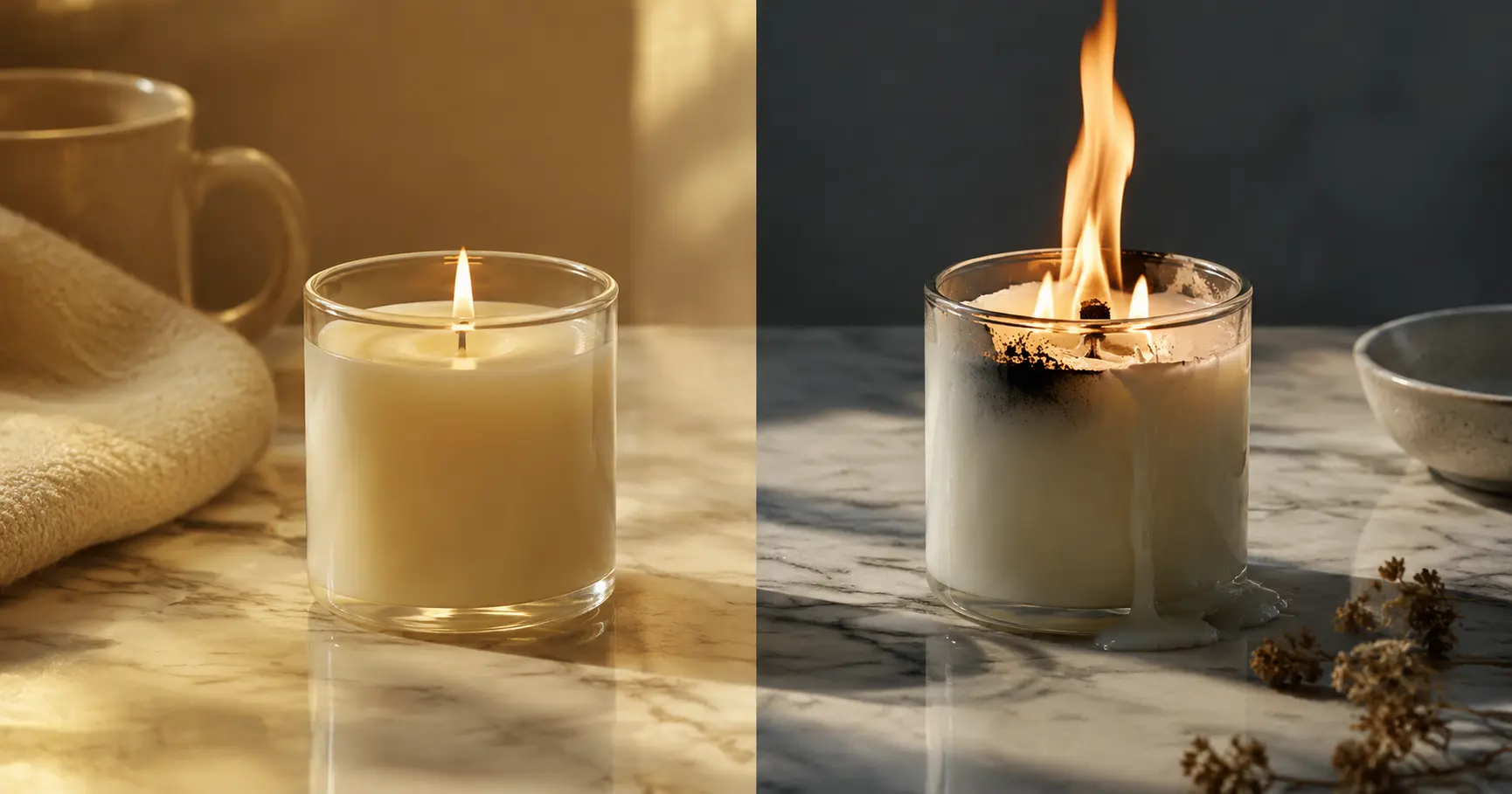
Most candle waxes have a melting point somewhere in the range of about 120 to 180°F (roughly 49 to 82°C), depending on whether they're soy, paraffin, beeswax, or a blend. When a candle reaches its candle wax melting point and forms a proper melt pool across the surface, the suspended fragrance oils warm up and lift into the air at a steady, pleasant rate.
That's the sweet spot. Enough heat to release scent, not so much that it gets destroyed. A clean, even melt pool is the sign you've hit it.
Too Hot: When Fragrance Oils Break Down
Fragrance oils are delicate chemical blends, and they don't love extreme temperatures. Push them past a certain point and fragrance oil heat degradation kicks in. The molecules that make up a scent can break apart, change, or flash off so quickly that you lose them.
This is what people mean when they say scent "burns off." A flame running too hot, an oversized wick, or a warmer cranked beyond what the wax needs can all torch the fragrance instead of gently releasing it. You end up smelling mostly hot wax and very little of the scent you paid for.
Why a Candle Smells Weaker the Longer It Burns
Ever notice the scent feels strongest in the first hour, then fades? Two things are happening.
First, your nose adapts. After a while you simply stop noticing a smell you've been sitting in, a phenomenon called olfactory fatigue. The candle hasn't necessarily weakened, you've just tuned it out.
Second, across a candle's whole lifespan, each burn uses up fragrance near the surface. As the candle works through its wax, the oil reserves genuinely deplete, so the last third of a jar often does smell softer than the first.
Candle Warmers and Wax Melts: A Gentler Heat?
Flameless options have exploded in popularity, and for good reason. No open flame, no soot, no worrying about leaving a candle unattended. But do they handle scent any better?
Do Candle Warmers Reduce Scent?
An electric candle warmer heats a candle from below or above with a bulb or hot plate, melting the wax without a flame. Because the heat is usually lower and more even than a burning wick, candle warmer scent throw can actually be excellent, and it tends to be gentler on fragrance oils.
So do candle warmers reduce scent? Not really. In many cases they preserve fragrance better than burning, since there's no intense flame to degrade the oils. The main tradeoff is that a warmer's hot throw is sometimes a touch softer than a roaring candle on its best day, but it lasts and stays consistent.
Wax Melts and Fragrance Retention
Wax melts are small, wickless cubes you pop into a warmer. Because they're never burned, wax melt fragrance retention works a little differently than wick candles.
With melts, no fragrance is lost to a flame, so the oils release purely through gentle evaporation. The scent eventually fades once the oils are spent, but the wax itself remains, which is why a melt can look fine yet smell like nothing. That's your cue to swap it out.
Burning vs Warming: Which Preserves Scent Longer
Here's a quick side-by-side to help you decide.
| Factor | Burning a Candle | Using a Warmer |
|---|---|---|
| Heat level | Higher, from open flame | Lower and more even |
| Fragrance preservation | Some oil degrades in the flame | Gentler, less degradation |
| Hot throw strength | Can be very strong | Steady, sometimes slightly softer |
| Scent longevity | Wax consumed as it burns | Wax lasts longer per session |
| Safety | Open flame, soot risk | No flame |
If you want maximum staying power and gentler treatment of the fragrance, warming generally wins. If you love a strong, immediate burst of scent and the ambiance of a flame, burning has its place.
Common Myths About Candles Losing Their Scent
The internet is full of candle hacks, and not all of them hold up. Let's clear out a couple of the big ones.
"Microwaving or Overheating Refreshes Old Candles"
This one circulates a lot, and it's a bad idea on both counts. Microwaving a candle can damage the container, ignite leftover wick material, or create a fire hazard, especially with any metal in the wick tab.
Beyond the safety risk, blasting an old candle with extra heat doesn't restore lost fragrance. If the oils are already spent, more heat just degrades whatever little remains. You can't refill a candle's scent by overheating it.
"Expensive Candles Never Lose Their Scent"
Price and fragrance staying power aren't the same thing. A premium candle often does have a higher fragrance oil load and better-quality oils, which helps. But every candle has a finite amount of scent, and every candle eventually runs low.
Plenty of mid-priced candles with a generous oil load outperform luxury ones that lean more on packaging than fragrance. Read the experience, not just the price tag.
How to Make Your Candle's Scent Last Longer
Good news: a few simple habits go a long way toward prolonging candle fragrance life. None of these are complicated.
Proper First Burn and Melt Pool Tips
The very first burn sets the tone. Let the candle burn long enough for the melt pool to reach the edges of the container, usually one to two hours. This prevents "tunneling," where wax builds up on the sides and shrinks your scent-releasing surface.
Trim the wick to about a quarter inch before each burn. A trimmed wick keeps the flame at the right size, which means a clean melt pool and far less fragrance lost to an overheated flame.
Storage and Temperature Best Practices
How you store candles before use matters more than people think. Keep them in a cool, dark place, away from direct sunlight and heat sources.
Heat and light slowly degrade fragrance oils even in an unlit candle, weakening the candle scent throw before you ever light it. A lid or a closed box helps lock the fragrance in until you're ready.
Choosing Candles With Better Scent Staying Power
When shopping, look for candles that mention a meaningful fragrance oil percentage, often around 6 to 10 percent for a strong throw. Single-wick candles in oversized jars may struggle to throw scent, so match the wick count to the container size.
Wax type plays a role too. Soy and coconut blends tend to hold fragrance well and burn slowly, while paraffin often gives a punchier immediate throw. Neither is "best," it depends on what you want from the candle.
Frequently Asked Questions
Q: Do candles lose their scent if you don't burn them?
A: Yes, slowly. Even unlit, fragrance oils gradually evaporate and degrade over months, especially if the candle is exposed to heat or light. Most candles smell their best within the first year or so, which is why proper storage and a tight lid help preserve the scent until you use it.
Q: Why does my candle smell strong cold but weak when lit?
A: This is a classic cold throw versus hot throw mismatch. Some candles release plenty of fragrance at room temperature but don't have the right wick, wax, or oil chemistry to project it once melted. It can also mean the wick is too small to form a full melt pool, so the scent never fully lifts into the air.
Q: Can you revive a candle that has lost its scent?
A: Honestly, not much works once the oils are gone. You can't add fragrance back into spent wax at home in any reliable way. The best you can do is make sure you're getting a full melt pool and a properly trimmed wick, which maximizes whatever scent remains. If the candle is genuinely used up, it's time to replace it.
Q: Is it normal for the last bit of a candle to smell weaker?
A: Completely normal. As a candle burns through its wax, the fragrance reserves deplete, so the final portion almost always smells softer than the first. This end-of-life fade happens with even high-quality candles and isn't a sign of a defective product.
Q: Do candle warmers make scent last longer than burning?
A: Generally, yes. Because warmers use lower, steadier heat and no flame, they cause less fragrance degradation and stretch a candle's scent across more hours per session. The hot throw can be slightly gentler than a strong burning candle, but for longevity and gentler treatment of the oils, warming usually comes out ahead.