
If you wear dentures, you've probably dropped one of those small white tablets into a glass of water and watched it fizz away. But have you ever wondered what's actually inside them? Understanding the ingredients can help you clean your dentures more effectively and use these products safely.
This guide breaks down what goes into denture cleaning tablets, how each component works, and what to keep in mind when choosing and using them. No chemistry degree required.
Introduction: Why Knowing the Ingredients Matters
Denture cleaning tablets are designed to clean, freshen, and help disinfect removable dental appliances. Most people use them daily without giving the contents a second thought.
Knowing what's inside matters for a few reasons. It helps you pick a product that suits your needs, avoid ingredients you might react to, and use the tablets correctly. A little knowledge goes a long way toward keeping both your dentures and your mouth healthy.
How Denture Cleaning Tablets Actually Work
At their core, these tablets rely on a simple chemical reaction. When the tablet hits water, it releases bubbles and active cleaning compounds that get to work on your dentures.
The process targets the things that build up on dental appliances over time: food particles, stains, plaque, and bacteria. Let's look at how that fizzing action does its job.
The "Fizz" Explained: Effervescent Cleaning Agents
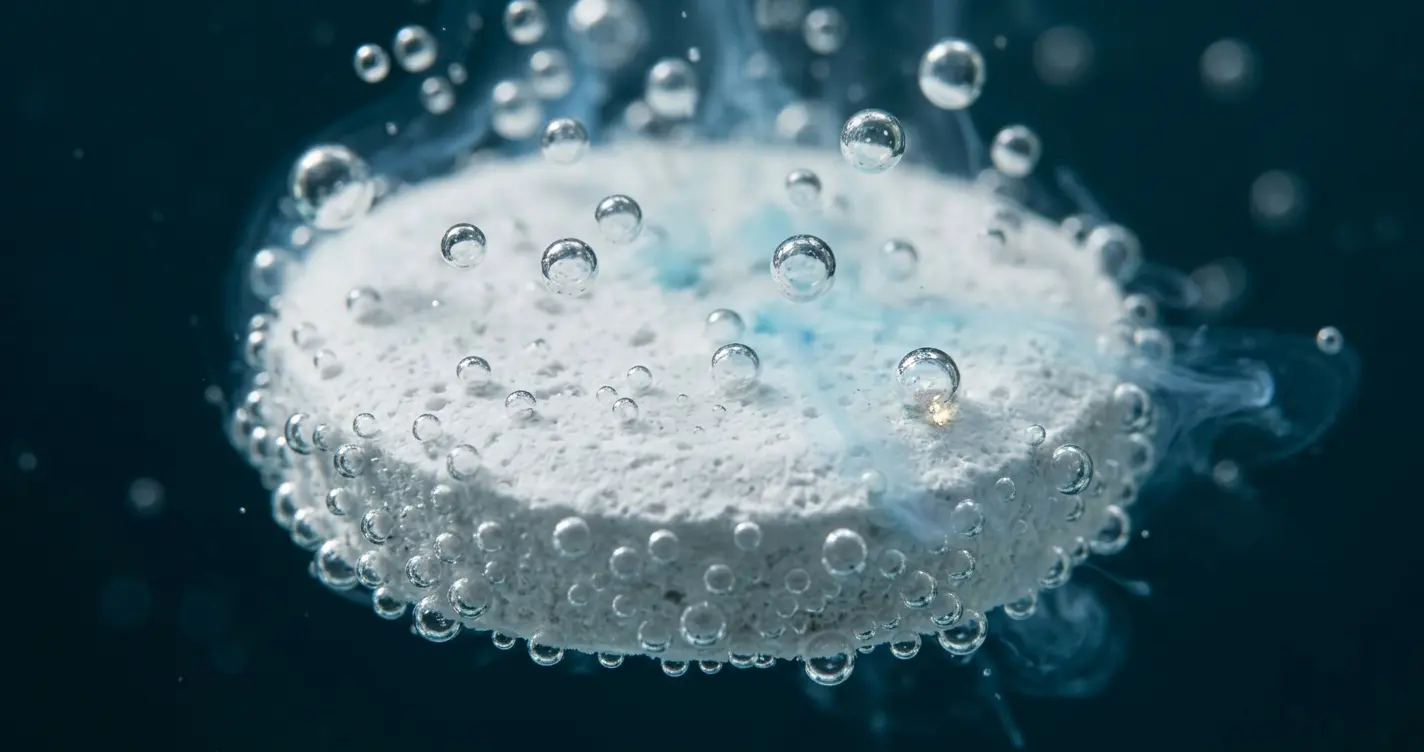
That satisfying fizz isn't just for show. When the tablet dissolves, it produces a stream of oxygen and carbon dioxide bubbles.
These bubbles physically agitate the water around your dentures, helping to loosen trapped food debris and surface stains from grooves and crevices that brushing alone might miss. The effervescent cleaning agents essentially scrub your dentures without you lifting a finger.
Cleaning vs. Disinfecting: What Tablets Do
It's worth understanding the difference between cleaning and disinfecting. Cleaning removes visible debris and stains. Disinfecting reduces or kills the bacteria living on the surface.
Good denture tablets aim to do both. The mechanical fizzing handles the cleaning side, while certain active ingredients work on the antibacterial side. Neither replaces gentle daily brushing, though, since some buildup needs physical removal.
The Core Ingredients Inside Denture Cleaning Tablets
While formulas vary between brands, most tablets share a common set of active and supporting ingredients. Here's what you'll typically find on the label.
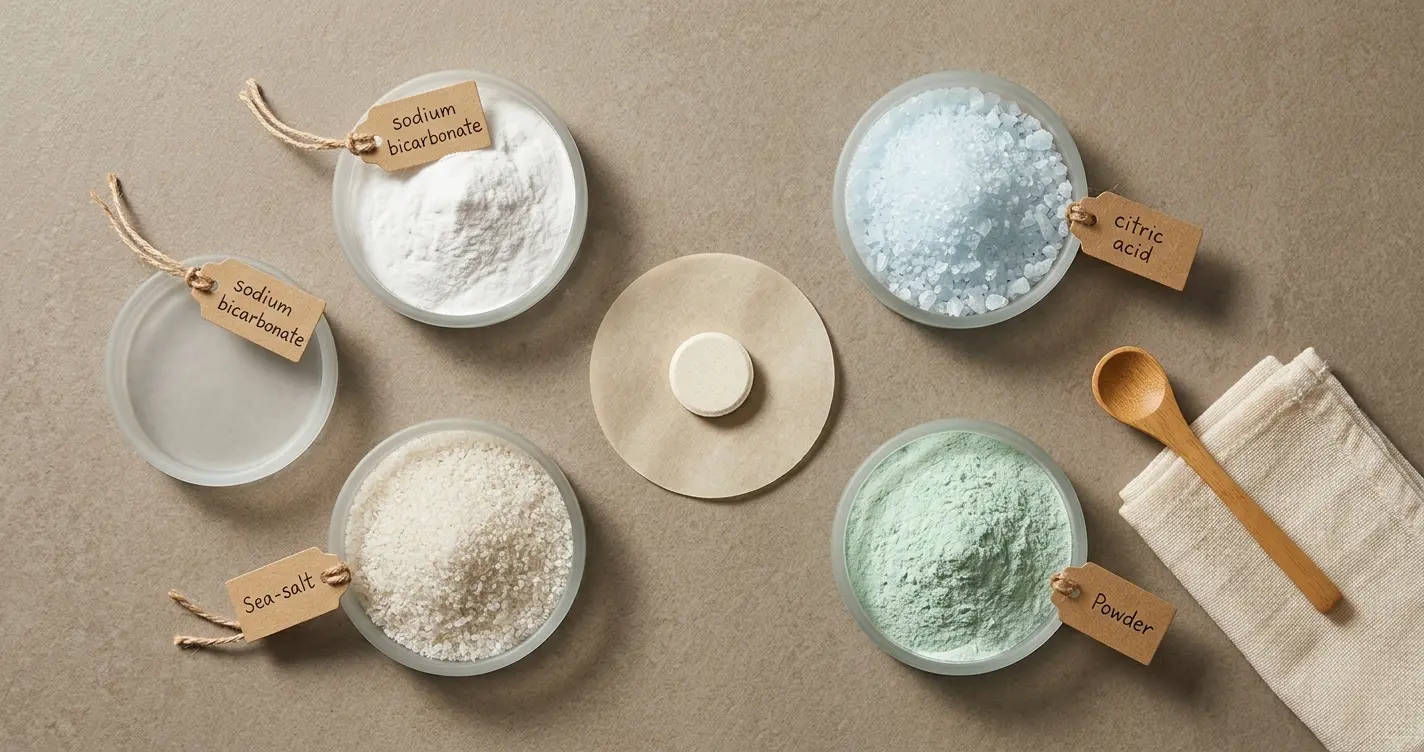
Sodium Bicarbonate (Baking Soda)
You probably know sodium bicarbonate as baking soda, the same stuff used in baking and household cleaning. In denture tablets, it plays several roles.
It provides gentle, mild abrasion to help lift stains, and it's well known for neutralizing odors. It also reacts with acids in the tablet to create part of that signature fizz.
Sodium Perborate
This is one of the key active ingredients. Sodium perborate is an oxygen-releasing compound, meaning it breaks down in water to release active oxygen.
That oxygen does two useful things. It bleaches and lifts stubborn stains, and it helps reduce bacteria on the denture surface. It's a major reason these tablets can tackle discoloration that brushing alone won't budge.
A Note on Sodium Perborate and Safety
Because sodium perborate is a chemical oxidizer, denture tablets should never be swallowed or used in the mouth directly. They are meant for soaking only.
Always rinse your dentures thoroughly under running water before putting them back in. Leftover cleaning solution can irritate your gums and mouth, so a careful rinse is not optional.
Citric Acid
Citric acid is the same mild acid found naturally in citrus fruits. In denture tablets, it serves two main purposes.
First, it reacts with sodium bicarbonate to power the effervescent reaction. Second, it helps break down mineral deposits and tartar-like buildup that form from saliva and hard water over time.
Effervescent Cleaning Agents
The fizz comes from a classic acid-base reaction. When sodium bicarbonate meets citric acid in water, they react and release carbon dioxide gas, creating those rising bubbles.
This bubbling action carries cleaning agents into every nook of your dentures. It's the same basic principle behind effervescent vitamin tablets, just put to work for cleaning instead.
Antibacterial Enzymes
Some modern formulas include antibacterial enzymes, which target the biological gunk that ordinary cleaners struggle with. Enzymes are specialized proteins that break down specific substances.
In this case, they help dissolve plaque, break down protein-based residue, and disrupt the bacterial film that clings to denture surfaces. By targeting these at a molecular level, enzymes make the overall cleaning more thorough.
Other Common Additives
Beyond the main active ingredients, tablets often contain a few supporting components:
Colorants: Often blue or green dyes that signal the tablet is active and dissolving.
Flavorings and fragrances: Mint and similar scents help leave dentures feeling fresh.
Surfactants: Detergent-like agents that lift away grease and food residue.
Bleaching agents: Additional compounds that boost stain removal and brightening.
Are These Ingredients Safe?
For typical, intended use, denture cleaning tablets are considered safe. The ingredients are formulated for soaking dental appliances, not for direct contact with your mouth.
The key word is "intended." Safety depends entirely on using them correctly, which mostly comes down to soaking, timing, and rinsing properly.
Proper Use Guidelines
A few simple habits keep things safe and effective:
Use the tablets for soaking only, never in your mouth.
Follow the recommended soaking time on the package.
Rinse your dentures thoroughly with clean water before wearing them.
Keep tablets and solution out of reach of children and pets.
Who Should Take Extra Care
Most people use these products without issue, but some should be more cautious. If you have known allergies or sensitivities to any listed ingredient, check the label carefully.
People prone to gum irritation or with certain health conditions may want to rinse extra thoroughly. If you ever notice burning, redness, or unusual irritation after wearing freshly cleaned dentures, stop use and talk to your dentist.
How to Choose the Right Denture Cleaning Tablets
Not all tablets are identical, and the best one depends on your specific situation. Here's how to compare your options.
Reading the Label
Start by checking the active ingredients. Look for the components that matter to you, whether that's stain-fighting sodium perborate, plaque-busting enzymes, or a fragrance-free formula if you're sensitive to scents.
Be a little skeptical of bold marketing claims. Terms like "advanced" or "extra strength" don't always mean much, so let the ingredient list and any approval seals guide you more than the front-of-box promises.
Matching Tablets to Your Denture Type
Your denture type affects which product is best. Full dentures, partial dentures, and appliances with metal clasps can react differently to certain ingredients.
Some bleaching or oxygen-based formulas can affect metal components over time, so if your partial has metal parts, look for a product labeled as safe for partials. When in doubt, your dentist can recommend a suitable option.
Common Mistakes to Avoid When Using Tablets
Even a good product can cause problems if used incorrectly. Here are the most common slip-ups to avoid:
Using hot or boiling water: High heat can warp dentures. Use warm or room-temperature water as directed.
Skipping the rinse: Failing to rinse can leave chemical residue that irritates your mouth.
Soaking too long: Leaving dentures in solution far beyond the recommended time can damage certain materials.
Reusing old solution: Always use fresh water and a fresh tablet each time.
Skipping brushing entirely: Tablets complement brushing, they don't replace it.
Natural and Alternative Cleaning Options
If you prefer fewer chemicals or run out of tablets, there are alternatives, though each has trade-offs.
A simple baking soda solution can gently clean and deodorize dentures. Mild dish soap with a soft brush also works for everyday cleaning without harsh ingredients.
These options handle basic cleaning but are generally less effective at disinfecting and removing deep stains than dedicated tablets. For a deeper clean, professional cleaning at your dentist's office remains the gold standard, especially for hardened deposits.
Conclusion: Cleaner Dentures, Smarter Choices
Denture cleaning tablets combine a handful of well-understood ingredients to do a useful job. Sodium bicarbonate and citric acid power the cleaning fizz, sodium perborate tackles stains and bacteria, and enzymes break down plaque and protein residue.
Used correctly, these products are a safe and convenient way to keep your dentures clean and fresh. The golden rules are simple: soak only, follow the timing, and always rinse thoroughly before wearing.
By understanding what's inside the tablet and reading labels with a little more confidence, you can choose the right product for your needs and care for your dentures the smart way.
Frequently Asked Questions
Q: Can I leave my dentures soaking overnight?
A: It depends on the product. Many tablets are designed for short soaks of around 15 to 30 minutes, while some are specifically formulated for overnight use. Check the packaging, since soaking too long in the wrong formula can damage certain denture materials.
Q: Are denture cleaning tablets safe to swallow?
A: No. These tablets are for soaking only and should never be swallowed, as ingredients like sodium perborate can cause irritation or harm if ingested. If you or someone else accidentally swallows one or drinks the solution, contact a poison control center or seek medical help right away.
Q: Can I use these tablets for retainers or mouthguards?
A: Sometimes, but not always. Some tablets are safe for retainers and mouthguards, while others may be too harsh for certain materials, especially clear plastics that can discolor. Check the label for compatibility or ask the appliance maker before using them.
Q: How often should I use denture cleaning tablets?
A: For most people, daily use works well as part of a regular cleaning routine. Combine the soak with gentle brushing and rinsing to keep dentures fresh and free of buildup. Follow your dentist's advice for your specific situation.
Q: Do the tablets whiten dentures?
A: Not exactly. The tablets remove surface stains and buildup, which can make dentures look noticeably brighter. They don't bleach the denture material itself the way tooth whitening works, so they restore the original color rather than create a whiter-than-new shade.