
Yes, you can use denture tablets in an ultrasonic cleaner. But after fifteen-plus years working with these machines, I can tell you the honest answer is closer to "yes, but it depends." The internet is full of confident one-liners that skip the parts that actually matter.
The real question isn't just whether you can drop a fizzing tablet into the tank. It's whether you should, what you're cleaning, and how to do it without damaging your gear or wasting your time. Let me walk you through what I've learned hands-on.
The Short Answer: Yes, But With Important Caveats
If you're in a hurry: denture tablets work fine for cleaning dentures, retainers, and mouthguards in an ultrasonic cleaner. They're cheap, easy to find, and gentle enough for dental appliances.
The caveats are where people get tripped up. Too many bubbles can dampen the machine's performance, leftover residue causes problems, and not every item belongs in that tank. Stick with me before you hit the power button.
Why Denture Tablets and Ultrasonic Cleaners Seem Like a Perfect Match
The appeal is obvious. Denture tablets fizz and lift away stains on their own, and an ultrasonic cleaner blasts grime loose with sound waves. Combine the two and it feels like double the cleaning power.
There's some truth to that pairing. The chemical action loosens buildup while the machine handles the deep mechanical scrubbing you can't do by hand.
Where the Combination Goes Wrong
Here's the catch. Effervescent tablets produce a lot of foam, and foam is the enemy of ultrasonic cleaning. Bubbles absorb the energy the machine relies on, so you get a weaker clean.
Add to that the residue some tablets leave behind and the fact that certain materials simply don't tolerate the chemistry, and you can see why a little knowledge goes a long way.
How Ultrasonic Cleaners Actually Work
To understand why your solution choice matters, you need a quick grasp of what's happening inside the tank. It's simpler than it sounds.
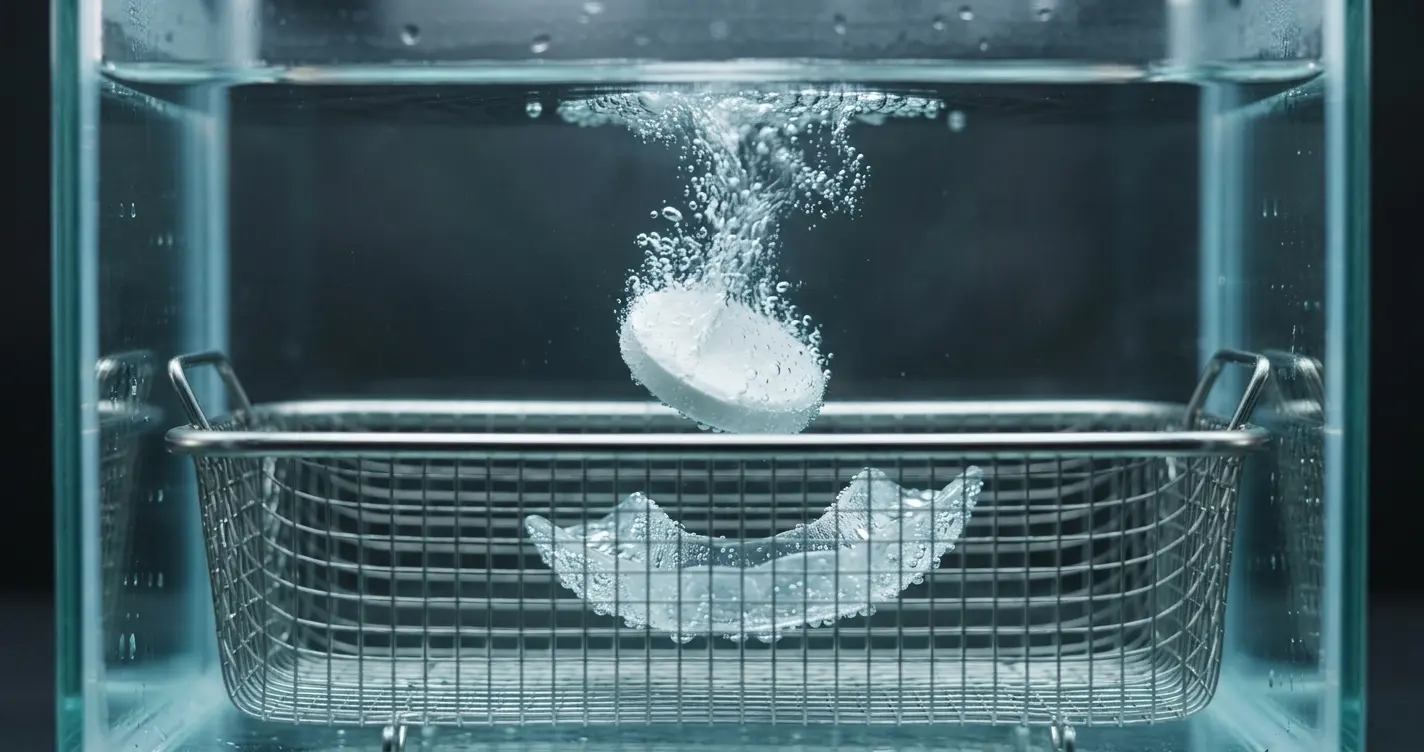
The machine sends high-frequency sound waves through the liquid. These waves create millions of tiny bubbles that form and collapse in an instant, a process called cavitation. Those collapsing bubbles scrub every nook and crevice of whatever you've submerged.
Cavitation vs. Chemical Action
This is the part most people miss. The machine does the heavy lifting through cavitation. The fluid is a supporting player, helping carry away the debris the sound waves shake loose.
That means your cleaning solution doesn't need to be aggressive. It needs to support cavitation, not fight it with a mountain of suds.
What the Manufacturer Recommends vs. Real-World Use
Most units ship with a recommendation to use a dedicated ultrasonic cleaner cleaning fluid. There's a reason for that. Those fluids are formulated to be low-foaming and to enhance cavitation rather than smother it.
In the real world, plenty of people reach for what's already in the bathroom cabinet. Denture tablets fall into that category, and they're a reasonable choice for the right items if you manage the downsides.
Using Denture Cleaning Tablets as an Ultrasonic Solution
Let's get practical. Here's how I actually do it when a denture tablet is the tool for the job.
Step-by-Step: Dissolving Tablets Safely
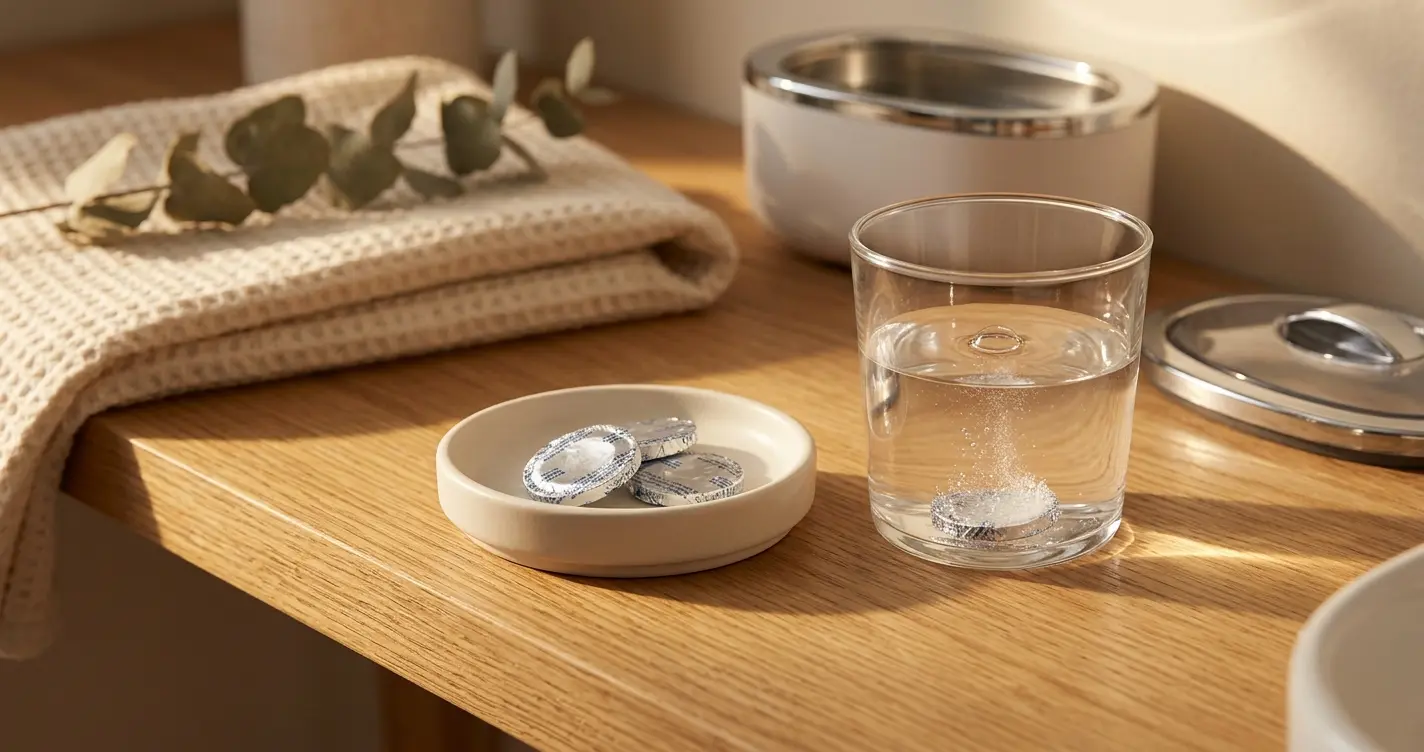
Fill the tank with warm water, not hot. Lukewarm is the sweet spot for dissolving tablets without warping plastics.
Add one tablet per standard small tank. For larger units, two is usually plenty.
Let the tablet dissolve and fizz out before you run the cycle. This is the step people skip, and it's the most important one.
Once the bubbling settles, place your item in the basket and start the machine.
Letting the fizz die down first prevents the foam from interfering with cavitation. Patience here gives you a noticeably better clean.
Managing the Foam Problem
Effervescent denture tablets are designed to bubble, and that's exactly what works against ultrasonic energy. Bubbles scatter the sound waves before they can do their job.
The fix is straightforward: wait out the initial reaction. If you still see heavy foam when you start the cycle, pause, let it calm, then resume. A clear, gently active solution cleans far better than a frothy one.
Recommended Cycle Times and Rinsing
For dentures and retainers, a single cycle of three to five minutes usually does the trick. Heavily stained appliances might need a second pass.
Never skip the rinse. After the cycle, rinse the item thoroughly under clean running water to flush away any chemical residue. For anything that goes in your mouth, this step is non-negotiable.
What You Can (and Can't) Clean This Way
Matching the method to the item is half the battle. Here's where this approach shines and where it falls flat.
Dentures, Retainers, and Mouthguards
This is the intended use case, and it works beautifully. Dental appliances are made from materials that tolerate the mild chemistry, and the combination clears away plaque, stains, and odor better than soaking alone.
Effervescent Denture Tablets for Jewelry Cleaning
The jewelry hack is popular online, and it's worth addressing honestly. Hard, non-porous pieces like solid gold and most diamonds usually handle it fine.
The trouble starts with soft or porous stones. Pearls, opals, turquoise, and emeralds can be damaged by the chemicals and the cavitation. Plated items are also risky, since the process can lift thin coatings over time. When in doubt, leave the heirloom piece out.
Items to Keep Away From This Method
Electronics that aren't sealed or rated for liquid immersion.
Certain soft plastics that can cloud or warp.
Delicate finishes like antique patinas, lacquered surfaces, or anything with glued components.
If an item is irreplaceable or you're unsure of its materials, skip the experiment.
Denture Tablets vs. Other Ultrasonic Cleaner Cleaning Fluid Options
Denture tablets aren't your only option. Here's how they stack up against the alternatives I reach for.
Dedicated Commercial Ultrasonic Solutions
These are formulated for the job: low foaming, cavitation-friendly, and often tuned for specific materials like metal or eyewear. The downside is cost and the need to keep a bottle on hand.
They're worth it if you clean often or work with valuable items where you can't afford guesswork.
Homemade Ultrasonic Cleaning Solution for Dentures and Beyond
Plenty of reliable ultrasonic cleaner cleaning fluid alternatives live in your kitchen. A few drops of mild dish soap in distilled water is my go-to general-purpose mix. Distilled water alone works for a light refresh.
A diluted vinegar solution cuts mineral buildup, but use it sparingly and never on soft stones or aluminum. Whatever homemade route you take, keep concentrations low and always rinse afterward.
Quick Comparison Table
| Solution | Cost | Effectiveness | Residue | Material Safety |
|---|---|---|---|---|
| Denture cleaning tablets ultrasonic solution | Low | Good for dental items | Moderate (rinse needed) | Safe for appliances; mixed for jewelry |
| Dedicated commercial fluid | Higher | Excellent | Low | Broad, often material-specific |
| Dish soap + distilled water | Very low | Moderate | Low | Gentle and versatile |
| Diluted vinegar | Very low | Good for mineral buildup | Low | Avoid soft stones and aluminum |
For most households, the choice comes down to what you're cleaning and how often. Ultrasonic cleaner safe cleaning agents don't have to be expensive to be effective.
Mistakes I See People Make (And How to Avoid Them)
After years of fielding the same questions, a few recurring errors stand out. Avoid these and you're ahead of the curve.
Overloading the Tank
Crowding items together blocks the cavitation bubbles from reaching every surface. I see people stack rings or pile in multiple appliances and then wonder why the clean is uneven.
Give each item room. If you have several pieces, run them in small batches instead of all at once.
Skipping the Rinse
This is the big one for dental appliances. Leftover tablet residue can leave a chemical taste and irritate your mouth. A quick rinse under running water solves it completely, so there's no excuse to skip it.
Using Hot Water When You Shouldn't
Hot water seems like it would clean better, but it can warp plastic appliances and degrade certain materials. Warm water dissolves tablets perfectly well without the risk. Hot water also isn't necessary for cavitation to do its work.
Caring for Your Ultrasonic Cleaner After Using Tablets
An ultrasonic cleaner is an investment, and a little upkeep keeps it running for years. Tablets in particular leave behind residue that's worth managing.
Draining and Wiping the Tank
After each use, drain the solution and wipe the tank dry with a soft cloth. This prevents mineral buildup and corrosion on the metal surface, which is exactly what shortens a machine's life.
How Often to Deep Clean the Unit
For regular users, a deeper clean every few weeks is plenty. Run a short cycle with plain water and a drop of mild dish soap, then drain and dry. If you notice buildup or odor sooner, clean it then. Simple consistency beats occasional scrubbing.
Final Verdict: When It's Worth It
If you're cleaning dentures, retainers, or mouthguards, denture tablets in an ultrasonic cleaner are a smart, budget-friendly choice. Manage the foam, keep the water warm, and rinse thoroughly, and you'll get excellent results.
For valuable jewelry, delicate materials, or frequent heavy-duty cleaning, reach for a dedicated solution instead. It's formulated to support cavitation and spares you the guesswork. Match the method to the item, and your ultrasonic cleaner will serve you well for years.
Frequently Asked Questions
Q: Will denture tablets damage my ultrasonic cleaner?
A: No, not under normal use. Denture tablets are mild and safe for the stainless steel tank as long as you drain and dry the unit afterward. The bigger risk is residue buildup over time, which regular cleaning prevents entirely.
Q: How many denture tablets should I use per tank?
A: One tablet works for a standard small tank, and two is usually enough for larger units. More tablets just mean more foam, which actually reduces cleaning performance rather than improving it.
Q: Can I reuse the denture tablet solution?
A: I don't recommend it. Once you've cleaned an item, the solution holds the debris and bacteria you just removed. For hygiene reasons, especially with dental appliances, use fresh solution each time. It's cheap enough to justify.
Q: Are denture tablets safe for cleaning gold and silver jewelry?
A: Solid gold generally handles it well. Silver can tarnish or react depending on the alloy, so watch it closely and keep cycles short. Avoid plated pieces and anything with soft or porous stones, since the chemistry and cavitation can cause damage.
Q: What's the best alternative if I run out of denture tablets?
A: A few drops of mild dish soap in distilled water is the easiest swap and works for most general cleaning. For a dedicated approach, a commercial ultrasonic cleaner fluid is the most reliable choice. These ultrasonic cleaner safe cleaning agents cover nearly any situation.