
The Short Answer: Yes, They Do — Here's Why That Matters
Yes, denture cleaning tablets absolutely expire. In my experience working alongside manufacturers and retail buyers, the typical shelf life sits between 2 and 3 years from the date of manufacture, depending on the formulation and packaging type.
That date isn't just a suggestion. Using tablets past their prime can mean weaker cleaning, lingering bacteria, and in some edge cases, even residue that's harder to rinse off your dentures than the stains you were trying to remove.
What "Expiration" Actually Means on a Denture Tablet Box
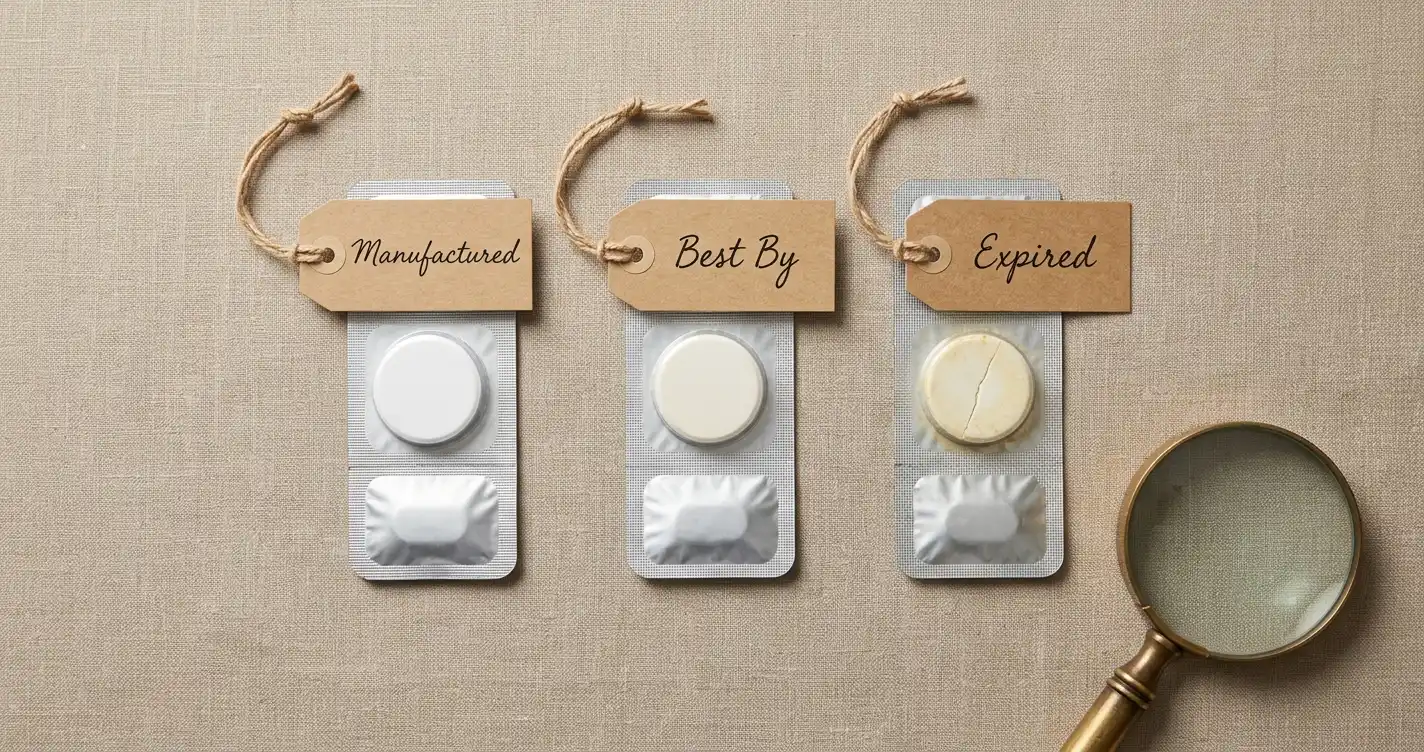
Here's a confusion I run into almost weekly with consumers: there's a real difference between a hard expiration date, a "best by" date, and a manufacture date.
Manufacture date — when the tablet was produced.
Best by — the date the manufacturer guarantees full effectiveness.
Expiration date — the point at which the product should no longer be used.
Most denture tablet boxes print either a "best by" or expiration date. They mean the same thing in practical terms — once you're past it, performance starts dropping.
Why Manufacturers Print a Date in the First Place
Behind the scenes, every effervescent product goes through accelerated stability testing — basically, samples are stored in heat and humidity chambers that simulate years of aging in weeks. Regulators in the US, EU, UK, and Australia require this for any product making cleaning or hygiene claims.
The printed date is the manufacturer's promise that, up to that point, the tablet will perform as advertised. Beyond it, they make no guarantees.
How Denture Cleaning Tablets Actually Work (And Why That Affects Shelf Life)
To understand why expiration matters, you need to know what's inside the tablet.
The Core Ingredients Doing the Heavy Lifting
A typical denture tablet contains a handful of working ingredients:
Sodium bicarbonate — provides the alkaline base and helps with the fizz reaction.
Citric acid — reacts with bicarbonate to create effervescence.
Sodium perborate or percarbonate — the oxygen-releasing bleaching agent that lifts stains.
Potassium monopersulfate — a powerful oxidizer that kills bacteria and dissolves biofilm.
Surface-active agents (surfactants) — help loosen food particles and debris.
The Effervescent Reaction Explained Simply
When you drop a tablet into water, the citric acid and sodium bicarbonate react instantly, releasing carbon dioxide bubbles. Those bubbles aren't just for show — they agitate the water, helping the oxygen-releasing compounds reach every crevice in your denture.
It's a time-sensitive chemical chain reaction. If any ingredient has degraded, the whole sequence falters.
Why These Ingredients Are Inherently Unstable
From auditing product returns over the years, I can tell you this: oxygen-releasing compounds and acids don't sit quietly forever. Even inside sealed packaging, they slowly react with whatever trace moisture is present.
This is why you'll occasionally see a tablet that looks fine but barely fizzes — the active oxidizers have already partially burned themselves out before the tablet ever hit the water.
Denture Cleanser Shelf Life: What's Typical Across Major Brands
Standard Shelf Life Ranges by Product Type
| Packaging Type | Typical Shelf Life |
|---|---|
| Foil-wrapped individual tablets | ~3 years |
| Bottled or jar-packaged tablets | ~2 years |
| Powder-based cleansers | 2–3 years |
Individually foil-wrapped tablets last longest because each one is sealed away from air and humidity until the moment you use it.
How to Read the Date Code on the Packaging
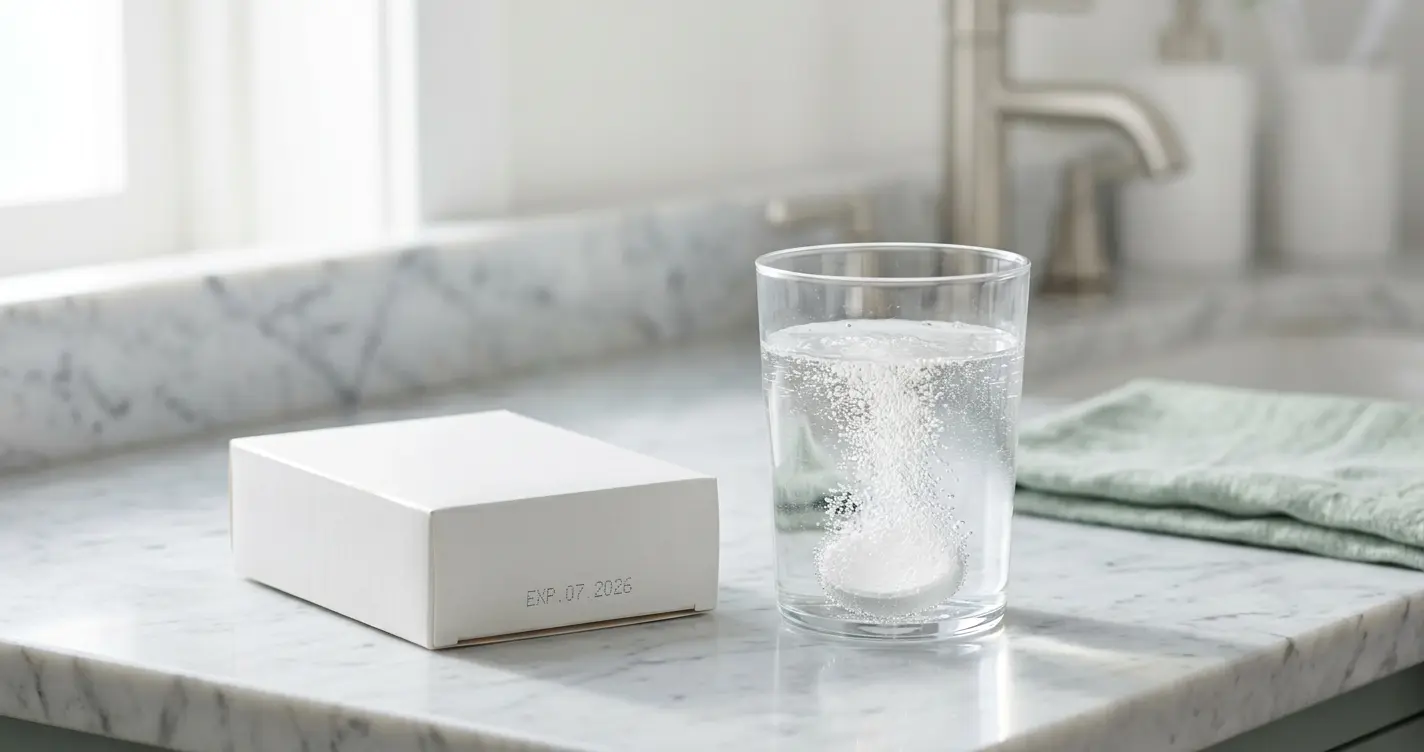
Most brands print the expiration date on the box flap, the bottom of the bottle, or the crimped edge of the foil strip. You'll usually see a format like EXP 04/2027 or a batch code followed by a date.
If you only see a string of letters and numbers, that's likely a lot code — the customer service line on the box can decode it for you in under a minute.
What Happens When Denture Tablets Expire
Reduced Cleaning Effectiveness
The first thing to go is the fizz. Expired tablets dissolve more slowly, produce weaker bubbles, and release less active oxygen. The result? Stains stick around, tartar starts building up, and bacteria that should be neutralized in 15 minutes survive the soak.
Potential Risk to Your Dentures
A degraded chemical balance occasionally causes uneven cleaning or a chalky residue that's hard to rinse off. In rare cases — usually with very old tablets used repeatedly — I've seen mild dulling of acrylic denture bases.
Is It Dangerous to Use Expired Tablets?
Honestly? For most healthy adults, using slightly expired tablets isn't going to send you to the ER. But I'd never recommend soaking a device you're going to put back in your mouth in a compromised cleaning solution. Your dentures touch your gums for 12+ hours a day — they deserve a clean that actually works.
Signs of Expired Effervescent Tablets You Can Spot at Home
Visual Red Flags
Tablets that have swelled, cracked, or crumbled in the package
Yellowing or brown spotting on a normally white or blue tablet
Foil wrappers that look puffed or "pillowed" (a sign of internal gas buildup)
White powdery residue inside the bottle
The Fizz Test
Drop one tablet into a glass of warm water. A healthy tablet should erupt into vigorous bubbles within seconds and fully dissolve within 3–5 minutes. A weak, slow fizz — or a tablet that just sits there breaking apart — tells you the chemistry has gone flat.
Smell and Texture Clues
Fresh tablets have a faint, clean mint or chemical scent. If you notice a sharp, off-chemical odor, sticky residue on your fingers, or tablets that feel soft and squishy instead of firm, those are all signs I've learned to spot instantly. Toss them.
Storing Denture Cleaning Tablets the Right Way
The Bathroom Cabinet Mistake Almost Everyone Makes
I get it — the bathroom is the obvious place. It's where you brush, soak, and rinse. But it's also the worst possible storage spot. Every hot shower fills the room with humidity, and that moisture seeps through packaging over time, accelerating the breakdown of those sensitive oxidizers.
Ideal Storage Conditions
Cool, dry location — under 25°C (77°F)
Original packaging kept tightly sealed
Away from direct sunlight and heat sources like radiators or windowsills
A bedroom drawer or hallway linen closet works far better than a bathroom cabinet
Should You Refrigerate Them?
No. This question comes up often and the answer is clear — refrigeration introduces condensation every time you open the container, and condensation is moisture. Moisture is what you're trying to keep away from these tablets.
Travel and Bulk-Buy Tips
If you bought a giant warehouse-club box, don't open all the inner packs at once. Keep the unopened blister strips sealed and only break into a new one when the current pack is finished. For travel, foil-wrapped individual tablets are your friend — they survive humidity changes much better than loose tablets in a bottle.
Can You Still Use Slightly Expired Denture Tablets?
When It's Probably Fine
Tablets a month or two past their date, stored properly in a cool dry place, with a normal vigorous fizz when tested — these are likely still functional for routine daily cleaning. Not ideal, but not a crisis.
When You Should Throw Them Out
Anything more than 6 months past the printed date
Any tablet showing visual or texture signs of degradation
Any product stored in a humid bathroom for an extended time
Tablets from a bottle that's been left open
My Personal Rule of Thumb
Before using any questionable batch, I do the fizz test in a clear glass. If the reaction is strong and the water turns its normal color within a minute, I'll use it. If it's sluggish, cloudy, or the tablet just crumbles — straight in the bin. It's not worth gambling on a $0.30 tablet when your dentures cost hundreds.
Smart Buying Habits to Avoid Wasted Tablets
Match Quantity to Actual Usage
Most people use one tablet daily. That means a 90-count box should last roughly three months, a 120-count about four. Do the simple math before you buy — there's no benefit to having a two-year supply sitting in a closet.
Buying in Bulk — When It Makes Sense
Warehouse-club pricing genuinely saves money for households with multiple denture wearers or for care facilities. For a single user? You'll probably end up throwing half of it out.
Rotating Stock at Home
I use a simple first-in-first-out method: new boxes go to the back of the drawer, older ones move forward. Takes ten seconds and prevents the embarrassing discovery of a 4-year-old box you forgot about.
Final Takeaway
Here's what I keep coming back to: denture care is about consistency and quality, not shortcuts. Paying attention to something as small as an expiration date is part of looking after both your appliance and your oral health.
Check the date on your box tonight. Store new packs somewhere cool and dry — not your steamy bathroom. And if a tablet doesn't fizz like it should, trust your instincts and replace it. Your dentures, and the gums they sit against, are worth that extra moment of attention.
FAQ
Q: Do unopened denture cleaning tablets last longer than opened ones?
A: Yes — significantly. Sealed packaging dramatically slows the moisture exposure that breaks down the active oxidizers. Once you crack open a bottle, the clock speeds up, especially in humid environments. Foil-wrapped tablets stay sealed individually until use, which is why they typically last longer.
Q: Can expired tablets damage my dentures permanently?
A: In almost all cases, no. Occasional use of slightly expired tablets won't ruin your denture. The rare exception is using very old, degraded tablets repeatedly over months — in those scenarios I've seen mild discoloration or dulling of acrylic finishes, but it's uncommon.
Q: Is it safe to clean retainers, mouthguards, or aligners with expired tablets?
A: I'd be even more cautious here than with dentures. Orthodontic appliances are often worn 20+ hours a day and sit directly against teeth and gums. Use fresh, in-date tablets only — or switch to a manufacturer-recommended cleaner specifically designed for clear aligners.
Q: What should I do with a large stash of expired tablets?
A: Don't throw them in the trash if you can repurpose them. I've personally tested expired tablets for cleaning toilet bowls (drop 2–3 in, let sit overnight), refreshing stained coffee carafes, cleaning glass flower vases, and even freshening sink drains. They still oxidize — just not reliably enough for oral appliances.
Q: How can I tell the manufacture date if only an expiration date is printed?
A: Easy back-calculation: subtract the brand's typical shelf life from the expiration date. For foil-wrapped, subtract 3 years. For bottled versions, subtract 2 years. That gives you a close approximation of when the batch was produced.