
You've had a long day. The jetted tub is calling your name, and that gorgeous lavender bath bomb on the counter looks like the perfect finishing touch. But right before you drop it in, a nagging question stops you cold: Is this going to wreck my tub?
It's a question worth pausing for. Bath bombs are a beloved self-care staple, and jetted tubs represent a significant home investment — often costing thousands of dollars to install. A single wrong bath product can lead to clogged jets, bacterial buildup, and hundreds of dollars in plumbing repairs.
This article gives you a clear, honest answer — plus a practical framework for enjoying that fizzy bath bomb experience without putting your tub at risk.
Why This Question Matters More Than You Think
The global bath bomb market has exploded into a billion-dollar industry, and jetted tubs remain one of the most popular bathroom upgrades for homeowners. The problem? These two luxuries don't always play nicely together.
Here's the critical detail most people miss: the answer depends heavily on which type of jetted tub you own. Whirlpool jets, air jets, and combination systems each handle bath products very differently. A bath bomb that's relatively harmless in an air-jet tub could cause serious bath bomb jetted tub damage in a whirlpool system.
Before you can make a smart decision, you need to understand what's happening beneath the surface of your tub.
How Jetted Tubs Actually Work (And Why That Changes Everything)
Whirlpool / Water-Jet Tubs
Whirlpool tubs recirculate the bathwater itself. A pump pulls water from the tub, pushes it through a network of internal pipes, and blasts it back out through jet nozzles. This creates that powerful, massaging stream you love.
But here's the catch: every substance dissolved or floating in your bathwater gets pulled through that same system. Residue from bath products coats pipe interiors, pump impellers, and jet nozzles. Over time, jetted tub clogging residue becomes the number one maintenance headache whirlpool owners face — and it's the primary reason this question matters so much.
Air-Jet Tubs
Air-jet tubs work on a completely different principle. Instead of recirculating water, they push air through a series of channels and release it through small ports in the tub floor or walls. This creates a gentler, champagne-bubble effect.
Because bathwater doesn't travel through the plumbing, the risk of product buildup is significantly lower. However, it's not zero. Oils can still coat the tub shell and seep into air channels, and most manufacturers still urge caution with bath products.
Combination (Dual-System) Tubs
Some high-end tubs feature both water jets and air jets. These dual-system tubs fall into the highest risk category because they combine the vulnerabilities of both technologies. Maintenance complexity essentially doubles, and so does the potential for bath product damage.
What's Actually Inside a Bath Bomb?
To understand the risk, you need to know what you're dropping into the water. The core ingredients of most bath bombs are relatively harmless: baking soda, citric acid, Epsom salt, and cornstarch. These dissolve cleanly and generally won't cause problems.
The trouble starts with the add-ins that make bath bombs look, smell, and feel luxurious. Here's how the most common problematic ingredients interact with jet plumbing:
- Carrier oils and butters (coconut oil, shea butter, cocoa butter) — These coat the inside of pipes and create a slick film that breeds biofilm and bacteria over time.
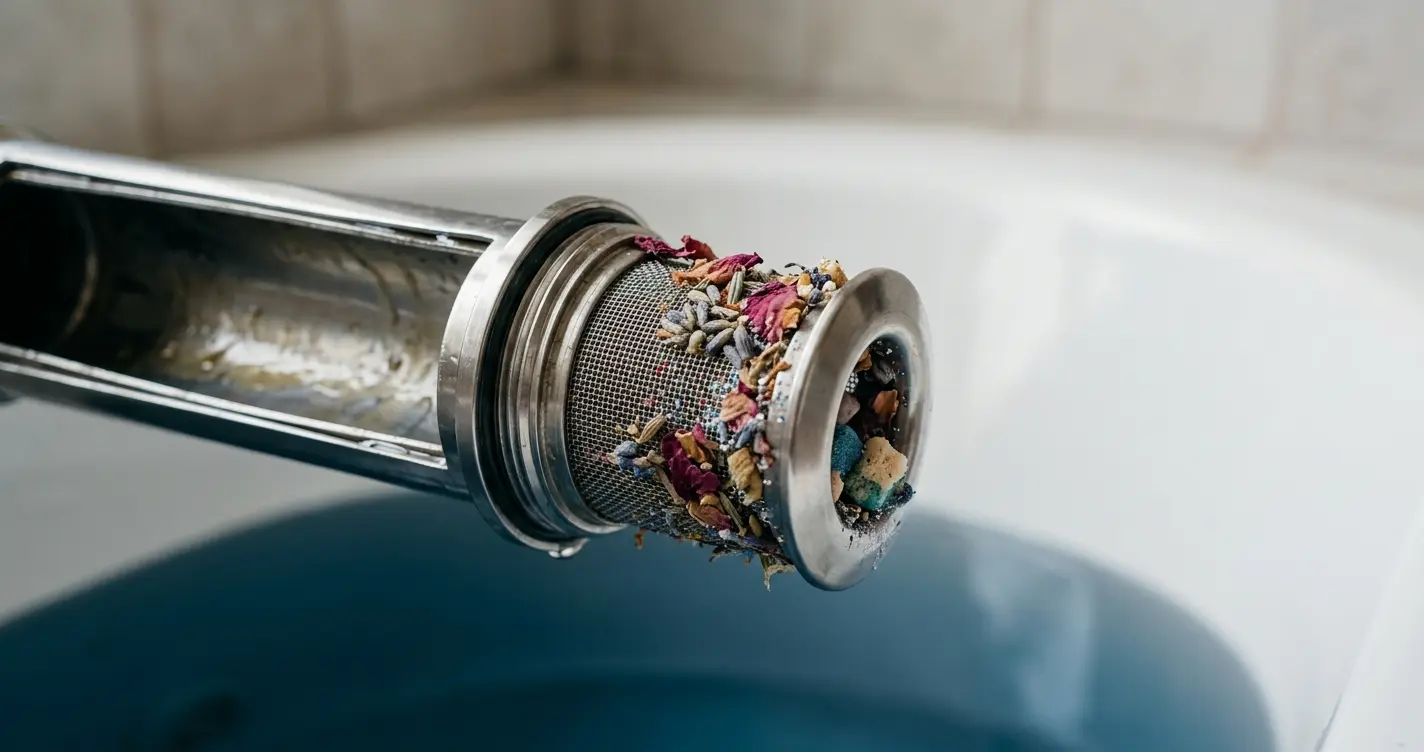
- Glitter and dried botanicals (flower petals, herbs, lavender buds) — These physically clog jet nozzles and filter screens, restricting water flow and straining the pump.
- Artificial dyes — Vivid colorants can stain internal plumbing components, gaskets, and acrylic tub surfaces permanently.
When shopping for bath bomb ingredients safe for jets, the label is your best friend. If you see oils, butters, glitter, or "botanicals" listed, that product isn't designed for a jetted system.
Can You Use a Bath Bomb in a Jetted Tub? The Honest Answer
The Short Answer
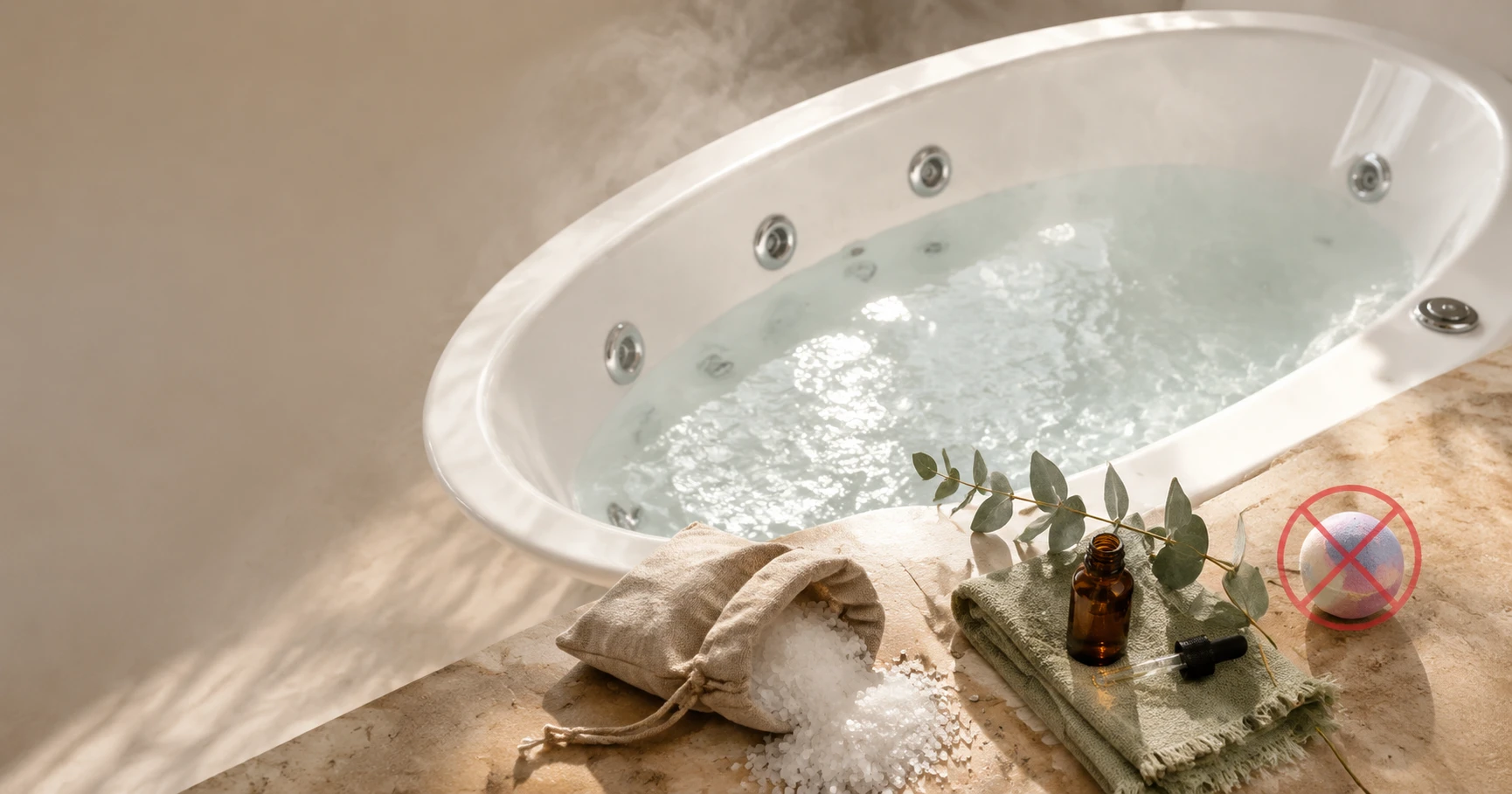
Standard bath bombs with oils, glitter, or botanicals: No. The risk of damage to whirlpool tub systems is simply too high. The gorgeous swirl of petals and shimmer that looks amazing in a regular soaking tub becomes a plumbing nightmare inside jet lines.
Jet-safe or jet-friendly bath bombs (oil-free, residue-free): Yes, with precautions. Products specifically formulated to dissolve completely without leaving residue can be used in most jetted tubs — as long as you follow a few important steps.
Air-jet tubs: Lower risk, but still choose clean-dissolving formulas. You have more flexibility here, but smart product selection still matters.
What Tub Manufacturers Actually Say
Major manufacturers like Jacuzzi, Kohler, and American Standard generally advise against using standard bath bombs in their whirlpool tub bath products guidelines. Most brand manuals specifically warn that using unapproved products can void your warranty coverage — a detail many homeowners overlook until it's too late.
Some brands have softened their stance in recent years, acknowledging the popularity of products like a jacuzzi tub bath fizzy, but they consistently recommend oil-free, fully dissolvable formulas and thorough post-use cleaning.
The Real Risks — What Can Go Wrong
Clogged Jets and Reduced Water Flow
Flower petals, glitter particles, and undissolved chunks lodge in jet nozzle openings and filter screens. You might not notice it after one use, but gradual buildup restricts water flow and forces the pump to work harder. Over time, this increased strain can shorten the pump's lifespan significantly.
Oily Biofilm and Bacterial Growth Inside Pipes
This is arguably the most concerning risk. Oils from bath bombs create a slick biofilm on the interior walls of jet pipes — a warm, moist environment where mold, mildew, and bacteria thrive. The result? Unpleasant odors, cloudy water, and genuinely unsanitary bathing conditions between uses.
Bath bomb jetted tub damage from biofilm often goes unnoticed for weeks or months because it's happening inside pipes you can't see. By the time you smell something off, the problem is well-established.
Staining and Surface Damage
Vivid dyes — especially reds, blues, and purples — can permanently tint acrylic tub shells, rubber gaskets, and seals. Some synthetic fragrances also contain chemicals that degrade rubber seals over time, eventually leading to leaks.
Costly Repairs
Here's where the real financial pain hits. Professional jet-line cleaning typically costs $150 to $400 or more. If the damage progresses to pump failure or jet replacement, you're looking at $200 to $800+ depending on your system. Prevention is dramatically cheaper than the cure.
How to Safely Enjoy a Bath Bomb Experience in Your Jetted Tub
Step 1 — Choose a Jet-Safe Bath Bomb
Look for products explicitly labeled "jet-safe," "whirlpool-friendly," "oil-free," "no botanicals," or "no glitter." The ingredients should fully dissolve with zero residue. Several brands now specifically market jacuzzi tub bath fizzy products designed for these systems — they're worth seeking out.
When checking bath bomb ingredients safe for jets, your green-light list includes: baking soda, citric acid, Epsom salt, and water-soluble dyes. Your red-flag list: anything with oils, butters, mica glitter, or dried flowers.
Step 2 — Use a Mesh Bag or Bath Bomb Holder
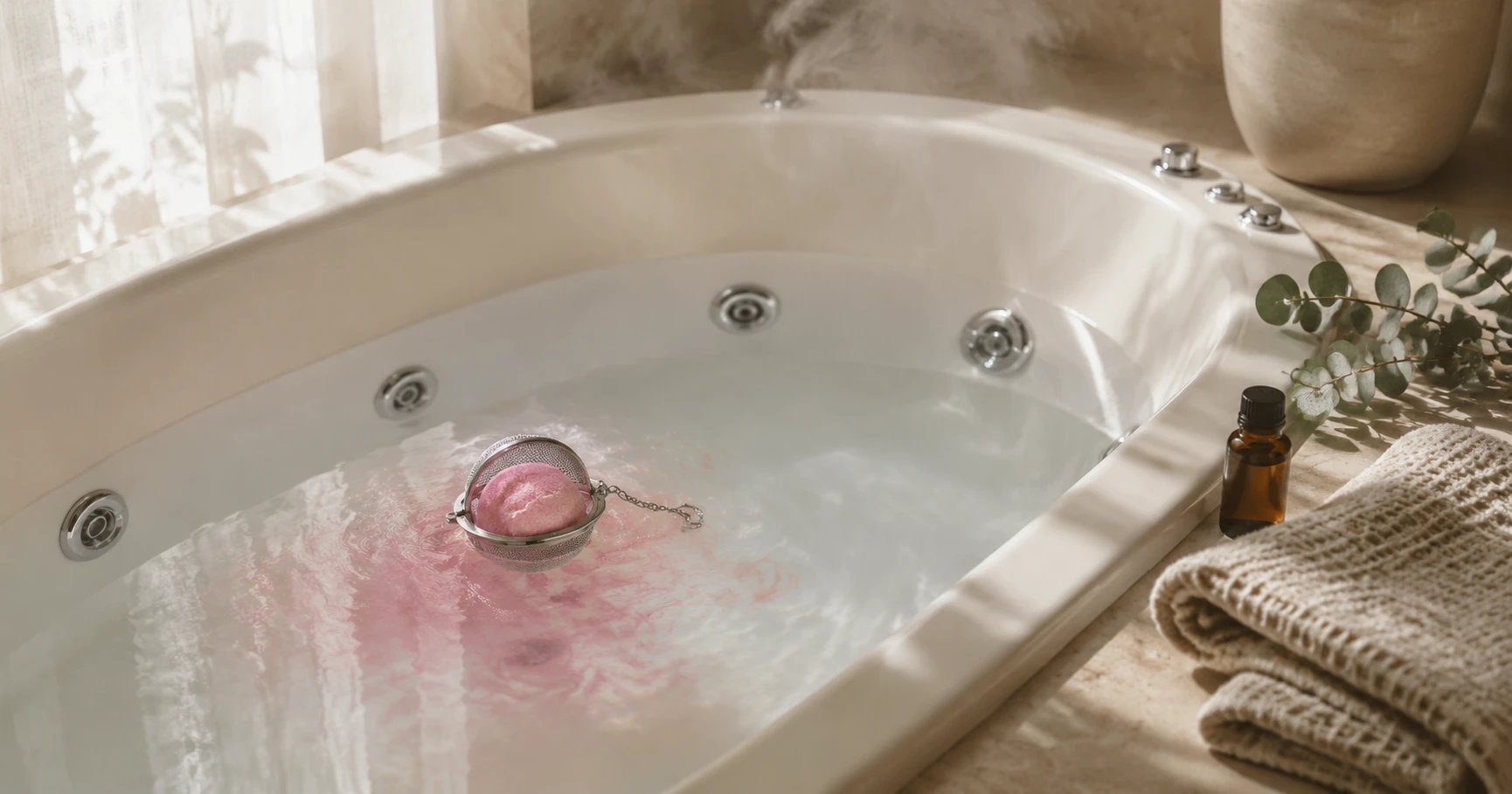
Place the bath bomb inside a fine-mesh lingerie bag or a stainless steel tea infuser ball before dropping it in. This simple trick catches any solids or undissolved particles while still releasing fragrance, fizz, and color into the water. It's cheap insurance against clogged nozzles.
Step 3 — Run Jets on Low or Skip Them During the Soak
For the safest approach, dissolve the bath bomb completely with the jets turned off. Once the fizzing is done and the bomb has fully dissolved, you can run the jets briefly on the lowest setting if desired. Turn the jets off again before draining to minimize residue being pulled into the lines.
Step 4 — Flush the System After Every Use
This step is non-negotiable. After draining the bathwater, refill the tub with warm water until it covers the jets by about two inches. Add a tablespoon of low-suds dish cleaner or a cup of white vinegar. Run the jets for 10 to 15 minutes, then drain and wipe down all surfaces.
For monthly deep cleaning, use a dedicated jet-line cleaner such as Ahh-Some, Oh Yuk, or Jet Clean. These products are specifically formulated to break down biofilm and residue inside whirlpool tub bath products plumbing.
Best Alternatives to Bath Bombs for Jetted Tubs
Epsom Salt (Plain, Unscented)
Plain Epsom salt fully dissolves, leaves no residue, and is safe for most jetted systems. You still get the muscle-soothing, relaxation benefits without any of the risk. It's the simplest and most reliable option.
Jet-Safe Bubble Bath Formulas
Several brands make bubble bath products specifically designed for whirlpool systems. These formulas are low-suds and residue-free. Look for "whirlpool-compatible" on the label — it means the product has been formulated to avoid the foaming and buildup that standard bubble baths cause.
Essential Oil Drops (With Caution)
Three to five drops of pure essential oil — without a carrier oil — is generally low-risk for jetted systems. The amount is small enough that it won't create significant residue. Lavender, eucalyptus, and peppermint are popular choices. Just always flush the system afterward.
Bath Salts (Without Oils or Botanicals)
Pure mineral bath salts dissolve cleanly and pose minimal risk. However, avoid blends that contain dried herbs, flower petals, or added oils — those carry the same risks as a standard bath bomb.
How to Clean Your Jetted Tub If You Already Used a Bath Bomb
Immediate Flush Protocol
If you've already used a standard bath bomb in your jetted tub, don't panic — but act quickly. Drain the tub completely. Refill with hot water until it's about two inches above the highest jet. Add two to three tablespoons of low-suds dishwasher detergent or a dedicated jet cleaner. Run the jets on high for 15 to 20 minutes. Drain, rinse the tub thoroughly, and wipe down all surfaces.
Deep Cleaning for Stubborn Buildup
If you've been using bath bombs regularly without flushing, you likely have biofilm buildup inside the pipes. Use a dedicated biofilm remover following the product's instructions. You may need to run two full cleaning cycles if residue or odor persists after the first round.
Know when to call a professional: if you see discolored water shooting from the jets on startup, notice a persistent foul or musty smell, or experience noticeably weak jet pressure, a professional jet-line cleaning is your best next step.
Preventive Maintenance Schedule
Adopting a simple maintenance routine will keep your tub healthy for years:
- After every use: Quick flush with clean water and a splash of vinegar or mild cleaner.
- Monthly: Full jet-line cleaner cycle using a dedicated product.
- Every 6 to 12 months: Professional inspection and cleaning, especially for heavy-use tubs.
The Bottom Line — Enjoy the Fizz Without the Risk
You don't have to give up bath bombs just because you own a jetted tub. You simply need to be intentional about it. The framework is straightforward: Know your tub type → Read the label → Choose jet-safe products → Flush every time.
The goal isn't deprivation — it's smart self-care. A jet-safe bath fizzy can deliver the same satisfying fizz, soothing fragrance, and relaxation ritual you love. The only difference is you're protecting a major home investment at the same time.
A little diligence goes a long way. Choose the right products, clean the system after use, and your jetted tub will keep running beautifully for years to come — bath bomb nights included.
Frequently Asked Questions
Q: Will one bath bomb ruin my jetted tub?
A: A single use probably won't be catastrophic, but residue starts accumulating immediately — particularly oils and fine particles. If you've already done it, flush the system right away with clean water and a mild cleaner to minimize potential damage. The bigger danger is making it a habit without proper cleaning.
Q: Are bath bombs safe in air-jet tubs but not whirlpool tubs?
A: Air-jet tubs are lower risk because water doesn't recirculate through the plumbing. However, oils and dyes can still coat the tub shell and potentially seep into air channels. Caution is still advised, and choosing clean-dissolving formulas remains the smart approach regardless of tub type.
Q: Can I use bath bombs with the jets turned off?
A: Yes — using a jetted tub as a regular soaking tub with the jets off eliminates most risks. You're essentially treating it like any standard bathtub at that point. Just be aware that residue can still settle in drain lines, so a quick rinse after draining is still a good idea.
Q: What bath bomb ingredients are safe for jets?
A: Baking soda, citric acid, Epsom salt, and water-soluble dyes that leave zero residue are generally safe for jetted systems. Avoid any bath bomb containing oils, butters, glitter, dried botanicals, or heavy artificial colorants — these are the ingredients most likely to cause clogs, staining, and biofilm buildup.
Q: How do I know if my jets are clogged from bath products?
A: Common signs include reduced water pressure from one or more jets, uneven jet flow, cloudy or discolored water on startup, and musty or sour odors when the jets run. If you notice black or brown flecks in the water when you first turn on the jets, that's biofilm breaking loose — a clear sign your pipes need a deep cleaning.
Q: Can I make my own jet-safe bath bombs at home?
A: Absolutely. Combine baking soda, citric acid, and Epsom salt as your base. You can add a few drops of pure essential oil for fragrance — just skip the carrier oil. Leave out glitter, dried flowers, and heavy colorants entirely. The result is a fizzy, fragrant bath bomb that dissolves completely and won't harm your jet system.