
A clear, practical guide for anyone tempted to toss a shower steamer into the tub.
Quick Answer: The Short Version
Technically yes — but most experts and manufacturers say you really shouldn't. Shower steamers will fizz happily in your bathtub, but they're formulated with much higher concentrations of essential oils than bath bombs, which can irritate skin that's submerged for 20 minutes.
If you're after a quick verdict: skip the swap. Your skin, your nose, and your wallet will all be better off using each product as intended.
What Are Shower Steamers, Exactly?
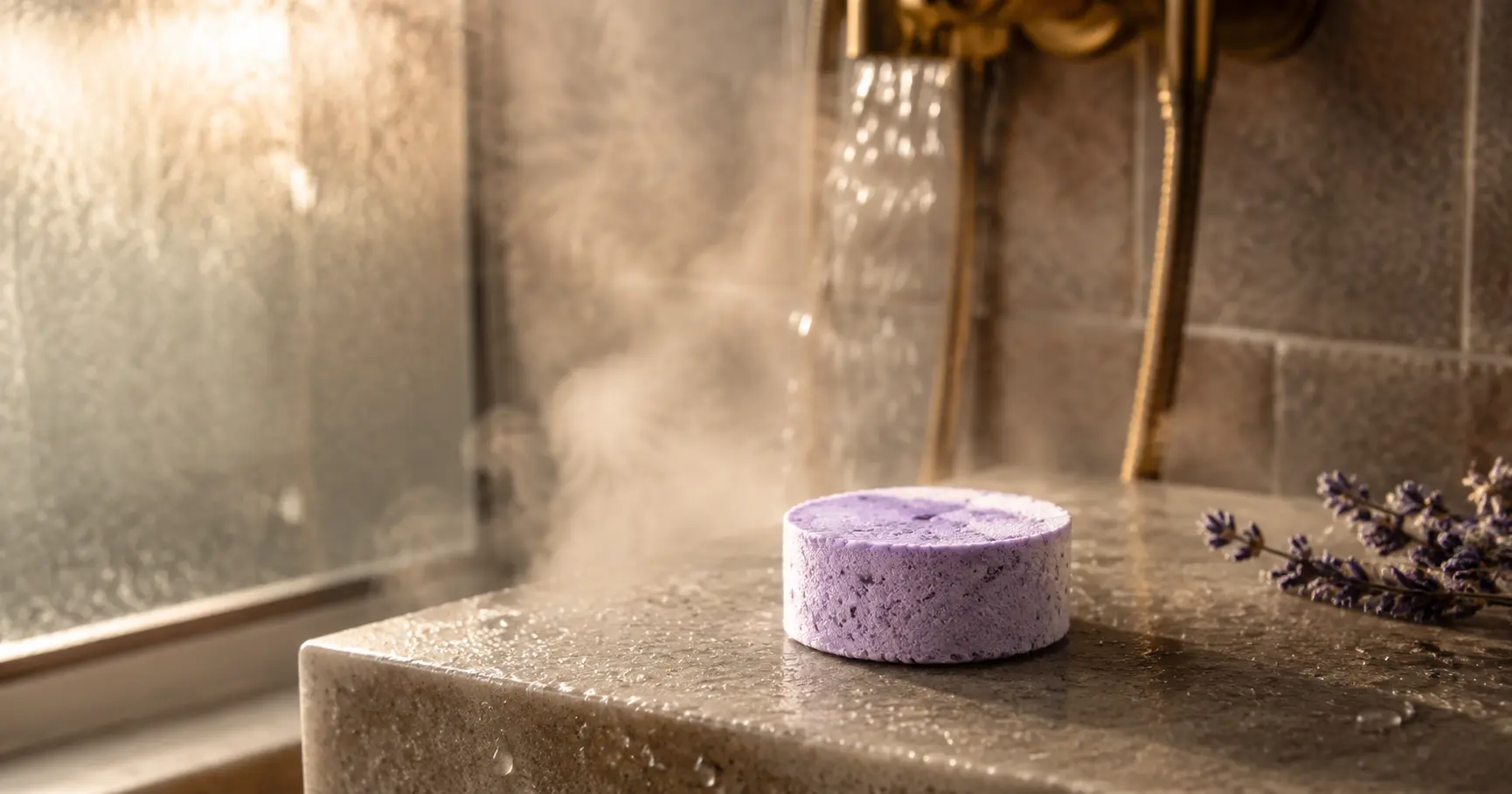
Shower steamers are small, puck-shaped tablets designed to sit on your shower floor (or in a corner away from direct spray) and release aromatic vapor as water hits them. Think of them as aromatherapy shower tablets that turn your morning rinse into a spa-like experience.
The Basic Ingredients
Most shower steamers contain a simple base: baking soda, citric acid, cornstarch, and a generous dose of concentrated essential oils. The first two ingredients create that signature fizzing reaction when they meet water, while cornstarch helps slow the dissolve so the steamer lasts your whole shower.
How They Work in the Shower
These dissolvable bath fizzies are engineered to release their aromatic punch through steam and splash — not full submersion. As warm shower water occasionally hits the tablet, the oils vaporize into the steamy air, where you breathe them in. Your skin barely touches the product directly.
Popular Varieties on the Market
Walk into any wellness aisle and you'll spot familiar favorites: eucalyptus shower melts for stuffy sinuses, menthol-infused options for post-workout recovery, lavender for evening wind-downs, and citrus blends like grapefruit or sweet orange for a morning energy boost.
What Are Bath Bombs, and How Are They Different?
Bath bombs may look like cousins of shower steamers, but they're built for a completely different job — soaking, not steaming.
Bath Bomb Ingredients vs. Shower Steamer Ingredients
While both share that baking soda and citric acid base, bath bombs typically include skin-conditioning extras: Epsom salts, carrier oils like coconut or sweet almond, cocoa butter or shea butter, and significantly diluted fragrance. They're designed to nourish skin during prolonged contact.
Essential Oil Concentration: The Big Issue
Here's the heart of the problem. Shower steamers can pack three to ten times more essential oil per ounce than bath bombs. That intensity is perfect for filling a steamy shower with scent — but it's far too strong for bare skin sitting in warm bathwater for half an hour.
So… Can You Actually Use a Shower Steamer in the Bath?
Let's get to the honest answer most people are looking for.
Yes, It Will Fizz and Dissolve
Drop a shower steamer into your tub and it will absolutely do its thing — bubbling, dissolving, and releasing a wave of fragrance. Visually, you won't notice much difference from a bath bomb. The water might even smell more intensely aromatic than usual.
But Here's Why Manufacturers Say Don't
Almost every reputable brand explicitly labels their products "for shower use only" — and not just as a legal precaution. There are real reasons behind that warning.
Skin Irritation Risks
Concentrated menthol, eucalyptus, and peppermint oils can trigger burning sensations, redness, tingling, or rashes when they sit on submerged skin. Sensitive areas — face, intimate regions, freshly shaved legs — are especially vulnerable to that "icy hot" reaction nobody wants in the bath.
Allergic Reactions
Even if you've happily inhaled lavender steamers for years, prolonged skin contact is a completely different exposure. Many people develop reactions in the tub that they'd never experience in the shower simply because their skin is soaking up undiluted oils for 20+ minutes.
Weakened Aromatherapy Effect
Ironically, dumping a shower steamer into a full tub also dilutes the very thing you bought it for. Without rising steam to carry the oils into the air, much of that scent payoff gets lost in the bathwater. You end up with a stronger skin exposure and a weaker aromatherapy moment.
When It Might Be Okay (And When to Skip It)
Not every situation is equally risky. Here's how to gauge yours.
Lower-Risk Scenarios
If a steamer uses gentler oils — lavender, chamomile, sweet orange, or ylang-ylang — and you have normal, non-sensitive skin, the risk is lower. Some newer brands also market explicitly as multi-use bath accessories, formulating their products with bath-safe oil concentrations from the start.
Definite No-Go Situations
High-menthol, peppermint, or eucalyptus formulas
Sensitive, eczema-prone, or recently shaved skin
Pregnancy (many essential oils aren't recommended during pregnancy)
Children's baths — kids' skin absorbs more and reacts faster
Bathrooms where pets, especially cats, may be exposed to the vapor
Safer Alternatives if You Want Both Experiences
Good news: you don't have to choose between fizzy bath fun and your favorite aromatic blends.
Look for Dual-Purpose Products
A growing category of brands now explicitly markets dual-use fizzies designed for both tub and shower. Check the label for terms like "bath and shower safe," "multi-use," or "skin-conditioning formula." These products use lower oil concentrations and often add moisturizing carriers.
DIY Tip: Place It Outside the Water
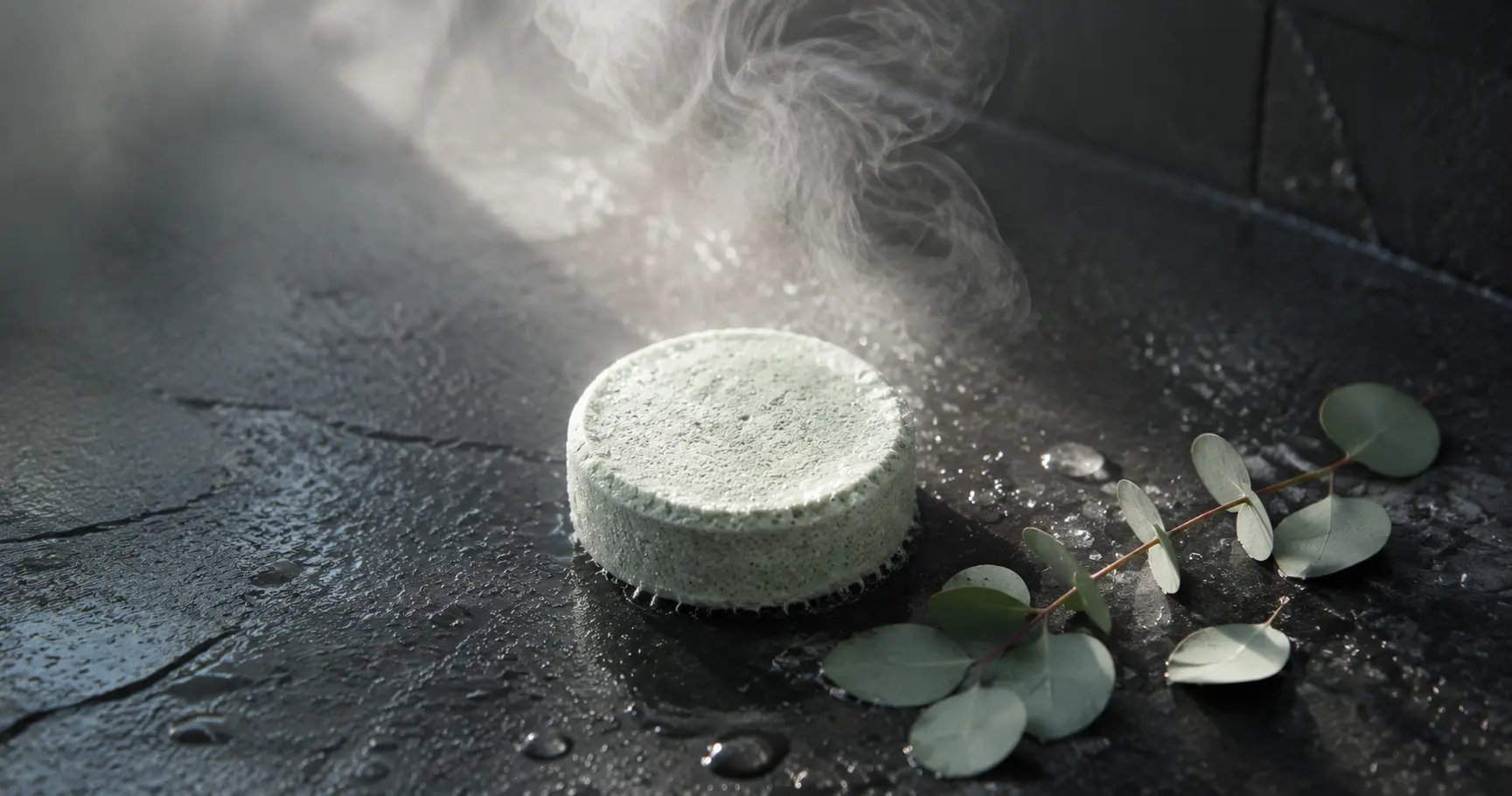
Want shower-steamer aromatherapy during a bath without the risk? Set the steamer on the tub's edge, on a soap dish, or on the shower floor where occasional splashing or dripping water can activate it. You get the rising vapor with zero skin contact.
Try a True Bath Bomb with Similar Scents
Most brands that make eucalyptus shower melts also offer eucalyptus bath bombs — same scent profile, skin-safe dilution. It's the easiest swap if you've fallen in love with a particular aroma and want to enjoy it while soaking.
How to Patch-Test Before Committing
If you're determined to experiment with a steamer you already own, do this first.
The 24-Hour Test
Dissolve a small piece of the steamer in a cup of warm water. Dab a drop onto the inside of your forearm and let it dry. Wait 24 hours and watch for any redness, itching, bumps, or warmth at the test site.
Signs to Stop Immediately
If you go ahead with a bath and notice tingling, burning, redness, or itching anywhere on your body, drain the tub right away. Rinse thoroughly with cool water and a gentle, fragrance-free cleanser. Don't tough it out — irritation only gets worse the longer you soak.
The Bottom Line
Shower steamers and bath bombs look like twins on the shelf, but they're built for two very different jobs. Steamers are aromatherapy delivery systems designed for steam and splash; bath bombs are skin-conditioning soaks designed for prolonged contact.
Could you use one in place of the other? Sure — but you'll likely end up with weaker scent, irritated skin, or both. The smarter move is to keep them in their lanes: let steamers transform your shower into a spa, and let bath bombs do what they do best in the tub.
Your skin handles a lot every day. Giving it the right product for the right moment is one of the easiest little kindnesses you can offer it.
Frequently Asked Questions
Q: Will a shower steamer ruin my bathtub?
A: For most acrylic and porcelain tubs, no — but heavily dyed steamers can occasionally leave a faint ring of residue, especially in older or porous tubs. Rinse the tub well after use, and avoid steamers with deep colorants if you have a light-colored or vintage bathtub.
Q: Can I cut a shower steamer in half to make it gentler for the bath?
A: Halving the dose does reduce overall oil exposure, but it doesn't change the underlying concentration of oils that touches your skin in any given spot. If the formula is intense, even a small piece can still cause irritation. It's safer to use a true bath bomb than to risk it.
Q: Are shower steamers safe for kids if used in the bath?
A: No, and most pediatric and aromatherapy guidelines agree on this one. Children's skin is thinner, more absorbent, and more reactive, and many essential oils common in shower steamers (eucalyptus and peppermint especially) aren't recommended for young kids at all. Stick to gentle, child-formulated bath products.
Q: Do bath bombs work in the shower the way shower steamers do?
A: Not really. Bath bombs dissolve too quickly under direct shower spray and contain oils and butters that can make your shower floor slippery and leave an oily film. The scent also evaporates too fast without the slow steam-activated release that shower steamers are built around.
Q: What's the best way to use a shower steamer I already bought?
A: Place it in a corner of your shower where water splashes it occasionally but doesn't pour directly on it — usually opposite the showerhead. Run the water warm to hot to create plenty of steam, breathe deeply, and you'll get the full aromatherapy effect for 10 to 15 minutes.
Q: Can I make my own bath-safe version at home?
A: Yes — plenty of DIY recipes exist for bath-friendly fizzies using baking soda, citric acid, Epsom salts, a tablespoon of carrier oil (like fractionated coconut), and just 5–10 drops of skin-safe essential oil per batch. The key is keeping essential oils heavily diluted compared to a shower-specific recipe.