
Natural is not automatically better. When you compare essential oils vs fragrance oils for bath bombs, the right pick depends on how the scent performs in the finished product, whether its cost holds across reorders, and what your target market allows on the label. The word "natural" settles none of those.
Below is a practical way to decide, starting from the result you want and working back to the oil.
What a Good Result Looks Like
A good scent result in a bath bomb is a fragrance that survives mixing, pressing, curing and months on a shelf, and smells the same in the tenth batch as in the first. A scent that is lovely in the sample bottle but weak or off after curing has failed, whatever the oil's origin.
Scent Strength After Curing
What counts is how the finished bomb smells when the customer opens the pack, and again when it hits the water. Oils behave differently once they are inside a pressed, dry matrix. Some top notes, especially citrus, fade quickly. Others turn harsh or flat. So judge the scent on a cured bomb, not on a blotter strip or the bottle.
Batch-to-Batch Consistency
Essential oils are agricultural products. Crop year, growing region, harvest timing and distillation all move the aroma profile, and a lavender or bergamot lot can smell noticeably different from the last. Good suppliers blend and standardize, but some variation is part of the material. Fragrance oils are compounded from a fixed formula, so a repeat order can be matched far more tightly. If your product will be reordered for years across several retail accounts, that matters a great deal.
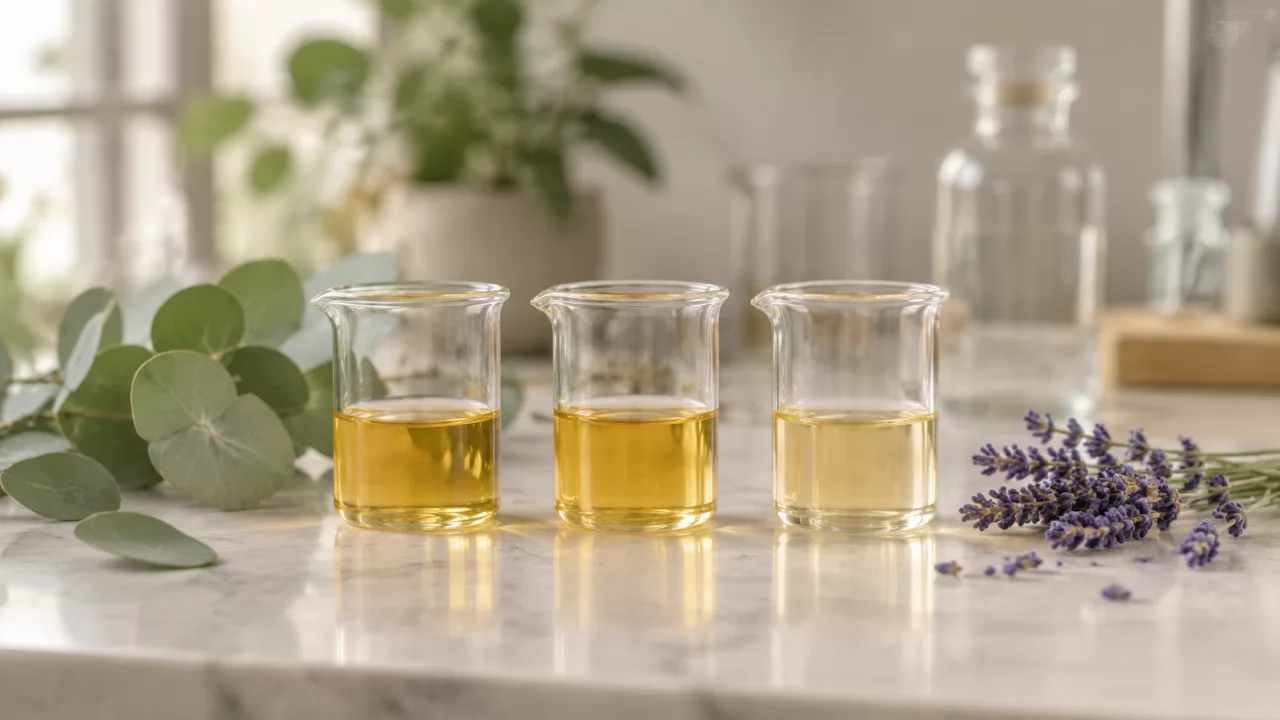
Color and Skin Contact
Some oils shift the color of a bomb or stain a tub. Vanilla-type materials and certain botanical oils are common culprits, and they can darken over time. Total fragrance load is another point to settle with your formulator early. A higher load may throw more scent, but it also raises the chance of discoloration, tub residue and skin reactions. Agree on the level in writing, per scent, rather than assuming one number fits all.
Essential Oils vs Fragrance Oils Explained
Essential oils are concentrated aromatic extracts taken from plants, usually by steam distillation or, for citrus, cold pressing of the peel. Fragrance oils are blended aroma compositions made from aroma materials, which may be natural isolates, synthetic molecules or a mix of both. That is the core of the difference between essential oils and fragrance oils in personal care.
| Criterion | Essential oils | Fragrance oils |
|---|---|---|
| Source | Plant material | Blended natural and/or synthetic materials |
| Scent range | Limited to what plants yield | Very wide, including dessert and marine notes |
| Cost stability | Can swing with harvests | Usually steadier |
| Supply | Tied to crops and weather | Reproducible from a formula |
| Label name | Botanical names, e.g. Lavandula Angustifolia Oil | Parfum (Fragrance) |
| Typical use | Botanical-led brands | Large ranges and trend scents |
Essential oils fit narrow, botanical ranges; fragrance oils fit wide ranges that need repeatable scents.
The "natural fragrance vs synthetic fragrance" argument is less tidy than marketing makes it sound. A fragrance oil can contain naturally derived components. An essential oil is made of many chemical constituents, such as limonene and linalool, which are the same molecules a perfumer might use in a compounded blend. Origin and safety are separate questions.
How Each Is Made
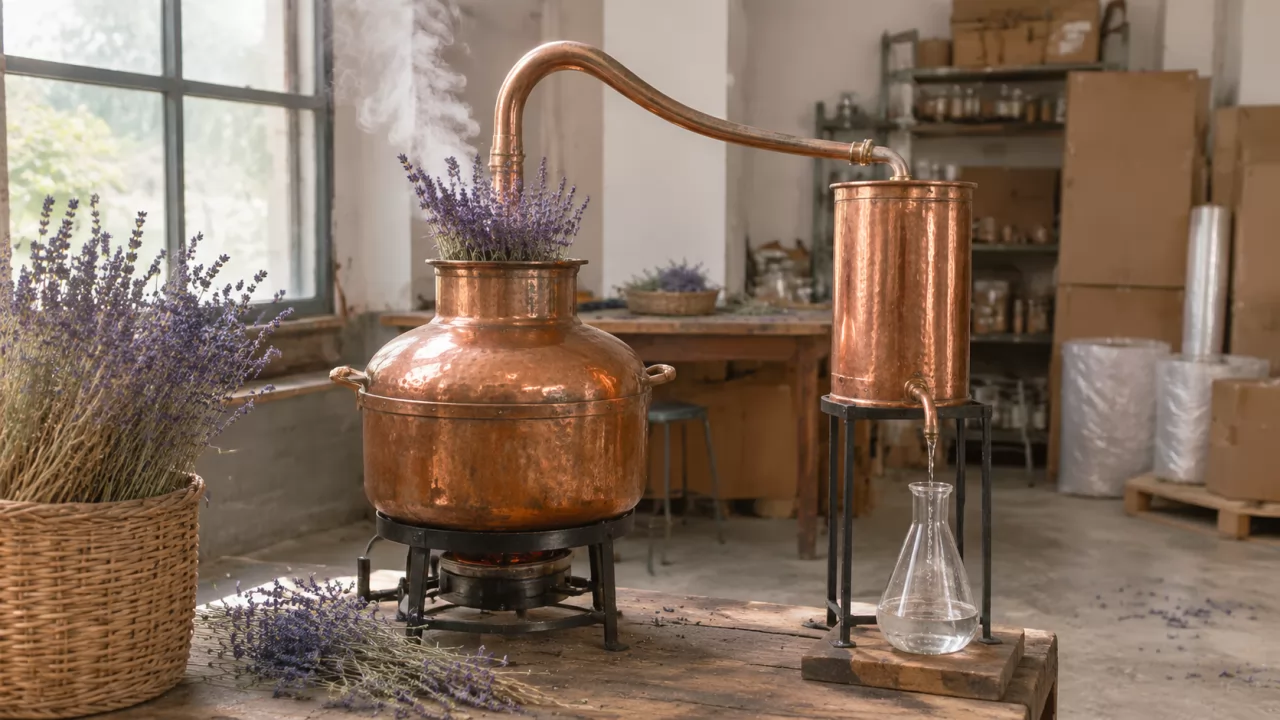
Distillation passes steam through plant material and condenses the volatile fraction. Pressing is used for citrus peels. Fragrance oils are built by a perfumer or fragrance house who blends aroma materials to a formula, then adjusts it for the base, here a dry, alkaline-leaning, effervescent matrix. That adjustment step is why a fragrance oil built for candles may not behave well in a bath bomb.
What the Label Tells You
Under INCI (International Nomenclature of Cosmetic Ingredients), an essential oil is listed by its botanical name, while a compounded fragrance oil appears as "Parfum" or "Fragrance." Both can trigger allergen declarations. In the EU, for example, listed fragrance allergens must be named on the label above certain concentrations, whether they come from a plant oil or a compounded blend. A botanical-sounding label does not remove that duty.
Are Fragrance Oils Safe for Bath Bombs?
Fragrance oils can be used in bath bombs, but safety depends on the specific material, the usage level and the supplier's documentation, not on the category. Cosmetic-grade fragrance oils come with safety data and usage limits set by standards such as those of the International Fragrance Association (IFRA). Candle or craft-grade oils may not.
Check that the fragrance oil is supplied for cosmetic use, not for candles or soap-craft hobby use. Same-looking bottles, different documentation.
Why "Natural" Is Not a Safety Guarantee
Essential oils contain known fragrance allergens, and some constituents are restricted or limited under IFRA standards or regional cosmetic rules. Citrus oils can also be phototoxic in leave-on products, though a rinse-off bath product is a different exposure. Because bath water means long skin contact over a large area, the safety assessment still has to look at the whole formula. Patch testing and a documented safety assessment apply to both oil types.
Documents to Request
Ask the supplier for these, per scent:
- IFRA certificate stating the category and maximum use level
- Allergen list with concentrations
- Safety Data Sheet (SDS)
- Statement of compliance for your target region
If a supplier cannot produce these, treat the scent as unapproved, however good it smells.
Which Is Better for Private Label Bath Bombs?
Neither wins across the board. For private label bath bombs, essential oils suit small, botanical-led ranges, and fragrance oils suit larger, trend-driven or high-repeat ranges. Your price point, brand story and reorder volume decide it.
The honest trade-offs:
- Essential oils: fit a botanical brand story and are easy to explain to customers.
- Essential oils: cost and aroma can shift between harvests.
- Essential oils: the scent menu is narrow, and some notes, like cherry or cotton, do not exist as plant extracts.
- Fragrance oils: a wide library with steady supply and tight batch matching.
- Fragrance oils: easier to match to current trends.
- Fragrance oils: some buyers and shoppers read "fragrance" as synthetic and judge it negatively.
- Fragrance oils: documentation must be solid for each scent.
If your brand is built on botanical claims, weigh the left side; if you are filling shelves across many scents and several retailers, the right side matters more.
Where Essential Oils Fit
They fit a short list of scents such as lavender, eucalyptus, peppermint or sweet orange, where the botanical story is the product. The risk is on the supply side: a poor harvest can lift your cost or force a substitute lot. Build that into your pricing and your reorder plan.
Where Fragrance Oils Fit
They fit bakery, fruit, floral and fresh notes that plants simply do not provide, and any range that must smell identical across reorders. Seasonal lines also run more easily on a fragrance library than on a crop calendar.
Compliance by Market
Compliance is checked case by case for each target market and each formula. No scent is "approved everywhere." The table gives the general picture of what is usually looked at.
| Market | What is usually checked | Documents often asked for |
|---|---|---|
| EU | Cosmetics Regulation (EC) No 1223/2009, allergen labeling | Safety report, PIF, allergen list |
| UK | UK Cosmetics Regulation, responsible person | Safety assessment, SCPN notification |
| US | FDA cosmetic rules, labeling, MoCRA | Ingredient list, safety substantiation |
| Gulf countries | Local registration, labeling language, ingredient rules | Certificates, SDS, free-sale or product documents |
Start from the market with the strictest rules among those you plan to sell in, then work out which scents survive it.
Choosing Your Scent System
Work through these five checks before you commit to a scent line.
- Price point: essential oils can lift cost and make it less predictable; confirm the budget per unit before choosing scents.
- Claims: decide what you will say on pack. Scent descriptions are fine, but wording about health effects is not something a scent can support.
- Shelf life: ask how the scent and color hold over the shelf life you intend, and test it.
- Markets: list every country you plan to sell in and check allergen and labeling needs for each.
- Scent matching: if you need a specific reference scent, fragrance oils give far more room to match it.
Rule of thumb: pick essential oils when the botanical story is the product, and fragrance oils when repeatability and range are.
Ordering Scented Bath Bombs
A scent moves through five stages, and the cure time sits right in the middle of the review. A sample judged on day one tells you little; look again after the bomb has dried and cured. For a bath bomb fragrance oil manufacturer OEM workflow, the supplier's fragrance documentation should already be on file before sample sign-off.

| Stage | What happens |
|---|---|
| Brief | You send scent idea, market, claims |
| Sample | Scented bombs made to your brief |
| Scent adjustment | Strength and color tuned after curing |
| Approval | You sign off sample and documents |
| Bulk production | Made to the approved sample |
Changing a fragrance after approval usually means new samples, new documents and a reset of the schedule, so lock the scent before bulk.
First Thing to Check
Before you approve any sample, ask the supplier for the IFRA certificate and allergen list for that exact scent. If you are still comparing, request both for two candidate scents. If you want a sample brief, send your target market, scent idea and quantity.
FAQ
Q: Can I mix essential oils and fragrance oils in one formula?
A: Yes. Many blends do. Each component still needs its own documentation, and the total load and allergen content must be checked together.
Q: Do essential oils make a bath bomb "natural"?
A: No. The rest of the formula, such as colorants, surfactants and binders, also counts, and "natural" claims need proof for the exact formula.
Q: Can a fragrance oil be matched to a competitor's scent?
A: Often a close match is possible, but an exact copy rarely is. Describe the scent by notes rather than by naming a brand.
Q: How should I describe scent on pack without making health claims?
A: Describe the smell, such as "fresh citrus" or "warm vanilla." Avoid words that promise a physical or mood effect.