
Why I Wanted to Write This
People ask me about bath bomb ingredients more than anything else. At parties, at family dinners, even at the dentist once. There's this weird mix of curiosity and suspicion — folks love using them but aren't totally sure what they're putting in their bathwater. And fair enough. The labels can be confusing, full of long chemical names that don't mean much to someone who isn't staring at formulation sheets all day like I am.
I also think there's a lot of misinformation floating around online. Some blogs make bath bombs sound like toxic chemical cocktails. Others act like every single one is a pure, all-natural spa miracle. The truth, as usual, is somewhere in the middle. I wanted to give you the real picture — from someone who actually works with this stuff daily.
The Core Ingredients — What Every Bath Bomb Needs
Baking Soda (Sodium Bicarbonate)
This is the backbone. If bath bombs had a main character, baking soda would be it. It makes up roughly 50 to 60 percent of most formulas I've seen come through our facility. It's a base, which matters because it needs to react with something acidic to create that fizz everyone loves. It also softens water — a nice bonus most people don't even think about. Your skin genuinely feels different in softened water, and baking soda is a big reason why a bath bomb soak feels more luxurious than a plain bath.
Citric Acid
And here's that acidic counterpart. When citric acid meets baking soda in water, you get carbon dioxide gas — those bubbles shooting up from your tub. The ratio between these two bath bomb ingredients is honestly where a lot of the art comes in. Too much citric acid and the bomb fizzes out in seconds flat. Too little and it just kind of… sits there, slowly dissolving like a sad lump nobody wants to watch.
Most manufacturers aim for something around a 2:1 ratio of baking soda to citric acid, though every brand tweaks it differently. I've seen formulas that go heavier on the citric acid side for a more dramatic fizz, and others that pull back for a slow, gentle dissolve. Neither approach is wrong — it's really about what experience the product is going for.
Cornstarch
Not every bath fizzy uses cornstarch, but a lot do. It acts as a filler and a binder. It slows down the fizzing reaction a bit, which gives you a longer, more luxurious experience instead of a quick explosion that's over before you even settle into the tub. It also makes the water feel silkier on your skin. I always notice the difference when a formula skips it — the bath just doesn't feel as smooth.
Epsom Salt (Magnesium Sulfate)
This one's popular for a reason. Epsom salt has been used in baths for ages — people swear by it for sore muscles and general relaxation. In bath bombs, it adds weight and texture, and it gives the product that "spa treatment" feel that customers love. Not every bath bomb includes it, but the ones marketed for muscle relief or stress relief almost always do. I personally think it makes a noticeable difference, though I know some people are skeptical.
What Makes Them Pretty (and Smell Amazing)
Essential Oils and Fragrance Oils
Okay, this is where things get personal — and I mean that literally. Choosing the scent profile for a bath bomb is one of the most debated parts of product development at our company. I've sat in meetings where grown adults argued for twenty minutes about whether a lavender blend should lean floral or herbal. It's intense.
Essential oils for bath bombs like lavender, eucalyptus, and peppermint are the natural options. They smell wonderful and come with their own sets of aromatherapy claims. Fragrance oils are synthetic but offer way more variety — you can get scents like "birthday cake" or "ocean breeze" that just don't exist in nature as a single extract.
Most commercial bath bombs use a blend of both. A word of caution though: not all fragrance oils are created equal. Cheaper ones can irritate sensitive skin. This is something I've seen firsthand in customer feedback reports that land on my desk. If you have reactive skin, look for brands that disclose their fragrance sourcing or stick with products that rely solely on essential oils.
Colorants
The rainbow swirls, the galaxy effects, the pastel pinks — all colorants. These can be natural (like beetroot powder or spirulina) or synthetic (FD&C dyes, micas, lake dyes). Micas are probably the most common in the bath bomb world because they give that shimmery, pearlescent look without staining your tub too badly.
I say "too badly" because let's be real — some bath bombs absolutely will leave color behind. That's usually a formulation choice, not an accident. Water-soluble dyes rinse away more easily. Micas can cling to surfaces if used heavily. Just something to keep in mind before you drop a deep purple bomb into your brand-new white tub.
Oils and Butters
Coconut oil, sweet almond oil, shea butter, cocoa butter — these are the moisturizing agents. They float on the water's surface and coat your skin as you soak. This is honestly what separates a decent bath bomb from one that actually leaves your skin feeling soft and hydrated afterward.
Our facility uses coconut oil in probably 70 percent of our bath bomb lines. It's affordable, effective, and most people tolerate it well. But I've noticed a growing shift toward lighter oils like jojoba and grapeseed, especially in products targeting people with oily or acne-prone skin. The industry listens to what consumers want — slowly, sometimes, but it does listen.
The "Extra" Ingredients You Might Find
Dried Botanicals
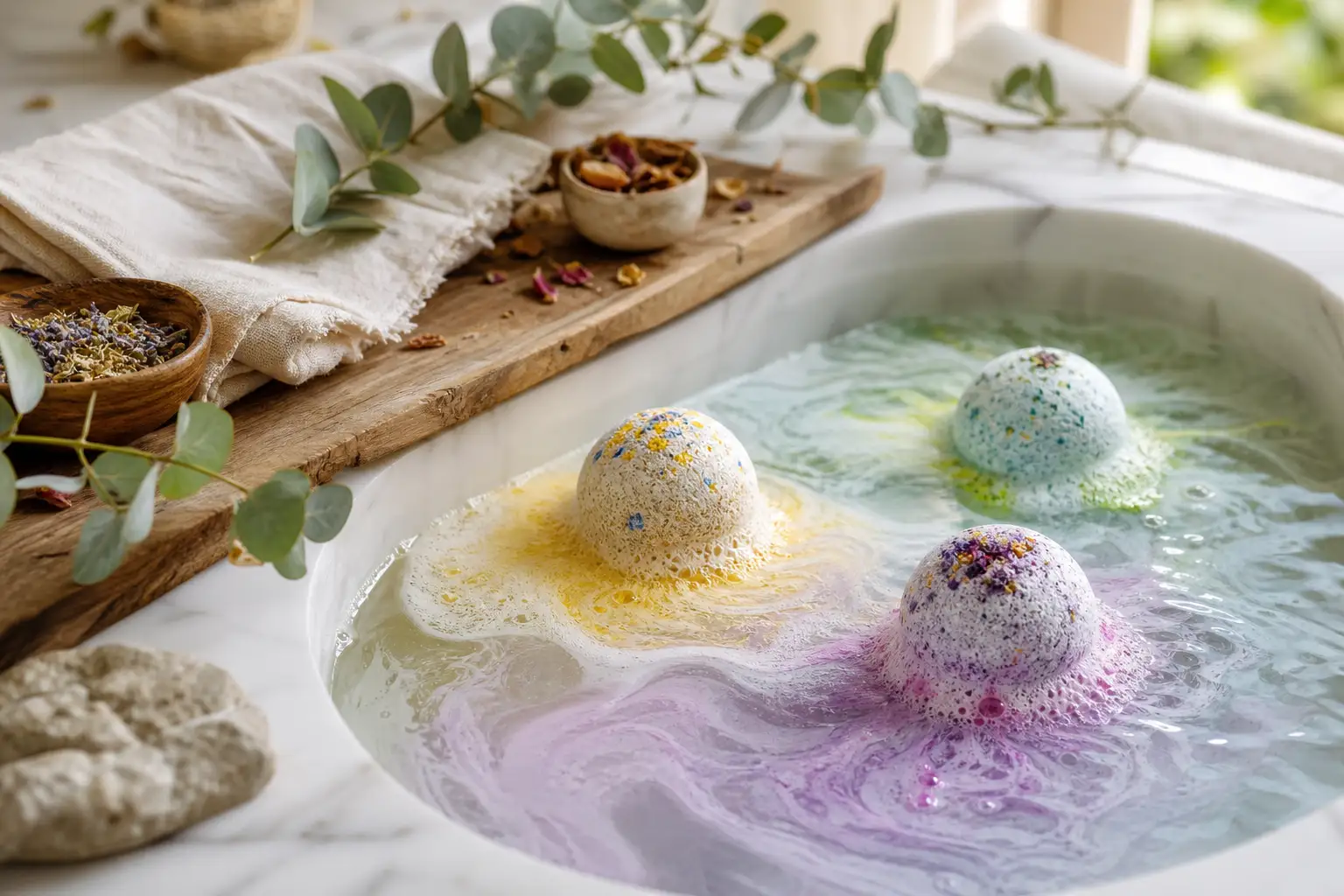
Rose petals, lavender buds, calendula flowers — they look gorgeous scattered on top of a bath bomb. Aesthetically, they're a huge selling point. I mean, who doesn't want their bath to look like something out of a magazine? Practically though? They can clog your drain if you're not careful. A lot of brands now put botanicals inside dissolvable pouches or use them purely as surface decoration. Smart move, honestly. Nobody wants to spend their relaxing evening fishing flower petals out of the plumbing.
Glitter and Embellishments
This is a touchy subject in the industry right now. Traditional craft glitter is microplastic, and it's terrible for the environment. Most responsible manufacturers — ours included — have switched to biodegradable glitter made from plant cellulose. It still sparkles. It just doesn't hang around in waterways for centuries afterward.
If a bath bomb is loaded with glitter and the label doesn't mention "biodegradable" or "eco-friendly" anywhere, I'd personally skip it. That's not me being preachy — it's just what I've learned from seeing the difference between responsible sourcing and cutting corners.
CBD, Vitamins, and Other Trendy Add-Ins
The bath bomb market has gotten creative. CBD-infused bombs have been trending for a few years now. Vitamin C and niacinamide are showing up in some formulas too. Whether these additives actually do much in bath water is debatable — the concentration is usually pretty low, and you're not exactly soaking for hours. But consumers like them, and they're generally harmless, so they're not going anywhere anytime soon.
How Bath Bombs Are Actually Made
I won't bore you with every tiny step, but here's the general process I see on our production floor pretty much every day:
First, the dry ingredients get mixed together. Baking soda, citric acid, cornstarch, Epsom salt, colorants — all blended in large industrial mixers until the color is even and there are no clumps. This part looks deceptively simple but getting a consistent blend matters more than you'd think.
Then the wet ingredients go in slowly. Oils, fragrance, and sometimes a tiny bit of water or witch hazel to help with binding. This part is tricky. Add liquid too fast and the mixture starts fizzing prematurely right there in the mixer. I've watched entire batches get ruined because someone got a little impatient with the spray bottle. It's genuinely painful to see.
Next, the mixture gets packed into molds. This can be done by hand or by machine, depending on the production scale. The texture should feel like damp sand — packable but not wet. If you've ever built a sandcastle, you kind of already understand the concept.
After that comes drying and curing. Bath bombs need time to harden up. This can take anywhere from 12 to 48 hours depending on humidity levels and the specific formula. Our climate-controlled rooms exist for exactly this reason.
Finally, packaging. Shrink wrap is common because it protects the bomb from moisture in the air. Without it, bath bombs can start fizzing or crumbling right on the shelf. Nobody wants to open a package and find a pile of scented dust.
It sounds simple enough, but the margin for error is surprisingly thin. Humidity alone can wreck a whole day's production run. I've seen it happen more times than I'd like to admit.
A Few Things I Wish More People Knew
They expire. Not in a dangerous way, but bath bombs lose their fizz over time. Most are best used within about a year of production. If yours has been sitting in your bathroom cabinet since last holiday season, it'll probably still dissolve, but don't expect the dramatic fireworks you saw in that Instagram video.
Price reflects ingredient quality. A two-dollar bath bomb and a ten-dollar bath bomb are not the same product. The cheaper one likely uses lower-grade fragrance, synthetic dyes, and minimal moisturizing oils. You genuinely get what you pay for here. I see the cost breakdowns. The difference in raw materials is real.
They're not regulated the same way everywhere. In the U.S., bath bombs fall under cosmetic regulations from the FDA, but the requirements are honestly pretty minimal compared to what you might expect. The EU tends to be stricter about ingredient disclosure and safety testing. If ingredient transparency matters to you — and I think it should — look for brands that voluntarily go beyond the bare minimum requirements.
Frequently Asked Questions
Are bath bombs safe for sensitive skin?
It depends entirely on the formula. Fragrance and synthetic dyes are the most common irritants I see flagged in customer complaints. If you have sensitive skin, look for unscented or naturally colored options and always check the full ingredient list before buying. When in doubt, do a small patch test on your arm first.
Can kids use bath bombs?
Generally yes, but choose ones specifically designed for children. These usually skip heavy fragrance, strong dyes, and essential oils that might be too intense for young skin. Also keep an eye on small embellishments that could be a choking hazard for very little ones.
Do bath bombs damage bathtubs?
They can leave temporary staining, especially the brightly colored ones. A quick rinse right after draining the tub usually takes care of it. Micas and glitter might need a little extra scrubbing with a non-abrasive cleaner. It's rarely permanent though — I promise your tub will survive.
Why did my bath bomb not fizz very much?
Could be age, could be storage conditions. If the bath bomb was exposed to humidity before you used it, the chemical reaction between the citric acid and baking soda already started happening slowly over time. Keep them sealed and stored in a dry place for the best results.
Are bath bombs bad for plumbing?
Most dissolve completely and won't cause any issues whatsoever. The exception is ones loaded with chunky botanicals, thick oils, or non-dissolvable glitter. If you're worried, use a drain catcher — they're cheap and save you a potential headache.