
The bath bomb category looks simple on the shelf, but building a profitable brand around it is a sourcing and supply chain decision first. This guide walks entrepreneurs, retailers, and importers through the practical steps: choosing a business model, solving the operational pain points, and partnering with a manufacturer that can scale with you.
If you want a roadmap that goes beyond fizzy color and gets to margins, MOQs, and compliance, you're in the right place.
Why the Bath Bomb Market Is a Strong Business Opportunity
Bath bombs sit inside the broader bath and shower products category—one that has stayed resilient even as discretionary spending tightens. The product is affordable, giftable, and repeat-purchasable. That combination makes it attractive for both mass retail and online sellers.
Market Demand and Growth Drivers
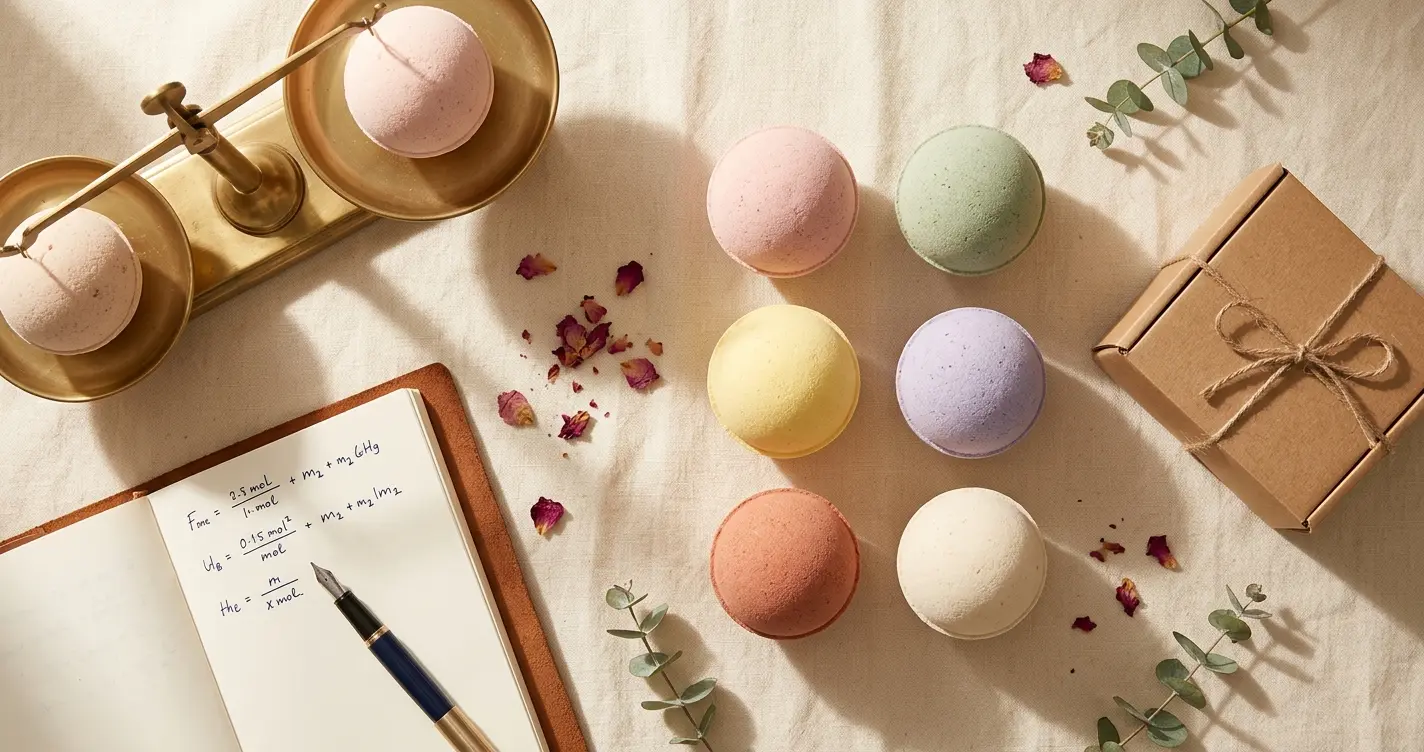
Demand is driven by the ongoing self-care trend, the rise of at-home spa routines, and steady gifting cycles around holidays and seasonal events. These are durable consumer behaviors, not short-lived fads, which is what makes the category worth planning inventory around for the long term.
The numbers below reflect commonly cited market research ranges as of 2026. Treat them as directional context for category planning rather than precise forecasts.
Table: Market Snapshot and Buyer Segments
| Metric / Segment | Detail | Order Pattern |
|---|---|---|
| Global bath bomb market value (2026 est.) | Roughly USD 0.9–1.2 billion within the wider bath products category | — |
| Projected CAGR | Approx. 6–8% through the early 2030s | — |
| Supermarkets & mass retail | Volume-driven, price-sensitive | Large recurring POs, tight specs |
| Pharmacies & drugstores | Compliance-focused, mid-volume | Steady reorders, certification required |
| Gift & specialty retailers | Premium packaging, seasonal peaks | Smaller, design-led orders |
| E-commerce & Amazon FBA | Brand and review driven | Frequent restocks, private label |
| Subscription boxes | Novelty and variety focused | High customization, rotating SKUs |
Who Is Buying Bath Bombs at Scale
The buyers behind these numbers are diverse. Supermarket and pharmacy buyers want consistent supply and clean compliance. Gift retailers care most about presentation. Amazon sellers and private label brands want differentiated products they can own.
Each channel has a different tolerance for MOQ, margin, and customization. Your sourcing strategy should follow your channel—not the other way around.
Understanding the Business Model: DIY vs. Wholesale vs. OEM/ODM
Before sourcing anything, decide how much of the value chain you want to own. Your capital, target scale, and branding ambitions will point you toward one of three paths.
The DIY Route and Its Limits
Following a homemade bath bomb recipe with baking soda, citric acid, and essential oils works well for hobby sellers and craft fairs. Low cost, full creative control at small scale.
It breaks down fast under commercial pressure. Batch-to-batch consistency, throughput, humidity control, and cosmetic compliance become real obstacles once you need thousands of units that pass retail or marketplace checks.
Buying Wholesale vs. Custom Manufacturing
Buying stock bath bombs at wholesale lets you resell finished goods quickly, but you share the same product with every other reseller. Custom manufacturing through an OEM/ODM partner lets you own the formulation, scent, and packaging—building real brand equity.
Table: Comparing Three Startup Models
| Factor | DIY | Wholesale Resale | OEM/ODM |
|---|---|---|---|
| Startup cost | Low | Low–Medium | Medium |
| Scalability | Poor | Moderate | High |
| Margin potential | Low at scale | Thin (shared product) | High |
| Branding control | Full but small | Limited | Full |
| Typical MOQ | None | Case quantities | From 1,000 pcs with flexible partners |
The Pain Points Bath Bomb Sellers Need to Solve
Smart sourcing is really about eliminating risk. Three operational problems sink most new bath bomb brands.
Quality Consistency and Compliance
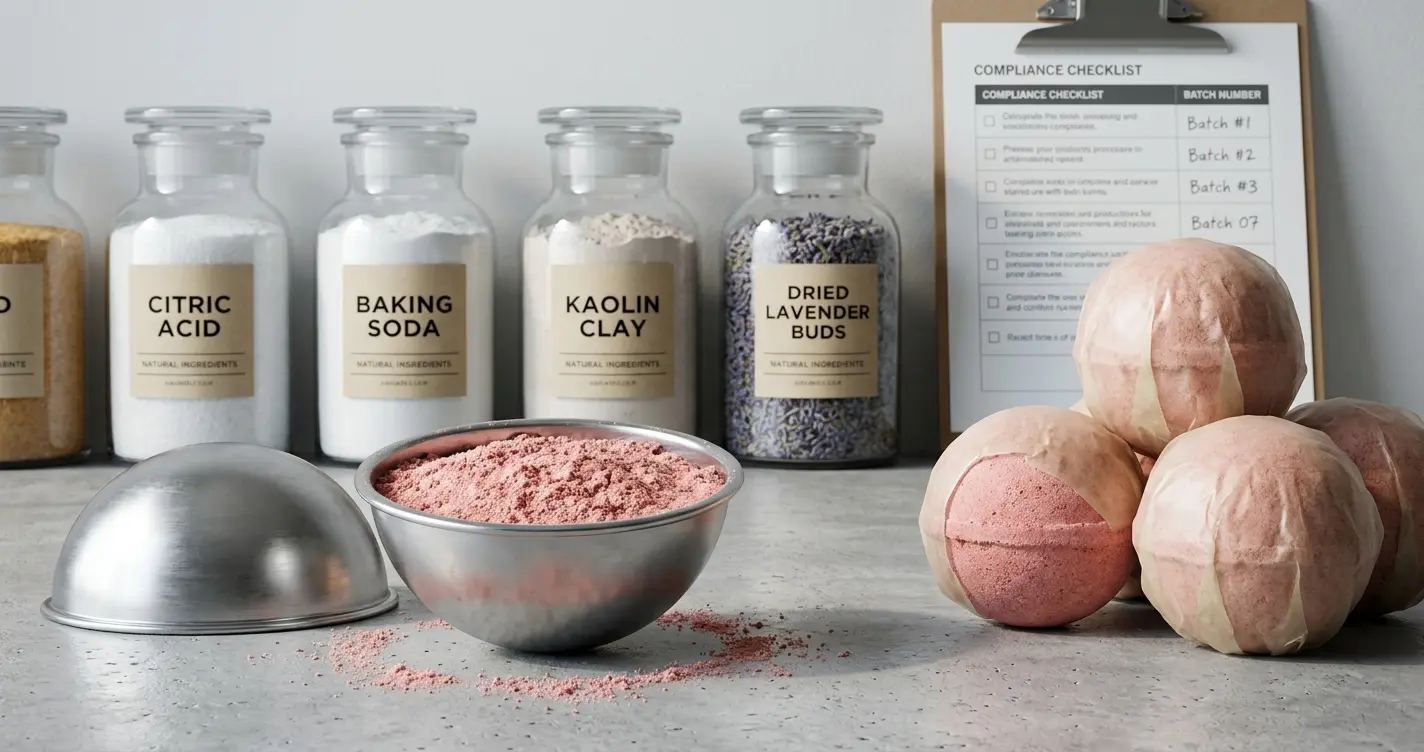
Retailers and marketplaces expect uniform size, color, and fizz performance across every unit. They also expect documented ingredient sourcing and recognized certifications before they'll list you. A manufacturer with established quality systems removes this barrier upfront.
Inventory, Cash Flow, and MOQ Barriers
High minimum order quantities are the classic trap for new entrants. Committing to tens of thousands of units ties up cash and creates inventory risk before you've proven demand. Flexible MOQs change the math entirely—letting you test SKUs and reorder based on real sell-through.
Shrinkage, Breakage, and Shelf Life
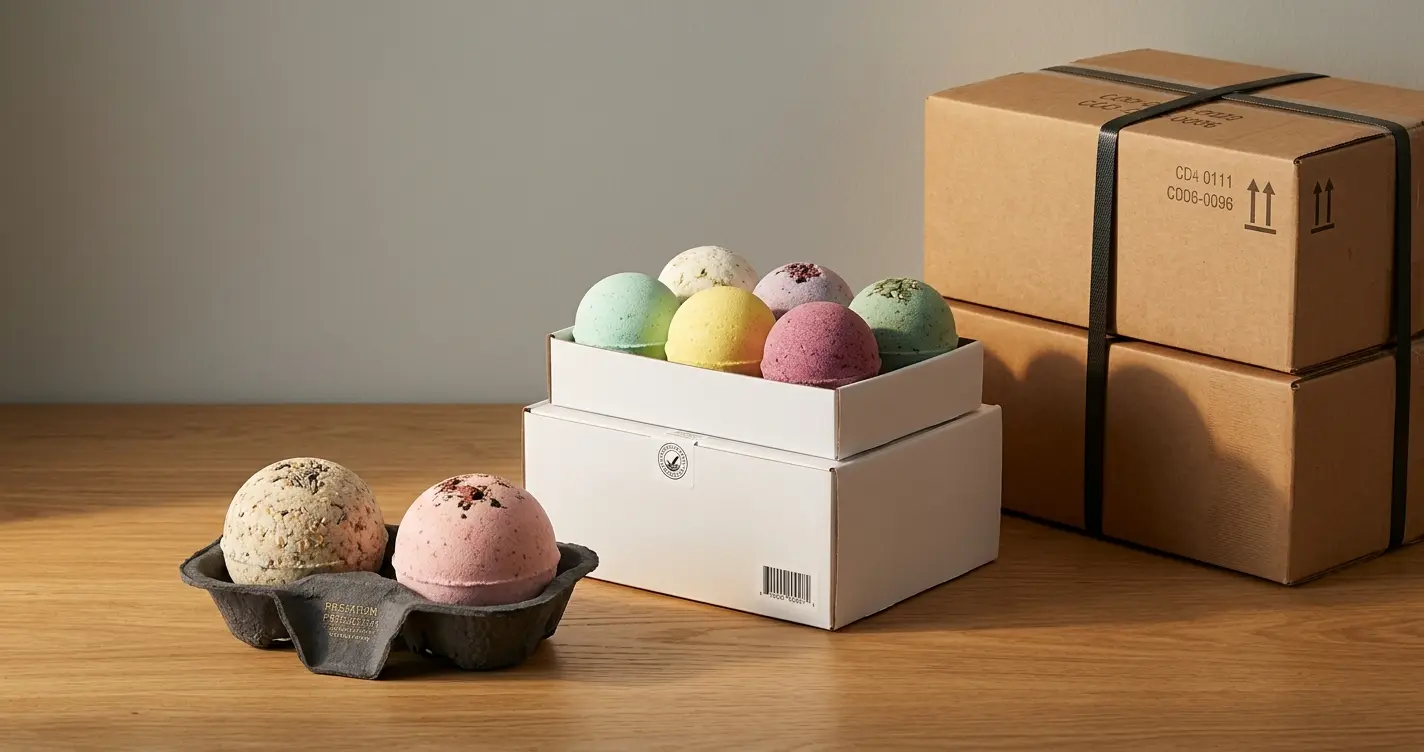
Bath bombs are fragile and humidity sensitive. Poor packaging leads to cracked products, customer returns, and negative reviews. Protective packaging and proper formulation directly affect your effective margin and your store ratings.
Step-by-Step: How To Start Your Bath Bomb Business
Step 1: Define Your Niche and Target Channel
Decide where you'll compete: gifting, mass retail, premium personal care, or online marketplaces. Selling bath bombs on Etsy rewards artisanal design and storytelling. Amazon rewards reviews, fast shipping, and a tight private label offer.
Your niche dictates your formulation, packaging, and price point—so lock it in before you start sourcing.
Step 2: Handle Legal and Compliance Basics
Bath bomb business license requirements vary by region, but most markets classify bath bombs as cosmetic products. That can mean cosmetic product registration, accurate ingredient labeling, and safety documentation. Sourcing from a certified manufacturer simplifies this — much of the compliance groundwork is already done.
Step 3: Source Products and Ingredients
You can buy bath bomb ingredients wholesale and produce in-house, or order finished goods from an OEM/ODM partner. In-house production gives you control but adds equipment, labor, and QC overhead. Finished goods from a manufacturer get you to market faster with consistent quality and ready documentation.
Step 4: Build Your Brand and Packaging
Strong bath bomb packaging ideas do three jobs: protect the fragile product, communicate value on the shelf, and create an unboxing moment online. Think shrink wrap plus rigid boxes for premium lines, or printed multipacks for retail. Packaging is where brand equity gets built.
Step 5: Set Pricing and Margins
Calculate your landed cost first — manufacturing, packaging, freight, and duties. Then set wholesale and retail prices that protect margin across the channel. Here's an illustrative breakdown for a mid-tier product.
Table: Sample Cost and Margin Breakdown
| Cost / Price Component | Per Unit (USD) |
|---|---|
| Manufacturing cost | 0.45 |
| Packaging | 0.25 |
| Shipping & duties (allocated) | 0.20 |
| Total landed cost | 0.90 |
| Wholesale price | 1.80 |
| Suggested retail price | 3.99 |
These figures are illustrative. Actual costs depend on formulation, order volume, and packaging complexity. But the structure shows how a healthy margin can survive across both wholesale and retail tiers.
Step 6: Launch, Sell, and Reorder
Start with a focused SKU range. Request samples to validate quality, then roll out channel by channel. Keep your best sellers in stock with a supplier that can reorder reliably. A stable supply partner is what turns a launch into a repeatable business.
Customization Opportunities That Differentiate Your Brand
In a crowded category, the product itself is your differentiator. Customization is how you escape price competition.
Formulation, Fragrance, and Color
Custom scents, signature colorways, and skin-friendly formulations let you match a specific demographic. A teen gifting line and a premium spa line need very different sensory profiles — owning the formulation lets you build both.
Size, Shape, and Specifications
Adapt specs to the channel: travel sizes for impulse buys, large statement pieces for premium retail, or curated shapes for gift sets and subscription boxes. Flexible specifications open multiple price points from a single brand.
Packaging and Private Label Branding
Custom boxes, labels, inserts, and full private label options turn a generic product into a recognizable brand. This is the part buyers can't replicate from a stock catalog. It's where long-term value lives.
What to Look for in a Bath Bomb Manufacturer
Your manufacturer is your single biggest source of risk and opportunity. Evaluate them like a long-term partner, not a one-off vendor.
Certifications and Quality Systems
GMP, ISO, FDA registration, and SMETA audits reduce your compliance risk and ease entry into retail and marketplaces. These credentials signal that quality and ethical sourcing are systematized, not improvised.
Production Capacity and Lead Times
Assess facility size, automation level, and the ability to scale with your demand. Automated lines mean tighter consistency and shorter lead times when reorders grow.
MOQ Flexibility and Sample Support
Low minimums and accessible samples let you test the market without overcommitting cash. For new and growing brands, this flexibility is often the deciding factor.
Table: Supplier Evaluation Checklist
| Criteria | What to Verify | Why It Matters |
|---|---|---|
| Certifications | GMP, ISO, FDA, SMETA | Eases retail and marketplace approval |
| Capacity | Facility size, automated lines | Ability to scale without quality drift |
| MOQ | Minimum per SKU | Protects cash flow for new brands |
| Customization | Scent, size, formula, packaging | Enables brand differentiation |
| Samples | Availability and turnaround | Validates quality before commitment |
| Lead times | Sample, production, shipping | Keeps best sellers in stock |
Why Boymay Is a Reliable Manufacturing Partner
Proven Experience and Infrastructure
Since 1995, Boymay has specialized in OEM/ODM manufacturing of bath bombs, shower steamers, and personal care products. The operation runs a 40,000㎡ facility with 16 automated production lines — giving brands the consistency and throughput that hand-poured suppliers simply can't match.
Certifications and Compliance Support
Internationally recognized GMP, ISO, FDA, and SMETA certifications help brands meet retail and marketplace requirements without rebuilding the compliance trail themselves. That shortens your path to listing and reduces sourcing risk.
Low MOQ and High Customization
Where many factories lock out smaller brands, Boymay offers flexible order quantities from 1,000 pcs, so you can launch and test without tying up capital. Customization runs deep — fragrance, size, formulation, color, and packaging — fitting both first-time entrepreneurs and established retailers expanding their lines.
Conclusion: Turning a Bath Bomb Idea Into a Scalable Business
So how do you start a bath bomb business that actually scales? You choose a clear channel, solve the compliance and consistency pain points early, price for margin across wholesale and retail, and differentiate through customization. The single decision that ties all of this together? Your manufacturer.
For B2B buyers, the value is straightforward. The right OEM/ODM partner delivers consistent quality, eases compliance, protects cash flow with flexible MOQs, and lets you own a distinctive private label brand. That combination turns a product idea into a repeatable, profitable business.
Get a Wholesale Quote From Boymay
Ready to move from planning to sourcing? Contact Boymay to request wholesale pricing, free samples, and the full product catalog. The team supports custom formulation, private label branding, and tailored packaging options — with flexible quantities from 1,000 pcs to fit startups and established retailers alike.
Reach out today to discuss your project specs and get a quote built around your channel, your brand, and your growth plan.
Frequently Asked Questions
Q: How much does it cost to start a bath bomb business?
A: It depends on your model. A DIY craft setup can start under a few hundred dollars. A private label launch typically runs from a few thousand dollars upward, driven by MOQ, packaging, and customization level. OEM/ODM gives you the strongest margin and branding control for that investment.
Q: What is the minimum order quantity for private label bath bombs?
A: Industry MOQs vary widely — many factories require tens of thousands of units. Boymay keeps this accessible with a starting point from 1,000 pcs, letting smaller brands enter the market and scale based on real demand.
Q: Do I need certifications to sell bath bombs?
A: In most regions, bath bombs are regulated as cosmetics. That means you may need product registration, compliant labeling, and safety documentation. Requirements differ by country and channel. Sourcing from a certified manufacturer makes meeting them significantly easier.
Q: How long does custom production and shipping take?
A: Samples typically take a short turnaround. Custom production usually runs a few weeks depending on order size and complexity, and shipping time depends on destination and freight method. A partner with automated lines helps keep these timelines predictable.