
The $1.2 Billion Question Hiding in Your Bathtub
The global bath bomb market has ballooned past $1.2 billion, fueled by sensory marketing, social media virality, and the post-pandemic ritualization of self-care. Yet beneath the fizz and pigment lies an underdiscussed truth: virtually no bath bomb on the mass market was formulated with hair health as a design parameter.
Consumers submerge their hair routinely during long soaks, then wonder why their color fades faster, why their curls feel stripped, or why their scalp itches by morning. For formulators, trichologists, salon professionals, and indie brand founders, this is no longer a fringe concern — it is a category-defining gap. This article offers an evidence-based examination of what bath bombs actually do to hair, and where the opportunities for honest innovation lie.
The Industry Context: Why This Question Now Matters
Market Pressure and Consumer Crossover Behavior
The bath-and-body category has steadily bled into haircare conversations. Influencer content routinely features models with hair submerged in vivid, glitter-laden water — yet ingredient interactions with the hair fiber are rarely addressed. Consumers assume that a product safe enough for skin must be safe for hair. That assumption deserves scrutiny.
The Regulatory and Labeling Gap
Bath bombs sit in a categorical gray zone. They are marketed primarily as skin-contact cosmetics, regulated as such, and almost never subjected to follicular or fiber-integrity testing. The result: no required disclosure of effects on hair, color treatments, or scalp microbiome.
What's Actually Inside a Bath Bomb: A Formulator's Breakdown
The Core Chemistry
The base reaction is simple: sodium bicarbonate and citric acid produce carbon dioxide upon contact with water. What matters for hair is the resulting pH window — typically swinging between 5.5 and 8.5 depending on dissolution stage and formulation ratios.
Healthy hair prefers a slightly acidic environment (pH 4.5–5.5). Even brief alkaline exposure can lift the cuticle, increase porosity, and compromise shine over repeated sessions.
Bath Bomb Ingredients for Hair: The Good, The Neutral, The Damaging
Beneficial Actives
Cocoa butter, shea butter, sweet almond oil, and jojoba esters are common emollients that, in theory, can deposit a thin conditioning film on mid-lengths and ends. Their benefit, however, is often overstated in marketing.
Neutral Fillers
Cornstarch, kaolin clay, and Epsom salts have minimal direct impact on hair when adequately rinsed. Problems arise when residue is left behind — particularly on porous or chemically treated strands.
Concerning Additives
Synthetic FD&C colorants, heavy fragrance oils, plastic glitter, and — most critically — sulfates such as sodium lauryl sulfate (SLS) used as foaming agents. These are the ingredients responsible for most of the documented complaints from professionals.
The Honest Answer: Are Bath Bombs Good For Your Hair?
The Short Professional Verdict
No — bath bombs are not designed for hair care. Their net effect on the hair fiber ranges from neutral (in well-formulated, sulfate-free, dye-free versions) to mildly damaging (in heavily fragranced, sulfate-loaded, brightly pigmented mass-market products).
Why Marketing Claims Outpace Evidence
"Nourishing," "hydrating," and "hair-loving" claims rarely survive scientific scrutiny in a submerged, prolonged-exposure context. A bath is not a hair treatment. The contact time, dilution ratio, and lack of conditioning surfactant systems make meaningful hair benefit improbable.
The Real Effects of Bath Bombs on Hair
Effects on the Cuticle and Hair Fiber
Alkaline exposure causes the cuticle scales to lift, increasing porosity. Over time, this translates to frizz, reduced light reflection, tangling, and accelerated mechanical breakage. Fine and chemically processed hair is most vulnerable.
Sulfates and Hair Damage: The Overlooked Culprit
SLS and similar surfactants strip the sebaceous lipid layer that protects both scalp and fiber. For textured, curly, or coily hair — which depends on sebum migration for moisture — this is a particularly damaging interaction.
Emerging research on scalp microbiome health suggests that repeated sulfate exposure disrupts the balance of beneficial flora, potentially contributing to dandruff, sensitivity, and inflammatory conditions.
Fragrance, Dyes, and Scalp Sensitization
Fragrance is consistently cited among the top causes of contact dermatitis. Synthetic dyes — particularly in highly pigmented "rainbow" bath bombs — can trigger follicular inflammation in sensitive users. For trichology professionals, ruling out bath product exposure is becoming a routine intake question.
Are Bath Bombs Safe For Colored Hair?
The Color-Stripping Mechanism
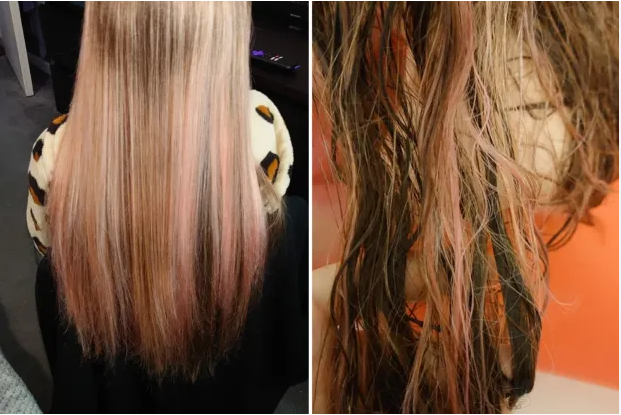
Alkaline water lifts the cuticle, surfactants extract pigment, and warm prolonged soaking accelerates dye release. Semi-permanent shades, direct dyes, and vibrant fashion colors are the most fragile — losing visible vibrancy within a handful of bath sessions.
Mineral Deposition and Tonal Shifts
Epsom salts, hard-water minerals, and certain natural clays can deposit on the hair shaft, interacting with deposited pigment. Blondes may experience brassiness or unwanted warm tones; vibrant reds and coppers may dull noticeably; cool-toned tones can shift unpredictably.
Professional Recommendation for Color-Treated Clients
Salon professionals should counsel clients to tie hair up in a loose bun, apply a leave-in conditioner or oil-based barrier before bathing, and avoid submersion entirely within 72 hours of any color service. A post-bath chelating rinse can further protect investment.
When Bath Bombs Can Benefit Hair: The Narrow Use Case
Moisturizing Bath Bombs For Dry Hair
A specific formulation profile can offer marginal benefit to coarse, dry, low-porosity hair: sulfate-free, dye-free, fragrance-minimal, and dominated by butters and emollient oils. Even then, the benefit is supplementary — not a substitute for a proper deep conditioner.
Best Practice Protocols
Limit soak time to under 15 minutes. Follow with a clarifying or chelating rinse to remove mineral residue. Close with a cool-water rinse to encourage cuticle compaction and shine. These three steps mitigate most of the documented risks.
Strategic Implications For Industry Professionals
For Formulators
There is white space for a genuinely "hair-safe" bath bomb category — pH-balanced toward 5.5, surfactant-free, fragrance-conscious, and formulated with hydrolyzed proteins or cationic conditioning agents that perform under dilution. The brand that authentically owns this niche will define it.
For Salon and Trichology Professionals
Bath product habits belong on intake questionnaires alongside shampoo, swimming, and heat styling. Client education materials should specifically address bath bomb use, especially for color clients, scalp-sensitive clients, and clients with textured hair.
For Indie Brands and Retailers
Transparent labeling is no longer optional — it is a competitive advantage. Brands willing to print explicit hair-safety guidance, ingredient rationales, and use warnings will earn trust in a category increasingly skeptical of vague "natural" claims.
FAQ: Professional-Level Answers to Common Questions
Can I wash my hair with a bath bomb?
No. Bath bombs lack the balanced surfactant systems, conditioning agents, and pH control of a true shampoo or co-wash. Using one as a hair cleanser will leave residue, disturb cuticle alignment, and likely produce dull, tangled results.
How long is too long to soak hair in a bath bomb bath?
Industry consensus suggests limiting submersion to under 15 minutes, followed by a rinse in clean, lukewarm water. Beyond this window, alkaline and surfactant exposure compound the risk of cuticle damage and color fade.
Do "natural" bath bombs eliminate the risk?
Not entirely. Essential oils can sensitize the scalp, citric acid still drives the pH swing, and natural colorants (turmeric, beetroot, spirulina) can stain porous or light-toned hair. "Natural" is a marketing term, not a safety guarantee.
Are CBD or collagen bath bombs better for hair?
Despite the premium pricing, there is no peer-reviewed evidence that CBD or collagen molecules penetrate or meaningfully benefit the hair fiber in a diluted bath context. These claims are largely sensory and aspirational, not functional.
What should I recommend to clients who love bath bombs?
A simple three-step protocol works for nearly all clients: bun the hair securely above the waterline, apply a leave-in conditioner or light oil as a barrier in case of submersion, and follow the bath with a gentle clarifying rinse to remove any deposited minerals or pigments.