
Rose Soap vs Lavender Soap: Which Is More Popular (And Which One Actually Suits You)?
Rose vs lavender soap—which wins? After years of testing both, here's the honest truth about scent, skin benefits, and gifting appeal.
I've had both of these bars sitting on my bathroom shelf for years now, and people always ask me the same thing: "Okay, but which one is actually better?" Honestly? That's the wrong question. Let me explain why.
Quick Answer: There's No Universal Winner, Only What Fits You
Here's the short version before we dig in — popularity and "best for you" are two completely different things. A soap can top every sales chart and still be wrong for your skin or your mood.
What I want to do here is share what I've noticed after using rose and lavender bars through a lot of seasons, gift them to a lot of people, and read more soap labels than any sane person should. We'll cover scent, skin benefits, sales patterns, and gifting appeal — and I promise not to pretend one bar is a magic solution.
First, Why We're Even Comparing These Two
Walk into any craft market or scroll through a small soap shop online, and you'll see the same pattern. Rose and lavender show up again and again, front and center, while everything else fights for the leftover shelf space.
The Two Heavyweights of the Fragrance Soap World
There's a reason for that. Both scents are instantly recognizable — even people who "don't care about fragrance" can name them blindfolded. In the natural handmade soap comparison world, they've become shorthand for two moods: romance and calm.
Other florals exist, sure. Jasmine, geranium, ylang-ylang. But they tend to be polarizing or harder to source affordably. Rose and lavender hit that sweet spot of familiar-but-still-special.
What "Popular" Really Means Here
This part trips people up. When we ask which soap is more popular, we could mean three different things:
- What sells the most units — the everyday workhorse people grab without thinking.
- What gets gifted most — the pretty bar you buy for someone else.
- What people actually repurchase — the quiet loyalty test.
A bar can win one of these and lose the other two. Keep that in mind, because it changes the whole answer.
Meet Rose Soap: The Romantic Classic
Rose is the one that feels like an occasion. You don't grab it mindlessly — you reach for it when you want a little ceremony in your day.
What Rose Soap Actually Smells Like
Here's the thing nobody tells beginners: "rose" isn't one smell. Good rose soap runs a whole range, from soft powdery petals to a deep, almost jammy garden-rose richness that fills the whole bathroom.
And this is where quality shows itself brutally. Cheap rose soap often smells like air freshener — sharp, plasticky, a bit fake. Real rose essential oil (or a well-blended rose absolute) has warmth and roundness that synthetic dupes just can't fake.
Rose Scented Soap Benefits for Your Skin
Rosewater has been in skincare routines for centuries — Persian, Roman, and Ayurvedic traditions all leaned on it long before we had lab studies. It's known for gentle toning and a mild hydrating feel.
Dermatological consensus is pretty measured here: rose extracts contain natural compounds with mild antioxidant and soothing properties, though a rinse-off soap doesn't sit long enough to work miracles. Think of the rose scented soap benefits as a lovely bonus, not a treatment plan. The mood lift, honestly, is half the point.
Who Tends to Reach for Rose
In my experience, rose fans lean toward the "treat yourself" crowd. People who like a feminine, slightly luxurious vibe. Folks who buy the nice hand cream and light a candle for no reason. If your bathroom has any pink in it, you probably already know.
Meet Lavender Soap: The Calm-Down Favorite
Lavender is the opposite energy. Where rose says "special," lavender says "exhale."
The Scent That Signals "Relax"
Lavender is herbal, a touch camphor-like, green around the edges. To most noses it reads immediately as spa. There's a reason hotels and massage places lean on it — the association with relaxation is nearly universal.
It's less sweet than rose, which is exactly why some people prefer it. If overly floral scents give you a slight headache, lavender usually plays nicer.
Lavender Soap for Relaxation and Skin
This is lavender's home turf. In floral soap aromatherapy, lavender is the classic pick for winding down. A warm lavender shower before bed genuinely does help me shift into evening mode — placebo or not, it works.
On skin, lavender has a gentle reputation and is often chosen for irritated or reactive skin. That said — and I'll say this again in the FAQ — "gentle" doesn't mean "guaranteed safe for everyone." Lavender is still a botanical, and botanicals can occasionally irritate.
Who Tends to Reach for Lavender
The lavender crowd is the after-work-decompress crowd. Parents buying calming bath products for restless kids. People who find sweet scents cloying. It's the practical, everyday choice for a lot of households.
Head-to-Head: Rose Soap vs Lavender Soap
Alright, the main event. I'm not crowning a champion here — I'm laying out the trade-offs so you can pick your own.
Scent Personality and Everyday Wearability
Rose is sweet and romantic; lavender is herbal and calming. In practice, lavender tends to feel more wearable during the day because it's not as attention-grabbing. Rose can be a lot at 7 a.m. but feels perfect for an evening soak.
Longevity-wise, a good rose bar often lingers on the skin a touch longer, since heavier floral molecules cling. Lavender fades a little faster — soothing while you shower, gone soon after.
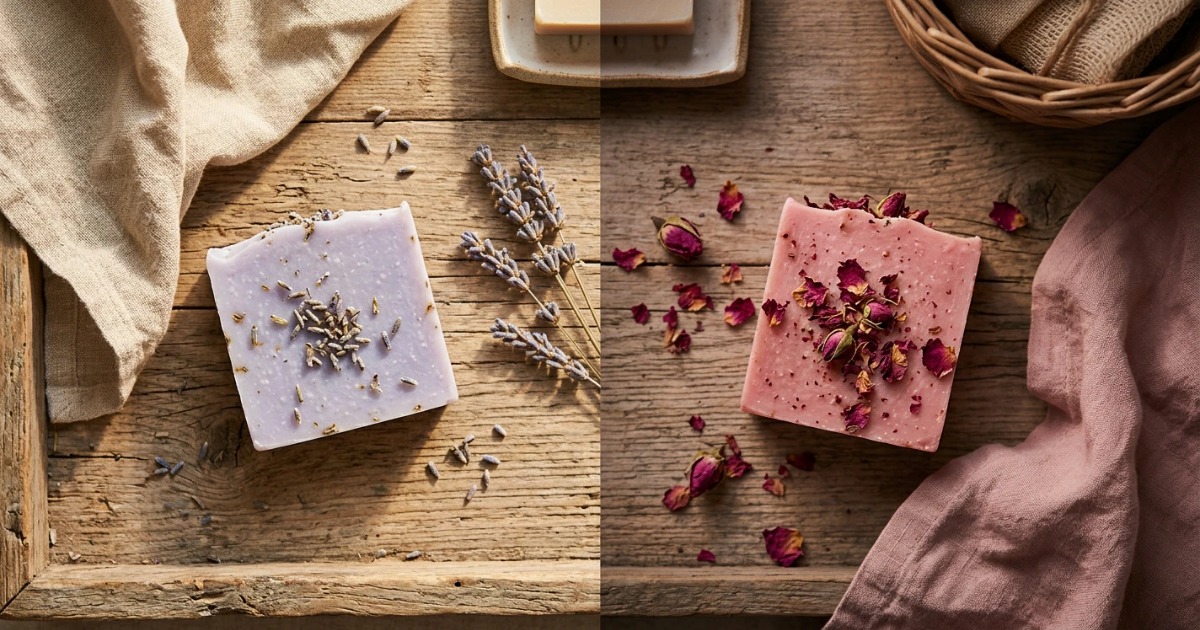
Best Fragrance Soap for Skin: How They Compare
When people ask about the best fragrance soap for skin, it really depends on skin type. Here's how I'd line up rose or lavender soap benefits:
- Dry skin: Rose often has the slight edge if the bar is loaded with nourishing oils — it just tends to feel more comforting.
- Oily skin: Both are fine; lavender's lighter feel wins narrowly.
- Sensitive skin: Genuinely a toss-up — depends on the individual and the formulation, not the scent name.
Price, Availability, and Value
Rose usually costs more. Real rose essential oil is famously expensive — it takes an enormous quantity of petals to distill a tiny amount of oil, which is exactly why so many "rose" soaps quietly use fragrance oil instead.
Lavender essential oil is far more affordable and widely produced, so lavender soap tends to be cheaper and easier to find. On pure value, lavender often wins.
A Simple Comparison Table
| Feature | Rose Soap | Lavender Soap |
|---|---|---|
| Scent profile | Sweet, floral, romantic | Herbal, fresh, calming |
| Best for | Treat-yourself moments, gifting | Everyday use, winding down |
| Mood | Luxurious, uplifting | Relaxed, spa-like |
| Skin match | Great for dry, comfort-seeking skin | Great for irritated, reactive skin |
| Typical price | Higher | More budget-friendly |
| Best time of day | Evening | Morning or night |
So Which Soap Is More Popular?
Time for the headline question — answered as honestly as I can, given that soap sales data is scattered across thousands of tiny makers.
What Sales and Search Trends Suggest
Looking at general market and search interest through 2026, lavender consistently pulls broader, steadier demand. It's the reliable year-round seller. Rose, on the other hand, spikes hard around Valentine's, Mother's Day, and the holidays — its strength is premium and gifting rather than daily volume.
I'll be upfront: this is a general pattern, not a precise statistic. Handmade soap sales are notoriously hard to track. But the shape of it holds up across most reports and every craft fair I've stood behind a table at.
The Most Popular Handmade Soap Fragrance Overall
If you're asking about the most popular handmade soap fragrance in raw, everyday terms, lavender usually takes it. It routinely tops "best natural soap scent" lists because it appeals to almost everyone and offends almost no one.
Rose wins the moments that matter emotionally — the gift, the anniversary, the little splurge. Different kind of popularity, equally real.
Why Popularity Shouldn't Decide It for You
Here's my honest stance: fit beats fame. If lavender is technically the crowd favorite but the smell reminds you of a dentist's office, buy the rose. Your nose doesn't care about market share.
How to Choose the One That's Right for You
Let's make this actually useful. A few quick filters.
Match the Scent to Your Daily Rhythm
Need a morning lift and a bit of glamour? Rose. Winding down after a long day, or trying to settle into sleep? Lavender. Some people, myself included, keep both and switch depending on the hour.
Match It to Your Skin's Needs
Quick self-check: dry and craving comfort, lean rose. Reactive or easily irritated, lean lavender — but patch test either way. If your skin is drama-free, pick purely on scent and enjoy yourself.
Buying for Someone Else
Gifting is where this really splits. Rose lands beautifully for romantic partners, mothers, or anyone who loves a touch of luxury. Lavender is the safer, universal bet — great for coworkers, new acquaintances, or anyone whose taste you don't know well. You almost can't go wrong with a nice lavender bar.
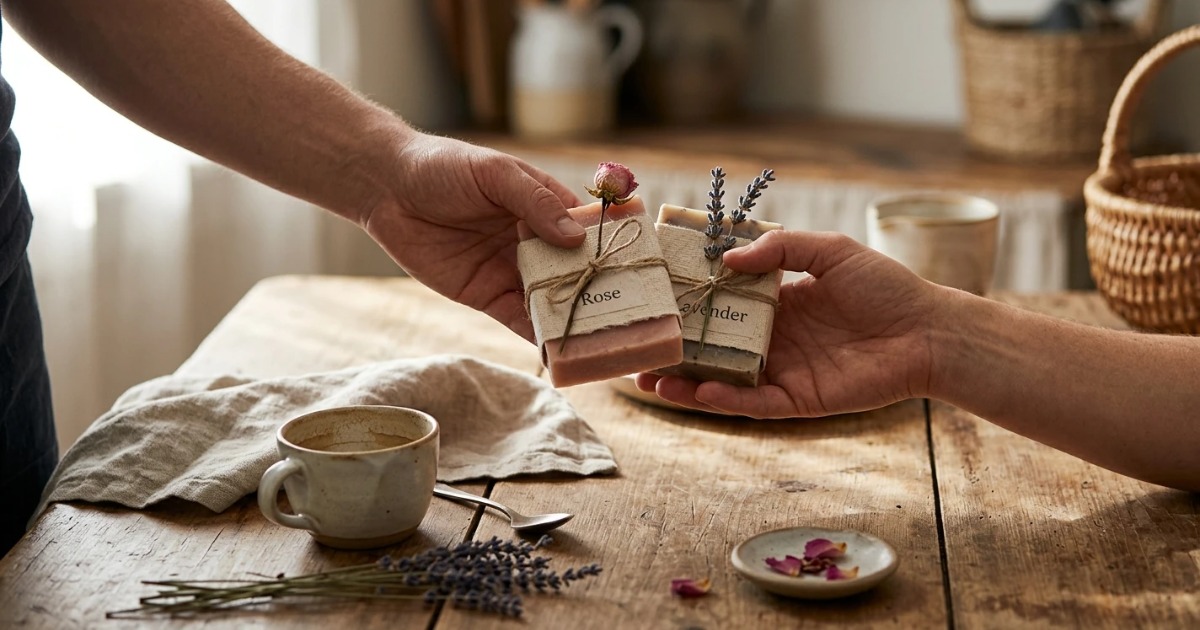
Reading the Label: Spotting Quality
This is the part that separates a lovely bar from a disappointing one. A few signs of a well-made natural handmade soap:
- The label lists essential oil (e.g., "lavandula angustifolia oil"), not just "fragrance" or "parfum."
- Recognizable oils like olive, coconut, or shea near the top of the ingredient list.
- Realistic scent claims — a $3 bar promising "pure Bulgarian rose oil" is almost certainly using a synthetic dupe.
- A natural, sometimes slightly rustic color rather than neon dye.
Fragrance-oil soaps aren't evil, to be clear — they're just a different thing. But if you're paying for the real botanical experience, the label should back it up.
At the end of the day, this whole rose soap vs lavender soap debate has no real loser. One's a warm hug, the other's a deep breath. Pick the mood you need more of — and honestly, there's no rule against keeping both.
FAQ
Q: Is rose or lavender soap better for sensitive skin?
A: Neither one is automatically safer — it depends on your skin and the specific formula. Lavender has a gentler reputation, but rose can be equally kind in a well-made bar. The honest answer is to patch test on your inner arm for a day or two before committing.
Q: Which lasts longer, rose or lavender scent?
A: Rose usually lingers a bit longer, both on skin and in the bathroom, because its scent molecules are heavier. Lavender is brighter and fades faster after you rinse. If you want the fragrance to hang around, rose has the edge.
Q: Are these soaps good for aromatherapy?
A: Yes, in a casual sense. Lavender soap for relaxation is a genuine classic — that spa association is powerful. Rose lifts the mood in a warmer, more uplifting way. Neither replaces proper floral soap aromatherapy with essential oil diffusion, but a scented shower absolutely shifts how you feel.
Q: Can I use rose soap and lavender soap together?
A: You can, and I do. My favorite trick is rotating — rose in the morning, lavender at night — so neither scent gets boring. Using them in the same shower can get muddy, so I'd space them out rather than layer them directly.
Q: Which is the best natural soap scent for beginners?
A: Lavender, usually. It's affordable, easy to find, universally liked, and forgiving on most skin types. Once you know you enjoy natural soap, treat yourself to a good rose bar and see if it becomes your special-occasion favorite.