
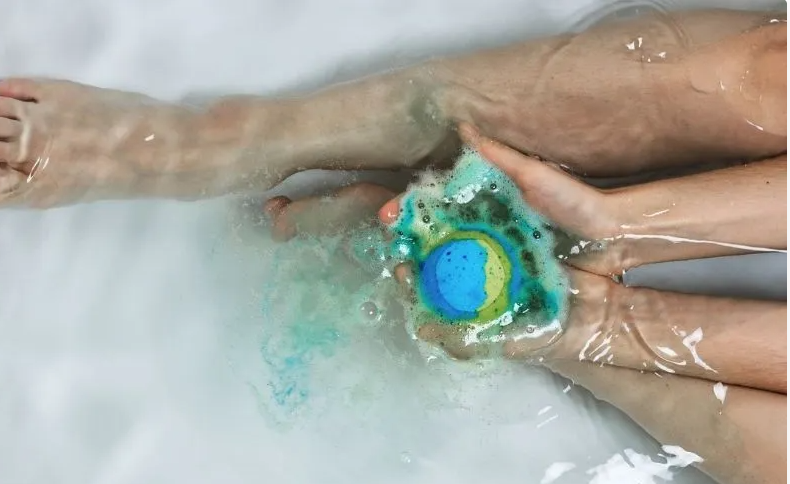
We've all been there. You drop a gorgeous, colorful bath bomb into the tub, watch it fizz and swirl, sink in up to your shoulders — and then the question hits. Can I just… let my hair soak in this? Would it be fine? Would it be a disaster?
The internet gives you a lot of flat yes-or-no answers on this one. But the truth is messier and more interesting than that. So let's actually break it down.
The Short Answer (And Why It's Complicated)
If your hair accidentally dips into bath bomb water once in a while, you're probably not going to notice any damage. Your hair won't melt. It won't fall out in clumps. Relax.
But — and this is a meaningful but — regularly soaking your hair in bath bomb water isn't doing it any favors. The reasons come down to three things: what's in the bath bomb, what type of hair you have, and how long you're marinating in there.
Let me walk you through each piece so you can make your own call.
What's Actually Inside a Bath Bomb?
The Base Ingredients
Every bath bomb starts with the same core duo: baking soda (sodium bicarbonate) and citric acid. That's what creates the fizz. When they hit water, they react and release carbon dioxide gas — the bubbles you see.
Here's the thing most people don't think about: once that reaction finishes, you're left with water that's shifted alkaline. We're talking a pH somewhere between 7 and 9, depending on the formula. I'll explain why that matters for your hair in a minute.
Beyond the fizz-makers, most bath bombs contain carrier oils (like coconut or sweet almond), butters (shea, cocoa), fragrances, essential oils, and colorants. Some have dried flowers. Some have glitter. The ingredient list varies wildly from brand to brand.
The Problematic Stuff for Hair
Not all bath bomb ingredients are created equal when it comes to your hair. Here's what can cause issues:
Synthetic dyes. These are the big one for anyone with light, bleached, or porous hair. Vivid bath bomb colors can temporarily stain hair — especially if your cuticle is already open from chemical processing.
Sulfates and surfactants. Some bath bombs include these for extra foam. They strip natural oils from your hair the same way a harsh shampoo would. If you're already using sulfate-free bath products for your skin, check whether your bath bombs match that standard.
Heavy fragrances. Synthetic fragrance compounds can coat your strands and leave residue that makes hair feel waxy or dry once it dries.
Glitter and mica particles. These get tangled in hair like nobody's business. If you've ever tried to brush craft glitter out of long hair, you already know this nightmare.
What Bath Bomb Water Actually Does to Your Hair
The pH Problem
This is the part most articles skip over, and it's arguably the most important factor.
Healthy hair and your scalp sit at a slightly acidic pH — around 4.5 to 5.5. At this pH, your hair cuticle (the outer protective layer of each strand) lies flat and smooth. That's what gives hair its shine and keeps moisture locked in.
Bath bomb water pushes alkaline. When your hair sits in alkaline water, the cuticle swells and opens up. Open cuticles mean frizz, dryness, tangles, and a rough texture. It's the same thing that happens when you use a clarifying shampoo too often or live in an area with very hard water.
One soak probably won't be noticeable. But repeated exposure? You'll start to feel the difference — hair that's harder to detangle, looks duller, feels straw-like at the ends.
Color-Treated Hair Gets Hit Hardest
If you've colored your hair, bath bomb water is working against you in two ways at once.
First, the alkaline pH opens your cuticle, which lets color molecules escape faster. That expensive balayage fades quicker than it should.
Second, the dyes in the bath bomb itself can deposit onto your hair. This is where you get those stories of someone using a hot pink bath bomb and ending up with a rosy tint on their blonde highlights. It's usually temporary — a wash or two gets it out — but it's annoying and avoidable.
Fine Hair vs. Thick Hair — Different Risks
Your hair type changes the equation. Fine or thin hair is more vulnerable to being weighed down by oils and residue from bath bomb ingredients. It also tends to be more porous, meaning it absorbs more of whatever it's sitting in.
Curly or coarse hair might actually tolerate the oils and butters better — those can feel nourishing on thicker textures. But curly hair still hates the pH shift. Alkaline water disrupts curl patterns and causes frizz that takes days to calm down.
So the potential for bath bomb hair damage really depends on what you're working with.
So When Is It Actually Fine?
Not every bath bomb soak is a hair emergency. Here's when you can probably relax about it:
- The bath bomb has minimal dyes and zero glitter
- Your hair is healthy, uncolored, and not chemically processed
- You're dipping in briefly, not soaking for 45 minutes with your hair submerged
- You rinse with clean water afterward
Exposure time genuinely matters here. A quick dunk is different from lying back and letting your hair marinate for the duration of a podcast episode. The longer your hair sits in that alkaline, dye-filled water, the more it absorbs.
How to Protect Your Hair If You Love Bath Bombs
Before the Bath
The simplest move: clip your hair up or wear a shower cap. I know, not glamorous. But it's the most effective barrier between your hair and everything dissolved in that water.
If you want your hair down for the aesthetic (no judgment), try applying a light leave-in conditioner or a few drops of argan oil before you get in. This creates a thin protective layer that reduces how much your hair absorbs.
After the Bath (If Your Hair Got Wet)
Good hair care after bath bomb exposure is straightforward:
Rinse thoroughly with cool, clean water. This is non-negotiable. You want to flush out dye residue, fragrance buildup, and any particles clinging to your strands. Cool water helps close the cuticle back down.
Use a gentle, pH-balancing conditioner. Something in that 4.5–5.5 range to bring your hair back to its happy place. Leave it on for a couple of minutes.
Skip the shampoo. Your hair doesn't need more stripping right now. The bath bomb water already did plenty of that. Just condition.
Consider an apple cider vinegar rinse. Mix one part ACV with three parts water, pour it through your hair, wait 30 seconds, rinse out. It's a quick pH reset that smooths the cuticle and adds shine. Not everyone loves the smell, but it fades fast.
Choosing Hair-Friendlier Bath Bombs
If bathing with bath bombs is a regular part of your routine, be selective about what you buy:
- Look for sulfate-free formulas with short, recognizable ingredient lists
- Avoid intensely pigmented dyes — especially if you have light or porous hair
- Skip glitter bombs entirely unless you're committed to keeping your hair completely dry
- Some brands now market "hair-safe" or minimal-ingredient options — these tend to use fewer synthetic colorants and gentler surfactants
What About Washing Your Hair WITH Bath Bomb Water on Purpose?
This comes up more than you'd think. Some people figure: bath bombs have oils and butters in them, so maybe that water would be good for my hair? Like a conditioning treatment?
In theory, I get the logic. In practice, it doesn't work that way.
The concentration of beneficial oils in a full tub of water is incredibly diluted. You're not getting a meaningful amount of coconut oil on your hair — you're getting trace amounts mixed with alkaline water, synthetic fragrance, and dye. The pH alone cancels out any potential benefit from the oils.
Bath bomb water is not a substitute for shampoo or conditioner. It won't clean your hair properly, and it won't condition it effectively.
If you want a luxurious hair wash experience, you're better off with a dedicated hair mask, a co-wash, or even just adding a few drops of jojoba oil to your regular conditioner. Those are formulated for your hair's pH and actually deliver ingredients where they need to go.
Frequently Asked Questions
Can bath bomb water turn my hair a different color?
Yes, temporarily. Highly pigmented bath bombs — especially reds, pinks, and purples — can deposit color onto light, bleached, or porous hair. It usually washes out within one to three shampoos, but it can be startling. If you have platinum or pastel-colored hair, keep it out of vivid bath bomb water.
Will bath bomb water make my hair fall out?
No. There's no evidence that bath bomb ingredients cause hair loss. You might experience some extra shedding if your hair gets very tangled or dry from repeated exposure, but that's breakage — not hair falling from the root. If you're experiencing actual hair loss, that's a separate issue worth discussing with a dermatologist.
Is bath bomb water bad for kids' hair?
Kids' hair is generally finer and more porous than adult hair, so it can pick up dye stains more easily. The occasional bath bomb is fine for children, but avoid heavily pigmented or glitter-filled options. Rinse their hair with clean water after the bath, and you're good.
How do I get bath bomb glitter out of my hair?
A clarifying shampoo is your best bet — it'll cut through the oils that make glitter stick. Follow with conditioner since clarifying shampoos are drying. For stubborn glitter, try applying a thick conditioner to dry hair before washing, which helps loosen particles. A fine-tooth comb on conditioner-soaked hair can also help.
Can I use a bath bomb if I have a keratin treatment?
Be cautious. Keratin treatments work by sealing the cuticle flat, and alkaline bath bomb water works against that by opening it back up. If you've recently had a keratin treatment, keep your hair dry during bath bomb soaks for at least the first two weeks — and ideally ongoing, to preserve your results.
Are shower steamers safer for my hair than bath bombs?
Generally yes, because shower steamers dissolve on the shower floor and you're not soaking in the water. Your hair gets minimal direct contact with the ingredients. They're a solid alternative if you want the aromatherapy experience without worrying about what's happening to your hair.