
We've all been there. You're running a hot bath, reaching for a bath bomb, and realize you're completely out. But there's a shower steamer on the shelf, looking pretty similar. Same fizzy disc shape. Same nice smell. So you think — why not just toss it in the tub?
Short answer: you can. It won't explode or ruin your plumbing. But whether you should is a different conversation. The experience won't match what you're hoping for, and depending on the formula, your skin might have some opinions about it afterward.
Let me walk you through what's actually in these things, what happens when a shower steamer hits bath water, and when it's fine versus when you should just skip it.
What's Actually Inside a Shower Steamer vs a Bath Bomb
From the outside, shower steamers and bath bombs look like cousins. They share a citric acid and baking soda base — that's what creates the fizz in both products. But the similarities pretty much stop at the ingredient list's first two lines.
Shower Steamer Ingredients Breakdown
Shower steamers are built for one job: releasing fragrance into steam. Everything about their formula reflects that purpose.
The essential oil concentration runs significantly higher than what you'd find in a bath bomb. We're talking eucalyptus, peppermint, and menthol at levels designed to punch through a steamy shower and reach your nose from the shower floor. They're not formulated with the assumption that these oils will sit against your skin for 30 to 45 minutes.
The tablet itself is compressed harder and denser. It needs to dissolve slowly under a narrow stream of water rather than disintegrating the moment it's submerged. You'll also notice that most aromatherapy shower tablets skip the moisturizing extras entirely — no shea butter, no coconut oil, no carrier oils. There's no reason to include them when the product never touches your skin for more than a few seconds.
Bath Bomb Ingredients Breakdown
Bath bombs take the opposite approach. They're designed for full-body immersion, which means every ingredient is chosen with prolonged skin contact in mind.
Essential oil levels stay within safe dermal exposure thresholds. The formula includes carrier oils and butters that make the water feel silky and leave your skin moisturized. Colors and embeds are selected to disperse evenly in still water. And the composition is deliberately softer and more porous so the whole thing dissolves quickly once submerged, creating that satisfying fizz show.
Bath bomb ingredients are basically a skin-care delivery system wrapped in a fun sensory experience. Shower steamers are an aromatherapy delivery system that happens to fizz.
The Key Differences That Matter
Three things separate these products in ways that actually affect your bath experience:
- Oil concentration: Shower steamers can contain two to three times the essential oil load of a comparable bath bomb
- Dissolution behavior: Dense tablets don't break apart the same way in still water as they do under running water
- Exposure pathway: Inhalation from a distance versus direct skin contact for extended periods — these require very different safety margins
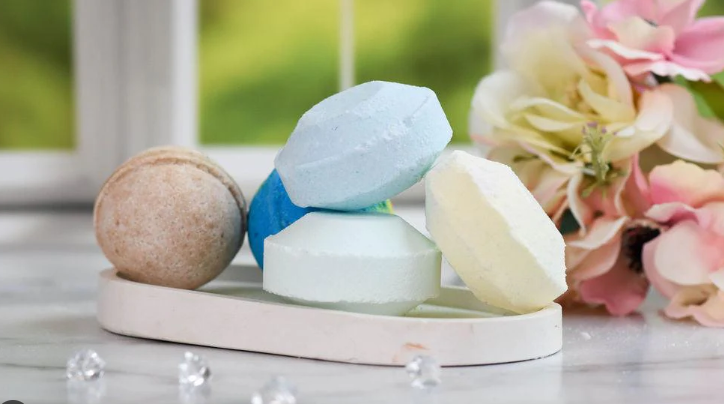
What Happens When You Drop a Shower Steamer in the Bath
Okay, so you've decided to try it anyway. Here's what you'll actually experience.
The Fizz Factor
It will fizz. That part works. But the reaction is noticeably different from dropping in an essential oil bath fizzy designed for the tub.
Because shower steamers are compressed so tightly, the fizz tends to be slower and less dramatic. Instead of that eruption of color and bubbles spreading across the water's surface, you'll likely watch it sit on the bottom of the tub, slowly releasing small streams of bubbles. It might not fully dissolve at all during a normal-length bath. No colorful swirls. No milky, luxurious water. Just slightly scented bathwater with a partially dissolved tablet sitting near the drain.
Aromatherapy Effect
Here's the ironic part — you'd think putting the steamer directly in your bath water would give you a stronger scent experience. It actually does the opposite.
Shower steamers rely on hot water hitting them and creating steam that carries essential oils upward into the air around your face. When submerged in bath water, those oils disperse into the water itself rather than becoming airborne. The scent throw is weaker and less focused. You're dissolving shower steamers in water rather than activating them with steam, and the aromatherapy payoff drops considerably.
Meanwhile, oils like eucalyptus and peppermint that feel invigorating when inhaled from steam can cause noticeable tingling or cooling sensations when they're sitting in your bath water against your skin.
Skin Sensitivity Concerns
This is where things get worth paying attention to. Menthol and camphor at shower-steamer concentrations can genuinely irritate skin when you're soaking in warm water. Warm water opens your pores, increases absorption, and makes your skin more reactive to concentrated compounds.
Without the moisturizing oils and butters that bath bombs include, the water won't feel particularly nourishing either. And for anyone with sensitive skin, the concentrated essential oils can cause reactions in areas you'd really rather not have reactions — especially during a long soak.
When It's Probably Fine (And When It's Not)
Low-Risk Scenarios
Not every shower steamer will cause problems in the tub. If yours contains gentle oils like lavender or chamomile at moderate concentrations, you're probably fine. Using half a tablet instead of a full one reduces your exposure. A quick 15-minute soak carries less risk than an hour-long bath. And if you generally don't have reactive skin, you'll likely come out of it without any issues — just a slightly underwhelming bath experience.
Skip It If...
Put the steamer back on the shelf if it's loaded with menthol, camphor, or high-concentration eucalyptus. Same goes if you have eczema, psoriasis, sensitive skin, or any open cuts or freshly shaved areas. Definitely don't use one in a child's bath — kids have thinner, more reactive skin and lower tolerance for concentrated essential oils. And if the packaging says "not for use in bath water," take that seriously. Manufacturers include those warnings for liability reasons that are grounded in actual formulation choices.
Better Alternatives Worth Trying
DIY Quick Bath Bomb Hack
If you're out of bath bombs and want that fizzy bath experience, you can fake it with pantry ingredients. Mix a half cup of baking soda with a quarter cup of citric acid, add three to five drops of your favorite essential oil, and toss in a tablespoon of coconut oil. Stir it loosely and drop the mixture into your running bath. It won't hold together like a commercial bath bomb, but you'll get fizz, scent, and soft water without the skin sensitivity gamble.
Hybrid Products on the Market
The market has caught up to this exact dilemma. Several brands now sell dual-purpose aromatherapy tablets formulated to work in both settings. Look for labels that specifically say "bath safe" or "shower and bath." These products use moderate essential oil concentrations that work aromatically in steam but remain within safe dermal contact levels for soaking.
Get More From Your Shower Steamer (In the Shower)
Rather than repurposing your steamers, try getting more out of them where they're designed to work. Place them on the shower floor just outside the direct water stream — where splash hits them but they're not drowning under the flow. This gives you a slower, longer-lasting scent release. Some people set them on a small ledge at chest height where the steam concentration is strongest. You'll get a much better aromatherapy experience than you would by submerging them in a tub.
The Bottom Line
Dropping a shower steamer in your bath won't cause a disaster, but you're getting a compromised version of both experiences. Weaker aromatherapy than you'd get in the shower, less luxury than a proper bath bomb, and a small but real chance of skin irritation from concentrated oils that weren't meant to sit against your skin. In a pinch with a gentle formula, go for it — just use half and keep the soak short. For the best experience, use each product where it's designed to shine, or grab one of the dual-purpose options that actually bridge the gap properly.
Frequently Asked Questions
Is it safe to use a shower steamer as a bath bomb?
For most healthy adults using a mild-formula steamer, it's generally safe but not ideal. The concentrated essential oils designed for inhalation may irritate skin during prolonged soaking, especially in warm water that increases absorption. Check the ingredients first and consider using only half the tablet.
Will a shower steamer dissolve in bath water?
Yes, but expect it to take considerably longer than a bath bomb. The denser compression means it may sit on the tub floor releasing slow fizz for a long time, and it might not fully dissolve or distribute evenly throughout the water during a typical bath.
Why do shower steamers have stronger scents than bath bombs?
Shower steamers need to project fragrance through an open, ventilated shower environment using only steam as a carrier. Bath bombs release scent directly into enclosed water that surrounds your body. The delivery challenge is completely different, so steamers compensate with higher essential oil concentrations.
Can shower steamers irritate your skin in the bath?
Absolutely possible, particularly those containing menthol, eucalyptus, or peppermint. These ingredients are formulated for brief inhalation at a distance, not for sitting against skin in warm water for 30-plus minutes. Tingling, redness, and irritation can occur, especially in sensitive individuals.
What's the difference between a shower steamer and a bath bomb?
They share a citric acid and baking soda base, but that's where the meaningful overlap ends. Shower steamers have higher essential oil concentrations, harder compression, no moisturizing additives, and are designed for steam-based aromatherapy. Bath bombs have skin-safe oil levels, moisturizing butters, colors, and softer compositions meant to dissolve quickly in still water for full-body soaking.
Are there shower steamers safe for bath use?
Some brands specifically formulate milder tablets suitable for both shower and bath use. Look for packaging that mentions "bath safe," "dual use," or "suitable for soaking." These products balance the aromatherapy strength needed for showers with the dermal safety required for baths.