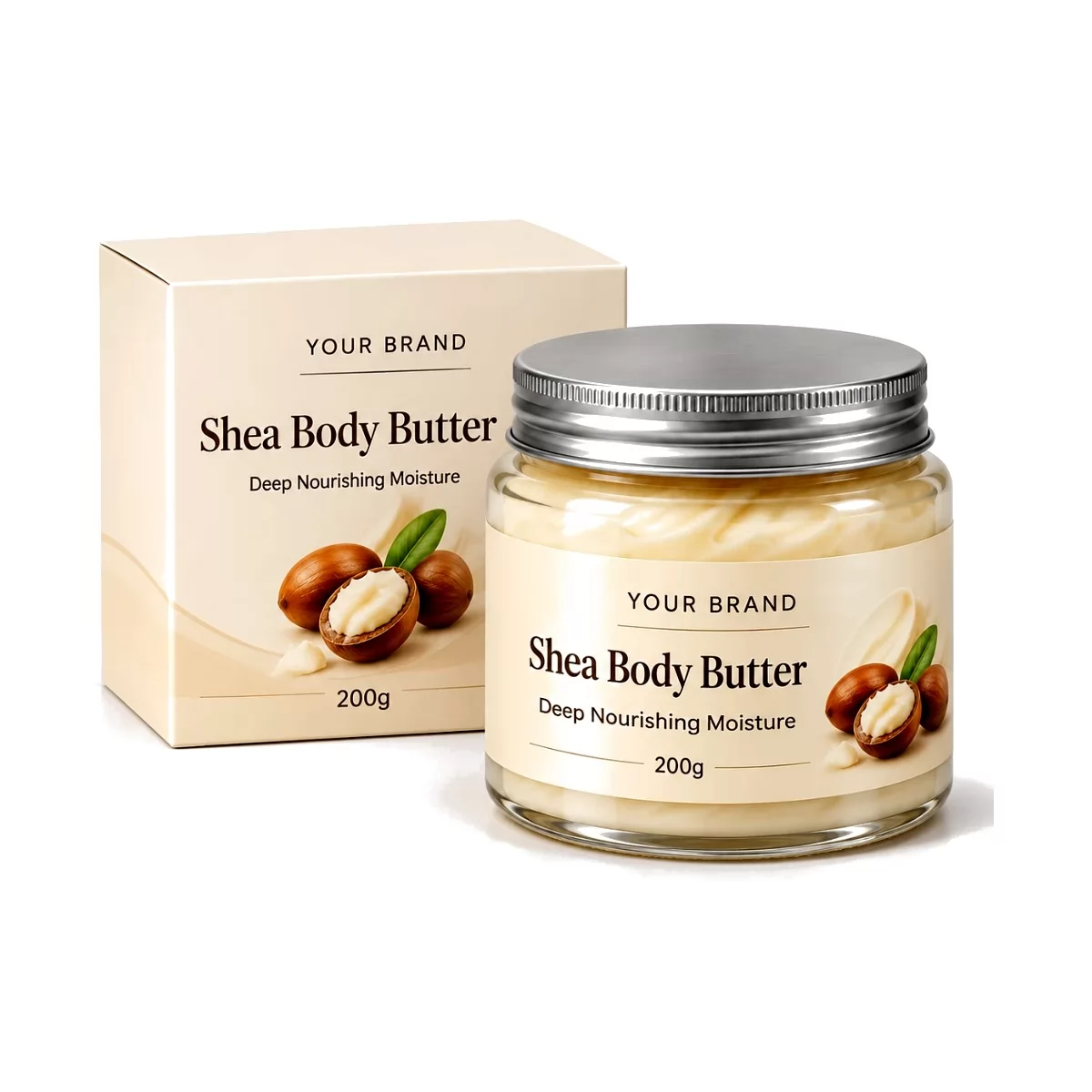

A tub of shea butter should be checked before anything goes near a pot: scoop a little, rub it between your fingers, smell it. Grit or a sour, crayon-like smell means the batch is compromised before you start. This is how to make body butter in small amounts, and it also shows where a kitchen recipe stops being something you can sell.
Shea Butter, Oils and Everything Else on the Ingredient List
Body butter needs a hard butter, a liquid oil and, if you like, a little starch for a drier feel. That is the whole base. The recipe changes the moment you add water, aloe or hydrosol, because then it needs a preservative system.
The base: butters, carrier oils and optional additions
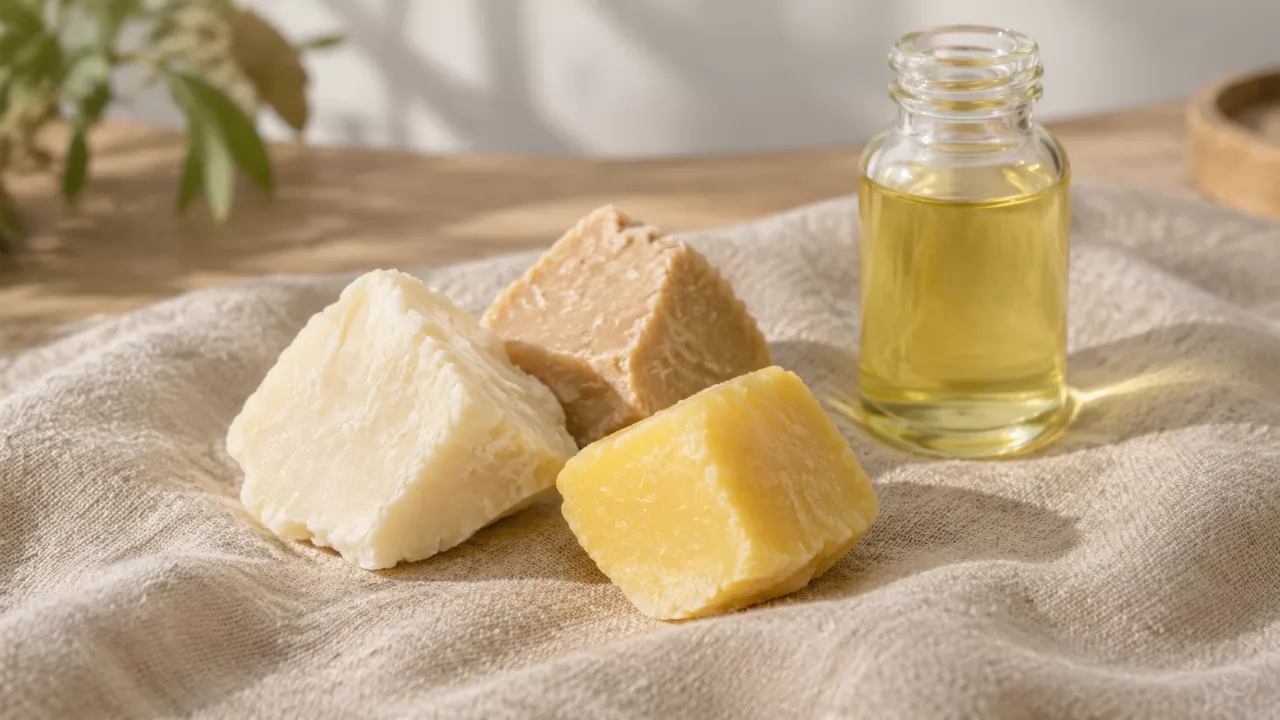
Shea, cocoa and mango butter are the usual hard butters. They give the body of the product, and each has its own melting behaviour and smell. Shea is soft and a little nutty, cocoa is firmer and smells of chocolate, and mango is milder. The liquid oil (sweet almond, jojoba, sunflower, fractionated coconut and so on) loosens the butter so it can be scooped and spread. A starch such as arrowroot or cornstarch, added in small amounts, usually reduces the greasy afterfeel. As a starting point for a homemade whipped body butter recipe, think two parts butter to one part liquid oil by weight, and adjust from there.
Preservation and water: the point people skip
A recipe with only butters and oils is called anhydrous, meaning it contains no water. Microbes need water to grow, so this kind of product is lower risk, though still not immune: wet fingers dipped into the jar can bring water in. Once you add water-based ingredients, you need a broad-spectrum preservative used at the supplier's recommended level. Essential oils are not a preservative. They may have some antimicrobial activity in a lab, but that does not make a product stable in a jar over months.
Equipment and Workspace Before You Melt Anything
Most failures start with poor prep, not with the recipe. Wipe the bench, wash your hands, and sanitize bowls, whisk blades and spatulas with an alcohol-based sanitizer, then let them dry fully. A drop of leftover water or a trace of old product in a bowl can seed contamination, and you will not see it until the jar is weeks old.
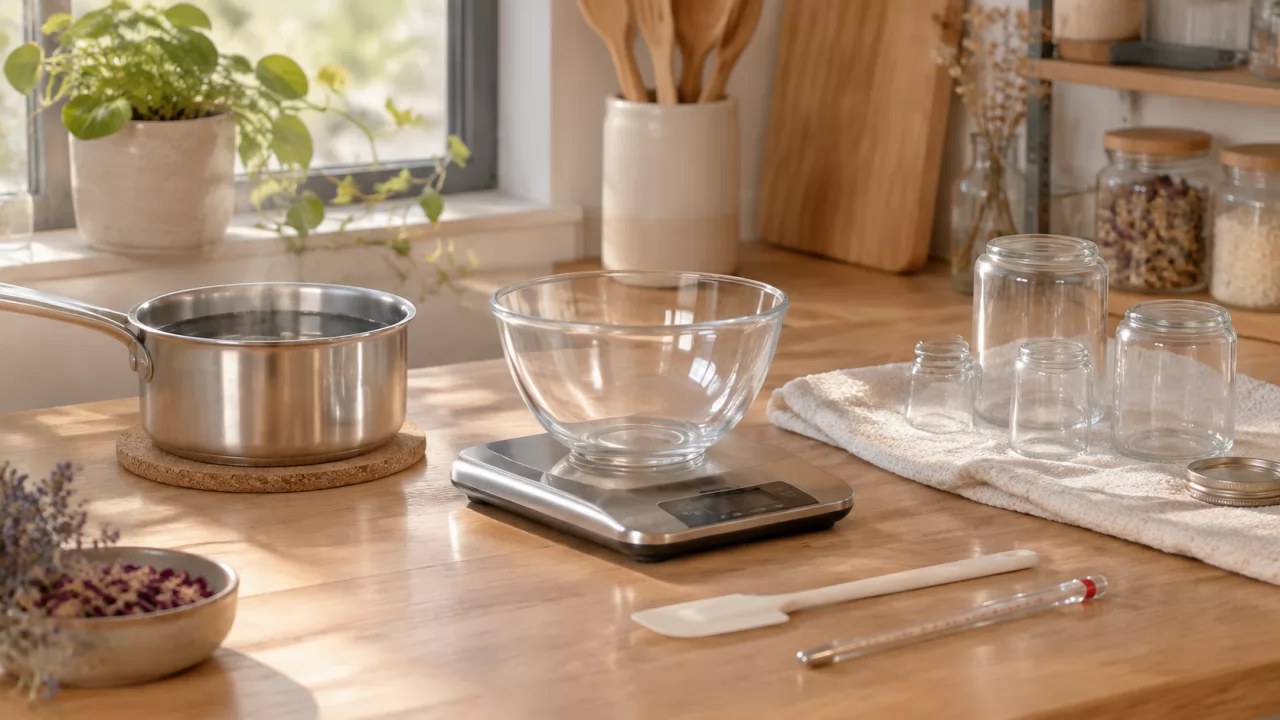
| Item | Purpose | Common mistake |
|---|---|---|
| Digital scale | Weighs by mass, so batches repeat | Measuring in cups or spoons |
| Double boiler or heatproof bowl | Melts butters gently | Direct heat that scorches the butter |
| Hand or stand mixer | Whips air into the chilled base | Starting while the base is still warm |
| Clean spatula | Scrapes bowl and fills jars | Reusing one that touched water |
| Dry, sanitized jars | Holds the finished product | Filling jars that are still damp |
None of this is expensive, but the scale matters most, because it is the only way to repeat a batch exactly.
How to Make Body Butter in Three Phases
The method below makes a small batch. Weigh everything, keep notes on each batch, and change only one variable at a time.
- Weigh the hard butters and the liquid oil into a heatproof bowl.
- Melt the butters over gentle heat, stirring, until the liquid is clear. Take it off the heat as soon as the last lumps disappear. (Overheating is the step people get wrong most often: it can scorch the butter and make it grainy later.)
- Stir in the liquid oil and any starch.
- Chill the bowl until the edges firm up but the centre is still soft.
- Whip until the mixture is pale and holds soft peaks.
- Add fragrance, fill the sanitized jars with a clean spatula, and leave them undisturbed to set.
Phase 1: Melt and combine
The goal is a clear, even liquid. Look for any visible grains and smell it: a faint toasted or burnt note means it got too hot. If you see grains, keep warming gently and stirring. Do not turn the heat up.
Phase 2: Chill and whip
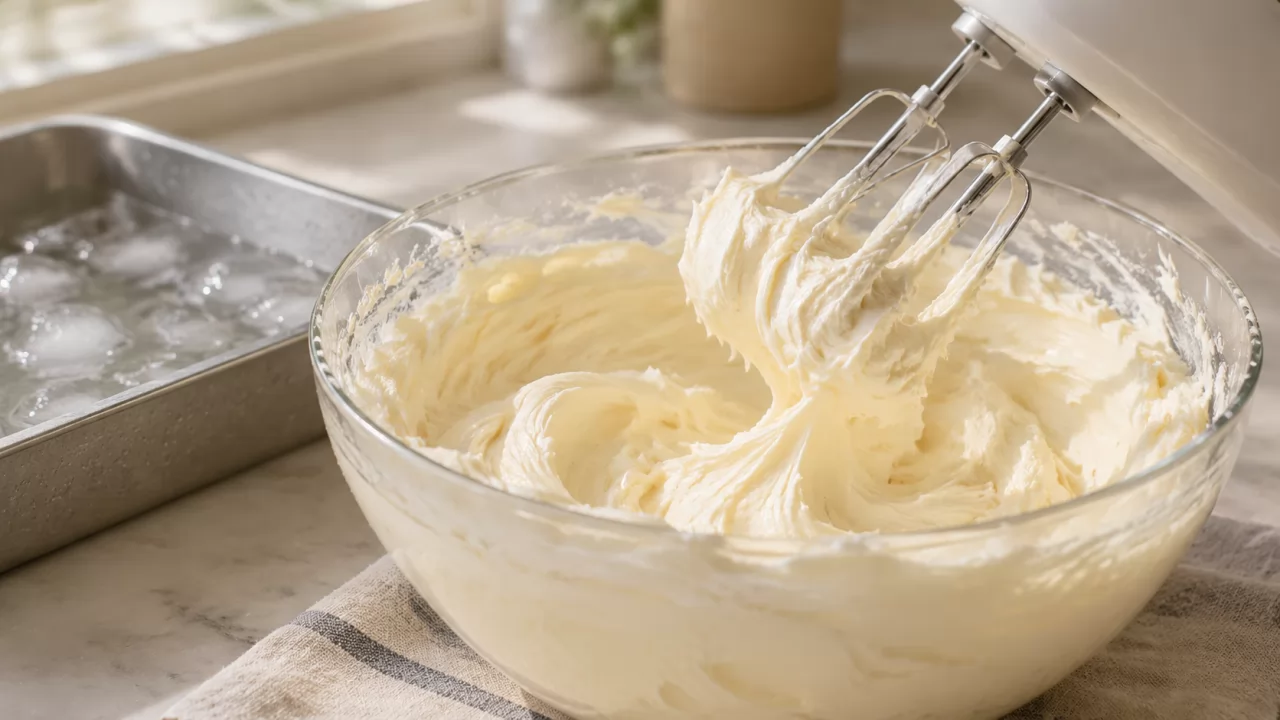
You want a base that is solid at the edges and still soft in the middle. Too warm and the air you whip in will not hold; too cold and the mix turns lumpy. Lift the whisk: if the mixture holds a ridge and the peaks keep their shape, the phase worked.
Phase 3: Scent, fill and cure
Add fragrance last, at a cautious dilution, following the usage guidance from your essential oil or fragrance supplier. Some oils are restricted or need specific labeling, so check the rules for the market you plan to sell in before you settle on a scent. Fill the jars, then leave them for 24 hours. If no oil has pooled on the surface after that, the batch has held together.
Why Batches Go Wrong: Grainy, Greasy, Melted
Grainy body butter is the most common complaint, and it is almost always about temperature. Shea butter contains fats that crystallize at different speeds. If the melted butter cools slowly or unevenly, the fast-setting fats form small hard crystals that you feel on the skin. Melting fully and then chilling quickly and evenly usually prevents it.
Greasy, separated batches usually have too much liquid oil for the amount of butter. A reader tempted to fix this with more whipping will only add air to a soft base, and the whip will deflate overnight. Change the ratio instead, in the next batch, and record it.
The third mistake is storing jars somewhere warm. A whipped butter that looks perfect on the bench can soften, sweat or slump in a hot room or a parcel in summer. The fix is a firmer butter blend, not a stronger whisk.
The last one is adding water or aloe “just a little” without a preservative. It looks harmless on day one. It is the one mistake that can make a product unsafe, not just ugly.
| Symptom | Likely cause | Fix |
|---|---|---|
| Grainy texture | Slow or uneven cooling | Remelt fully, then chill faster |
| Oily separation | Too much liquid oil | Raise butter share next batch |
| Whip deflates overnight | Base too soft or too warm | Chill longer before whipping |
| Sweating in warm storage | Butter blend melts too easily | Use firmer butter, store cool |
Most of these point back to the same lever: the ratio of hard butter to liquid oil and how you cool it.
From Kitchen Recipe to Private Label Body Butter Manufacturer: What Changes
The recipe barely changes when you start selling. Everything around it does. A product for sale needs a stability check, a safety assessment, a correct ingredient list, and records you can trace back to a batch.
Compliance and labeling you cannot improvise
Ingredients are listed by INCI name (International Nomenclature of Cosmetic Ingredients), the standard naming system used on cosmetic labels. Rules differ by market. In the US, cosmetics fall under the FDA and the Modernization of Cosmetics Regulation Act. In the EU and the UK, a product needs a safety report and a named responsible person. Gulf countries have their own registration and labeling requirements. Compliance is checked case by case for each market, so a formula that works in one can need changes in another. Claims are limited too: a body butter can be described as moisturizing in general terms, but not as treating a skin condition. For production records, ISO 22716 is the international guideline for good manufacturing practice in cosmetics, and it is a useful model even for a small maker.
Deciding between small-batch production and a manufacturer
Making it yourself gives control and low commitment, but every jar depends on your hands, your room temperature and your time. A contract maker brings repeatable batches, tested formulas and packaging options, in exchange for minimum quantities and a longer lead time. At Boymay, the OEM minimum is 1000 sets per color or style when there is no special container or accessories, and samples are free with the buyer paying freight.
| Factor | Make it yourself | Order from a manufacturer |
|---|---|---|
| Batch size | Small, a few jars at a time | Set by a minimum order |
| Consistency | Varies with room and hands | Controlled by batch records |
| Testing and paperwork | You arrange and pay for it | Discussed during formula development |
| Packaging | Stock jars, hand-labeled | Custom jars, labels and cartons |
| Main cost drivers | Your time, small ingredient lots | Minimums, packaging, testing |
Small batches suit testing a concept; a manufacturer starts to make sense once demand is steady enough to justify a minimum.
Next Step: Send Your Formula Idea or Sample Request
Questions about moving a body butter formula from a kitchen batch to a production run are welcome; include the markets you plan to sell in, the jar size, and whether the formula contains water.
FAQ
How long does homemade body butter last?
It depends on the oils, the storage and whether water got in. An anhydrous batch typically lasts months if kept cool and dry. Watch for a rancid smell.
Do I need a preservative?
Not for a water-free recipe. Yes, as soon as you add water, aloe or hydrosol.
Why is my body butter grainy?
Uneven or slow cooling after melting is the usual reason. Remelt it fully, then chill it faster and more evenly.
Can I sell what I make at home?
Rarely without more work. Selling usually requires a safety assessment, compliant labeling, stability data and, in many places, registration or a responsible person. The rules depend on where you sell, so check them market by market before the first sale, and ask a regulatory specialist if you are unsure.