

You love your evening shower ritual. The fizzing tablet, the burst of eucalyptus or lavender filling the steam, the mini spa moment after a long day. But then your cat pushes the bathroom door open, or your dog is lounging right outside. And suddenly you wonder: could this little aromatherapy treat actually be hurting my pet?
It's a question more people are asking as shower steamers become a household staple. Let's break down what's actually in these products, why pets react differently than we do, and how you can keep enjoying your self-care routine without putting your furry (or feathered) family at risk.
What Are Shower Steamers and How Do They Work?
Shower Steamer Ingredients Breakdown
At their core, shower steamers are pretty simple. Most contain baking soda and citric acid — the same fizzing combo you'd find in a bath bomb. When water hits the tablet, it triggers an effervescent reaction that releases aromatic compounds into the surrounding steam.

The key difference between shower steamers and bath bombs is that you're not soaking in them. They sit on the shower floor, dissolving gradually while you stand above. The steam carries essential oils, synthetic fragrances, and sometimes colorants into the air you breathe.
Common shower steamer ingredients include essential oil blends (eucalyptus, peppermint, lavender), artificial fragrances, binding agents like cornstarch or kaolin clay, and occasionally artificial dyes for visual appeal.
Why Pet Owners Are Asking This Question
The aromatherapy market has exploded in recent years, and shower steamers are one of the fastest-growing segments. More products in more homes means more pets being exposed to airborne compounds they never encountered before.
There's also the social media factor. DIY pet-pampering trends on TikTok and Instagram have blurred the line between human wellness products and what's appropriate for animals. Some creators have even shown pets in bathrooms during steamer use, prompting veterinarians to speak up about the risks.
And practically speaking, most pets share our living spaces. Bathroom doors get left open. Scents travel through vents. Curious noses investigate everything.
Why Shower Steamers Can Be Dangerous for Pets
Pet Respiratory Sensitivity to Airborne Compounds
Here's the fundamental issue: your pet's respiratory system is not a smaller version of yours. Dogs and cats process inhaled substances through different metabolic pathways, and their bodies often can't neutralize compounds that are harmless to humans.
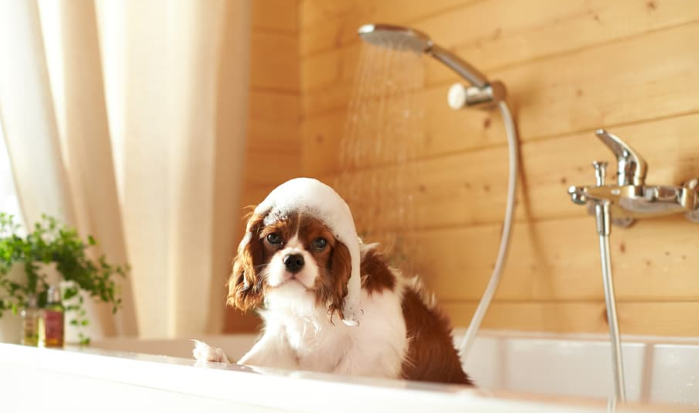
Dogs breathe faster than we do, and cats have proportionally smaller lung capacity. This means both species take in more concentrated doses of airborne chemicals relative to their body weight. What smells pleasantly strong to you can be overwhelming — even damaging — to them.
Birds and exotic pets face even greater danger. Avian respiratory systems are extraordinarily efficient at gas exchange, which means they absorb airborne toxins with alarming speed. A scented product that mildly irritates a dog could be lethal to a parrot or cockatiel.
Toxic Ingredients for Pets Hidden in Shower Steamers
Many popular essential oils are genuinely dangerous for animals, even in amounts that seem tiny to us. For cats, the most concerning oils include tea tree, eucalyptus, peppermint, citrus oils, and lavender in concentrated forms. For dogs, tea tree, pine, wintergreen, and cinnamon top the toxicity list.
Synthetic fragrances present their own problems. Many contain phthalates and volatile organic compounds whose cumulative effects on animals remain poorly studied. Just because a product smells nice doesn't mean its chemical profile has been evaluated for animal safety.
Artificial dyes and chemical binders round out the concern list. These pose ingestion risks if pets come into contact with residue — a scenario more common than most owners realize.
Ingestion and Skin Contact Risks
The airborne exposure gets most of the attention, but physical contact matters too. Pets routinely lick shower floors and tub surfaces where steamer residue collects. Dogs especially will lap up water from any available surface.
Paw pad absorption is another overlooked pathway. The skin on your pet's paws is surprisingly permeable, and dissolved chemicals from steamer residue can enter the bloodstream through prolonged contact. If your pet walks through the shower area before it's been rinsed, they're picking up whatever was left behind.
And then there's the obvious risk: curious pets chewing on unused steamers left on counters, in open bags, or in accessible cabinets. A single tablet contains concentrated ingredients that could cause serious gastrointestinal distress or worse.
Pet-Safe Essential Oils — Do They Exist?
Oils Generally Considered Lower Risk for Dogs
Some essential oils carry lower toxicity profiles for dogs specifically. Chamomile, frankincense, and cedarwood are often cited as less problematic — but only at highly diluted levels and ideally under veterinary guidance.
It's critical to understand that "lower risk" does not mean "safe." Context matters enormously. The concentration, duration of exposure, your dog's size, breed, and individual health all influence whether a given oil causes problems. A Great Dane and a Chihuahua will react very differently to the same airborne concentration.
Never deliberately expose your dog to essential oils without consulting your veterinarian first. What works for one animal may be harmful to another.
Why Almost No Essential Oil Is Truly Safe for Cats
Cats present a unique biological challenge. They lack a key liver enzyme called glucuronyl transferase, which is essential for metabolizing phenolic compounds found in many essential oils. Without this enzyme, these substances accumulate in a cat's system rather than being processed and eliminated.
This means even diffused oils — the kind floating in your shower steam — can build up in your cat's body over time. A single exposure might not cause visible symptoms, but repeated low-level contact creates a cumulative toxic burden that eventually manifests as liver damage or neurological issues.
Veterinary toxicologists are increasingly clear on this point: there is no established safe threshold for essential oil exposure in cats. The safest approach is minimizing their contact entirely.
Aromatherapy for Animals — What Veterinarians Actually Recommend
Legitimate aromatherapy for animals looks nothing like human aromatherapy practices. When veterinarians do incorporate scent-based interventions, they use controlled, supervised protocols with species-appropriate products at carefully calculated dilutions.
Passive diffusion at safe distances — meaning the animal can freely leave the scented area — is the only approach most vets consider acceptable. Direct application of essential oils to an animal's skin or fur is almost universally discouraged outside of specific veterinary-prescribed treatments.
For calming purposes, most veterinarians recommend species-specific products like pheromone diffusers rather than essential oil-based solutions. These are formulated with animal biology in mind from the start.
What Happens If Your Pet Is Exposed to Shower Steamer Fumes?
Signs of Essential Oil Toxicity in Pets
Knowing what to watch for can make the difference between a close call and a crisis. Respiratory distress is often the first sign — look for coughing, wheezing, rapid breathing, or labored inhalation. Your pet may paw at their face or sneeze repeatedly.
Neurological symptoms can follow quickly. Excessive drooling, tremors, lethargy, wobbliness, or disorientation all suggest the nervous system is being affected. In cats especially, you might notice a sudden loss of coordination or a dazed, unfocused look.
Gastrointestinal reactions include vomiting and diarrhea, particularly if ingestion occurred. Check paw pads and skin for redness, irritation, or what appears to be chemical burns — especially between the toes where residue collects.
Immediate Steps to Take
First, remove your pet from the exposure area immediately. Get them into fresh air and ventilate the space by opening windows and running fans. Time matters here — the faster you reduce exposure, the better the outcome.
Do not induce vomiting unless specifically instructed by a veterinarian. Some substances cause more damage coming back up than they do staying down, and you need professional guidance for that call.
Contact the ASPCA Animal Poison Control Center (888-426-4435) or your emergency veterinarian right away. Have this information ready: the product name and ingredient list, estimated duration of exposure, your pet's weight and species, and any symptoms you've observed so far.
How to Safely Enjoy Shower Steamers in a Pet-Friendly Home
Ventilation and Containment Strategies
You don't necessarily have to give up shower steamers entirely. Smart containment goes a long way. Keep the bathroom door fully closed during use and for at least 15 to 20 minutes afterward. This prevents scented steam from migrating into shared living spaces.
Run your exhaust fan during and after your shower. This actively pulls aromatic compounds out of the air rather than letting them settle on surfaces or drift under the door. If your bathroom lacks an exhaust fan, crack a window instead.
Before allowing pets back into the bathroom, rinse the shower floor thoroughly with plain water. This removes dissolved residue that could be licked or absorbed through paw pads.
Choosing Pet-Conscious Products
If you share your home with animals, ingredient transparency becomes non-negotiable. Look for shower steamers that clearly list every component — and avoid any containing essential oils known to be toxic to your specific pet species.
Fragrance-free options or those using naturally derived scent compounds with full disclosure are your safest bet. Be cautious of products marketed as "pet-safe" without third-party verification or veterinary endorsement. That label isn't regulated, and companies can use it freely without meeting any standard.
When evaluating brands, look for those that reference veterinary consultation in their formulation process or carry certifications from recognized animal welfare organizations.
Storage and Disposal Best Practices
Store all shower steamers in sealed, airtight containers placed well out of pet reach. High shelves or locked cabinets are ideal. Remember that dogs can counter-surf and cats can access almost any elevated surface.
Dispose of packaging and any steamer fragments in pet-proof trash bins. The concentrated scent of a partially used steamer is exactly the kind of thing that attracts a curious nose — and a curious mouth.
Safer Alternatives for Pampering Your Pet
Vet-Approved Grooming and Calming Products
If you want to pamper your pet, start with products actually designed for them. Species-specific shampoos and sprays are formulated for animal skin pH levels, which differ significantly from human skin. What feels luxurious to you could strip your pet's coat of protective oils.
Pheromone-based calming diffusers offer genuine relaxation benefits without respiratory risks. Adaptil for dogs and Feliway for cats use synthetic versions of naturally occurring calming pheromones — completely undetectable to humans but genuinely soothing for pets.
Pet-safe grooming wipes provide a quick freshening option between baths without introducing any airborne compounds into your shared environment.
Creating a Relaxing Environment Without Aromatherapy Risks
Scent isn't the only path to relaxation — for you or your pet. Calming music specifically composed for dogs and cats (yes, it exists, and studies support its effectiveness) can reduce anxiety without any chemical exposure.
Gentle massage techniques adapted for animals provide bonding and stress relief simultaneously. Many pets respond beautifully to slow, rhythmic stroking along their spine or gentle ear rubs.
Environmental enrichment — puzzle feeders, new textures, safe outdoor time, interactive play — addresses the root causes of pet stress far more effectively than any scent-based product ever could.
Frequently Asked Questions (FAQ)
Can I use a shower steamer if my dog is in the next room?
Generally yes, provided you keep the bathroom door closed, run the exhaust fan, and allow adequate ventilation time before opening the door. Distance and physical barriers significantly reduce exposure. However, if your dog has pre-existing respiratory conditions like brachycephalic syndrome (common in flat-faced breeds), extra caution is warranted.
Are "natural" or "organic" shower steamers safe around pets?
Not necessarily. "Natural" and "organic" describe ingredient sourcing, not animal safety. Many of the most toxic essential oils for pets — tea tree, eucalyptus, peppermint — are completely natural. Organic certification means the plants were grown without synthetic pesticides, but the concentrated oils extracted from them remain just as dangerous to your pet's liver and respiratory system.
My cat licked shower steamer residue — what should I do?
Act quickly. Rinse your cat's mouth gently with plain water if they'll allow it. Check the product's ingredient list for known feline toxins, especially tea tree, eucalyptus, or any phenol-containing oils. Contact your veterinarian or the ASPCA Poison Control hotline immediately — don't wait for symptoms to appear. Given cats' inability to metabolize many essential oil compounds, early intervention is always the safer choice.
Can shower steamer fumes harm birds or small animals?
Yes, and the risk is substantially higher than for dogs or cats. Birds have extremely efficient respiratory systems that absorb airborne compounds rapidly and thoroughly. Rabbits and rodents are similarly vulnerable due to their small body mass and fast respiratory rates. If you keep birds or small animals, shower steamers should never be used in the same airspace — even with a closed door, ensure no shared ventilation pathways exist.
Are there any shower steamers specifically made to be pet-safe?
A small number of brands now market pet-conscious formulations, typically using minimal or no essential oils and avoiding known animal toxins. However, "pet-safe" is not a regulated claim in the personal care industry. Look for products that list every ingredient transparently, reference veterinary input in their development, and ideally carry endorsements from recognized animal health organizations. When in doubt, fragrance-free steamers made only with baking soda and citric acid pose the lowest risk.
How long do shower steamer fumes linger in a bathroom?
In a well-ventilated bathroom with an exhaust fan running, most aromatic compounds dissipate within 20 to 30 minutes after the steam clears. Without ventilation, scent molecules can linger on surfaces and in still air for one to two hours or longer. Factors that extend this time include poor airflow, high humidity, larger or more concentrated steamers, and enclosed spaces without windows. Always ventilate actively rather than relying on passive air movement.